Creatine Monohydrate Market Size, Share, Trends, Growth 2034

Creatine Monohydrate Market By Type (Creatine Monohydrate Powder, Creatine Monohydrate Capsules and Tablets, Creatine Monohydrate Gummies, Micronized Creatine Monohydrate, and Creatine Monohydrate Blends), By Application (Sports Nutrition and Bodybuilding, Clinical and Medical Nutrition, Weight Management and Body Composition, and General Wellness and Healthy Aging), By Distribution Channel (Online Retail Stores, Specialty Nutrition and Supplement Stores, Pharmacies and Drug Stores, Supermarkets and Hypermarkets, and Direct to Gym Sales), By End User (Athletes and Bodybuilders, Fitness and Recreational Users, Elderly Population, Medical and Clinical Patients, and General Consumers), and By Region - Global and Regional Industry Overview, Market Intelligence, Comprehensive Analysis, Historical Data, and Forecasts 2026 to 2034
| Market Size in 2025 | Market Forecast in 2034 | CAGR (in %) | Base Year |
|---|---|---|---|
| USD 293.63 Million | USD 649.07 Million | 10.60% | 2025 |
Creatine Monohydrate Industry Perspective:
What will be the size of the creatine monohydrate market during the forecast period?
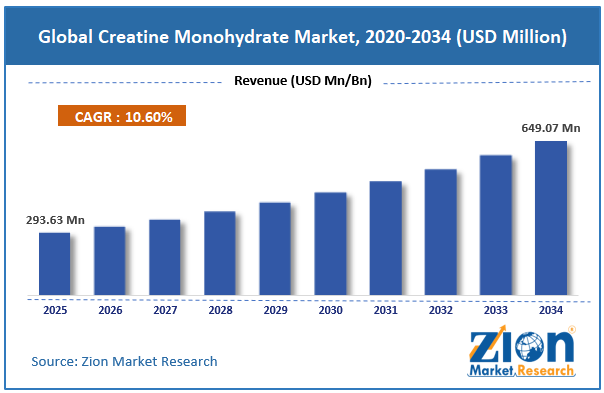
The global creatine monohydrate market size was valued at approximately USD 293.63 million in 2025 and is projected to reach around USD 649.07 million by 2034, growing at a compound annual growth rate of approximately 10.60% between 2026 and 2034.
Key Insights
- As per the analysis shared by our research team, the global creatine monohydrate market is estimated to grow at a compound annual growth rate of approximately 10.60% during the forecast period from 2026 to 2034.
- In terms of revenue, the global creatine monohydrate market was valued at approximately USD 293.63 million in 2025 and is projected to reach USD 649.07 million by 2034.
- The creatine monohydrate market is expected to grow steadily due to rising fitness awareness, growing interest in preventive healthcare, expanding sports participation among younger populations, and increasing acceptance of the ingredient among older adults.
- Based on type, creatine monohydrate powder leads the market because it remains the most affordable and versatile format. In contrast, micronized creatine monohydrate is the fastest-growing segment as consumers seek smoother mixing and easier digestion.
- Based on application, sports nutrition and bodybuilding lead the market since building muscle and improving athletic output remain the primary reasons people buy the product. At the same time, general wellness and healthy aging are the fastest-growing applications as older consumers adopt the ingredient for everyday health support.
- Based on distribution channel, online retail stores lead the market because shoppers value the convenience, product reviews, and subscription options available on digital platforms, while specialty nutrition and supplement stores are growing quickly as knowledgeable staff help guide first-time buyers.
- Based on end user, athletes and bodybuilders account for the largest share given their consistent, frequent usage patterns. At the same time, the elderly population is the fastest-growing end-user group as awareness spreads about creatine's role in preserving strength and mobility with age.
- Based on region, North America leads the global creatine monohydrate market thanks to a mature fitness culture and high supplement spending. At the same time, Asia Pacific is the fastest-growing region as gym membership and sports participation expand rapidly.
Creatine Monohydrate Market: Overview
Creatine monohydrate is a widely used dietary supplement that helps support muscle strength, exercise performance, energy production, and recovery during physical activity. It is a natural compound found in the body and stored mainly in muscles, where it helps provide energy during short, high-intensity activities such as weightlifting, sprinting, and resistance training. The growing popularity of fitness and sports nutrition has made creatine monohydrate a major supplement category, with products available as powders, capsules, tablets, and gummies. While athletes and bodybuilders remain key consumers, demand is growing among regular gym users, older adults focused on maintaining muscle, and consumers focused on overall wellness. Ongoing research is also increasing interest in creatine for areas such as healthy aging, cognitive function, bone health, and physical recovery, although benefits can vary by individual and use case. Improvements in product quality and manufacturing, including micronized creatine, have made supplements easier to mix and consume. Online shopping has also made it easier for consumers to compare brands, prices, ingredients, and product reviews. Growing product availability, increased fitness participation, and wider awareness of creatine's potential benefits are encouraging manufacturers to develop more convenient formats and reach new consumer groups through pharmacies, specialty stores, supermarkets, and e-commerce platforms.
The creatine monohydrate industry is growing, driven by rising fitness participation, broader wellness awareness, product innovation, and expanding consumer adoption.
Creatine Monohydrate Market: Strategic Perspective
Where is the creatine monohydrate market heading?
The creatine monohydrate market is moving toward more product choices and simpler formulations, with brands introducing flavored powders, chewable gummies, and convenient single-serving packets for busy consumers. Greater transparency is also becoming important, as companies publish third-party test results and purity certifications to build buyer trust.
Where should businesses invest in the creatine monohydrate market?
Businesses seeking growth in the creatine monohydrate market can invest in better taste and solubility, direct-to-consumer subscription services, and educational content that clearly explains dosage and potential benefits. New products designed for women, older adults, and casual exercisers also offer opportunities beyond traditional bodybuilding-focused products and marketing.
What will reshape competition in the creatine monohydrate market?
Brand success in the creatine monohydrate market will increasingly depend on product purity, third-party testing, competitive pricing, and strong customer relationships built through communities and influencers. Companies that combine reliable product information with simple, easy-to-understand marketing can strengthen consumer trust and stand out in a growing market.
Creatine Monohydrate Market: Development Roadmap 2026 to 2034
What is the projected development roadmap of the creatine monohydrate market over the forecast period?
The creatine monohydrate market is progressing through improved manufacturing purity standards, wider retail distribution, expansion into new consumer segments, and growing integration of creatine into everyday food and beverage products. The market is expected to grow at a compound annual growth rate of approximately 10.60% over the forecast period, driven by rising fitness participation, growing scientific validation, and continuous product innovation.
The following roadmap outlines key development phases expected through 2034.
2026 to 2028: Awareness and Accessibility Phase
- Broader retail placement: Supplement brands are expected to expand shelf presence across supermarkets, pharmacies, and convenience stores, making creatine monohydrate available to shoppers who previously only associated it with specialty gym stores.
- Consumer education campaigns: Companies are likely to invest heavily in explaining creatine dosage, timing, and safety to overcome lingering myths and hesitation among first-time buyers.
- Format experimentation: Brands are expected to test gummies, flavored drink mixes, and ready-to-drink beverages to attract consumers who dislike the taste or texture of plain powder.
2029 to 2031: Diversification and Personalization Phase
- Targeted product lines: Companies are likely to launch creatine products formulated specifically for women, seniors, and casual wellness users, moving away from a one-size-fits-all bodybuilding image.
- Functional food integration: Creatine monohydrate is expected to appear more often in protein bars, snacks, and fortified beverages as food manufacturers add recognizable performance ingredients.
- Subscription and loyalty growth: Direct-to-consumer brands are expected to expand subscription-based purchasing models that keep customers engaged and reduce reliance on one-time retail sales.
2032 to 2034: Mainstream and Scientific Validation Phase
- Expanded clinical backing: Continued research into cognitive health, bone density, and healthy aging may push creatine further into mainstream healthcare and pharmacy recommendations.
- Global market normalization: Creatine monohydrate could become a standard household supplement in developing markets as awareness catches up with more mature regions such as North America and Europe.
- Advanced formulation technology: Manufacturers may introduce next-generation delivery methods, including fast-dissolving strips or enhanced absorption blends, to further differentiate their offerings.
Creatine Monohydrate Market: Dynamics
Growth Drivers
What factors are driving changing consumer habits in the creatine monohydrate market?
Consumer behavior in the creatine monohydrate market is changing as people increasingly view creatine as more than a bodybuilding supplement. Buyers are becoming interested in goals such as workout recovery, muscle maintenance, healthy aging, and improved overall fitness. This broader demand is encouraging brands to offer simpler packaging, new flavors, and products suited to different age groups and lifestyles. Social media and fitness influencers are introducing creatine to younger consumers, while nutritionists and healthcare professionals are discussing its potential uses with older adults. Retailers are also placing creatine alongside general wellness and fitness products instead of limiting it to sports nutrition sections. Consumers increasingly want clear information on dosage, product quality, safety, and realistic benefits before buying. Brands that provide transparent information and consistent quality can strengthen customer trust and encourage repeat buying. As creatine becomes more familiar to everyday consumers, its use is spreading beyond gyms and bodybuilding communities, supporting broader adoption and continued market growth. These changes are also shaping how consumers compare products, choose brands, select supplement formats, and make purchases.
Rising scientific research is opening new avenues in the creatine monohydrate market.
Scientific research is creating new growth opportunities in the creatine monohydrate market by examining potential benefits beyond exercise performance, including brain health, mood, healthy aging, and physical recovery. Expanding research is also helping consumers and healthcare professionals better understand creatine's safety, effectiveness, and possible applications. Universities and independent researchers continue to study the ingredient, giving brands useful evidence to educate customers and reach audiences beyond traditional sports nutrition. This growing knowledge is increasing interest among older adults, wellness-focused consumers, and people seeking to maintain muscle as they age. Suppliers can also use research-backed quality standards and high-purity formulations to develop premium products alongside affordable options. Clear scientific information about proper use, evidence, and realistic benefits can improve consumer confidence and reduce confusion around supplementation. As research expands understanding of creatine, the market can reach new customer groups and strengthen its presence across sports nutrition, everyday fitness, healthy aging, and broader wellness categories.
Restraints
Consumer misconceptions and safety concerns are limiting faster growth in the creatine monohydrate market.
Despite its long history of research, the creatine monohydrate industry still faces challenges from common myths about kidney damage, water retention, and its use being limited to bodybuilders. These beliefs may discourage women, older adults, and first-time users from considering creatine for their fitness and wellness goals. Different regulations across countries can also make product approval, labeling, imports, and marketing more difficult, especially for smaller brands entering new markets. In developing countries, price-sensitive consumers may consider creatine less essential than familiar products such as protein supplements or multivitamins. Poor-quality or counterfeit products sold through unregulated online channels can further reduce customer trust and create negative experiences. To overcome these barriers, companies need to provide clear product information, accurate usage guidance, third-party quality testing, and simple consumer education. Building trust through consistent quality and transparent communication can help brands reach new users and support long-term market growth.
Opportunities
Will expansion into everyday wellness routines create fresh opportunities in the creatine monohydrate market?
As creatine monohydrate moves beyond its traditional bodybuilding image, brands have strong opportunities to position it as part of everyday wellness routines. Convenient formats such as pre-measured sachets, flavored gummies, capsules, and smoothie-friendly products can attract consumers who want easier ways to use creatine without measuring powder. The healthy aging segment also offers growth potential, as maintaining muscle strength, physical function, and mobility becomes increasingly important for older adults. Partnerships with fitness apps, wearable technology companies, nutrition platforms, and telehealth services can connect brands with consumers interested in exercise, recovery, and healthy aging. Smaller regional companies can compete by meeting local quality standards and using marketing that reflects regional preferences and lifestyles. Online education, social media, fitness communities, and recommendations from qualified professionals can further build consumer awareness and understanding of the product.
As creatine becomes more familiar to everyday consumers, companies offering convenient products, clear information, reliable quality, and targeted solutions for different age groups can reach new audiences and expand the market beyond traditional sports nutrition users. Wider distribution through pharmacies, supermarkets, specialty stores, and e-commerce channels can further improve product access across different regions.
Challenges
How are market saturation and pricing pressure affecting the creatine monohydrate market?
The creatine monohydrate industry faces increasing pressure from crowded product shelves, price competition, and limited product differentiation. Since creatine monohydrate is relatively simple and affordable to produce, many brands compete mainly on price, which can reduce profit margins and limit spending on research, quality testing, and marketing. Online marketplaces and large retailers often offer many similar products, making it hard for smaller brands to stand out. Rising raw material, packaging, and shipping costs can add further pressure, especially for companies that are dependent on imported ingredients. Consumer confusion is another challenge, as buyers may struggle to understand differences between standard creatine monohydrate and newer, more expensive formulations promoted with additional benefits. To remain competitive, companies need to clearly communicate product quality, purity, testing, and value rather than relying only on low prices. Strong branding, transparent labeling, consistent product quality, and effective digital marketing can help companies build consumer trust and strengthen their market position.
Creatine Monohydrate Market: Report Scope
| Report Attributes | Report Details |
|---|---|
| Report Name | Creatine Monohydrate Market |
| Market Size in 2025 | USD 293.63 Million |
| Market Forecast in 2034 | USD 649.07 Million |
| Growth Rate | CAGR of 10.60% |
| Number of Pages | 227 |
| Key Companies Covered | Glanbia Performance Nutrition, MuscleTech, Optimum Nutrition, NOW Foods, BulkSupplements, Cellucor, Klean Athlete, Universal Nutrition, Thorne Research, AlzChem Group, and others. |
| Segments Covered | By Type, By Application, By Distribution Channel, By End User, and By Region |
| Regions Covered | North America, Europe, Asia Pacific (APAC), Latin America, Middle East, and Africa (MEA) |
| Base Year | 2025 |
| Historical Year | 2020 - 2024 |
| Forecast Year | 2026 - 2034 |
| Customization Scope | Avail customized purchase options to meet your exact research needs. Request For Customization |
Creatine Monohydrate Market: Segmentation
The global creatine monohydrate market is segmented by type, application, distribution channel, and end user, and further broken down by region.
Why does powder lead the creatine monohydrate market?
Based on type, the market is classified into creatine monohydrate powder, creatine monohydrate capsules and tablets, creatine monohydrate gummies, micronized creatine monohydrate, and creatine monohydrate blends. Creatine monohydrate powder holds about 42% of the market share, leading because it remains the most cost-effective option and allows consumers to adjust their dosage easily. Micronized creatine monohydrate holds around 23% market share. This is the fastest-growing segment as consumers increasingly prefer its smoother texture and easier mixing compared to standard powder.
How is sports nutrition maintaining its lead in the creatine monohydrate market?
By application, the creatine monohydrate industry is segmented into sports nutrition and bodybuilding, clinical and medical nutrition, weight management and body composition, and general wellness and healthy aging. Sports nutrition and bodybuilding accounts for approximately 39% of the global market share, driven by consistent demand from athletes and regular gym users seeking strength and performance benefits. General wellness and healthy aging holds around 21% market share. It is the fastest-growing segment as older consumers and everyday wellness shoppers increasingly adopt the ingredient.
Where does online retail stand in the creatine monohydrate market?
Based on distribution channel, the market is categorized into online retail stores, specialty nutrition and supplement stores, pharmacies and drug stores, supermarkets and hypermarkets, and direct-to-gym sales. Online retail stores lead with about a 36% share because of their convenience, competitive pricing, and detailed product information. Specialty nutrition and supplement stores hold around 24% market share. It is growing rapidly as knowledgeable in-store staff help build trust among new and returning customers.
Which end user accounts for the largest share in the creatine monohydrate market?
Based on end user, the global creatine monohydrate market is divided into athletes and bodybuilders, fitness and recreational users, the elderly population, medical and clinical patients, and general consumers. Athletes and bodybuilders account for about 33% of the market, leading due to their frequent, consistent product use. The elderly population holds around 19% market share. This segment is expanding quickly as awareness grows around creatine's benefits for maintaining strength and independence later in life.
Creatine Monohydrate Market: Regional Analysis
What factors are strengthening North America's position in the creatine monohydrate market?
North America leads the global creatine monohydrate market and is expected to grow at a CAGR of around 6.5% during the forecast period. The region benefits from a strong fitness culture, high consumer spending power, and widespread awareness of sports nutrition products. The United States is a major contributor, supported by extensive retail networks, including supplement stores, pharmacies, supermarkets, and well-developed e-commerce platforms. These channels make creatine products widely available and convenient to purchase. Growing interest in healthy aging and preventive wellness is also encouraging older adults to consider creatine, expanding demand beyond athletes and regular gym users. Social media influencers, sports professionals, fitness communities, and online product reviews continue to increase consumer awareness and influence purchasing decisions.
Consumers are also showing greater interest in product quality, ingredient purity, and clear labeling, encouraging brands to improve transparency and develop differentiated products. Established supplement manufacturers and strong distribution networks further support regional market growth. In addition, continued product innovation, including flavored powders, gummies, capsules, and convenient single-serving formats, is helping brands reach different consumer groups. These factors are strengthening North America's position and supporting steady market expansion.
How is rising fitness participation driving growth in the Asia Pacific creatine monohydrate market?
The Asia Pacific creatine monohydrate market is expected to grow at a volume CAGR of around 8.9% during the forecast period, supported by rising gym memberships, increasing disposable income, and growing interest in fitness and sports nutrition. China, India, Japan, and South Korea are seeing more fitness centers, organized sports activities, and wellness communities, driving stronger demand for performance supplements such as creatine monohydrate. Younger consumers are increasingly influenced by social media, fitness influencers, athletes, and international sports nutrition brands, which is improving awareness of creatine and its uses. Growing middle-class incomes are also making sports supplements more affordable and accessible to a wider customer base.
At the same time, local manufacturers are expanding production and distribution, improving product availability and reducing dependence on imported supplements. E-commerce platforms are further supporting market expansion by allowing consumers in smaller cities and towns to access a wider range of products. Growing interest in healthy lifestyles, strength training, recreational sports, and personal fitness is expected to support continued demand. Together, rising consumer awareness, improving product availability, expanding fitness infrastructure, and stronger retail networks are expected to make Asia Pacific the fastest-growing region during the forecast period.
Recent Market Developments
- In May 2026, MuscleBlaze launched Creatine Chews in India, providing 1 g of creatine monohydrate per chew. The individually packed chewable format was introduced to make creatine easier to consume and attract consumers beyond traditional gym users.
- In May 2026, Protein Works expanded its creatine portfolio with Creatine 360 Gold, a flavored powder combining micronized creatine with ingredients such as CoQ10, magnesium, vitamin D3, vitamin B6, and coconut water powder.
- In January 2026, GNC launched a new creatine lineup that included its Pro Performance Creatine Monohydrate alongside new formulas combining creatine with HMB and other ingredients.
Creatine Monohydrate Market: Competitive Analysis
The leading players in the global creatine monohydrate market are:
- Glanbia Performance Nutrition
- MuscleTech
- Optimum Nutrition
- NOW Foods
- BulkSupplements
- Cellucor
- Klean Athlete
- Universal Nutrition
- Thorne Research
- AlzChem Group
The global creatine monohydrate market is segmented as follows:
By Type
- Creatine Monohydrate Powder
- Creatine Monohydrate Capsules and Tablets
- Creatine Monohydrate Gummies
- Micronized Creatine Monohydrate
- Creatine Monohydrate Blends
By Application
- Sports Nutrition and Bodybuilding
- Clinical and Medical Nutrition
- Weight Management and Body Composition
- General Wellness and Healthy Aging
By Distribution Channel
- Online Retail Stores
- Specialty Nutrition and Supplement Stores
- Pharmacies and Drug Stores
- Supermarkets and Hypermarkets
- Direct to Gym Sales
By End User
- Athletes and Bodybuilders
- Fitness and Recreational Users
- Elderly Population
- Medical and Clinical Patients
- General Consumers
By Region
- North America
- The U.S.
- Canada
- Mexico
- Europe
- France
- The UK
- Spain
- Germany
- Italy
- Rest of Europe
- Asia Pacific
- China
- Japan
- India
- Australia
- South Korea
- Rest of Asia Pacific
- The Middle East & Africa
- Saudi Arabia
- UAE
- Egypt
- Kuwait
- South Africa
- Rest of the Middle East & Africa
- Latin America
- Brazil
- Argentina
- Rest of Latin America
Table Of Content
Methodology
FrequentlyAsked Questions
Creatine monohydrate is a widely used dietary supplement that helps support muscle strength, exercise performance, energy production, and recovery during physical activity. It is a natural compound found in the body and stored mainly in muscles, where it helps provide energy during short, high-intensity activities such as weightlifting, sprinting, and resistance training.
The global creatine monohydrate market is expected to grow due to rising fitness awareness, expanding scientific research, growing interest in healthy aging, and increasing availability across online and offline retail channels.
According to research, the global creatine monohydrate market was valued at approximately USD 293.63 million in 2025 and is projected to reach approximately USD 649.07 million by 2034.
The creatine monohydrate market is expected to grow at a compound annual growth rate of approximately 10.60% from 2026 to 2034.
North America is expected to lead the global creatine monohydrate market throughout the forecast period, supported by a mature fitness culture, strong retail infrastructure, and high consumer spending on supplements.
The major players in the global creatine monohydrate market include Glanbia Performance Nutrition, MuscleTech, Optimum Nutrition, NOW Foods, BulkSupplements, Cellucor, Klean Athlete, Universal Nutrition, Thorne Research, and AlzChem Group.
The report examines key aspects of the creatine monohydrate market, including growth drivers, adoption barriers, application opportunities, competitive landscape dynamics, detailed regional market performance, and a comprehensive forward-looking outlook across all major types, applications, distribution channels, end users, and geographic regions through 2034.
Rising disposable income and growing consumer spending on health and wellness products are expected to support demand in the creatine monohydrate market. However, inflation and rising raw material or packaging costs may slow adoption among price-sensitive consumers in certain regions.
The creatine monohydrate market offers opportunities in new product formats, healthy aging-focused formulations, direct-to-consumer subscription models, and partnerships with fitness platforms, gyms, and wellness clinics.
Prices in the creatine monohydrate market vary by purity, formulation, and brand positioning, with micronized and clinically studied products commanding higher prices than standard powder. Basic creatine monohydrate remains widely accessible and affordable across most retail channels.

HappyClients