
Global Natural Protein Powder Market Size, Share, Trends, Growth and Forecast 2034

Natural Protein Powder Market By Product Type (Whey Protein, Casein Protein, Soy Protein, Pea Protein, Rice Protein, and Others), By Application (Sports Nutrition, Functional Food, Dietary Supplements, and Others), By Distribution Channel (Online Stores, Supermarkets/Hypermarkets, Specialty Stores, and Others), By End-User (Athletes, Bodybuilders, Fitness Enthusiasts, and General Consumers) and By Region - Global and Regional Industry Overview, Market Intelligence, Comprehensive Analysis, Historical Data, and Forecasts 2026 - 2034
| Market Size in 2025 | Market Forecast in 2034 | CAGR (in %) | Base Year |
|---|---|---|---|
| USD 8.5 Billion | USD 17.3 Billion | 8.2% | 2025 |
Natural Protein Powder Market: Industry Perspective
What will be the size of the global natural protein powder market during the forecast period?
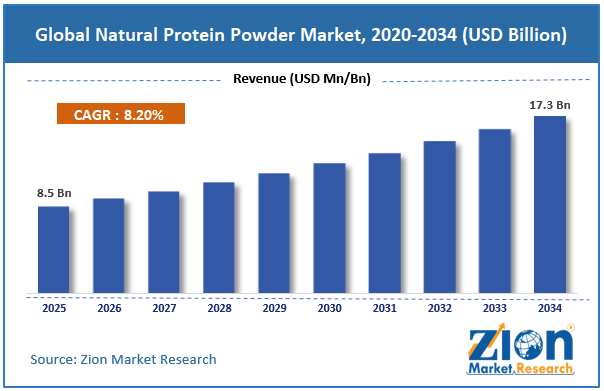
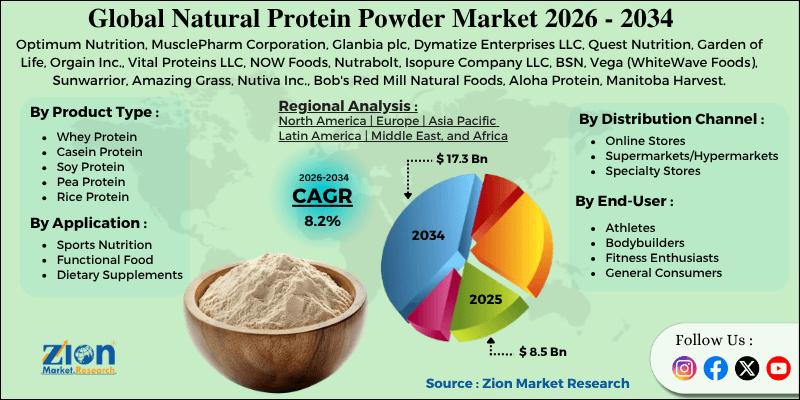
The global natural protein powder market size was worth around USD 8.5 billion in 2025 and is predicted to grow to around USD 17.3 billion by 2034, with a compound annual growth rate (CAGR) of roughly 8.2% between 2026 and 2034.
Key Insights
- As per the analysis shared by our research analyst, the global natural protein powder market is estimated to grow annually at a CAGR of around 8.2% over the forecast period (2026-2034).
- In terms of revenue, the global natural protein powder market size was valued at around USD 8.5 billion in 2025 and is projected to reach USD 17.3 billion by 2034.
- The rapid growth of plant-based diets and vegan lifestyles is expected to propel the natural protein powder market over the projected period.
- Based on the product type, the whey protein segment held the largest revenue share in 2025 of 38.5%.
- Based on the application, the sports nutrition segment held a prominent market share of 45% in 2025.
- Based on the distribution channel, the online stores segment captures a prominent revenue share in 2025 of 42%.
- Based on the end-user, the fitness enthusiasts segment captures a prominent revenue share in 2025 of 31%.
- Based on region, North America dominates the natural protein powder market with a revenue share of 35% in 2025.
Natural Protein Powder Market: Overview
Natural protein powder is a dietary supplement produced from natural sources and containing high concentrations of protein that can be used to increase body mass, support muscle growth and recovery, and maintain or lose weight with a sufficient amount of dietary protein. Products in this category have a natural composition that is minimally refined and contains no artificial additives. Natural protein powders may be produced from animal sources like milk (whey and casein), eggs, or meat, or plant-based sources like pea, soy, brown rice, hemp, pumpkin seeds, and others. These supplements are beneficial for bodybuilders, athletes, seniors, and people who want to improve their nutrition with an easy and affordable source of protein.
Impact of the USA-Israel War on Iran on the Natural Protein Powder Market
The USA – Israel conflict over Iran’s involvement has indirectly affected the natural protein powder market by causing political instability in the region. Increased tensions and changes in import-export policies have resulted in rising costs of production, transportation, and other expenses involved in manufacturing the product. Also, demand for natural protein powders has suffered due to soaring agricultural prices and transportation costs, which have adversely affected manufacturers' and producers' profit margins. Nevertheless, the high demand for the product has not been weakened significantly due to an increase in buyers’ interest in health and wellness.
Natural Protein Powder Market: Dynamics
Growth Drivers
Does the growing consumer preference for clean-label and natural nutrition products drive the natural protein powder market?
The increasing demand for clean-label and natural nutrition products is a significant factor contributing to the growth of the natural protein powder market. Rising consumer awareness of the importance of healthy food and its effects on the immune system, reducing cholesterol or triglyceride levels in the body, and preventing chronic diseases is driving demand for nutritional supplements. The majority of consumers are now more conscious about the food they eat and prefer products with simplified ingredients lists and minimal processing. This has led to increased demand for protein powders with natural ingredients such as whey, pea, soy, brown rice, hemp, pumpkin seed, etc.
Moreover, the rise of healthy, protein-based diets and their promotion by fitness influencers has increased the relevance of natural protein powders. Consumers are now more inclined to read the labels of the products they purchase and prefer items with organic, non-GMO, gluten-free, and sugar-free characteristics. In addition, producers are developing products with high-quality, natural ingredients and transparent labeling to meet the rising demand for natural protein powder. Trends reflect a shift towards prevention and management of chronic disease through better health and active lifestyles.
As a result, natural protein powders have become popular among healthy-habit followers, working people, elderly people, vegetarianism advocates, and others. Additionally, the accessibility of natural protein powders and their availability in different sales channels, including conventional stores, health shops, and online platforms, is also influencing the expansion of the market for natural protein powders. Lastly, the development of new clean-label products with functional ingredients is supporting the growth of the natural protein powder market.
Restraints
How does the high cost of natural protein powders pose a restraint to the natural protein powder industry's growth?
High protein powder prices are a major restraint on the growth of the natural protein powder market. Natural protein powders are typically made from premium ingredients like whey, grass-fed dairy protein, organic pea protein, and other plant-based proteins. Additionally, producers of natural protein powders have to spend more on organic farming, quality control tests, clean-label ingredients, certifications, and eco-friendly packaging, which adds to the final cost of the product. Overall, natural protein powders are considerably more expensive than regular protein powders on the market.
As a result, many consumers, especially in emerging and developing nations, are unable or unwilling to buy natural protein powder. Thus, natural protein powders encounter resistance from price-sensitive customers. Many consumers are willing to pay a premium for organic and natural products. However, a considerable proportion of the population considers protein-enriched whole food sources more accessible and is therefore less likely to switch to natural protein powders.
Opportunities
How do the rebranding strategies performed by the key players offer a lucrative opportunity for the natural protein powder market?
The rebranding strategies implemented by the industry’s major players can be considered attractive for the natural protein powder market. These companies allow consumers to shape their demands around their values and lifestyle choices, and address the growing need for healthy, clean-label products. Producers use a wide range of branding and marketing strategies to improve product recognition, promote their advantages and unique selling propositions (USPs), and establish a stronger presence in the market. Key aspects of rebranding include changes to brand identity, package design, messaging, and product line, which communicate the company’s values and give consumers greater insight into the product and its qualities.
Several companies report launching rebranding campaigns with upgraded labeling that designates the products as 100% natural, organic, non-GMO, plant-based, grass-fed, gluten-free, vegan, or free-from artificial ingredients. The changes aim to respond to growing demand for healthier options and help consumers make more mindful selections throughout their daily lives. Additionally, improved packaging contributes to the brand’s image and attracts more clients, since most people pay close attention to labels and ingredients and prefer products with reduced levels of processing.
For instance, in February 2025, VEGA, a pioneer in premium plant-based protein powders and nutritional products, ushered in the new year with an exciting rebrand, unveiling a new look and modified product line to fuel performance and empower fitness journeys. In addition to enhanced formulations and new products, this evolution brings a bold new aesthetic with sleek packaging and a celestial color scheme, coupled with the introduction of a new tagline, "VEGA – Perform Better", representing the brand's promise to empower athletes to reach their full potential.
Challenges
Availability of alternative source pose a significant challenge to the growth of the natural protein powder industry
The availability of alternative protein sources presents a significant restraint on the development of the natural protein powder market. Products such as eggs, milk, yogurt, cheese, chicken, fish, lean meat, legumes, beans, lentils, nuts, and seeds offer an affordable and wholesome alternative to the protein powder derived from these products. Additionally, these protein sources provide a more substantial number of vitamins, minerals, and other nutrients than most protein powders. They are therefore a preferred choice among many individuals who follow a healthy diet.
Moreover, the natural protein powder market competes with other protein dietary supplements, including protein powders, shakes or ready-to-drink supplements, protein bars, and other products made from whole food ingredients and designed to help meet daily protein requirements. These products provide a convenient option for many consumers as they are typically easy to prepare and consume and offer a wide range of flavors and other attributes. The availability of such products represents a competitive challenge to natural protein powders, as they provide a more accessible way to increase one’s protein intake with fewer expenses and without the inconvenience of preparing shakes.
Natural Protein Powder Market: Report Scope
| Report Attributes | Report Details |
|---|---|
| Report Name | Natural Protein Powder Market |
| Market Size in 2025 | USD 8.5 Billion |
| Market Forecast in 2034 | USD 17.3 Billion |
| Growth Rate | CAGR of 8.2% |
| Number of Pages | 227 |
| Key Companies Covered | Optimum Nutrition, MusclePharm Corporation, Glanbia plc, Dymatize Enterprises LLC, Quest Nutrition, Garden of Life, Orgain Inc., Vital Proteins LLC, NOW Foods, Nutrabolt, Isopure Company LLC, BSN, Vega (WhiteWave Foods), Sunwarrior, Amazing Grass, Nutiva Inc., Bob's Red Mill Natural Foods, Aloha Protein, Manitoba Harvest, Purely Inspired, and others. |
| Segments Covered | By Product Type, By Application, By Distribution Channel, By End-User, and By Region |
| Regions Covered | North America, Europe, Asia Pacific (APAC), Latin America, Middle East, and Africa (MEA) |
| Base Year | 2025 |
| Historical Year | 2020 to 2024 |
| Forecast Year | 2026 - 2034 |
| Customization Scope | Avail customized purchase options to meet your exact research needs. Request For Customization |
Natural Protein Powder Market: Segmentation
Product Type Insights
Why does the whey protein segment hold a prominent position in the natural protein powder market?
The whey protein segment held the largest revenue share of the natural protein powder industry in 2025, at 38.5%. One of the leading trends increasing revenue is the surge in fitness and strength training. Whey protein is a high-quality source of branched-chain amino acids, including leucine, which promotes the body’s ability to build and repair muscle tissue and helps to create lean body mass. The popularity of protein-based diets increases the need for natural whey protein.
Application
How does the sports nutrition segment capture the largest share in the natural protein powder market?
The sports nutrition segment held a prominent share of the natural protein powder market of 45% in 2025. Growth is driven by the rising number of fitness freaks, sportspeople, and people interested in recreation, and their awareness of the role of protein nutrition in maintaining muscle mass, improving performance, and promoting general health. People are turning to natural protein powders to add protein to their diet: to increase muscle mass, work capacity, speed up recovery after physical activity, and maintain health. Thus, one of the largest areas of application of protein powders, especially in sports nutrition, is the need for muscle tissue to grow after work and recover.
Distribution Channel Insights
Does the online stores segment capture the largest share in the natural protein powder market?
The online stores segment captures a prominent revenue share of the natural protein powder market in 2025 of 42%. Growth trends are driven by growing e-commerce, rising digitalization, and changing consumer behavior. Customers are turning to natural protein powders online for several reasons, such as convenience (buying products at home), a wide range of options, better prices, and access to relevant information. These factors allow consumers to choose the best option and make buying decisions faster and easier, which increases online sales of the product.
End-User Insights
How does the fitness enthusiasts segment capture the largest market share in the natural protein powder market?
The fitness enthusiasts segment captures a prominent revenue share in 2025 of 31%. Market growth is attributed to increased emphasis on an active lifestyle, attending gyms, and proper nutrition, particularly balanced protein consumption. Fitness enthusiasts use natural protein powders to build muscle, gain strength and endurance, and maintain a healthy muscular appearance, making this category one of the biggest and most consistent consumer groups.
Regional Insights
What factors drive the North America region in the natural protein powder market?
North America dominates the natural protein powder market with a revenue share of 35% in 2025. Growth is attributed to the region’s thriving health and wellness sector, high consumer spending on nutritional products, a fitness-oriented lifestyle, and growing demand for clean-label and natural variants. The United States and Canada are seeing an increased demand for protein supplements as customers pursue healthy and preventive healthcare and lead more fitness-centric lifestyles. The region’s extensive adoption of dietary supplements is one of the critical factors driving market growth.
According to the National Health and Nutrition Examination Survey (NHANES) conducted by the Centers for Disease Control and Prevention (CDC) in the United States, 60.2% of adults in the country used at least one dietary supplement between August 2021 and August 2023. Hence, there is a high acceptance of nutritional products among the US population. In addition, the survey notes that 38.7% of the population uses two or more dietary supplements. Therefore, a high adoption rate of health and wellness products is a key factor contributing to the projected growth of the natural protein powder market.
Natural Protein Powder Market: Competitive Analysis
The global natural protein powder market is dominated by players like:
- Optimum Nutrition
- MusclePharm Corporation
- Glanbia plc
- Dymatize Enterprises LLC
- Quest Nutrition
- Garden of Life
- Orgain Inc.
- Vital Proteins LLC
- NOW Foods
- Nutrabolt
- Isopure Company LLC
- BSN
- Vega (WhiteWave Foods)
- Sunwarrior
- Amazing Grass
- Nutiva Inc.
- Bob's Red Mill Natural Foods
- Aloha Protein
- Manitoba Harvest
- Purely Inspired
The global natural protein powder market is segmented as follows:
By Product Type
- Whey Protein
- Casein Protein
- Soy Protein
- Pea Protein
- Rice Protein
- Others
By Application
- Sports Nutrition
- Functional Food
- Dietary Supplements
- Others
By Distribution Channel
- Online Stores
- Supermarkets/Hypermarkets
- Specialty Stores
- Others
By End-User
- Athletes
- Bodybuilders
- Fitness Enthusiasts
- General Consumers
By Region
- North America
- The U.S.
- Canada
- Mexico
- Europe
- France
- The UK
- Spain
- Germany
- Italy
- Rest of Europe
- Asia Pacific
- China
- Japan
- India
- Australia
- South Korea
- Rest of Asia Pacific
- The Middle East & Africa
- Saudi Arabia
- UAE
- Egypt
- Kuwait
- South Africa
- Rest of the Middle East & Africa
- Latin America
- Brazil
- Argentina
- Rest of Latin America
Table Of Content
Methodology
FrequentlyAsked Questions
Natural protein powder is a dietary supplement produced from natural sources and containing high concentrations of protein that can be used to increase body mass, support muscle growth and recovery, and maintain or lose weight with a sufficient amount of dietary protein.
The natural protein powder market is primarily driven by the growing consumer preference for clean-label and minimally processed nutrition products, increasing health and fitness awareness, and rising demand for protein-rich diets. Expanding adoption of plant-based and organic protein powders, increasing participation in sports and active lifestyles, and the growing focus on preventive healthcare and personalized nutrition are further supporting market growth.
The major challenges restraining the growth of the natural protein powder market include the high cost of natural and organic protein powders, which limits adoption among price-sensitive consumers, and the widespread availability of alternative protein sources such as whole foods, conventional protein supplements, and ready-to-drink protein products.
Based on the product type, the whey protein segment is expected to dominate the natural protein powder market growth during the projected period.
Emerging trends and innovations in the natural protein powder market include the rising demand for clean-label, organic, and plant-based protein formulations, along with increasing consumer preference for products free from artificial additives and preservatives. Manufacturers are introducing innovative blends enriched with functional ingredients such as probiotics, digestive enzymes, superfoods, collagen, vitamins, and minerals to provide additional health benefits. Sustainable sourcing, eco-friendly packaging, personalized nutrition, and the expansion of direct-to-consumer and e-commerce channels are also shaping the market. At the same time, advancements in flavor, texture, and protein extraction technologies continue to enhance product quality and consumer acceptance.
According to the report, the global natural protein powder market size was worth around USD 8.5 billion in 2025 and is predicted to grow to around USD 17.3 billion by 2034.
The global natural protein powder market is expected to grow at a CAGR of 8.2% during the forecast period.
The global natural protein powder industry growth is expected to be led by North America over the forecast period.
The global natural protein powder market is dominated by players like Optimum Nutrition, MusclePharm Corporation, Glanbia plc, Dymatize Enterprises LLC, Quest Nutrition, Garden of Life, Orgain Inc., Vital Proteins LLC, NOW Foods, Nutrabolt, Isopure Company LLC, BSN, Vega (WhiteWave Foods), Sunwarrior, Amazing Grass, Nutiva Inc., Bob's Red Mill Natural Foods, Aloha Protein, Manitoba Harvest, and Purely Inspired, among others.
The natural protein powder market report covers the geographical market along with a comprehensive competitive landscape analysis. It also includes cash flow analysis, profit ratio analysis, market basket analysis, market attractiveness analysis, sentiment analysis, PESTLE analysis, trend analysis, SWOT analysis, trade area analysis, demand & supply analysis, Porter’s five forces analysis, and value chain analysis.

HappyClients

