
Dog Toys Market Size, Share, Trends, Growth and Forecast 2034

Dog Toys Market By Type (Chew Toys, Plush and Soft Toys, Interactive and Puzzle Toys, Fetch and Throw Toys, and Rope and Tug Toys), By Material (Natural Rubber, Plush Fabric, Nylon and Synthetic Blends, Rope and Fiber Based Materials, and Eco-Friendly and Biodegradable Materials), By End User (Household Pet Owners, Commercial Kennels and Shelters, and Veterinary and Pet Care Centers), By Distribution Channel (Pet Specialty Stores, Online Retail Platforms, Supermarkets and Hypermarkets, Veterinary Clinics, and Direct-to-Consumer Brand Stores), and By Region - Global and Regional Industry Overview, Market Intelligence, Comprehensive Analysis, Historical Data, and Forecasts 2026 - 2034
| Market Size in 2025 | Market Forecast in 2034 | CAGR (in %) | Base Year |
|---|---|---|---|
| USD 4.15 Billion | USD 8.66 Billion | 8.50% | 2025 |
Dog Toys Industry Perspective:
What will be the size of the dog toys market during the forecast period?
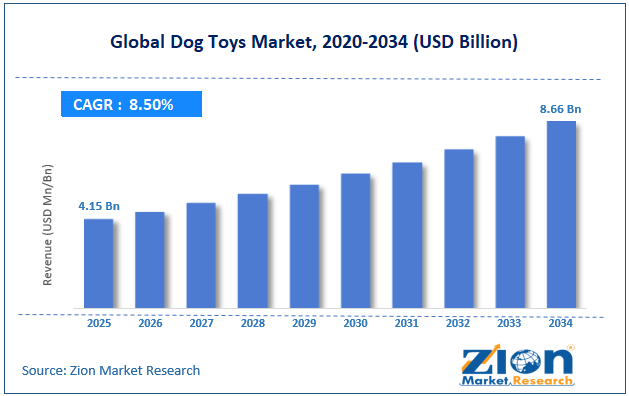
The global dog toys market size was valued at approximately USD 4.15 billion in 2025 and is projected to reach around USD 8.66 billion by 2034, growing at a compound annual growth rate of approximately 8.50% between 2026 and 2034.
Key Insights
- As per the analysis shared by our research team, the global dog toys market is estimated to grow at a compound annual growth rate of approximately 8.50% during the forecast period from 2026 to 2034.
- In terms of revenue, the global dog toys market was valued at approximately USD 4.15 billion in 2025 and is projected to reach USD 8.66 billion by 2034.
- The dog toys market is expected to grow steadily due to rising pet ownership, increased spending on pet well-being, the growing popularity of interactive toys, and the expansion of specialty pet retail worldwide.
- Based on type, chew toys lead the market because of their durability and suitability for daily use, while interactive and puzzle toys are gaining strong attention among owners seeking mental stimulation solutions for their dogs.
- Based on material, natural rubber leads the market due to its toughness and chew resistance. In contrast, eco-friendly and biodegradable materials are the fastest-growing choice among environmentally conscious pet owners.
- Based on end user, household pet owners lead the market as most dog toy purchases are for personal pets at home, while veterinary and pet care centers are growing steadily as more clinics offer enrichment products to clients.
- Based on distribution channel, pet specialty stores account for the largest share due to knowledgeable staff and focused product selection, while online retail platforms are expanding rapidly as more pet owners prefer shopping from home.
- Based on region, North America leads the global dog toys market. At the same time, Asia Pacific is the fastest-growing region, driven by rising pet adoption rates and increasing spending on pet care products.
Dog Toys Market: Overview
A dog toy is a product designed to keep dogs physically active, mentally stimulated, entertained, and engaged while supporting activities such as chewing, playing, training, and exercise. Dog toys range from chew toys and balls to interactive, puzzle, plush, and training toys that help dogs stay active and engaged at home. Chew toys are widely used for puppies and dogs that naturally enjoy biting and chewing, while interactive and puzzle toys are gaining popularity because they help reduce boredom and keep dogs mentally active, especially when owners are away for work. Pet owners are also paying closer attention to toy safety, durability, size, and material quality before buying. This has increased demand for strong toys that can handle heavy chewing without breaking into pieces that dogs could swallow. Online shopping is further supporting the dog toys market by giving owners access to more products, customer reviews, and specialized designs. At the same time, growing environmental awareness is creating interest in natural, non-toxic, recycled, and biodegradable toy materials. Rising pet ownership, higher spending on pet care, and the growing view of dogs as family members are expected to support continued demand for safe, durable, and engaging dog toys worldwide. Increasing product innovation, personalized toy designs, and demand for multifunctional products are also creating new growth opportunities.
Growing demand for safer, durable, interactive, and eco-friendly products is expected to create new opportunities in the global dog toys industry.
Dog Toys Market: Strategic Perspective
Where is the dog toys market heading?
The dog toys market is moving toward products that combine play with mental stimulation, dental care, exercise, and stress relief. Growing demand for puzzle toys, treat-dispensing products, durable chews, interactive designs, and eco-friendly materials is pushing brands to develop safer, more functional options for dogs of different ages, sizes, and activity levels.
Where should businesses invest in the dog toys market?
The dog toys market offers opportunities in durable, non-toxic materials; smart interactive toys; personalized products; and subscription-based toy services. Developing toys for specific needs such as teething, dental care, anxiety relief, and aggressive chewing can meet targeted demand. At the same time, online sales and veterinarian-backed product development can expand customer reach and build trust.
What will reshape competition in the dog toys market?
Changing pet-owner expectations, product innovation, and the expansion of e-commerce will shape the dog toys market. Brands that develop toys for specific breeds, sizes, ages, and behaviors can meet personalized demand. At the same time, transparent product information, reliable quality, attractive designs, and convenient replacement or warranty services can strengthen customer relationships.
Dog Toys Market: Technology Roadmap 2026–2034
What is the projected development roadmap of the dog toys market over the forecast period?
The market is evolving through smarter interactive designs, improved durability testing, wider adoption of sustainable materials, and growing use of technology to keep dogs engaged even when their owners are away. The market is expected to grow at a compound annual growth rate of approximately 8.50% over the forecast period, supported by rising pet humanization trends, increasing disposable incomes, and continuous innovation in toy design and materials.
The following roadmap outlines key development phases expected through 2034.
2026–2028: Durability and Safety Enhancement Phase
- Non-toxic material certification: Manufacturers are expected to place greater emphasis on certifying toys as free from harmful chemicals, giving pet owners more confidence in their purchases.
- Breed-specific and bite-strength-based designs: Companies are likely to introduce toy lines matched to a dog's size, jaw strength, and chewing habits, reducing the risk of toys breaking apart too quickly.
- Dental health-focused toys: Brands are expected to design chew toys that double as dental care tools, helping reduce plaque and tartar buildup during regular play.
2029–2031: Interactive and Enrichment Expansion Phase
- Puzzle and treat-dispensing toy growth: Interactive toys that reward dogs with treats for solving simple puzzles are expected to become increasingly mainstream among owners seeking mental stimulation options.
- Application-connected and remote-play toys: Some manufacturers are likely to introduce toys that owners can control remotely through smartphone applications, allowing interaction even when away from home.
- Personalized and subscription toy services: Companies are expected to expand subscription boxes that deliver toys tailored to a dog's age, size, and play preferences on a regular schedule.
2032–2034: Smart and Sustainable Play Phase
- Advanced eco-manufacturing: Toy production is expected to shift further toward biodegradable materials, recycled fabrics, and reduced plastic packaging.
- Behavior-responsive smart toys: Toys embedded with simple sensors could increasingly adjust their movement or sounds based on how a dog interacts with them, keeping play sessions engaging over time.
- Fully tailored enrichment solutions: Dog toys could increasingly be developed around a dog's individual temperament, energy level, and specific behavioral needs identified by owners or veterinarians.
Dog Toys Market: Dynamics
Growth Drivers
What factors are driving changing pet owner preferences in the dog toys market?
Pet owner preferences are changing as more households treat dogs as family members and seek safer, better-quality products. Many owners now research toy safety before buying, checking whether materials are non-toxic, whether construction can withstand rough play, and whether the toy suits their dog’s size and chewing strength. This careful approach is increasing demand for products with clear safety information, durable designs, and reliable quality. Growing awareness of canine mental well-being is also encouraging owners to choose toys that provide more than entertainment by reducing boredom, anxiety, and destructive behavior. Busy work schedules are further increasing interest in interactive toys that keep dogs occupied and mentally engaged when owners are away. Environmental concerns are also influencing purchases, with some consumers preferring toys made from natural, recycled, or biodegradable materials instead of conventional plastics. Online shopping makes these choices easier by letting owners compare products, read reviews, check durability, and find specialized toys suited to different breeds and play styles. These changing preferences are encouraging manufacturers to focus on safer, smarter, longer-lasting, and more environmentally responsible products for modern pet households.
Premium and specialty products are creating opportunities in the dog toys market.
The dog toys market is creating opportunities through premium products that combine durability, safety, and developmental benefits. Manufacturers are using advanced rubber compounds, reinforced stitching, and natural fibers to create toys that withstand rough play and aggressive chewing. Natural rubber and organic cotton options are gaining attention among pet owners seeking safer, longer-lasting alternatives to conventional synthetic products. Specialty toys for senior dogs, anxious pets, and dogs recovering from injuries are also creating niche opportunities for brands that address specific needs. Subscription services can provide owners with a regular supply of new toys while creating recurring revenue for businesses. Online marketplaces help smaller toy makers reach customers beyond local markets and build broader brand awareness. Extended warranties on chew-resistant products and bundled offers that combine toys with treats or grooming items can further improve customer value. These approaches allow brands to diversify their product ranges, target specific consumer groups, and create additional revenue streams while responding to changing expectations around pet safety, convenience, product quality, and overall well-being.
Restraints
Durability concerns and safety recalls are key challenges limiting growth in the dog toys market.
The dog toys industry faces challenges from inconsistent product durability, rising raw material costs, safety concerns, and increasing sustainability expectations. Aggressive chewers can quickly damage poorly made toys, resulting in customer complaints, returns, and higher costs for manufacturers. Fluctuating prices of rubber, synthetic fibers, and packaging materials can also pressure production costs and product pricing. Pet owners are increasingly concerned about choking risks, toxic substances, and unsafe designs, requiring manufacturers to invest more in testing and quality control. Homemade toys and low-cost alternatives can limit demand for branded products among price-sensitive consumers. Growing concerns about plastic waste are also encouraging businesses to consider recyclable, biodegradable, and longer-lasting materials. Limited access to specialty pet stores in smaller towns can further restrict consumer choices. Manufacturers are responding by strengthening materials, improving safety testing, using clearer labels, expanding retail and online distribution, and developing more environmentally responsible products to build trust and reduce these market barriers.
Opportunities
Will enrichment-focused innovation open new opportunities in the dog toys market?
Growing interest in canine mental stimulation is creating new opportunities in the dog toys industry as pet owners increasingly seek products that support physical activity, mental engagement, and emotional well-being. Puzzle toys, treat-dispensing designs, and scent-based games are helping dogs stay occupied, especially when they spend long hours alone. Advanced rubber and nylon blends with improved durability are supporting premium products for powerful chewers, including owners willing to pay more for toys that last longer. Subscription and toy-rotation services provide regular variety while reducing unnecessary purchases and home clutter. Compact, travel-friendly toys are also gaining attention among owners who frequently travel with their dogs, while larger interactive products remain popular for home use. Online pet stores are enabling regional and boutique brands to reach wider customer groups and showcase specialized products. Growing demand for sustainable and biodegradable materials is attracting environmentally conscious buyers.
Additional opportunities are emerging through size-specific, breed-specific, and behavior-focused toys designed around different chewing habits, activity levels, and developmental needs, giving manufacturers more ways to serve specialized customer preferences. This shift is encouraging innovation in products that combine play, training, exercise, convenience, safety, and lasting value.
Challenges
How are rising costs and safety expectations affecting the dog toys market?
The dog toys market faces challenges from fluctuating raw material prices, stricter safety expectations, and growing concerns about manufacturing practices. Rising costs of rubber, synthetic fibers, and packaging can increase production expenses and make stable pricing difficult. Pet owners are also comparing products based on durability, safety certifications, material quality, and value for money, requiring brands to strengthen testing and quality control. Low-priced generic toys create additional pressure, particularly in price-sensitive regions. Growing awareness of plastic waste is also increasing concerns about toy disposal and environmental impact. Limited retail networks in developing markets can restrict access to safer, higher-quality products, while dependence on imported materials can cause shipping delays and currency-related cost changes. Manufacturers can address these challenges through local sourcing, efficient production, transparent safety information, stronger quality controls, and improved retail partnerships. Developing recyclable or biodegradable products can also help brands address sustainability concerns, strengthen consumer trust, and reduce long-term environmental impact.
Dog Toys Market: Report Scope
| Report Attributes | Report Details |
|---|---|
| Report Name | Dog Toys Market |
| Market Size in 2025 | USD 4.15 Billion |
| Market Forecast in 2034 | USD 8.66 Billion |
| Growth Rate | CAGR of 8.50% |
| Number of Pages | 228 |
| Key Companies Covered | KONG Company, Chuckit!, Nylabone, PetSafe, Outward Hound, West Paw, Hartz Mountain Corporation, Petmate, Ethical Pet, Jax and Bones, and others. |
| Segments Covered | By Type, By Material, By End User, By Distribution Channel, and By Region |
| Regions Covered | North America, Europe, Asia Pacific (APAC), Latin America, Middle East, and Africa (MEA) |
| Base Year | 2025 |
| Historical Year | 2020 - 2024 |
| Forecast Year | 2026 - 2034 |
| Customization Scope | Avail customized purchase options to meet your exact research needs. Request For Customization |
Dog Toys Market: Segmentation
The global dog toys market is segmented by type, material, end user, distribution channel, and region.
What factors are driving the dominance of chew toys in the dog toys market?
Based on type, the global dog toys market is divided into chew toys, plush and soft toys, interactive and puzzle toys, fetch and throw toys, and rope and tug toys. Chew toys hold about 33% of the market share, leading due to their everyday usefulness, durability, and suitability for dogs of nearly every age and breed. Interactive and puzzle toys hold around 22% market share. This segment is gaining strong attention as more pet owners look for products that provide mental stimulation alongside physical play.
What factors support natural rubber's leading position in the dog toys market?
Based on material, the market is classified into natural rubber, plush fabric, nylon and synthetic blends, rope and fiber-based materials, and eco-friendly and biodegradable materials. Natural rubber accounts for about 31% of the global market share, driven by its toughness, chew resistance, and suitability for aggressive chewers. Eco-friendly and biodegradable materials hold around 14% market share. This is the fastest-growing material category as more pet owners look for sustainable, non-toxic play options for their dogs.
Why do household pet owners account for the largest share of demand in the dog toys market?
By end user, the market is segmented into household pet owners, commercial kennels and shelters, and veterinary and pet care centers. Household pet owners lead with about a 71% share, as most dog toy purchases are made directly by individuals for their personal pets at home. Veterinary and pet care centers hold around 15% market share. This segment is growing steadily as more clinics and care facilities offer enrichment products to support recovering or anxious animals.
What factors make pet specialty stores the leading distribution channel in the dog toys market?
By distribution channel, the dog toys industry is categorized into pet specialty stores, online retail platforms, supermarkets and hypermarkets, veterinary clinics, and direct-to-consumer brand stores. Pet specialty stores account for about 36% of the market, leading because of knowledgeable staff, curated product selection, and the ability for customers to physically inspect toy quality before buying. Online retail platforms hold around 27% market share. This channel is expanding rapidly as more pet owners value the convenience of browsing reviews and ordering toys from home.
Dog Toys Market: Regional Analysis
What factors are strengthening North America's position in the dog toys market?
North America is expected to grow at a CAGR of around 5.3% in the dog toys market during the forecast period, supported by strong pet ownership, premium pet care spending, and rising demand for durable, interactive, and wellness-focused products. The United States and Canada offer substantial demand as more households consider dogs family members and spend on premium pet products. Consumers are increasingly choosing durable, non-toxic, interactive, and enrichment-focused toys suited to active lifestyles and busy schedules. Rising disposable incomes are also supporting demand for specialty products and subscription-based toy services instead of basic options. Growing awareness of pet wellness, canine mental health, and the benefits of interactive play is encouraging owners to replace and upgrade toys regularly. Strong veterinary and pet care networks further improve product visibility and can influence purchasing decisions through professional recommendations. Manufacturers are responding by introducing eco-friendly materials, breed-specific designs, chew-resistant products, and toys tailored to different ages and activity levels. The region’s established e-commerce infrastructure is also helping brands reach consumers across wider geographic areas. Continued interest in premium, specialized, sustainable, and multifunctional toys is expected to create additional opportunities for manufacturers and retailers across North America during the forecast period.
How are changing pet ownership trends driving growth in the Asia Pacific dog toys market?
The Asia Pacific dog toys market is expected to grow at a volume CAGR of around 7.1% during the forecast period, supported by rising pet adoption, urbanization, and increasing spending on pet care products. China, India, Japan, and Southeast Asian countries are witnessing growing demand as more young urban households choose dogs as companions. Rising disposable incomes are encouraging owners to purchase toys that offer better durability, safety, and entertainment than basic or homemade alternatives. Growing awareness of canine mental stimulation, exercise, and overall well-being is also influencing buying decisions among new and experienced pet owners. The growing presence of international pet care brands is giving consumers access to a wider range of products and increasing product awareness.
Manufacturers are developing compact toys suited to smaller homes, durable products for active dogs, and affordable options that match regional spending patterns. Retailers are also broadening their offerings across different price ranges to attract diverse consumer groups. Meanwhile, e-commerce platforms are improving access to dog toys beyond major cities, helping brands reach customers in smaller towns and emerging markets. Continued pet humanization, improving household incomes, and expanding online retail are expected to support further regional demand during the forecast period.
Recent Market Developments
- In June 2026, Company of Animals relaunched its Coachi Boomi Ball, a durable dog toy offered in four sizes and positioned around enrichment and behavior-led play, with availability planned across international markets.
- In August 2026, BetterBone expanded its international distribution network into India and China, alongside South Korea, Singapore, and Thailand, to meet demand for safer and more sustainable dog chew products.
- In September 2026, Cheerble launched Wickedbone Air, an app-controlled interactive dog toy featuring automatic and joystick-controlled play, a replaceable E-TPU outer shell, and updated Bluetooth connectivity.
Dog Toys Market: Competitive Analysis
The leading players in the global dog toys market are:
- KONG Company
- Chuckit!
- Nylabone
- PetSafe
- Outward Hound
- West Paw
- Hartz Mountain Corporation
- Petmate
- Ethical Pet
- Jax and Bones
The global dog toys market is segmented as follows:
By Type
- Chew Toys
- Plush and Soft Toys
- Interactive and Puzzle Toys
- Fetch and Throw Toys
- Rope and Tug Toys
By Material
- Natural Rubber
- Plush Fabric
- Nylon and Synthetic Blends
- Rope and Fiber-Based Materials
- Eco-Friendly and Biodegradable Materials
By End User
- Household Pet Owners
- Commercial Kennels and Shelters
- Veterinary and Pet Care Centers
By Distribution Channel
- Pet Specialty Stores
- Online Retail Platforms
- Supermarkets and Hypermarkets
- Veterinary Clinics
- Direct-to-Consumer Brand Stores
By Region
- North America
- The U.S.
- Canada
- Mexico
- Europe
- France
- The UK
- Spain
- Germany
- Italy
- Rest of Europe
- Asia Pacific
- China
- Japan
- India
- Australia
- South Korea
- Rest of Asia Pacific
- The Middle East & Africa
- Saudi Arabia
- UAE
- Egypt
- Kuwait
- South Africa
- Rest of the Middle East & Africa
- Latin America
- Brazil
- Argentina
- Rest of Latin America
Table Of Content
Methodology
FrequentlyAsked Questions
A dog toy is a product designed to keep dogs physically active, mentally stimulated, entertained, and engaged while supporting activities such as chewing, playing, training, and exercise.
The global dog toys market is expected to grow due to rising pet ownership, increasing spending on pet well-being, growing preference for durable, safe materials, and the expansion of specialty pet retail worldwide.
According to research, the global dog toys market was valued at approximately USD 4.15 billion in 2025 and is projected to reach approximately USD 8.66 billion by 2034.
The dog toys market is expected to grow at a compound annual growth rate of approximately 8.50% from 2026 to 2034.
North America is expected to lead the global dog toys market throughout the forecast period, driven by high pet ownership rates, strong spending on pet well-being, and a well-established specialty retail network.
The major players in the global dog toys market include KONG Company, Chuckit!, Nylabone, PetSafe, Outward Hound, West Paw, Hartz Mountain Corporation, Petmate, Ethical Pet, and Jax and Bones.
The report examines key aspects of the dog toys market, including research and development drivers, adoption barriers, application opportunities, competitive landscape dynamics, detailed regional market performance analysis, and a comprehensive forward-looking outlook across all major types, materials, end users, distribution channels, and geographic regions through 2034.
The dog toys market offers opportunities in durable, eco-friendly, interactive, and smart toy development, along with partnerships with pet retailers, e-commerce platforms, veterinarians, and subscription services to expand product reach and recurring sales.
The dog toys market value chain includes raw material sourcing, toy design and development, manufacturing, quality and safety testing, packaging, distribution, retail, and final sales through stores and online platforms.
The dog toys market can see strong opportunities in interactive play, mental stimulation, dental care, training, chewing, anxiety relief, and exercise, particularly through products designed for puppies, senior dogs, aggressive chewers, and different breeds or sizes.

HappyClients

