
Peelable Seal Market Size, Share, Growth, Opportunities 2034

Peelable Seal Market By Product Type (Peelable Lidding Films, Peel & Reseal Films, Easy-Peel Flexible Films and Rigid Peelable Packaging), By End Use (Dairy Packaging, Meat, Poultry & Seafood, Snacks, Bakery & Confectionery, Ready Meals & Frozen Foods, Pharmaceutical & Medical Packaging and Other Consumer & Industrial End-Uses) and By Region - Global and Regional Industry Overview, Market Intelligence, Comprehensive Analysis, Historical Data, and Forecasts 2025 - 2034
| Market Size in 2024 | Market Forecast in 2034 | CAGR (in %) | Base Year |
|---|---|---|---|
| USD 5.4 Billion | USD 9.2 Billion | 5.5% | 2024 |
Peelable Seal Industry Perspective:
What will be the size of the global peelable seal market during the forecast period?
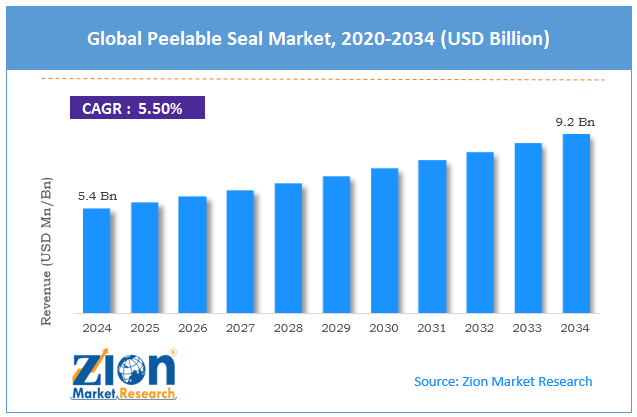
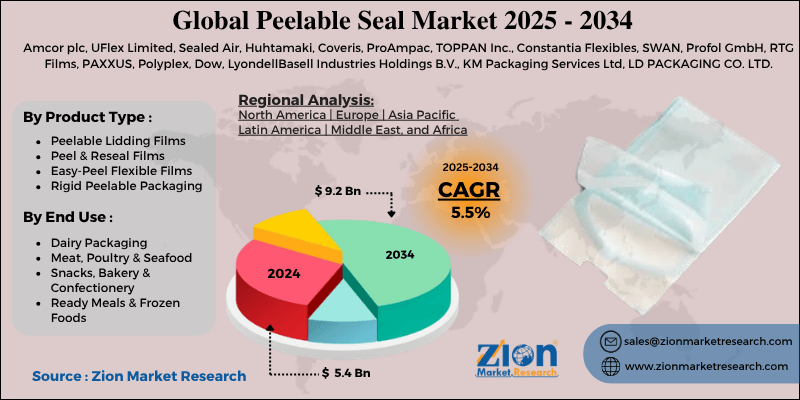
The global peelable seal market size was worth around USD 5.4 billion in 2024 and is predicted to grow to around USD 9.2 billion by 2034 with a compound annual growth rate (CAGR) of roughly 5.5% between 2025 and 2034.
Peelable Seal Market: Overview
Peelable seal is the term for all processes related to the development and application of peelable open packaging systems that allow the packaging to be opened without damaging it or leaving a trace of residue. The number of available peelable seals has grown rapidly and is used for a few products, such as food trays, dairy (e.g., cheese, butter) containers, blister packs for pharmaceutical, healthcare, cosmetic, and various flexible packaging. Peelable seals are a practical solution for providing a closure, preserving freshness, and protecting against pilferage and contamination, while offering maximum ease of use without compromising peel strength. Polymer materials such as PE, PP, and PET are most used in the production of peelable seals, and a variety of peel sealant resins that bond to plastics, aluminum foil, paper, and multi-ply materials.
Key Insights
- As per the analysis shared by our research analyst, the global peelable seal market is estimated to grow annually at a CAGR of around 5.5% over the forecast period (2025-2034).
- In terms of revenue, the global peelable seal market size was valued at around USD 5.4 billion in 2024 and is projected to reach USD 9.2 billion by 2034.
- Increasing focus on food safety and hygiene is expected to propel the peelable seal market over the projected period.
- Based on the product type, the peelable lidding films segment captures the largest market share in 2024 of 38%.
- Based on the end use, the dairy packaging segment dominated the market with a highest revenue share in 2024 of over 28%.
- Based on region, the Asia Pacific captures the largest market share in 2024 of over 37%.
Impact of the USA-Israel War on Iran on the Peelable Seal Market
The war between the USA and Israel over Iran has adversely affected the peelable seal industry through a rise in the prices of raw materials, energy, and transport. The primary raw material for peelable seal manufacture is plastics; the types of plastics used are Polyethylene (PE) and Polypropylene (PP), along with other specialty plastics. The cost of these raw materials has increased substantially due to the rise in crude oil prices as it passes through the Strait of Hormuz. ‘This has caused delays in shipments and an increase in the costs to the freight carriers’, affecting all packaging converters across the globe.
Peelable Seal Market: Dynamics
Growth Drivers
Why does the rising demand for convenient packaging drive the peelable seal market?
Increasing consumer preference for convenient packaging is largely driving the peelable seals market into an upward trajectory. Consumers have an inclination towards packaging that is easy to handle, hygienic, portable, and user-friendly. The advantages of peelable seals include easy access to products, product freshness, product safety, and tamper-proofing. Some products suitable for peelable seal packaging include ready-to-eat meals, dairy products, snack foods, pharmaceuticals, and cosmetic products. Furthermore, rapid urbanization, a hectic lifestyle, and the growing consumption of packaged food products are fueling the use of peelable seal packaging worldwide.
Restraints
High production and material costs hinder the growth of the peelable seal industry
Expensive production and material costs are a key limitation on the expansion of the peelable seal market, owing to the need for complex multi-layer film structures, specialized resins, high-end coatings, and state-of-the-art sealing machinery. Material input costs, such as those for PE, PP, EVA, and other specialty polymers, vary with crude oil prices, thereby increasing production costs. Additionally, manufacturers incur substantial costs for R&D, testing, and compliance to maintain optimal seal strength, safety, and packaging properties. Such high operating and capital costs may inhibit the use of peelable seals by small- to medium-sized packaging firms that favor traditional, less expensive packaging products.
Opportunities
How does the growing product launch offer a lucrative opportunity for the peelable seal market?
The growing product launch is expected to offer a potential opportunity to the peelable seal market over the projected period. For instance, in February 2026, Cosmo Films, a market leader in specialty films, has recently introduced its Sealable Peelable Transparent Anti-Fog BOPET (PET) Lidding Film, which aims to improve product visibility, extend shelf life, and enhance overall packaging performance across refrigerated and fresh foods. Fog or condensation in food packaging is a common problem, especially in cold chain packaging systems, due to fluctuating temperatures that can result in moisture build-up within packages. Fog can impair the visibility of products during the purchase process.
However, Cosmo Films' anti-fog PET lidding film uses an advanced antifog coating that provides excellent antifogging performance in cold-temperature environments, preventing the buildup of droplets. Its design includes several important functional aspects, including a low sealing temperature, which improves energy efficiency and ensures this film works effectively in high-speed packing lines. Moreover, the lidding film is sealable and peelable, allowing tight seals without compromising easy package opening.
Additionally, the film can be used in microwaving without compromising food safety, and it can help extend the shelf life of fresh salads and vegetables by 4-5 days. The lidding film can work with various substrates, including PP, HIPS, PET (APET, CPET), PVC, and LDPE trays. In terms of sustainability, the lidding film can be recycled into the mainstream recycling system if the package consists of PET trays.
Challenges
Why does the technical challenges in seal performance pose a significant challenge to the peelable seal market?
Seal efficiency-related technical issues remain a major constraint on the growth of the peelable seal market, as a peelable seal must balance proper product protection with ease of opening. Changes in the effectiveness of the seal might result in an inability to preserve the product, leading to leakage, contamination, premature opening, or requiring considerable effort to peel. Parameters such as temperature, moisture, pressure, compatibility, and seal composition may affect a seal's efficiency. These challenges are more threatening when considering packaging products such as food, medications, and medical devices that need to remain fresh and sterile.
Peelable Seal Market: Report Scope
| Report Attributes | Report Details |
|---|---|
| Report Name | Peelable Seal Market |
| Market Size in 2024 | USD 5.4 Billion |
| Market Forecast in 2034 | USD 9.2 Billion |
| Growth Rate | CAGR of 5.5% |
| Number of Pages | 227 |
| Key Companies Covered | Amcor plc, UFlex Limited, Sealed Air, Huhtamaki, Coveris, ProAmpac, TOPPAN Inc., Constantia Flexibles, SWAN, Profol GmbH, RTG Films, PAXXUS, Polyplex, Dow, LyondellBasell Industries Holdings B.V., KM Packaging Services Ltd, LD PACKAGING CO. LTD., SystemPAK Ltd., and others. |
| Segments Covered | By Product Type, By End Use, and By Region |
| Regions Covered | North America, Europe, Asia Pacific (APAC), Latin America, Middle East, and Africa (MEA) |
| Base Year | 2024 |
| Historical Year | 2019 - 2023 |
| Forecast Year | 2025 - 2034 |
| Customization Scope | Avail customized purchase options to meet your exact research needs. Request For Customization |
Peelable Seal Market: Segmentation
Product Type Insights
Why does the peelable lidding films dominate the peelable seal market?
The peelable lidding films segment captures the largest market share in 2024 of 38%. Peelable lidding films are thin, flexible films that serve as the outer surface of the container, tray, or cup for food/beverage packaging and pharmaceutical products. Peelable films offer protection against tampering, keep the product fresh, and allow easy removal without ripping the film. Peelable lidding films are popular in products such as yogurt packages, ready meals, and medical trays. For instance, yogurt brands such as Danone and Yoplait use peelable lidding films.
End Use Insights
How does the dairy packaging segment capture the largest market share in the peelable seal market?
The dairy packaging segment dominated the market with a highest revenue share in 2024 of over 28%. Peelable seals are very common in the packaging of dairy products such as yogurt, cream cheese, butter, and other dairy desserts. One such package is yogurt, which features a peelable film on its packaging that provides tamper protection and enhances hygiene and convenience for consumers. Peelable seals have become popular in the dairy industry due to demand for smaller packages, an existing cold-chain logistics network, and consumer demand for hygiene and convenience. Probiotic yogurts and milk drinks are spurring innovations in packaging technology to boost convenience without spillage.
Regional Insights
Why does the Asia Pacific lead the peelable seal market?
The Asia Pacific captures the largest market share in 2024 of over 37%. This optimism results from the presence of a large population, the ongoing urbanization, and the remarkable growth of the food and beverage and pharmaceutical industries in the country. This situation is necessitated by the growing middle class, whose needs require convenience, greater safety, and a longer shelf life. Nations such as China, India, and Japan are major consumers because they produce on an enormous scale. China’s peelable seal market is the largest catalyst for growth in the Asia Pacific region, as it is the world's greatest manufacturing base and consumer market. The nation's “Made in China 2025” plan stresses manufacturing prowess in the packaging of China’s electronic goods, automobiles, and consumables, which will require peelable seal packaging for protection.
Peelable Seal Market: Competitive Analysis
The global peelable seal market is dominated by players like:
- Amcor plc
- UFlex Limited
- Sealed Air
- Huhtamaki
- Coveris
- ProAmpac
- TOPPAN Inc.
- Constantia Flexibles
- SWAN
- Profol GmbH
- RTG Films
- PAXXUS
- Polyplex
- Dow
- LyondellBasell Industries Holdings B.V.
- KM Packaging Services Ltd
- LD PACKAGING CO. LTD.
- SystemPAK Ltd.
The global peelable seal market is segmented as follows:
By Product Type
- Peelable Lidding Films
- Peel & Reseal Films
- Easy-Peel Flexible Films
- Rigid Peelable Packaging
By End Use
- Dairy Packaging
- Meat, Poultry & Seafood
- Snacks, Bakery & Confectionery
- Ready Meals & Frozen Foods
- Pharmaceutical & Medical Packaging
- Other Consumer & Industrial End-Uses
By Region
- North America
- The U.S.
- Canada
- Mexico
- Europe
- France
- The UK
- Spain
- Germany
- Italy
- Rest of Europe
- Asia Pacific
- China
- Japan
- India
- Australia
- South Korea
- Rest of Asia Pacific
- The Middle East & Africa
- Saudi Arabia
- UAE
- Egypt
- Kuwait
- South Africa
- Rest of the Middle East & Africa
- Latin America
- Brazil
- Argentina
- Rest of Latin America
Table Of Content
Methodology
FrequentlyAsked Questions
Peelable seal is the term for all processes related to the development and application of peelable open packaging systems that allow the packaging to be opened without damaging it or leaving a trace of residue.
Key growth drivers for the peelable seal market include rising demand for convenient and easy-open packaging, growing packaged food and pharmaceutical industries, expansion of flexible packaging, increasing focus on food safety and hygiene, and advancements in sustainable packaging technologies.
Major challenges restraining the growth of the peelable seal market include high production and raw material costs, recycling difficulties, technical challenges in seal performance, stringent regulatory requirements, and volatility in petrochemical-based material prices.
Based on the end use, the dairy packaging segment is expected to dominate the peelable seal market growth during the projected period.
Emerging trends and innovations impacting the peelable seal market include the development of recyclable mono-material packaging, bio-based sealant films, smart and tamper-evident packaging technologies, high-barrier easy-peel solutions, and advanced resealable packaging systems designed to enhance sustainability, convenience, and product safety.
According to the report, the global peelable seal market size was worth around USD 5.4 billion in 2024 and is predicted to grow to around USD 9.2 billion by 2034.
The global peelable seal market is expected to grow at a CAGR of 5.5% during the forecast period.
The global peelable seal industry growth is expected to be led by the Asia Pacific over the forecast period.
- The global peelable seal market is dominated by players like Amcor plc, UFlex Limited, Sealed Air, Huhtamaki, Coveris, ProAmpac, TOPPAN Inc., Constantia Flexibles, SWAN, Profol GmbH, RTG Films, PAXXUS, Polyplex, Dow, LyondellBasell Industries Holdings B.V., KM Packaging Services Ltd, LD PACKAGING CO., LTD and SystemPAK Ltd. among others.
The market report covers the geographical market along with a comprehensive competitive landscape analysis. It also includes cash flow analysis, profit ratio analysis, market basket analysis, market attractiveness analysis, sentiment analysis, PESTLE analysis, trend analysis, SWOT analysis, trade area analysis, demand & supply analysis, Porter’s five forces analysis, and value chain analysis.

HappyClients

