
Confinement Center Market Size, Share, Trends, Growth & Forecast 2034

Confinement Center Market By Service Type (Postpartum Care Services, Nutritional Support Services, Infant Care Services, Traditional Therapy Services, Medical Consultation Services, and Others), By End-User (First-Time Mothers, Experienced Mothers, High-Risk Pregnancy Cases, Working Professionals, Elderly Mothers, International Clients), By Facility Type (Luxury Centers, Standard Centers, Hospital-Attached Centers, Home-Based Services), By Pricing Model (Premium Packages, Standard Packages, Basic Packages, Customized Services, Extended Stay Plans), and By Region - Global and Regional Industry Overview, Market Intelligence, Comprehensive Analysis, Historical Data, and Forecasts 2025 - 2034
| Market Size in 2024 | Market Forecast in 2034 | CAGR (in %) | Base Year |
|---|---|---|---|
| USD 6.74 Billion | USD 18.84 Billion | 15.80% | 2024 |
Confinement Center Industry Perspective:
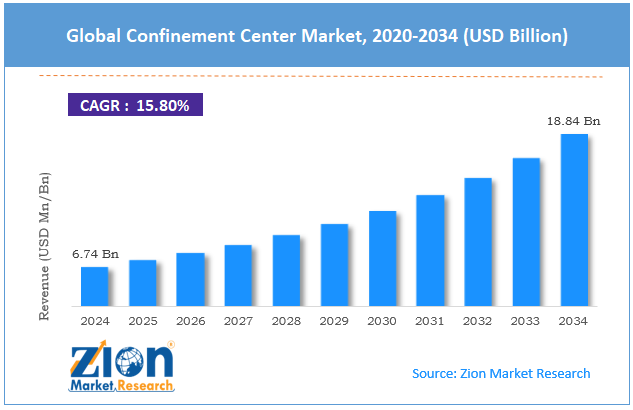
The global confinement center market size was worth approximately USD 6.74 billion in 2024 and is projected to grow to around USD 18.84 billion by 2034, with a compound annual growth rate (CAGR) of roughly 15.80% between 2025 and 2034.
Key Insights
- As per the analysis shared by our research analyst, the global confinement center market is estimated to grow annually at a CAGR of around 15.80% over the forecast period (2025-2034).
- In terms of revenue, the global confinement center market size was valued at approximately USD 6.74 billion in 2024 and is projected to reach USD 18.84 billion by 2034.
- The confinement center market is projected to grow significantly due to the increasing awareness of the importance of postpartum care, rising disposable incomes in developing nations, and the growing number of working mothers seeking professional support during recovery.
- Based on service type, the postpartum care services segment is expected to lead the confinement center market, while the medical consultation services segment is anticipated to experience significant growth.
- Based on end-user, the first-time mothers segment is expected to lead the confinement center market, while the working professionals segment is anticipated to witness notable growth.
- Based on facility type, the standard centers segment is the dominating segment, while the luxury centers segment is projected to witness sizeable revenue over the forecast period.
- Based on the pricing model, the standard packages segment is expected to lead the market compared to the basic packages segment.
- Based on region, Asia Pacific is projected to dominate the global confinement center market during the estimated period, followed by North America.
Confinement Center Market: Overview
Confinement center services are professional postpartum care programs designed to support mothers and newborns during the early recovery period after childbirth. These centers provide nursing assistance, traditional healing therapies, nutritious meal plans, infant care guidance, and emotional support in a calm and safe environment. Trained caregivers observe a mother’s physical recovery, help her learn breastfeeding techniques, and teach essential newborn care skills to build confidence. Specially prepared meals promote healing, improve milk supply, and restore energy after the physical demands of pregnancy and delivery. Many centers offer traditional practices such as massage, herbal baths, and gentle binding methods to ease discomfort and encourage natural recovery. Modern facilities combine cultural traditions with medical supervision to offer safe, structured care. Mothers receive regular health checkups, comfortable private rooms, and assistance with nighttime infant care to improve their rest. Educational sessions explain feeding patterns, sleep routines, early development signs, and common health concerns. Growing awareness of postpartum support encourages families across diverse regions to choose confinement center services.
The growing recognition of postpartum mental health and physical recovery needs is expected to drive growth in the confinement center market throughout the forecast period.
Confinement Center Market Dynamics
Growth Drivers
How are changing family structures and urbanization driving the confinement center market growth?
The confinement center market is growing quickly because modern family life and urban living conditions create many new difficulties for postpartum recovery and daily care. Nuclear families in cities often lack extended relatives who offered support for newborn care and guidance for new mothers in earlier generations. Young parents who move for work live far from elders who previously provided practical help during the first weeks after childbirth. Small apartments in cities make it difficult to host visiting relatives who could assist with newborn care and household work. Working mothers return to professional duties sooner, which makes recovery difficult without dependable postpartum support at home.
Dual-income households also struggle because partners cannot take long leave periods to help with the constant newborn needs. Many new parents lack experience with infant care because they grew up with fewer siblings and limited exposure to caregiving routines. Urban lifestyles involve busy schedules, emotional strain, financial pressure, and limited support, so confinement centers offer safe and reliable care.
Increasing awareness about postpartum health and recovery
The global confinement center market is growing steadily, as medical research underscores the importance of proper postpartum care for mothers and infants during the early recovery period. Scientific studies highlight how good rest, balanced nutrition, and professional guidance during the first weeks after delivery reduce postpartum complications and support long-term health. Healthcare providers emphasize the need for strong postpartum attention, yet many expectant parents enter recovery with limited preparation or clear instructions. Prenatal classes and online platforms offer simple explanations of recovery needs, which help families understand essential postpartum routines.
Awareness of postpartum depression has increased, encouraging parents to seek environments with emotional support and reduced stress. Research on breastfeeding also strengthens interest in professional help, especially when mothers face common feeding difficulties during the early days. Studies on infant development underline the importance of proper sleep, nutrition, and responsive care during the newborn stage. Growing concern about complications such as infections and blood pressure issues supports demand for monitored postpartum environments.
Restraints
High costs create accessibility barriers for many families
A major challenge for the confinement center market is the high cost of services, which makes professional postpartum care difficult for many families with limited budgets. Standard packages often require several thousand dollars, while luxury centers charge higher fees for private rooms and personalized support during recovery. Recommended stays of two to six weeks increase overall expenses because daily rates accumulate quickly over extended periods.
Extra charges for medical consultations, traditional therapies, and additional family accommodations also raise total costs beyond basic package prices. Insurance plans in many regions offer limited support because confinement centers are viewed as wellness services instead of essential medical care. Families must rely on personal savings or credit during a period filled with new baby-related expenses and reduced income. Rising living costs, loan payments, and household bills add pressure and limit spending power during early parenthood. Cultural expectations in some communities create stress for parents who feel social pressure to choose expensive care. Limited mid-range options and seasonal price increases further restrict access for many families.
Opportunities
How is the expansion into diverse demographic segments creating new opportunities for the confinement center industry?
The confinement center industry is experiencing strong growth opportunities as services expand to support diverse families with specialized postpartum needs and unique recovery situations. International medical tourism brings families from regions without established services to countries with trusted centers offering skilled care and high-quality support. Luxury segments create demand for premium facilities offering spacious rooms, gourmet meals, spa treatments, and personal attention during early recovery periods. Specialized care programs for caesarean mothers provide longer support for healing and assistance with movement limitations after surgery.
Services for parents of multiples help families handle the challenges of caring for more than one newborn during physically demanding recovery periods. Postpartum programs for mothers with medical issues offer safe environments with enhanced monitoring and coordination with healthcare providers. Mental health support programs include counseling sessions, calming activities, and group discussions for mothers needing emotional care during recovery. Cultural and religious accommodations support families with specific dietary preferences and personal practices. Inclusive services support diverse family structures with thoughtful and respectful postpartum care.
Challenges
How are quality control and standardization issues affecting the credibility of the confinement center market?
The confinement center industry faces several obstacles because service quality, safety practices, and regulatory systems vary widely across regions, creating confusion for families. Some facilities offer excellent care, while others struggle with weak staff training, poor hygiene, and limited knowledge of essential postpartum support skills. Missing government oversight in many areas allows unqualified operators to open centers without meeting proper standards for medical care or caregiver credentials.
Inconsistent training also leads to mistakes when staff handle infant care, breastfeeding guidance, or early signs of health concerns during recovery. Language gaps create communication difficulties between caregivers and mothers in busy cities with diverse populations and international clients. High staff turnover reduces overall care quality because new workers often replace experienced caregivers without proper preparation.
Limited medical oversight in some centers increases the risk when health concerns go unaddressed. Past food safety issues, overcrowded rooms, unclear pricing, cultural misunderstandings, and exaggerated marketing claims add further challenges for families seeking dependable postpartum care.
Confinement Center Market: Report Scope
| Report Attributes | Report Details |
|---|---|
| Report Name | Confinement Center Market |
| Market Size in 2024 | USD 6.74 Billion |
| Market Forecast in 2034 | USD 18.84 Billion |
| Growth Rate | CAGR of 15.80% |
| Number of Pages | 213 |
| Key Companies Covered | PEM Confinement Nanny Agency, Thomson Medical Group, Paradise Confinement Center, Allure Post Natal Center, NannySOS Confinement Agency, Fernwood Confinement Center, Confinement Angels, Sweet Pea Confinement Center, Mandarin Confinement Center, Jia Yue Confinement Nanny Agency, and others. |
| Segments Covered | By Service Type, By End User, By Facility Type, By Pricing Model, and By Region |
| Regions Covered | North America, Europe, Asia Pacific (APAC), Latin America, Middle East, and Africa (MEA) |
| Base Year | 2024 |
| Historical Year | 2019 to 2023 |
| Forecast Year | 2025 - 2034 |
| Customization Scope | Avail customized purchase options to meet your exact research needs. Request For Customization |
Confinement Center Market: Segmentation
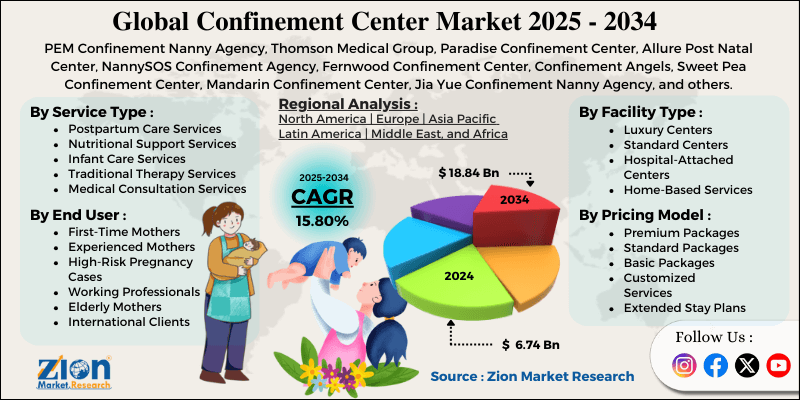
The global confinement center market is segmented based on service type, end-user, facility type, pricing model, and region.
Based on service type, the global confinement center industry is segregated into postpartum care services, nutritional support services, infant care services, traditional therapy services, medical consultation services, and others. Postpartum care services lead the market due to the fundamental importance of maternal physical recovery, and the primary reason most families seek professional confinement center assistance.
Based on end-user, the industry is segmented into first-time mothers, experienced mothers, high-risk pregnancy cases, working professionals, elderly mothers, and international clients. First-time mothers lead the market due to their lack of previous experience with newborn care and higher anxiety levels about infant health and development.
Based on facility type, the global confinement center market is classified into luxury centers, standard centers, hospital-attached centers, and home-based services. Standard centers are expected to lead the market during the forecast period due to their balance of quality care and reasonable pricing, accessibility for middle-income families, and provision of essential services without the premium costs of luxury facilities.
Based on the pricing model, the global market is divided into premium packages, standard packages, basic packages, customized services, and extended stay plans. Standard packages hold the largest market share due to their inclusion of core services most families require, and predictable pricing that facilitates budgeting.
Confinement Center Market: Regional Analysis
What factors are contributing to the Asia Pacific's dominance in the global confinement center market?
Asia Pacific is the leading region in the confinement center market because the concept of structured postpartum recovery has deep cultural roots and strong acceptance across many countries. Traditional practices emphasizing rest, nutrition, healing therapies, and maternal support have existed in this region for centuries, creating a natural foundation for modern confinement center development. China is the largest and most influential market, supported by rising incomes, rapid urbanization, an aging population, and widespread belief in guided postpartum recovery for long-term health. Singapore, Malaysia, Taiwan, and Hong Kong also maintain highly developed and regulated confinement service ecosystems with modern medical standards, strong hygiene systems, and diverse care programs.
Many centers in these countries combine traditional healing principles with professional nursing care, lactation support, infant monitoring, and personalized nutrition planning, making services appealing to both domestic and international clients. Asia Pacific also benefits from government initiatives supporting maternal and infant health, investment in private healthcare infrastructure, and increasing awareness of postpartum depression and anxiety. The region’s growing middle class shows a strong willingness to spend on high-quality postpartum care, while premium facilities with private suites, medical-grade equipment, and advanced security systems serve affluent clients seeking elevated comfort.
Medical tourism contributes additional growth as families from neighboring countries travel to well-known centers for reliable postpartum care. Overall, strong cultural support, economic expansion, and continuous healthcare investment position the Asia Pacific as the most dominant and mature region in the global confinement center market.
North America is experiencing significant growth.
North America is the second-leading region in the confinement center market because awareness of postpartum health needs is rising quickly, and demand is expanding among diverse population groups. Many families recognize the importance of structured postpartum care as healthcare providers highlight recovery risks, mental health issues, breastfeeding difficulties, and the need for early maternal support. The United States shows strong growth in cities with large Asian immigrant populations, where traditional confinement customs remain important and create steady demand for culturally aligned services. These families seek specialized centers offering appropriate dietary programs, language-friendly environments, and recovery methods similar to those practiced in their home countries.
The limited length of parental leave in the United States increases demand for intensive postpartum support during the brief recovery period available. High healthcare costs and short hospital stays also lead families to seek professional guidance after discharge, especially when dealing with infant feeding, sleep routines, or post-delivery complications. The wellness industry has further normalized investment in personal health services, making postpartum care more acceptable to mainstream populations.
Growing awareness of postpartum depression and anxiety encourages families to choose supervised recovery environments where emotional support, counseling services, and monitoring systems are available. Canada also contributes significantly to market expansion, especially in cities such as Toronto and Vancouver, where multicultural communities actively support the use of confinement care practices. These trends collectively strengthen North America’s position as a rapidly growing and influential secondary region in the global confinement center market.
Recent Market Developments
- In May 2025, Thomson Medical Group opened a new women’s clinic at i12 Katong in Singapore, offering pregnancy and postpartum support services.
Confinement Center Market: Competitive Analysis
The leading players in the global confinement center market are:
- PEM Confinement Nanny Agency
- Thomson Medical Group
- Paradise Confinement Center
- Allure Post Natal Center
- NannySOS Confinement Agency
- Fernwood Confinement Center
- Confinement Angels
- Sweet Pea Confinement Center
- Mandarin Confinement Center
- Jia Yue Confinement Nanny Agency
The global confinement center market is segmented as follows:
By Service Type
- Postpartum Care Services
- Nutritional Support Services
- Infant Care Services
- Traditional Therapy Services
- Medical Consultation Services
- Others
By End User
- First-Time Mothers
- Experienced Mothers
- High-Risk Pregnancy Cases
- Working Professionals
- Elderly Mothers
- International Clients
By Facility Type
- Luxury Centers
- Standard Centers
- Hospital-Attached Centers
- Home-Based Services
By Pricing Model
- Premium Packages
- Standard Packages
- Basic Packages
- Customized Services
- Extended Stay Plans
By Region
- North America
- The U.S.
- Canada
- Europe
- France
- The UK
- Spain
- Germany
- Italy
- Rest of Europe
- Asia Pacific
- China
- Japan
- India
- South Korea
- Southeast Asia
- Rest of Asia Pacific
- Latin America
- Brazil
- Mexico
- Rest of Latin America
- Middle East & Africa
- GCC
- South Africa
- Rest of Middle East & Africa
Table Of Content
Methodology
FrequentlyAsked Questions

HappyClients

