
Global Organic Coconut Water Market Size, Share, Trends, Value, and Forecast 2032

Organic Coconut Water Market By Form (Powder and Liquid), By Flavors (Aloe Vera, Coffee, Grape, Pear, White Grape, Mango, Pineapple, and Others), By Packaging (Bottles, Tetra Packs, and Others), By Distribution Channel (Supermarket & Hypermarket, Online, and Others): Global Industry Perspective, Comprehensive Analysis and Forecast, 2024 - 2032
| Market Size in 2023 | Market Forecast in 2032 | CAGR (in %) | Base Year |
|---|---|---|---|
| USD 6.91 Billion | USD 11.68 Billion | 6% | 2023 |
What is Organic Coconut Water Market Size?
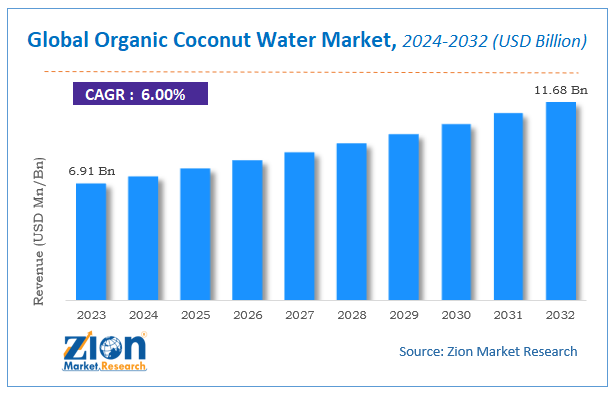
According to a report from Zion Market Research, the global Organic Coconut Water Market was valued at USD 6.91 Billion in 2023 and is projected to hit USD 11.68 Billion by 2032, with a compound annual growth rate (CAGR) of 6% during the forecast period 2024-2032. This report explores market strengths, weakness, opportunities, and threats. It also provides valuable insights into the market's growth drivers, challenges, and the future prospects that may emerge in the Organic Coconut Water Market industry over the next decade.
Organic Coconut Water Market Overview
Coconut water has risen in its properties across the world in recent years. The rising demand for coconut water can be attributed primarily to its hydrating and refreshing properties. The main difference between regular coconut water and organic coconut water is that organic water contains lower chemicals. Moreover, other characteristics such as the presence of better taste, antioxidants, and micronutrient content could shift the demand of conventional soft drinks to organic coconut water.
Key Insights
- As per the analysis shared by our research analyst, the global organic coconut water market is estimated to grow annually at a CAGR of around 6.0% over the forecast period (2024-2032).
- In terms of revenue, the global organic coconut water market size was valued at around USD 6.91 billion in 2023 and is projected to reach USD 11.68 billion by 2032.
- The organic coconut water market is driven by expanding consumer adoption of clean-label functional beverages and plant-based electrolyte sources over sugary soft drinks.
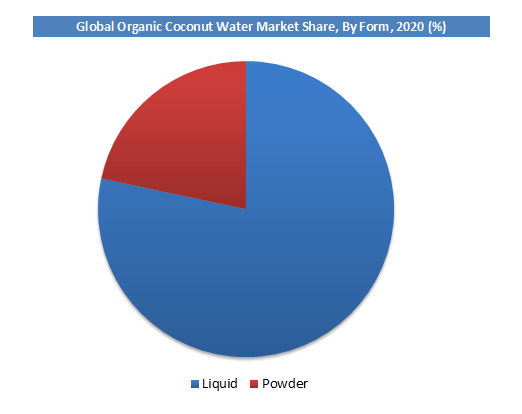
- Based on form segmentation, the liquid segment dominates the global market with the largest market share because ready-to-drink formats provide immediate convenience, optimal hydration, and superior organoleptic freshness.
- Based on flavors segmentation, the others segment, comprising unflavored pure organic coconut water, commands the largest market share because purist consumers prioritize natural authentic taste with zero added sugars or flavorings.
- Based on packaging segmentation, the tetra packs segment dominated the global market with over 40% revenue share because multi-layer aseptic barrier packaging ensures prolonged ambient shelf life and superior microbial safety.
- Based on distribution channel segmentation, the supermarket & hypermarket segment commands the dominant revenue share because of massive footfall, broad shelf displays, and one-stop grocery accessibility for premium organic goods.
- Based on regional analysis, North America commands the market with the largest revenue share because of a dense base of health-conscious consumers, expansive organized retail networks, and high per capita expenditure on organic beverages.
Market Dynamics
Growth Drivers
How is the shift toward clean-label and functional hydration fueling market expansion?
The modern beverage landscape is experiencing a definitive transformation as consumers actively scrutinize ingredient declarations and reject formulations containing synthetic sweeteners, chemical preservatives, and artificial colorants. Organic coconut water satisfies these dietary standards, offering an isotonic electrolyte composition rich in potassium, sodium, and magnesium that restores physiological hydration naturally. This nutritional alignment has made it a preferred hydration beverage among fitness practitioners, athletes, and health-conscious households seeking natural alternatives to conventional carbonated sodas and chemical sports drinks.
Furthermore, the rapid rise of veganism, vegetarianism, and flexitarian lifestyles worldwide has accelerated the consumption of plant-derived foods and beverages. Modern consumers view organic coconut water not merely as a thirst-quenching drink, but as an indispensable wellness beverage offering digestive support, cardiovascular protection via cholesterol modulation, and natural antioxidant defense against oxidative stress. As organized supermarket networks, specialty health retailers, and direct-to-consumer e-commerce channels expand worldwide distribution, consumer access has increased substantially, driving continuous upward market momentum.
Restraints
What challenges do elevated retail pricing and raw material procurement pose to market growth?
A primary restraint impeding broader market penetration is the pronounced price premium of organic coconut water relative to standard conventional coconut water and generic non-alcoholic beverages. Acquiring and sustaining certified organic agricultural status entails rigorous compliance frameworks, specialized non-chemical farming methods, costly third-party audits, and recurrent verification fees. These structural expenditures, coupled with the capital demands of specialized aseptic preservation, inflate retail shelf prices, discouraging price-sensitive demographics across emerging and cost-conscious economies.
In addition, global sourcing remains exposed to agricultural and logistical vulnerabilities. Certified organic coconut plantations are concentrated in specific tropical developing nations, leaving the international supply chain vulnerable to climatic disturbances, erratic monsoon seasons, crop diseases, and fluctuating sea-freight expenses. Because raw coconut water is prone to rapid enzymatic oxidation, delays in processing or distribution compromise flavor and physical purity, presenting consistent operational bottlenecks for manufacturers operating across regional boundaries.
Opportunities
How can innovative flavor fusions and powder formulations unlock new commercial frontiers?
While pure coconut water maintains a dedicated consumer following, flavor fatigue among certain demographic groups presents a major growth opportunity for product diversification. Commercial processors are investing in hybrid functional beverage portfolios that infuse organic coconut water with botanical extracts and fruit purees, such as mango, pineapple, aloe vera, coffee, and pear. These flavor combinations attract mainstream consumers who may otherwise dislike the earthy mineral notes of pure coconut water, broadening brand appeal across younger consumer demographics.
Simultaneously, the development of freeze-dried and spray-dried organic coconut water powders represents an expanding avenue of product innovation. Concentrated powders eliminate the shipping weights and cold-chain dependencies of liquid consignments, lowering carbon emissions and transport expenditures. Powder formats integrate seamlessly into sports supplements, portable travel hydration packets, nutraceutical mixes, and baking premixes, creating new opportunities in fitness nutrition and functional culinary applications.
Challenges
What obstacles emerge from short product shelf life and strict cold-chain dependencies?
Preserving the natural biochemical integrity, sensitive enzymes, and delicate flavor notes of organic coconut water without adding chemical preservatives poses an enduring processing challenge. Upon opening or harvesting from the coconut shell, unpasteurized coconut liquid degrades rapidly under environmental light, ambient air, and warm temperatures, inducing microbial fermentation and color discoloration. While processing technologies like High-Pressure Processing (HPP) and flash-pasteurization preserve nutrients, they require substantial capital expenditure, creating barriers for emerging organic startups.
Compounding this difficulty is the necessity for an unbroken, reliable refrigerated cold chain from tropical production hubs to urban consumer markets. Developing regions frequently face deficient cold-storage warehousing and uneven refrigerated logistics, leading to inventory spoilage and inconsistent batch quality. Securing durable, multi-layered, environmentally compliant packaging that guards against UV degradation and atmospheric oxygen while adhering to consumer demands for recyclable materials adds further operational complexity.
Organic Coconut Water Market: Report Scope
| Report Attributes | Report Details |
|---|---|
| Report Name | Organic Coconut Water Market |
| Market Size in 2023 | USD 6.91 Billion |
| Market Forecast in 2032 | USD 11.68 Billion |
| Growth Rate | CAGR of 6% |
| Number of Pages | 110 |
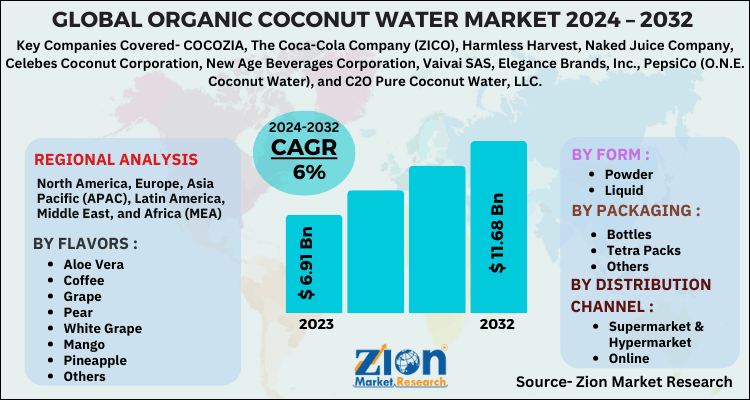
| Key Companies Covered | COCOZIA, The Coca-Cola Company (ZICO), Harmless Harvest, Naked Juice Company, Celebes Coconut Corporation, New Age Beverages Corporation, Vaivai SAS, Elegance Brands, Inc., PepsiCo (O.N.E. Coconut Water), and C2O Pure Coconut Water, LLC |
| Segments Covered | By Form, By Flavors, By Packaging, By Distribution Channel and By Region |
| Regions Covered | North America, Europe, Asia Pacific (APAC), Latin America, Middle East, and Africa (MEA) |
| Base Year | 2023 |
| Historical Year | 2018 - 2022 |
| Forecast Year | 2024 - 2032 |
| Customization Scope | Avail customized purchase options to meet your exact research needs. Request For Customization |
Organic Coconut Water Market: Segmentation Analysis
The organic coconut water market is segmented by form, flavors, packaging, distribution channel, and region.
Based on Form Segment, the organic coconut water market is divided into powder and liquid. The liquid segment represents the most dominant category, capturing the vast majority of overall sales due to consumer preference for ready-to-drink convenience and fresh taste profiles. Liquid formulations allow consumers to access natural hydration immediately after purchase without requiring dissolution or preparation. The powder form stands as the second most dominant and fastest-evolving segment, gaining momentum among fitness enthusiasts and outdoor travelers who seek lightweight, shelf-stable, and portable electrolyte mixes that eliminate the volume and shipping burdens associated with bottled liquids.
Based on Flavors Segment, the organic coconut water market is divided into aloe vera, coffee, grape, pear, white grape, mango, pineapple, and others. The others segment, driven primarily by unflavored, pure organic coconut water, stands as the most dominant category because health-conscious buyers prioritize pure hydration free of supplementary sugars, artificial blends, or masking agents. Pineapple and mango-infused varieties jointly comprise the second most dominant subsegment, as tropical fruit infusions effectively mask earthy coconut aftertastes, attracting mainstream beverage drinkers and children who prefer familiar sweet profiles.
Based on Packaging Segment, the organic coconut water market is divided into bottles, tetra packs, and others. The tetra packs subsegment holds the most dominant position, accounting for over 40% of the overall market revenue due to its multi-layered aseptic composition that blocks external pathogens, light, and ambient air to deliver extended shelf life without chemical preservatives. Bottles, fabricated from recyclable PET and premium glass materials, constitute the second most dominant packaging format, widely appreciated by urban commuters and gym-goers for their re-sealable screw caps, durable rigidity, and visual product transparency.
Based on Distribution Channel Segment, the organic coconut water market is divided into supermarket & hypermarket, online, and others. The supermarket & hypermarket segment commands the dominant revenue share because these organized physical retail stores offer extensive product displays, immediate availability, reliable refrigerated sections, and promotional pricing. The online retail channel serves as the second most dominant and fastest-growing segment, propelled by expanding home-delivery logistics, recurring subscription wellness models, and 24/7 shopping convenience that appeals strongly to younger demographics.
Organic Coconut Water Market: Regional Analysis
Why will North America continue to dominate the global market during the projection period?
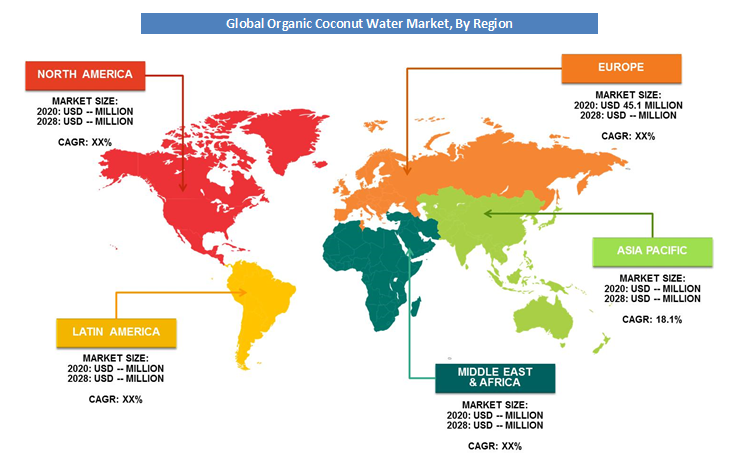
North America stands as the commanding force in the global organic coconut water market and is poised to maintain its market leadership throughout the projection timeframe. This regional hegemony is driven predominantly by the United States and Canada, where health literacy, active fitness lifestyles, and disposable incomes have generated an expansive demand for clean-label, plant-based hydration products. Consumers across this region routinely replace high-fructose corn syrup sodas and artificially colored sports drinks with certified organic coconut water to fulfill daily hydration and post-exercise recovery needs. Furthermore, deep penetration across established supermarket chains, specialty grocery stores, fitness centers, and e-commerce platforms ensures immediate product visibility and broad accessibility. Market expansion is further supported by leading beverage companies actively innovating flavor varieties and securing dedicated supply partnerships with certified tropical farms, keeping North America at the forefront of industry growth and product innovation.
Europe occupies a prominent position within the global industry landscape, marked by strict regulatory oversight from food safety authorities that encourages consumer trust in organic labeling. Western European nations, led by Germany, the United Kingdom, and France, exhibit strong preferences for ethically sourced, environmentally responsible, and zero-additive beverages. Retailers in the region increasingly require brands to adopt sustainable packaging, such as FSC-certified aseptic cartons and post-consumer recycled plastics. As plant-based and vegan diets expand across European metropolitan areas, organic coconut water consumption continues to establish itself as a regular dietary staple across wellness and hospitality sectors.
The Asia Pacific region functions as both the primary agricultural production engine and one of the fastest-growing consumer marketplaces for coconut water. Tropical countries including the Philippines, Indonesia, Thailand, Sri Lanka, and India cultivate the majority of the world's coconut supply, giving regional packagers direct access to raw materials and minimizing long-distance supply chain friction. As economic development, urban migration, and health awareness rise across emerging hubs like China, India, and Southeast Asia, domestic consumer demand for packaged, certified organic beverages is expanding rapidly. Consumers in these markets are progressively pivoting away from roadside unpasteurized coconut purchases toward branded, hygienic, aseptic packaging options, providing substantial growth momentum for established and regional brands.
Latin America represents an integral territory in the global coconut trade, supported by large-scale agricultural output and processing infrastructure centered in Brazil. The region enjoys a deeply rooted cultural tradition of consuming fresh coconut water for hydration, which provides a strong baseline for packaged organic alternatives. Rising disposable household incomes and the development of organized supermarket infrastructure are transforming localized consumption into modern commercial demand. Furthermore, regional processors are expanding export channels to North American and European buyers, attracting foreign direct investment and upgrades in certified organic farming standards.
The Middle East and Africa region is emerging as a high-potential frontier, driven by hot climate conditions, growing investments in retail infrastructure, and a rising awareness of metabolic health. In affluent Gulf Cooperation Council (GCC) economies such as the United Arab Emirates and Saudi Arabia, high purchasing power and a substantial expatriate population are accelerating demand for functional, premium imported organic drinks. Consumers in the region show an increasing preference for hygienically sealed, branded aseptic cartons over traditional drinks to navigate elevated daytime temperatures. Although cold-chain infrastructure across parts of the African continent remains developing, modernization of urban retail outlets and digital grocery platforms is steadily expanding market reach.
Recent Developments
- In August 2019, Vita Coco introduced a sparkling coconut water beverage designed to offer consumers a natural, low-calorie alternative to sugary carbonated sodas.
- In August 2020, Elegance Brands, Inc. expanded its functional wellness beverage catalog by rolling out new coconut-based functional product lines to capitalize on surging clean-label beverage demand.
- In January 2022, Harmless Harvest expanded its plant-based organic portfolio by releasing innovative multi-serve and single-serve flavored organic coconut waters, focusing on regenerative agricultural partnerships and cold-filtered processing techniques.
- In June 2023, The Coca-Cola Company optimized its production and distribution systems for the ZICO brand across key international target channels to support the increasing global adoption of premium hydration beverages.
Key Market Players & Competitive Landscape
Some of the key players in the organic coconut water market are COCOZIA, The Coca-Cola Company (ZICO), Harmless Harvest, Naked Juice Company, Celebes Coconut Corporation, New Age Beverages Corporation, Vaivai SAS, Elegance Brands, Inc., PepsiCo (O.N.E. Coconut Water), and C2O Pure Coconut Water, LLC, among others. Industry players are focusing on strategies such as joint ventures and new product development to gain a competitive advantage.
For instance, in 2019 August, a new product was launched by Vita Coco “sparkling coconut water” a substitute for sugary beverages. In 2020 August, Elegance Brands, Inc. and KC Distributing came into a strategic partnership which means KC Distributing can only sell Elegance’s products for 12 months.
Organic Coconut Water Market: Competitive Analysis
The global Organic Coconut Water market is dominated by players like:
- COCOZIA
- The Coca-Cola Company (ZICO)
- Harmless Harvest
- Naked Juice Company
- Celebes Coconut Corporation
- New Age Beverages Corporation
- Vaivai SAS
- Elegance Brands, Inc
- PepsiCo (O.N.E. Coconut Water)
- C2O Pure Coconut Water, LLC
The global organic coconut water market is segmented as follows:
By Form
- Powder
- Liquid
By Flavors
- Aloe Vera
- Coffee
- Grape
- Pear
- White Grape
- Mango
- Pineapple
- Others
By Packaging
- Bottles
- Tetra Packs
- Others
By Distribution Channel
- Supermarket & Hypermarket
- Online
- Others
By Region
- North America
- The U.S.
- Canada
- Mexico
- Europe
- France
- The UK
- Spain
- Germany
- Italy
- Rest of Europe
- Asia Pacific
- China
- Japan
- India
- Australia
- South Korea
- Rest of Asia Pacific
- The Middle East & Africa
- Saudi Arabia
- UAE
- Egypt
- Kuwait
- South Africa
- Rest of the Middle East & Africa
- Latin America
- Brazil
- Argentina
- Rest of Latin America
Table Of Content
Methodology
FrequentlyAsked Questions
Organic coconut water is the clear, naturally refreshing fluid sourced from the interior of young green coconuts cultivated entirely without synthetic fertilizers, chemical pesticides, or genetically modified organisms. It is naturally packed with critical electrolytes like potassium and magnesium, providing physiological hydration while remaining free of added preservatives and artificial additives.
The primary growth drivers include rising global consumer interest in natural, clean-label functional beverages, expanding adoption of plant-based and vegan lifestyles, and a broader consumer shift away from sugary carbonated soft drinks toward naturally hydrating options rich in micronutrients and electrolytes.
The global organic coconut water market size was valued at USD 6.91 billion in 2023 and is projected to reach USD 11.68 billion by 2032.
The market is anticipated to expand at a compound annual growth rate (CAGR) of 6.0% between 2024 and 2032.
The market faces notable headwinds from the price premium associated with certified organic cultivation and processing, alongside logistical complexities surrounding rapid natural oxidation, short unpreserved shelf lives, and dependencies on refrigerated cold chains.
Key trends include the development of hybrid functional formulations incorporating botanicals and fruit infusions, freeze-dried soluble hydration powders, and the transition toward sustainable packaging formats such as FSC-certified cartons and post-consumer recycled containers.
The industry value chain encompasses certified organic coconut farming and harvesting, raw liquid extraction, filtration, thermal or high-pressure aseptic processing, sustainable packaging assembly, warehousing, cold-chain transport, and wholesale/retail distribution to end-use consumers.
North America commands the largest market share and will continue to contribute heavily to overall market revenue, followed by Europe and the rapidly expanding Asia Pacific consumer market.
COCOZIA, The Coca-Cola Company (ZICO), Harmless Harvest, Naked Juice Company, Celebes Coconut Corporation, New Age Beverages Corporation, Vaivai SAS, Elegance Brands, Inc., PepsiCo (O.N.E. Coconut Water), and C2O Pure Coconut Water, LLC.

HappyClients

