
Maritime Tourism Market Size, Growth, Global Trends, Forecast 2034

Maritime Tourism Market By Type (Cruise Tourism, Yacht and Sailing Tourism, Ferry and Coastal Tourism, Marine Adventure Tourism), By Application (Leisure and Recreation, Corporate and Business Travel, Educational and Research Voyages, Wedding and Event Cruising), By End-User (Individual Travelers, Travel Agencies and Tour Operators, Corporate Clients, Educational Institutions), By Booking Channel (Online Travel Platforms, Travel Agents, Direct Cruise Line Bookings, Mobile Applications), and By Region - Global and Regional Industry Overview, Market Intelligence, Comprehensive Analysis, Historical Data, and Forecasts 2026 - 2034
| Market Size in 2025 | Market Forecast in 2034 | CAGR (in %) | Base Year |
|---|---|---|---|
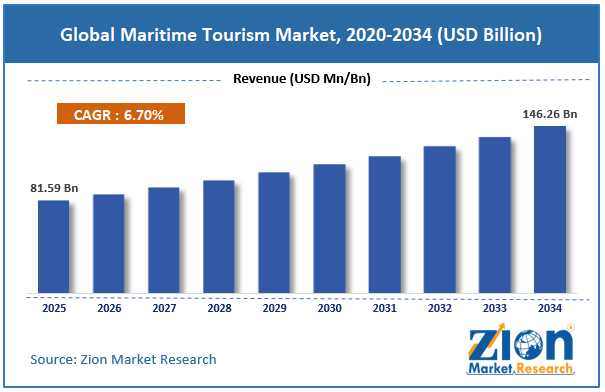
| USD 81.59 Billion | USD 146.26 Billion | 6.70% | 2025 |
Maritime Tourism Industry Perspective:
What will be the size of the maritime tourism market during the forecast period?
The global maritime tourism market size was valued at approximately USD 81.59 billion in 2026 and is projected to reach around USD 146.26 billion by 2034, growing at a compound annual growth rate of approximately 6.70% between 2026 and 2034.
Key Insights
- As per the analysis shared by our research team, the global maritime tourism market is estimated to grow at a compound annual growth rate of approximately 6.70% during the forecast period from 2026 to 2034.
- In terms of revenue, the global maritime tourism market was valued at approximately USD 81.59 billion in 2026 and is projected to reach USD 146.26 billion by 2034.
- The maritime tourism market is expected to grow strongly due to rising travel budgets, increasing popularity of cruise vacations, growing preference for experiential travel, and expanding investment in modern vessel fleets.
- Based on type, cruise tourism leads the market because of its wide destination coverage and all-inclusive vacation appeal, while marine adventure tourism is gaining strong momentum as one of the fastest-growing segments among younger and adventure-seeking travelers.
- Based on application, leisure and recreation leads the market due to the strong consumer demand for relaxing sea-based vacations. At the same time, wedding and event cruising is the fastest-growing segment as more couples and organizers choose unique onboard celebrations.
- Based on end user, individual travelers lead the market due to rising personal travel spending and growing interest in independent trip planning, while corporate clients are steadily growing as more companies choose cruises and yacht charters for team events and incentive travel.
- Based on booking channel, online travel platforms lead the market because of their convenience and wide range of comparison options. At the same time, mobile applications are the fastest-growing channel as more travelers prefer booking and managing trips directly from their phones.
- Based on region, Europe leads the global maritime tourism market. At the same time, the Asia Pacific is the fastest-growing region due to rising middle-class travel spending and expanding cruise port infrastructure.
Maritime Tourism Market: Overview
Maritime tourism is travel and leisure activities that take place on or around seas, oceans, rivers, and other large water bodies. It includes cruise trips, yacht and sailing tours, ferry journeys, coastal trips, and marine adventures such as diving, fishing, sailing, and wildlife watching. Travelers choose maritime tourism to enjoy scenic views, relax, explore different destinations, and experience unique activities on the water. A major advantage of maritime tourism is that travelers can visit several destinations during one trip without repeatedly packing and unpacking. Cruise ships and other vessels also offer accommodation, dining, entertainment, and recreational activities, making travel convenient and enjoyable. The maritime tourism market is growing due to rising disposable incomes, increasing interest in experiential and adventure travel, and improvements in vessel comfort and safety. Cruise companies, yacht operators, and ferry services are expanding their offerings to meet changing traveler preferences. Affordable packages, luxury experiences, and diverse coastal destinations are attracting travelers across different age groups and budgets, further increasing demand for maritime tourism worldwide.
The maritime tourism industry continues to expand as travelers and tourism companies work together to create safer, more comfortable, and more exciting sea-based travel experiences around the world.
Maritime Tourism Market: Strategic Perspective
How is the maritime tourism market evolving?
The maritime tourism market is moving from simply providing transportation to offering complete travel experiences. Travelers now care about visiting different destinations, personalized services, and convenience throughout their journey. Future growth is expected to depend more on improving the overall travel experience, from booking to leaving the vessel, rather than only increasing the number of ships or routes.
Which areas offer the strongest investment potential in the maritime tourism market?
The strongest investment opportunities in the maritime tourism market are expected in technologies and services that make trip planning easier, allow travelers to customize their itineraries, and improve onboard experiences. Growing demand for personalized and memorable vacations is likely to increase investment in digital booking platforms, customized excursions, and better hospitality services.
How is the competitive landscape of the maritime tourism market expected to change?
Competition in the maritime tourism market is expected to focus on more than fleet size and the number of destinations served. Companies are likely to compete through better vessels, sustainable operations, digital travel planning, and stronger partnerships with ports and local businesses. Travelers are increasingly looking for convenient, personalized, and environmentally responsible sea travel experiences.
Maritime Tourism Market: Technology Roadmap 2026–2034
What is the projected development roadmap of the maritime tourism market over the forecast period?
The maritime tourism market is advancing through improved vessel design, more efficient booking technology, expanded onboard entertainment options, and growing use of personalized travel planning tools, making sea-based vacations more comfortable and accessible for travelers. The market is expected to grow at a compound annual growth rate of approximately 6.70% over the forecast period, driven by accelerating tourism investment, developing port infrastructure, and continuous refinement of vessel and hospitality technology.
The following roadmap outlines key development phases expected through 2034.
2026–2028: Recovery and Infrastructure Expansion Phase
- Tourism operators are expected to identify new coastal and island destinations that allow itineraries to reach a wider range of travelers, including regions that have been underexplored by traditional cruise routes.
- Stricter global safety and environmental standards are expected to encourage cruise lines and ferry operators to improve vessel maintenance processes, helping ensure maritime journeys are both safe and comfortable for passengers.
- Growing collaboration between tourism boards, port authorities, and travel companies is expected to speed up the development of new maritime tourism routes and shore excursion packages.
2029–2031: Personalization and Premium Experience Phase
- Advanced booking platforms are expected to become more widely used, helping travelers customize their itineraries with greater flexibility, fewer planning hassles, and more manageable costs.
- The growing use of combination packages, where maritime tourism trips are paired with land-based excursions, is expected to improve satisfaction for travelers seeking more complete vacation experiences.
- Improved onboard technology is expected to help travelers plan activities more easily, supporting more personalized cruise and yacht vacation experiences.
2032–2034: Next Generation Sea Travel Phase
- Maritime tourism vessels are expected to become more refined, with designs aimed at reducing environmental impact while improving comfort and the overall quality of the onboard experience for travelers.
- Smaller and more specialized vessels are expected to support the growing demand for trips that can be tailored closely to each traveler's specific interests and preferences.
- New technologies combining maritime tourism with real-time travel assistance tools are expected to help travelers track itineraries closely, improving convenience and trip adjustments during the journey.
Maritime Tourism Market: Dynamics
Growth Drivers
What is driving growth in the maritime tourism market as demand for sea-based travel experiences rises?
The maritime tourism market is growing as more travelers look for relaxing and memorable sea-based vacations. Rising demand for cruise trips, frequent travel, and better vessel comfort is supporting market growth worldwide. Maritime tourism allows travelers to visit multiple destinations while enjoying onboard accommodation, dining, entertainment, and other services, making travel more convenient. These experiences are popular for leisure vacations, corporate trips, educational tours, weddings, and special events. Cruise lines and yacht companies are launching new vessels and expanding routes to attract more travelers. They are also investing in comfortable ships, modern technology, and improved onboard facilities to enhance the travel experience. Travel agencies are promoting maritime tourism packages to meet changing customer preferences and encourage repeat bookings.
At the same time, rising travel spending and growing awareness of cruise vacations and other sea-based experiences are creating new opportunities for the market. Growing interest in personalized itineraries, sustainable travel, and unique coastal experiences is also encouraging companies to expand their maritime tourism offerings.
The growing demand for experiential and memorable travel is driving the maritime tourism market.
The maritime tourism market is creating strong growth opportunities as travelers increasingly look for unique and memorable vacation experiences. These trips combine transportation, accommodation, dining, and entertainment in one journey, allowing travelers to enjoy different destinations and activities without making separate travel arrangements. This convenience can make vacations easier, more enjoyable, and less tiring. Travel agencies, cruise lines, and tour operators are expanding maritime tourism packages because of their growing popularity for leisure, celebrations, and adventure travel. Companies are also introducing new marine activities across coastal and island destinations, creating more choices for travelers and new opportunities for market growth. Expanding cruise routes and improvements in vessel design are further increasing travel options worldwide.
At the same time, investments in port infrastructure, digital booking platforms, and tourism facilities are supporting market development. Governments and private companies are also investing in coastal tourism projects to attract more visitors and strengthen local economies. As more travelers become aware of sea-based vacation options, the market is expected to maintain steady demand and achieve long-term growth during the forecast period across regions.
Restraints
Why are high operational costs and environmental regulations challenging the maritime tourism market?
The maritime tourism industry faces several restraints that can limit its growth and wider adoption. High operating costs are a major concern because cruise ships, yachts, and ferries require large amounts of fuel, regular maintenance, safety equipment, and trained crews. Environmental rules also create pressure on operators to control emissions, manage waste, and reduce pollution, which can increase costs and require costly vessel upgrades. Limited port infrastructure in developing coastal regions can make it difficult to add new routes or serve more travelers.
Weather conditions, rough seas, and seasonal changes can also disrupt sailing schedules and affect tourist demand. Another restraint is the shortage of skilled maritime and hospitality workers needed to operate large tourism vessels safely and efficiently. Maritime tourism also faces competition from hotels, resorts, road trips, and air travel packages that may offer travelers greater flexibility. These factors can increase ticket prices and reduce affordability for some travelers. Addressing these restraints through cleaner technologies, better infrastructure, workforce training, and efficient operations will be important for the industry's long-term growth.
Opportunities
Will expanding destination options and emerging markets drive growth opportunities in the maritime tourism industry?
The maritime tourism market offers strong growth opportunities as cruise lines, travel agencies, and tour operators develop more diverse sea-based travel experiences. These trips are popular for leisure vacations, corporate retreats, weddings, celebrations, and special events because they combine scenic travel with comfortable accommodation, dining, and entertainment. This makes it easier for travelers to visit multiple destinations without managing separate travel arrangements. Companies are also expanding maritime tourism into educational voyages, wildlife tours, diving, sailing, and other marine adventure activities, creating new market opportunities.
Rising interest in experiential travel is encouraging businesses to offer more specialized and personalized maritime tourism packages. Emerging destinations in Southeast Asia, the Middle East, and Africa are investing in ports, coastal facilities, and tourism promotion, helping attract more visitors. Cruise and yacht companies are also improving vessel technology, safety features, onboard services, and digital booking systems to provide better travel experiences. New routes and vessel launches are giving tourists more destination choices. Rising travel spending, better tourism infrastructure, and growing awareness of sea-based vacations are expected to support steady market growth throughout the forecast period.
Challenges
Maritime tourism market faces challenges in sustaining growth and achieving widespread adoption.
The maritime tourism industry faces several challenges that may slow its growth. Operating large tourism vessels requires high fuel and maintenance costs, advanced safety equipment, and trained crews, making it difficult for smaller companies to compete. Strict maritime safety approvals also require vessels to meet safety and reliability standards before new routes can begin, which can delay expansion. Different regulations across countries can further increase the time and cost of developing new routes. The industry also needs more trained maritime officers, hospitality workers, and port staff to support growing tourism activities. Companies must maintain reliable supplies of fuel, spare parts, and vessel technology to prevent service disruptions. Maritime tourism also competes with land-based resorts, hotels, and air travel packages that offer alternative vacation options. Despite these challenges, improvements in vessel technology, stronger partnerships between tourism boards and travel companies, and increasing investment in coastal infrastructure are expected to support the long-term growth of the market worldwide.
Maritime Tourism Market: Report Scope
| Report Attributes | Report Details |
|---|---|
| Report Name | Maritime Tourism Market |
| Market Size in 2025 | USD 81.59 Billion |
| Market Forecast in 2034 | USD 146.26 Billion |
| Growth Rate | CAGR of 6.70% |
| Number of Pages | 227 |
| Key Companies Covered | Royal Caribbean Group, Carnival Corporation, MSC Cruises, Norwegian Cruise Line Holdings, Disney Cruise Line, Princess Cruises, Costa Crociere, Viking Cruises, Star Cruises, Celebrity Cruises, and others. |
| Segments Covered | By Type, By Application, By End-User, By Booking Channel, and By Region |
| Regions Covered | North America, Europe, Asia Pacific (APAC), Latin America, Middle East, and Africa (MEA) |
| Base Year | 2025 |
| Historical Year | 2020 - 2024 |
| Forecast Year | 2026 - 2034 |
| Customization Scope | Avail customized purchase options to meet your exact research needs. Request For Customization |
Maritime Tourism Market: Segmentation
The global maritime tourism market is segmented by type, application, end-user, booking channel, and region.
What makes cruise tourism the dominant type in the maritime tourism market?
Based on type, the global maritime tourism market is segregated into cruise tourism, yacht and sailing tourism, ferry and coastal tourism, and marine adventure tourism. Cruise tourism holds about 43% of the market share, leading due to its wide destination coverage, all-inclusive pricing, and strong appeal among families and older travelers. Marine adventure tourism holds around 21% market share. It is the fastest-growing segment because of its strong appeal among younger travelers seeking active and unique sea-based experiences.
How does leisure and recreation application maintain its leading position in the maritime tourism market?
Based on application, the maritime tourism industry is divided into leisure and recreation, corporate and business travel, educational and research voyages, and wedding and event cruising. Leisure and recreation accounts for approximately 40% of the global market share, driven by the well-established popularity of relaxing sea-based vacations among travelers of all ages. Wedding and event cruising holds around 18% market share. It is the fastest-growing segment due to expanding interest in unique onboard celebration venues.
What makes individual travelers the dominant end-users in the maritime tourism market?
Based on end-user, the market is classified into individual travelers, travel agencies and tour operators, corporate clients, and educational institutions. Individual travelers lead with about a 46% share because of rising personal travel budgets and growing interest in independent trip planning. Corporate clients hold around 22% market share. They are growing steadily as more businesses choose maritime experiences for meetings, retreats, and incentive travel programs.
How does the online travel platform booking channel shape the trip planning landscape of the maritime tourism market?
Based on the booking channel, the maritime tourism market is categorized into online travel platforms, travel agents, direct cruise line bookings, and mobile applications. Online travel platforms account for about 37% of the market, leading because they offer travelers convenient price comparison and a wide range of itinerary options. Mobile applications hold around 24% market share. They are supported by the growing preference among travelers for planning and managing trips directly from their smartphones.
Maritime Tourism Market: Regional Analysis
Why is Europe leading the global maritime tourism market?
The European maritime tourism market leads the global market and is expected to grow at a CAGR of around 7.4% during the forecast period. This strong position is supported by the region’s long coastline, well-developed cruise ports, and wide range of maritime tourism activities. Italy leads the regional market because of its scenic coastal cities, strong cruise infrastructure, and high demand for Mediterranean Sea travel. The country has several popular cruise departure points and yacht charter destinations. Rising international tourist arrivals, growing interest in coastal vacations, and increasing themed cruise itineraries are supporting market growth. Spain is also expanding through higher tourism investment, improved port facilities, and growing maritime festivals and events. Greece and Croatia continue to attract travelers interested in island hopping, sailing, and coastal experiences.
France is also becoming a growing market due to better port infrastructure, easier access to coastal destinations, and rising interest in luxury yacht tourism. Government support, tourism promotion, and investment in travel infrastructure are further strengthening the regional market. Growing interest in sustainable tourism, better traveler experiences, and diverse maritime activities is expected to support the long-term growth of the Europe maritime tourism market across the region and attract more international travelers annually.
What makes Asia Pacific the fastest-growing region in the maritime tourism market?
The Asia Pacific maritime tourism market is one of the fastest-growing regional markets and is expected to grow at a CAGR of around 9.8% during the forecast period. This growth is supported by a large and growing middle-class population, expanding cruise port infrastructure, and government efforts to make sea-based tourism more accessible. China leads the regional market due to its growing domestic cruise industry, rising travel demand, and strong support for coastal tourism. Japan is another major market, supported by advanced ports, high-quality hospitality services, and new themed cruise experiences. Singapore is also growing as a major regional cruise hub, supported by modern terminal facilities and strong tourism infrastructure. Vietnam offers significant opportunities because of its scenic coastline, improving tourism facilities, expanding hospitality industry, and growing access to sea-based travel. Thailand, Indonesia, and the Philippines are also supporting regional growth through rising tourism spending and better access to island and coastal destinations.
Increasing demand for affordable cruise vacations, new travel routes, and continued investment in port infrastructure are driving the market. Government support, tourism promotion, and improved travel facilities are expected to support the long-term growth of the Asia Pacific maritime tourism market.
Recent Market Developments
- In June 2026, Royal Caribbean International unveiled Legend of the Seas in Málaga, Spain, ahead of its European debut in July. The new vessel is expected to strengthen cruise tourism by offering travelers expanded onboard experiences and access to Mediterranean destinations.
- In June 2026, The Ritz-Carlton Yacht Collection made its first visit to Vancouver with Luminara, beginning a new annual Alaska itinerary. The vessel is scheduled to make nine calls at Vancouver’s Canada Place terminal during 2026, supporting the growth of luxury yacht and cruise tourism in the region.
- In July 2026, MSC Cruises launched its Digital Remote Check-In service in Seattle for Alaska cruises, allowing passengers to complete check-in procedures before reaching the cruise terminal. The company plans to expand the technology to additional ports, improving convenience and the overall maritime tourism experience.
Maritime Tourism Market: Competitive Analysis
The leading players in the global maritime tourism market are:
- Royal Caribbean Group
- Carnival Corporation
- MSC Cruises
- Norwegian Cruise Line Holdings
- Disney Cruise Line
- Princess Cruises
- Costa Crociere
- Viking Cruises
- Star Cruises
- Celebrity Cruises
The global maritime tourism market is segmented as follows:
By Type
- Cruise Tourism
- Yacht and Sailing Tourism
- Ferry and Coastal Tourism
- Marine Adventure Tourism
By Application
- Leisure and Recreation
- Corporate and Business Travel
- Educational and Research Voyages
- Wedding and Event Cruising
By End-User
- Individual Travelers
- Travel Agencies and Tour Operators
- Corporate Clients
- Educational Institutions
By Booking Channel
- Online Travel Platforms
- Travel Agents
- Direct Cruise Line Bookings
- Mobile Applications
By Region
- North America
- The U.S.
- Canada
- Mexico
- Europe
- France
- The UK
- Spain
- Germany
- Italy
- Rest of Europe
- Asia Pacific
- China
- Japan
- India
- Australia
- South Korea
- Rest of Asia Pacific
- The Middle East & Africa
- Saudi Arabia
- UAE
- Egypt
- Kuwait
- South Africa
- Rest of the Middle East & Africa
- Latin America
- Brazil
- Argentina
- Rest of Latin America
Table Of Content
Methodology
FrequentlyAsked Questions
Maritime tourism is travel and leisure activities that take place on or around seas, oceans, rivers, and other large water bodies. It includes cruise trips, yacht and sailing tours, ferry journeys, coastal trips, and marine adventures such as diving, fishing, sailing, and wildlife watching.
The global maritime tourism market is expected to grow due to rising travel budgets, increasing popularity of cruise vacations, growing demand for experiential travel, and expanding investment in vessel and port infrastructure worldwide.
According to research, the global maritime tourism market was valued at approximately USD 81.59 billion in 2026 and is projected to reach approximately USD 146.26 billion by 2034.
The compound annual growth rate of the maritime tourism market is expected to be approximately 6.70% from 2026 to 2034.
Europe is expected to lead the global maritime tourism market throughout the forecast period, driven by its extensive coastline, strong cruise port infrastructure, and significant investment in tourism development.
The major players in the global maritime tourism market include Royal Caribbean Group, Carnival Corporation, MSC Cruises, Norwegian Cruise Line Holdings, Disney Cruise Line, Princess Cruises, Costa Crociere, Viking Cruises, Star Cruises, and Celebrity Cruises.
The report examines key aspects of the maritime tourism market, including growth drivers, adoption barriers, application opportunities, competitive landscape dynamics, detailed regional market performance analysis, and a comprehensive forward-looking outlook across all major types, applications, end-user segments, booking channels, and geographic regions through 2034.
The maritime tourism market offers opportunities in cruise services, yacht charters, port development, digital booking, coastal tourism, marine activities, and sustainable travel through strategic partnerships.
The maritime tourism market value chain includes destination planning, vessel manufacturing and procurement, port services, travel booking, transportation, shore excursions, hospitality services, and customer support. Each stage contributes to delivering a complete sea-based travel experience.
The maritime tourism market is shifting toward personalized, sustainable, and experience-focused travel. Travelers increasingly prefer unique destinations, luxury services, adventure activities, digital booking, flexible itineraries, and environmentally responsible options, encouraging operators to improve onboard experiences and introduce more customized tourism packages.

HappyClients

