
High Purity Alumina Market Size, Growth, Global Trends, Forecast 2034

High Purity Alumina Market By Product (4N, 5N, and 6N), By Application (LED, Semiconductor, Phosphor, Sapphire, Lithium-ion Batteries, and Others), By End-Use Industry (Consumer Electronics, Automotive, Aerospace and Defense, Healthcare and Medical Devices, Telecommunications, Energy and Power, Industrial Manufacturing, and Others), and By Region - Global and Regional Industry Overview, Market Intelligence, Comprehensive Analysis, Historical Data, and Forecasts 2025 - 2034
| Market Size in 2024 | Market Forecast in 2034 | CAGR (in %) | Base Year |
|---|---|---|---|
| USD 4.60 Billion | USD 11.49 Billion | 12.12% | 2024 |
High Purity Alumina Industry Perspective:
What will be the size of the global high purity alumina market during the forecast period?
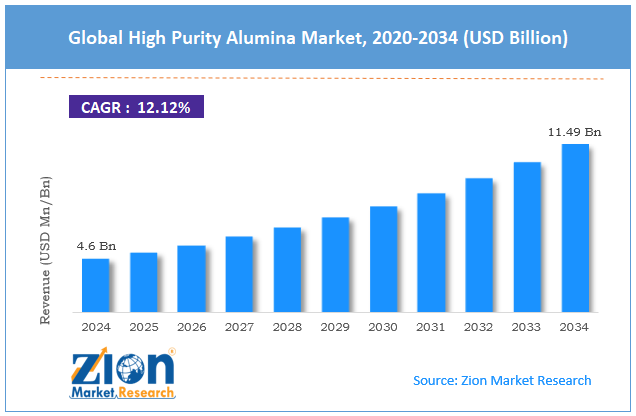
The global high purity alumina market size was around USD 4.60 billion in 2024 and is projected to reach USD 11.49 billion by 2034, with a compound annual growth rate (CAGR) of roughly 12.12% between 2025 and 2034.
This report provides a comprehensive analysis of the growth drivers, restraints, and challenges shaping demand across the global high purity alumina market throughout the forecast period, while highlighting high-potential emerging opportunities within the industry.
Key Insights:
- As per the analysis shared by our research analyst, the global high purity alumina market is estimated to grow annually at a CAGR of around 12.12% over the forecast period (2025-2034)
- In terms of revenue, the global high purity alumina market was valued at approximately USD 4.60 billion in 2024 and is projected to reach USD 11.49 billion by 2034.
- The high purity alumina market is projected to grow significantly owing to the expansion of electric vehicles, the increasing use in semiconductor substrates, and the growth of consumer electronics.
- Based on product, the 4N segment is expected to lead the market, while the 5N segment is expected to grow considerably.
- Based on application, the LED segment is the dominating segment, while the lithium-ion batteries segment is projected to witness sizeable revenue over the forecast period.
- Based on end-use industry, the consumer electronics segment is expected to lead the market, followed by the automotive segment.
- Based on region, Asia Pacific is projected to dominate the global market during the estimated period, followed by North America.
High Purity Alumina Market: Overview
High-purity alumina is aluminum oxide (Al₂O₃) refined to extremely high levels, typically 99.99% (4N) or higher, thereby increasing its suitability for advanced technological applications. It is produced using processes such as hydrochloric acid leaching, hydrolysis of aluminum alkoxides, or modified Bayer processes, which promise a controlled crystal structure and minimal impurities. The global high purity alumina market is poised to expand rapidly, driven by rising demand for LED lighting, growth in electric vehicle production, and expanding semiconductor manufacturing. High-purity alumina is a major material used in sapphire substrates for LED lighting systems. Government regulations promoting LED use and the worldwide shift toward energy-efficient lighting solutions primarily drive HPA consumption. LEDs currently hold the leading application segments for HPA worldwide.
Moreover, electric vehicles need lithium-ion batteries with ceramic-coated separators that integrate high-purity alumina. The rapid growth of electric vehicle manufacturing worldwide is driving demand for advanced battery materials. This trend remarkably fuels long-term HPA market growth. Semiconductor fabrication needs ultra-pure materials to maintain high wafer quality and lower contamination. HPA is widely used in components and semiconductor substrates that require enhanced chemical and thermal stability. The growth of worldwide semiconductor production supports industry growth.
Despite growth, the global market is constrained by factors such as energy-intensive manufacturing processes and volatility in raw material prices. HPA production involves energy-intensive refining, chemical processing, and calcination. High energy consumption raises the carbon footprint and operational expenses. This factor may limit the profitability and scalability of production. Likewise, variations in feedstock prices, such as bauxite and aluminum compounds, affect production economics. Supply chain disturbances or price instability may increase manufacturing costs. This volatility creates uncertainty for investors and producers.
Nonetheless, the global high-purity alumina industry stands to benefit from several key opportunities, such as growth in EV battery manufacturing and rising demand for energy storage systems. The rapid growth of EV battery gigafactories worldwide offers a key opportunity for HPA producers. Ceramic-coated separators using HPA improve thermal stability and safety. Growing EV adoption will continue to drive demand for battery-grade HPA. Additionally, large-scale energy storage systems are becoming increasingly crucial for integrating renewable energy. The lithium-ion battery technologies used in these systems require HPA coatings to enhance safety. Growth in grid storage infrastructure creates long-term market prospects.
High Purity Alumina Market: Dynamics
Growth Drivers
How is the rapid expansion of high-purity alumina production capacity driving the market?
Major investments and capacity expansions are driving the worldwide market, with more than 80 projects announced between 2023 and 2025, including several that will double current production. Companies and governments are investing in advanced refining solutions to secure supplies of materials for semiconductors, LEDs, and lithium-ion batteries. New large-scale refineries are improving efficiency and backing the industry’s long-term growth.
How is the high purity alumina market fueled by the growth in semiconductor and advanced electronics manufacturing?
HPA is vital in semiconductor fabrication, advanced electronics, and optical components because of its thermal stability and high purity. Ultra-high-purity grades (5N and above) are widely used in EUV lithography and dielectric layers in chip manufacturing. Demand for 5N HPA in semiconductor applications surged by nearly 29% in 2024, fueled by growing chip production. The growth of AI computing, high-performance electronics production, and data centers further underscores the need for ultra-pure HPA, making the semiconductor industry a major driver of the high purity alumina market.
Restraints
Limited availability of high-quality raw materials slows down the market progress
High-purity alumina production mainly depends on high-grade bauxite or aluminum hydroxide feedstock. The availability of such raw material is limited and concentrated in some regions worldwide. Supply constraints may lead to higher procurement costs and shortages of raw materials for manufacturers. Moreover, variations in bauxite mining output directly impact HPA supply stability. These limitations create uncertainty in the upstream supply chain and limit industry expansion.
Opportunities
How does the development of next-generation energy technologies present favorable prospects for the expansion of the high purity alumina market?
Beyond lithium-ion batteries, HPA is being explored for advanced energy storage technologies like hydrogen fuel cells and solid-state batteries. Research shows that HPA coatings can enhance electrolyzer efficacy by nearly 30% in some hydrogen systems. These technologies are expected to become commercially viable in the near future. As the worldwide energy transition accelerates, demand for advanced ceramic materials will increase. This ranks HPA as a vital material for future energy infrastructure, positively impacting the high purity alumina industry.
Challenges
Competition from alternative materials limits the market growth
Although HPA has unique properties, some applications may shift toward alternative materials that offer similar functionality at a lower cost. Materials such as alternative coatings or advanced ceramics may compete with HPA in some industrial applications. Cost-sensitive sectors may switch to alternatives when HPA prices rise sharply. Continuous material innovation also creates competitive pressure for the industry. This competition poses a long-term challenge to maintaining global market share.
High Purity Alumina Market: Segmentation
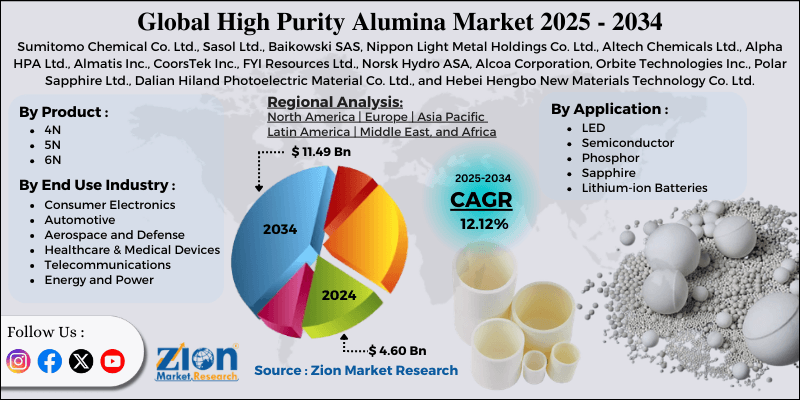
The global high purity alumina market is segmented based on product, application, end-use industry, and region.
Why is the 4N segment projected to dominate the high purity alumina market?
Based on product, the global high purity alumina industry is divided into 4N, 5N, and 6N. The 4N segment holds a dominant market share of 43%, primarily used in lithium-ion battery separators, LED substrates, and electronic components. Its balance of cost efficiency and high purity makes it well-suited for large-scale industrial applications. Growing demand from consumer electronics and EV industries continues to support the industry's leadership.
The 5N segment ranks second in the market with a 30% share. It is used in sapphire glass, semiconductors, and high-performance LEDs. Ultra-low impurity levels are vital for precision applications such as optical devices and micro-LEDs. Growing semiconductor demand and advanced electronics production drive its rapid growth.
What factors are driving the LED segment to lead the high purity alumina market?
Based on application, the global high purity alumina market is segmented into LED, semiconductor, phosphor, sapphire, lithium-ion batteries, and others. The LED segment leads the market with 40% market share, since HPA is extensively used in sapphire substrates for LED chips. Its electrical insulation and thermal stability increase its suitability for high-efficiency lighting and display technologies. The rise in energy-efficient lighting and global LED adoption continues to fuel demand in this segment.
Conversely, the lithium-ion segment holds nearly 30% market share, second only to the LED segment. It is mainly used in ceramic-coated separators that improve thermal performance and battery safety. The growing adoption of electric vehicles and energy storage systems drives demand for battery-grade HPA. Investments in renewable energy and EV technologies are projected to continue to expand in this segment.
What are the key reasons for the leadership of the Consumer Electronics segment in the high purity alumina market?
Based on end-use industry, the global market is segmented into consumer electronics, automotive, aerospace and defense, healthcare and medical devices, telecommunications, energy and power, industrial manufacturing, and others. The consumer electronics segment accounts for 40% of the total market, driven by its use in smartphone screens, LED displays, and optical components. Durability and high purity increase its demand for high-performance and scratch-resistant electronics. Continuous growth in wearables, smartphones, and premium devices sustains its industry dominance.
However, the automotive segment ranks second at 25% market share, primarily driven by lithium-ion battery separators in EVs. Growing EV production and the shift toward energy-efficient vehicles drive demand for battery-grade HPA. The growth of EV infrastructure and energy storage systems further supports growth in the segment.
High Purity Alumina Market: Report Scope
| Report Attributes | Report Details |
|---|---|
| Report Name | High Purity Alumina Market |
| Market Size in 2024 | USD 4.60 Billion |
| Market Forecast in 2034 | USD 11.49 Billion |
| Growth Rate | CAGR of 12.12% |
| Number of Pages | 225 |
| Key Companies Covered | Sumitomo Chemical Co. Ltd., Sasol Ltd., Baikowski SAS, Nippon Light Metal Holdings Co. Ltd., Altech Chemicals Ltd., Alpha HPA Ltd., Almatis Inc., CoorsTek Inc., FYI Resources Ltd., Norsk Hydro ASA, Alcoa Corporation, Orbite Technologies Inc., Polar Sapphire Ltd., Dalian Hiland Photoelectric Material Co. Ltd., and Hebei Hengbo New Materials Technology Co. Ltd., and others. |
| Segments Covered | By Product, By Application, By End Use Industry, and By Region |
| Regions Covered | North America, Europe, Asia Pacific (APAC), Latin America, Middle East, and Africa (MEA) |
| Base Year | 2024 |
| Historical Year | 2019 to 2023 |
| Forecast Year | 2025 - 2034 |
| Customization Scope | Avail customized purchase options to meet your exact research needs. Request For Customization |
High Purity Alumina Market: Regional Analysis
Why is Asia Pacific outperforming other regions in the global high purity alumina market?
Asia Pacific is anticipated to retain its leading role in the global high purity alumina market, with a 13.5% CAGR, driven by the rapid growth of consumer electronics, the expansion of electric vehicle production, and leadership in semiconductor manufacturing. Asia Pacific is home to leading electronics manufacturing centers, comprising Japan, South Korea, and China, fueling high demand for HPA in LED displays, optical components, and smartphones. The region’s strong electronics supply chain guarantees large-scale adoption of high-purity materials. This sustained growth in consumer electronics production remarkably drives HPA consumption.
Moreover, the region experiences massive investments in EV manufacturing, especially in Japan, China, and India. Lithium-ion batteries with ceramic-coated separators require high-purity alumina, which is increasing regional demand. Growing government incentives for EV adoption further support industry growth. Furthermore, APAC is a leader in semiconductor fabrication, with countries such as China, Taiwan, and South Korea operating advanced fabs. HPA is vital for semiconductor components and substrates that require ultra-low impurity levels. The advancing semiconductor market is a key driver for HPA consumption in the region.
Why does North America rank second in the global High Purity Alumina Market?
North America ranks as the second-largest region in the global high purity alumina industry, with a 10.4% CAGR, driven by the growth of EV and battery manufacturing, the high adoption of LEDs and display technologies, and a focus on research and development. The growth of EV production and lithium-ion battery manufacturing in the region increases the need for HPA in ceramic-coated separators. Private investments and government incentives in clean energy vehicles strengthen adoption. This trend dominates the region, making it a major market for battery-grade HPA.
Moreover, advanced displays, LED lighting, and optical devices are broadly used in industrial, commercial, and residential applications. HPA’s thermal purity and stability make it vital for high-efficiency micro-LED and LED displays. Regional technological adoption increases demand in this sector. Additionally, strong R&D capabilities in advanced ceramics and materials sciences improve HPA innovation and application development. Research initiatives in energy storage, semiconductor, and optical devices fuel demand for high-grade alumina. This technological dominance supports North America’s market rank.
High Purity Alumina Market: Competitive Analysis
The leading players in the global high purity alumina market are;
- Sumitomo Chemical Co. Ltd.
- Sasol Ltd.
- Baikowski SAS
- Nippon Light Metal Holdings Co. Ltd.
- Altech Chemicals Ltd.
- Alpha HPA Ltd.
- Almatis Inc.
- CoorsTek Inc.
- FYI Resources Ltd.
- Norsk Hydro ASA
- Alcoa Corporation
- Orbite Technologies Inc.
- Polar Sapphire Ltd.
- Dalian Hiland Photoelectric Material Co. Ltd.
- and Hebei Hengbo New Materials Technology Co. Ltd.
What are the key trends in the global High Purity Alumina Market?
Technological advancements in production processes:
Innovations in chemical leaching, hydrolysis, and sustainable production methods are enhancing HPA yield and purity. Enhanced manufacturing technologies reduce energy consumption, impurities, and environmental impact. These improvements allow producers to meet stringent quality standards for semiconductor and electronics applications.
Expansion of LED and display applications:
High-purity alumina continues to witness strong adoption in micro-LED displays, LED lighting, and high-performance optical components. The shift towards advanced display technologies and energy-efficient lighting drives consistent demand. Companies are largely investing in higher-purity grades to enhance efficiency and performance.
The global high purity alumina market is segmented as follows:
By Product
- 4N
- 5N
- 6N
By Application
- LED
- Semiconductor
- Phosphor
- Sapphire
- Lithium-ion Batteries
- Others
By End Use Industry
- Consumer Electronics
- Automotive
- Aerospace and Defense
- Healthcare and Medical Devices
- Telecommunications
- Energy and Power
- Industrial Manufacturing
- Others
By Region
- North America
- The U.S.
- Canada
- Mexico
- Europe
- France
- The UK
- Spain
- Germany
- Italy
- Rest of Europe
- Asia Pacific
- China
- Japan
- India
- Australia
- South Korea
- Rest of Asia Pacific
- The Middle East & Africa
- Saudi Arabia
- UAE
- Egypt
- Kuwait
- South Africa
- Rest of the Middle East & Africa
- Latin America
- Brazil
- Argentina
- Rest of Latin America
Table Of Content
Methodology
FrequentlyAsked Questions
High-purity alumina is aluminum oxide (Al₂O₃) refined to extremely high levels, typically 99.99% (4N) or higher, thereby increasing its suitability for advanced technological applications. It is produced using processes such as hydrochloric acid leaching, hydrolysis of aluminum alkoxides, or modified Bayer processes, promising controlled crystal structure and minimal impurities.
The global high purity alumina market is projected to grow due to rising demand for LED lighting, scratch-resistant sapphire glass, and advancements in ceramic and coating technologies.
According to study, the global high purity alumina market size was around USD 4.60 billion in 2024 and is expected to grow to around USD 11.49 billion by 2034.
The CAGR of the high purity alumina market is expected to be around 12.12% during 2025-2034.
Macroeconomic factors such as global economic growth, industrial investment cycles, and raw material prices will directly influence pricing, demand, and expansion in the high purity alumina market.
Asia Pacific is expected to lead the global high purity alumina market during the forecast period.
China is a significant contributor to the global high purity alumina market due to extensive consumption in the battery and electronics industries and large-scale production.
The key players profiled in the global high purity alumina market include Sumitomo Chemical Co., Ltd., Sasol Ltd., Baikowski SAS, Nippon Light Metal Holdings Co., Ltd., Altech Chemicals Ltd., Alpha HPA Ltd., Almatis, Inc., CoorsTek, Inc., FYI Resources Ltd., Norsk Hydro ASA, Alcoa Corporation, Orbite Technologies Inc., Polar Sapphire Ltd., Dalian Hiland Photoelectric Material Co., Ltd., and Hebei Hengbo New Materials Technology Co., Ltd.
Stakeholders should focus on capacity expansion, technological innovation, strategic partnerships, and sustainable production to stay competitive in the high purity alumina market.
The report examines key aspects of the high purity alumina market, including a detailed analysis of current growth factors and restraints, as well as future growth opportunities and challenges that will affect the market.

HappyClients

