
Bedwetting Alarm Market Size, Share, Value, Trends 2034

Bedwetting Alarm Market By Product Type (Wearable Alarms, Bedside Alarms, Wireless Alarms, Vibrating Alarms, Sound-Based Alarms, and Others), By End-User (Children, Teenagers, Adults, Special Needs Individuals, Elderly, Bedwetting Clinics), By Distribution Channel (Online Retail, Offline Retail, Hospital Pharmacies, Specialty Stores), By Technology (Moisture Sensing, Wireless Connectivity, Smart Alarms, Traditional Alarms), and By Region - Global and Regional Industry Overview, Market Intelligence, Comprehensive Analysis, Historical Data, and Forecasts 2025 - 2034
| Market Size in 2024 | Market Forecast in 2034 | CAGR (in %) | Base Year |
|---|---|---|---|
| USD 214.1 Million | USD 330.18 Million | 4.63% | 2024 |
Bedwetting Alarm Industry Prospective
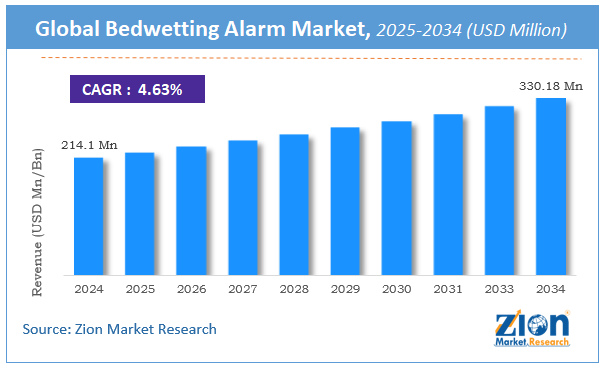
The global bedwetting alarm market size was worth approximately USD 214.1 million in 2024 and is projected to grow to around USD 330.18 million by 2034, with a compound annual growth rate (CAGR) of roughly 4.63% between 2025 and 2034.
Key Insights
- As per the analysis shared by our research analyst, the global bedwetting alarm market is estimated to grow annually at a CAGR of around 4.63% over the forecast period (2025-2034).
- In terms of revenue, the global bedwetting alarm market size was valued at approximately USD 214.1 million in 2024 and is projected to reach USD 330.18 million by 2034.
- The bedwetting alarm market is projected to grow significantly due to increasing awareness about enuresis treatment options, rising prevalence of bedwetting cases, and growing preference for non-pharmaceutical interventions.
- Based on product type, the wearable alarms segment is expected to lead the bedwetting alarm market, while the wireless alarms segment is anticipated to experience significant growth.
- Based on end-user, the children segment is expected to lead the bedwetting alarm market, while the special needs individuals segment is anticipated to witness notable growth.
- Based on distribution channel, the online retail segment is the dominating segment, while the specialty stores segment is projected to witness sizeable revenue over the forecast period.
- Based on technology, the moisture sensing segment is expected to lead the market compared to the smart alarms segment.
- Based on region, North America is projected to dominate the global bedwetting alarm market during the estimated period, followed by Europe.
Bedwetting Alarm Market: Overview
Bedwetting alarms are medical devices used to treat nocturnal enuresis by training the brain to respond to bladder signals during sleep. These devices detect moisture at the earliest stage of urination and trigger an alert using sound, vibration, or combined alerts to wake the sleeper. A small moisture sensor is placed on underwear or a bed pad and connects to an alarm unit, helping the user wake before bedwetting continues. Bedwetting alarms focus on correcting the underlying sleep and bladder coordination issue rather than masking symptoms with absorbent products. Regular use over several weeks helps the brain recognize bladder fullness and develop healthy nighttime control. Pediatricians widely recommend bedwetting alarms as a first-line treatment for children older than 5 years.
These devices support both primary enuresis and secondary enuresis cases. Families prefer this medication-free bedwetting solution due to the absence of side effects. Improved confidence, reduced stress, and better sleep quality are key benefits. Modern moisture sensor alarm systems are compact, comfortable, and easy to operate, improving long-term treatment outcomes. The growing awareness of bedwetting as a treatable medical condition rather than a behavioral problem is expected to drive growth in the bedwetting alarm market throughout the forecast period.
Bedwetting Alarm Market Dynamics
Growth Drivers
How is increasing awareness and reduced stigma driving the bedwetting alarm market expansion?
The bedwetting alarm industry is growing steadily as families recognize nocturnal enuresis as a common medical condition with effective treatment options. Medical organizations and pediatric associations run awareness campaigns explaining that bedwetting affects millions of children worldwide due to biological and developmental causes. Healthcare providers discuss bedwetting during routine child health visits, helping parents feel confident seeking early bedwetting alarm treatment solutions. Online parenting communities and social media platforms share real experiences, reviews, and guidance on bedwetting alarms, reducing stress, and social stigma. Public discussions by parents and health advocates present childhood bedwetting as manageable, encouraging families to explore proven enuresis treatment devices. Insurance providers increasingly classify bedwetting alarms as medical devices, improving affordability and access for families seeking non-medication solutions. Clinical research highlights neurological and genetic influences behind bedwetting, shifting responsibility away from children while supporting alarm-based therapy adoption.
Technological innovations are improving device effectiveness and user experience.
The global bedwetting alarm market grows through steady technology advances, improving comfort, accuracy, usability, and acceptance among children, parents, and healthcare professionals worldwide. Wireless bedwetting alarm systems remove cords between sensors and alarms, allowing natural sleep movement and reducing discomfort during nightly enuresis treatment. Bluetooth-enabled bedwetting alarms connect to mobile applications that support progress tracking, dry-night records, reminders, and positive reinforcement for families. Advanced moisture sensors detect urine faster, activate alerts earlier, strengthen bladder training, and reduce heavy wetting episodes during sleep therapy. Vibration-focused alerts, sound customization, and discreet wearable designs support teenagers seeking privacy while improving wake response for deep sleepers.
Rechargeable batteries, disposable sensor pads, waterproof materials, and moisture-wicking designs enhance hygiene, durability, environmental sustainability, and ease of daily use. Automatic shutoff, adjustable sensitivity, and smart data analytics help families and clinicians personalize bedwetting alarm therapy using clear sleep patterns. Compact child-friendly designs resembling watches increase acceptance, confidence, and consistent use, supporting successful long-term nocturnal enuresis treatment outcomes.
Restraints
User discomfort and compliance challenges are limiting treatment success
The bedwetting alarm market faces challenges because many families struggle to maintain consistent long-term use during extended nocturnal enuresis treatment programs. Early treatment stages often feel discouraging since children may need several weeks before responding, while families experience sleep disruption and ongoing cleaning burdens. Deep-sleeping children sometimes fail to wake from alarm sounds, forcing parents to assist repeatedly, increasing household fatigue and reducing motivation. Wearing moisture sensors can feel uncomfortable or embarrassing, especially for teenagers concerned about privacy, body image, and social acceptance. False alerts caused by sweat, movement, or damp bedding lead to unnecessary wake-ups, frustration, and reduced trust in bedwetting alarm devices. Repeated alarm exposure may create alarm fatigue, disturbing shared bedrooms, affecting family sleep quality, and lowering willingness to continue treatment. Parents face pressure to respond immediately during alarms, which proves difficult for working households needing rest, consistency, and daily performance.
Opportunities
How is the growing healthcare awareness in developing regions creating expansion possibilities for the bedwetting alarm industry?
The bedwetting alarm industry shows strong growth potential as healthcare awareness and disposable income increase across emerging economies worldwide. Urbanization expands middle-class families who access pediatric healthcare information and invest in medical devices for nocturnal enuresis treatment. Internet access and smartphone use help parents research bedwetting alarm solutions and purchase products through trusted E-commerce platforms. Local manufacturing in India, China, and Brazil lowers prices, improves availability, and supports wider adoption of affordable bedwetting alarms. Improved healthcare systems train doctors and nurses to identify enuresis early and recommend alarm-based pediatric treatment options.
Rising education levels increase health literacy, reduce stigma, and encourage families to seek safe, non-drug bedwetting solutions. Government child health programs, exposure to medical tourism, and growth in pediatric specialties strengthen trust in evidence-based alarm therapy. Partnerships, payment plans, and community education expand access, helping the bedwetting alarm market grow steadily across developing regions. International brands working with local partners maintain quality standards while reducing costs for families in emerging markets globally. Expanding school health programs and community outreach initiatives further raise awareness of bedwetting as a treatable condition, thereby supporting the long-term adoption of bedwetting alarms in emerging economies.
Challenges
How are misconceptions and alternative treatments creating barriers for the bedwetting alarm market?
The bedwetting alarm industry faces major challenges from strong myths about nocturnal enuresis and growing competition from easier but less effective treatments. Many families expect childhood bedwetting to disappear naturally, causing delayed treatment and longer emotional stress for children and parents. Cultural beliefs in some regions label bedwetting as bad behavior or poor parenting, blocking acceptance of medical enuresis solutions. Families often choose diapers, fluid limits, herbal remedies, or quick medications instead of consistent bedwetting alarm therapy use. Punishment methods and delayed care increase shame, reduce confidence, and worsen mental health without improving nighttime bladder control. Limited training among healthcare providers reduces recommendations for bedwetting alarms and weak follow-up support during treatment programs. High costs, inadequate insurance coverage, and early product returns generate negative perceptions, slowing adoption in the global bedwetting alarm market.
Bedwetting Alarm Market : Report Scope
| Report Attributes | Report Details |
|---|---|
| Report Name | Bedwetting Alarm Market Research Report |
| Market Size in 2024 | USD 214.1 Million |
| Market Forecast in 2034 | USD 330.18 Million |
| Growth Rate | CAGR of 4.63% |
| Number of Pages | 220 |
| Key Companies Covered | Nytone Medical Products, DRI Sleeper, Malem Medical, TheraPee, Rodger, PottyMD, Wet-Stop, Smart Bedwetting Alarm, Chummie, Nite Train-r, Clarity Medical Products LLC, Bayer HealthCare, Medtronic plc, Boston Scientific Corporation, and Stryker Corporation |
| Segments Covered | By Product Type, By Distribution Channel, By Technology, By End User, And By Region |
| Regions Covered | North America, Europe, Asia Pacific (APAC), Latin America, The Middle East and Africa (MEA) |
| Base Year | 2024 |
| Historical Year | 2019 to 2023 |
| Forecast Year | 2025 - 2034 |
| Customization Scope | Avail customized purchase options to meet your exact research needs. Request For Customization |
Bedwetting Alarm Market: Segmentation
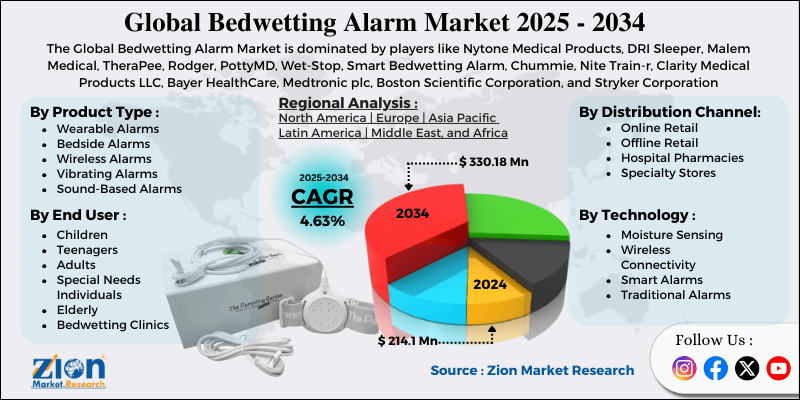
The global bedwetting alarm market is segmented based on product type, end-user, distribution channel, technology, and region.
Based on product type, the global market is segregated into wearable alarms, bedside alarms, wireless alarms, vibrating alarms, sound-based alarms, and others. Wearable alarms dominate the market due to their convenience, portability for travel, direct physical contact that enhances wakefulness, and preference among children, who find them less intrusive than bedside systems.
Based on end user, the industry is segmented into children, teenagers, adults, special needs individuals, the elderly, and bedwetting clinics. Children lead the market due to the high prevalence of primary nocturnal enuresis in the five to ten-year age group, parental motivation to resolve the condition before social complications develop, and greater neurological plasticity that improves conditioning success rates.
Based on distribution channel, the global bedwetting alarm industry is classified into online retail, offline retail, hospital pharmacies, and specialty stores. Online retail is expected to lead the market during the forecast period due to privacy advantages for purchasing sensitive medical products, extensive product selection with customer reviews, competitive pricing, and convenient home delivery.
Based on technology, the global market is divided into moisture sensing, wireless connectivity, smart alarms, and traditional alarms. Moisture sensing holds the largest market share due to its fundamental principle of immediate detection and response and its lower cost compared with advanced smart features.
Bedwetting Alarm Market: Regional Analysis
What factors are contributing to North America's dominance in the global bedwetting alarm market?
North America is estimated to grow at a CAGR of around 8.5% during the forecast period, maintaining its position as the leading region in the bedwetting alarm market. North America leads the bedwetting alarm market due to strong healthcare awareness, advanced pediatric care systems, broad insurance coverage, and high acceptance of medical devices. The United States and Canada support specialized pediatric urology services in which continence nurses routinely recommend bedwetting alarms as first-line treatment for enuresis. Ongoing medical education programs train healthcare providers in evidence-based bedwetting management, supporting consistent guidance for families across hospitals and clinics. Insurance providers classify bedwetting alarms as durable medical equipment, reducing costs and improving access for families seeking non-medication solutions. High internet usage helps parents research nocturnal enuresis, compare bedwetting alarm brands, and join trusted online support communities.
Advanced E-commerce networks ensure fast delivery of pediatric medical devices across cities, suburbs, and remote regions. Parenting culture encourages early intervention for child health concerns instead of waiting for natural resolution. Schools and clinics communicate openly about childhood conditions, helping identify bedwetting issues early. Mental health awareness highlights emotional stress linked with untreated bedwetting, increasing demand for proven behavioral treatment devices. Stable disposable income allows families to purchase bedwetting alarms and replacement sensors without financial pressure. Research institutions publish clinical studies that confirm the effectiveness of alarms. Telehealth services connect families with specialists, strengthening regional market leadership. Product innovation in North America remains strong, with manufacturers introducing wireless, application-connected, and child-friendly bedwetting alarm designs to improve treatment adherence.
Strict regulatory standards and consumer protection laws ensure product safety, reliability, and accurate marketing claims across the pediatric medical device market. Strong collaboration between healthcare providers, insurers, researchers, and manufacturers continues to reinforce North America’s leadership in the global bedwetting alarm market.
Europe is experiencing steady growth.
Europe is estimated to grow at a CAGR of around 7.4% during the forecast period, representing the second-leading regional growth rate in the bedwetting alarm market. Europe shows steady growth in the bedwetting alarm market through universal healthcare coverage, strong pediatric care systems, and wide use of evidence-based treatment approaches. Countries such as the United Kingdom, Germany, France, and the Netherlands operate national continence services focused on childhood enuresis management. Many European healthcare systems supply bedwetting alarms at low cost or free through public pediatric health programs. Clinical guidelines from European pediatric associations recommend bedwetting alarm therapy as the first-line treatment for nocturnal enuresis. School health initiatives promote continence education, helping families understand bedwetting as a medical issue and reducing embarrassment among children. European research centers contribute detailed studies on bladder development, sleep patterns, and effective alarm-based enuresis treatment strategies. Multi-language product instructions and customer support improve usability across diverse populations.
Environmental awareness supports reusable alarm devices over disposable products. Urban living conditions increase demand for fast treatment solutions. Strong consumer protection laws ensure high product quality. Cross-border E-commerce improves access. Pediatric training programs strengthen early diagnosis. Public health campaigns encourage treatment seeking. Parent networks share experiences. These combined factors support long-term stability within the European bedwetting alarm market. Supportive reimbursement frameworks and government-backed child health initiatives continue to improve access to bedwetting alarms across public healthcare systems. Ongoing collaboration between healthcare providers, research institutions, and medical device manufacturers reinforces Europe’s position as a stable and well-regulated bedwetting alarm market.
Recent Developments
- In November 2025, Dryly updated insurers and families on 2025 bedwetting alarm reimbursement policies, outlining health insurance options and reimbursement conditions for bedwetting alarms across several national insurers, aiming to increase access to its Dryly bedwetting alarm products.
Bedwetting Alarm Market: Competitive Analysis
The leading players in the global bedwetting alarm market are
- Nytone Medical Products
- DRI Sleeper
- Malem Medical
- TheraPee
- Rodger
- PottyMD
- Wet-Stop
- Smart Bedwetting Alarm
- Chummie
- Nite Train-r
- Clarity Medical Products LLC
- Bayer HealthCare
- Medtronic plc
- Boston Scientific Corporation
- Stryker Corporation
The global bedwetting alarm market is segmented as follows:
By Product Type
- Wearable Alarms
- Bedside Alarms
- Wireless Alarms
- Vibrating Alarms
- Sound-Based Alarms
- Others
By End User
- Children
- Teenagers
- Adults
- Special Needs Individuals
- Elderly
- Bedwetting Clinics
By Distribution Channel
- Online Retail
- Offline Retail
- Hospital Pharmacies
- Specialty Stores
By Technology
- Moisture Sensing
- Wireless Connectivity
- Smart Alarms
- Traditional Alarms
By Region
- North America
- The U.S.
- Canada
- Europe
- France
- The UK
- Spain
- Germany
- Italy
- Rest of Europe
- Asia Pacific
- China
- Japan
- India
- South Korea
- Southeast Asia
- Rest of Asia Pacific
- Latin America
- Brazil
- Mexico
- Rest of Latin America
- Middle East & Africa
- GCC
- South Africa
- Rest of Middle East & Africa
Table Of Content
Methodology
FrequentlyAsked Questions

HappyClients

