
Badminton Shoe Market Size, Trend, Growth, Industry Analysis 2034

Badminton Shoe Market By Type (Court Shoes, Lightweight Training Shoes, All Court Shoes, Professional Match Shoes), By Sole Material (Rubber Sole, Gum Rubber Sole, Non Marking Sole, Synthetic Composite Sole), By Distribution Channel (Sports Specialty Stores, Online Retail Platforms, Departmental Stores, Brand Outlets), By End User (Recreational Players, Amateur Competitive Players, Professional Players, Training Academies and Clubs), and By Region - Global and Regional Industry Overview, Market Intelligence, Comprehensive Analysis, Historical Data, and Forecasts 2026 - 2034
| Market Size in 2025 | Market Forecast in 2034 | CAGR (in %) | Base Year |
|---|---|---|---|
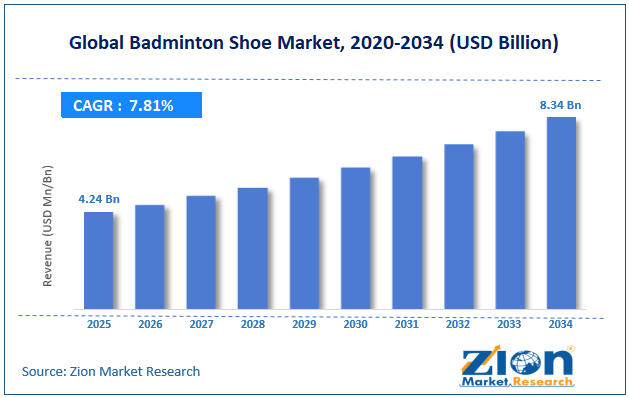
| USD 4.24 Billion | USD 8.34 Billion | 7.81% | 2025 |
Badminton Shoe Industry Perspective:
What will be the size of the badminton shoe market during the forecast period?
The global badminton shoe market size was valued at approximately USD 4.24 billion in 2025 and is projected to reach around USD 8.34 billion by 2034, growing at a compound annual growth rate of approximately 7.81% between 2026 and 2034.
Key Insights
- As per the analysis shared by our research team, the global badminton shoe market is estimated to grow at a compound annual growth rate of approximately 7.81% during the forecast period from 2026 to 2034.
- In terms of revenue, the global badminton shoe market was valued at approximately USD 4.24 billion in 2025 and is projected to reach USD 8.34 billion by 2034.
- The badminton shoe market is expected to grow steadily, driven by rising sports participation, growing awareness of injury prevention, increasing demand for performance footwear, and expanding retail and online availability.
- Based on type, court shoes lead the market because their balanced design suits general play, while lightweight training shoes are gaining strong momentum as players seek footwear that supports fast footwork during practice sessions.
- Based on sole material, rubber sole shoes lead the market due to their durability and reliable grip. In contrast, non-marking sole shoes are the fastest-growing segment as indoor courts increasingly require floor-friendly footwear.
- Based on distribution channel, sports specialty stores lead the market because of expert guidance and wider size availability, while online retail platforms are steadily growing as more buyers prefer to compare brands and prices from home.
- Based on end user, recreational players lead the market due to the sport's popularity as a casual fitness activity, while training academies and clubs are growing rapidly as structured coaching programs expand across cities.
- Based on region, Asia Pacific leads the global badminton shoe market, while Europe is the fastest-growing region due to rising badminton club memberships and greater sports infrastructure investment.
Badminton Shoe Market: Overview
A badminton shoe is specialized sports footwear designed to provide grip, comfort, stability, and support during the fast movements and sudden stops required on a badminton court. Unlike regular sports shoes, badminton shoes have cushioned soles, strong side support, and court-friendly grip patterns that help players move safely and confidently. The badminton shoe market includes footwear for recreational players, school programs, clubs, competitive players, and professional athletes across different skill levels. Growing interest in badminton for fitness, recreation, and competition is increasing demand for proper badminton footwear instead of ordinary sneakers. Rising participation in schools, community clubs, and local tournaments is also expanding the customer base, particularly in countries where badminton is widely played. Players are becoming more aware that suitable shoes can improve court movement, comfort, stability, and injury protection, encouraging new buyers to choose specialized footwear. Manufacturers are responding with lightweight designs, breathable materials, better cushioning, flexible soles, and improved grip technology. Online stores are also helping brands reach players in smaller cities and towns, making badminton shoes easier to find and purchase.
The badminton shoe industry continues to expand as footwear manufacturers, sports academies, and retail partners collaborate to bring safer, more comfortable, performance-driven products to players worldwide.
Badminton Shoe Market: Strategic Perspective
Where is the badminton shoe market heading?
The badminton shoe market is expected to shift toward more specialized, performance-focused footwear as players become more aware of grip, cushioning, stability, and comfort. Lightweight construction, breathable materials, improved shock absorption, injury-prevention features, and designs suited to different playing styles and court surfaces are likely to gain attention alongside traditional badminton shoe designs.
Where should businesses invest in the badminton shoe market?
The badminton shoe industry presents opportunities in youth and academy footwear, women-specific shoe designs, durable outsole technology, and partnerships with badminton clubs and coaching centers. Investing in comfortable materials, breathable designs, improved grip, and efficient manufacturing can help brands maintain product quality while controlling costs, especially as badminton participation grows across emerging markets.
What will reshape competition in the badminton shoe market?
Success in the badminton shoe market will increasingly depend on how effectively brands meet player expectations for comfort, grip, durability, stability, and injury protection. Companies that combine reliable performance with competitive pricing, attractive designs, athlete endorsements, strong product availability, and consistent quality are likely to stand out in an increasingly competitive sports footwear market.
Badminton Shoe Market: Technology Roadmap 2026–2034
What is the projected development roadmap of the badminton shoe market over the forecast period?
The badminton shoe market is advancing through improved cushioning systems, more precise grip engineering, expanded use of lightweight breathable materials, and growing incorporation of injury-preventive design features, making footwear safer and more comfortable for players of all levels. The market is expected to grow at a compound annual growth rate of approximately 7.81% over the forecast period, driven by rising sports participation, evolving safety standards, and ongoing refinement of footwear manufacturing technology.
The following roadmap outlines key development phases expected through 2034.
2026–2028: Comfort and Awareness Building Phase
- Lightweight construction focus: Shoe brands are expected to reduce overall shoe weight using advanced foam and mesh materials while maintaining structural support.
- Injury-prevention design: Brands are likely to focus more on ankle support, cushioned midsoles, and reinforced heel counters to reduce common badminton-related injuries.
- Player-specific product positioning: Manufacturers are expected to create shoe ranges targeting specific player needs, including junior players, women players, and casual weekend players.
2029–2031: Product Diversification and Distribution Expansion Phase
- Surface-specific footwear growth: Products designed for wooden courts, synthetic courts, and outdoor recreational courts are expected to gain greater shelf space.
- New design experimentation: Brands are likely to introduce combinations using breathable knit uppers, reinforced side panels, and gum rubber outsoles to differentiate products and attract competitive players.
- Digital retail expansion: Online sports platforms, direct-to-consumer sales, and academy partnership programs are expected to give footwear brands additional ways to reach players.
2032–2034: Smart and Sustainable Footwear Phase
- Next-generation materials: Manufacturers are expected to move toward recyclable uppers, biodegradable foams, and lower-waste packaging as sustainability becomes a stronger purchasing factor.
- Performance-monitoring technology: Smart insoles may increasingly provide information about foot pressure, movement patterns, or shoe wear levels.
- Customized fit products: Badminton shoes could increasingly be developed around individual foot shapes, with products tailored to specific playing styles, foot arches, and comfort preferences.
Badminton Shoe Market: Dynamics
Growth Drivers
What is driving changing consumer preferences in the badminton shoe market?
The badminton shoe industry is benefiting from changing player preferences as consumers increasingly value comfort, stability, grip, and lightweight designs. Players are moving from regular sports shoes to specialized badminton footwear that supports quick movements, sudden stops, and frequent direction changes. Growing awareness of foot safety and on-court performance is encouraging demand for shoes with better cushioning, ankle support, shock absorption, and traction. Younger players are also expanding the customer base as schools, academies, and clubs introduce more children to badminton. Brands are responding with junior sizes, wider fits, breathable materials, flexible soles, and attractive designs that suit different playing needs. Online shopping makes it easier for consumers to compare product features, prices, sizes, and reviews before buying. Retailers are also giving badminton-specific footwear more visibility instead of grouping it with general athletic shoes. Clearer product information about grip, cushioning, durability, and suitable court surfaces is helping buyers make more informed choices. These changing preferences are encouraging manufacturers to improve shoe performance, comfort, design, and durability across the market.
Performance-driven products are creating opportunities in the badminton shoe market.
The badminton shoe market is seeing opportunities as demand grows for premium footwear that delivers stronger performance, comfort, durability, and support. Brands are introducing advanced cushioning, improved grip patterns, breathable uppers, reinforced outsoles, and ergonomic designs to attract players seeking better-quality products. Lightweight construction is particularly attractive because it allows easier movement and reduces the heavy feel associated with traditional sports shoes. Sustainable footwear is also creating opportunities as manufacturers explore recycled materials, reduced packaging, and longer-lasting components to appeal to environmentally conscious buyers. Badminton clubs, schools, academies, and coaching centers are increasing demand for specialized footwear as organized training and youth participation expand. Online marketplaces and direct-to-consumer channels are helping smaller brands reach players beyond established sports retailers and major cities. Junior ranges, women-specific designs, and academy-focused products can further help companies target underserved customer groups. Brands can also build stronger customer relationships through exclusive collections, professional-player partnerships, and direct sales. Together, premium features, sustainable innovation, specialized product ranges, and broader distribution are creating new growth opportunities across the market.
Restraints
High production costs are a key challenge limiting growth in the badminton shoe market.
The badminton shoe industry faces pressure from rising manufacturing expenses, advanced design requirements, and increasing expectations for product quality. Developing specialized badminton footwear requires investment in cushioning systems, durable outsoles, breathable materials, grip technology, and testing, which can increase production costs. Premium materials and improved construction can also make finished shoes more expensive, limiting affordability for price-sensitive consumers. Brands must balance performance features with competitive pricing, especially in markets where buyers often compare badminton shoes with lower-cost athletic footwear. Smaller manufacturers may face greater difficulty because they have less purchasing power and fewer opportunities to spread development costs across large production volumes.
Spending on product research, design improvements, quality testing, and marketing can further increase operating expenses. Manufacturers can manage these pressures by improving production efficiency, simplifying selected designs, increasing manufacturing scale, and choosing cost-effective materials without reducing essential performance. Better production planning and waste reduction can also support healthier margins. These measures can help brands control expenses, maintain product quality, offer competitive prices, and strengthen their position in the growing market.
Opportunities
Will the development of premium products open new opportunities in the badminton shoe market?
The badminton shoe market is expanding beyond traditional court shoes as players seek footwear that provides better comfort, safety, stability, and performance. Shoes designed for ankle support, quick direction changes, strong grip, and long-lasting use are creating new opportunities for brands. Premium models featuring advanced cushioning, breathable uppers, reinforced outsoles, and comfortable shapes are attracting serious players willing to invest in specialized footwear. Junior badminton shoes and women-specific designs are also gaining attention by offering better fits for different age groups and foot shapes. Lightweight shoes suit schools, academies, recreational players, and regular training, while stronger designs continue to serve competitive athletes.
Badminton clubs, sports academies, and schools are supporting demand through organized training programs and growing participation. Online sports stores are helping smaller brands reach customers beyond traditional retail outlets. Sustainable materials and recyclable packaging can further improve product appeal among environmentally aware buyers. Brands are also introducing seasonal collections, local designs, professional-player collaborations, and affordable training shoes to attract different customer groups. These trends are creating new growth opportunities across the market.
Challenges
How are rising costs and supply challenges affecting the badminton shoe market?
The badminton shoe market faces supply-related challenges from material availability, transportation delays, import dependence, and disruptions across international sourcing networks. Shortages or delivery delays of rubber, synthetic fabrics, foam, adhesives, and other footwear materials can disrupt production schedules and product availability. Brands that rely heavily on overseas suppliers may also face longer shipping times, currency fluctuations, customs delays, and unexpected logistics costs. These issues can make it harder for retailers to maintain consistent inventories, particularly for popular sizes, colors, and specialized models. Limited access to dedicated sports retailers in some emerging markets can further restrict the availability of badminton-specific footwear.
Companies can reduce these risks by developing multiple suppliers, increasing local sourcing, maintaining strategic material inventories, and building stronger regional distribution networks. Digital inventory management can also help brands track demand and respond faster to changes in product availability. Stronger supplier relationships and regional warehousing can improve delivery reliability. These measures can help manufacturers maintain steady production, reduce supply disruptions, improve product availability, and serve badminton players more efficiently across different markets.
Badminton Shoe Market: Report Scope
| Report Attributes | Report Details |
|---|---|
| Report Name | Badminton Shoe Market |
| Market Size in 2025 | USD 4.24 Billion |
| Market Forecast in 2034 | USD 8.34 Billion |
| Growth Rate | CAGR of 7.81% |
| Number of Pages | 229 |
| Key Companies Covered | Yonex, Li Ning, Victor, ASICS, Mizuno, Adidas, Puma, FZ Forza, Ashaway, Kawasaki Sports, and others. |
| Segments Covered | By Type, By Sole Material, By Distribution Channel, By End User, and By Region |
| Regions Covered | North America, Europe, Asia Pacific (APAC), Latin America, Middle East, and Africa (MEA) |
| Base Year | 2025 |
| Historical Year | 2020 - 2024 |
| Forecast Year | 2026 - 2034 |
| Customization Scope | Avail customized purchase options to meet your exact research needs. Request For Customization |
Badminton Shoe Market: Segmentation
The global badminton shoe market is segmented by type, sole material, distribution channel, end user, and region.
Why do court shoes lead the badminton shoe market by type?
Based on type, the global badminton shoe industry is classified into court shoes, lightweight training shoes, all-court shoes, and professional match shoes. Court shoes hold about 43% of the market share, leading due to their balanced design, broad player acceptance, and suitability for both casual and semi-competitive play. Lightweight training shoes hold around 24% market share. It is the fastest-growing segment because performance-focused players increasingly seek footwear that supports quick footwork during regular practice.
How is rubber sole material maintaining its lead in the badminton shoe market?
By sole material, the badminton shoe market is segmented into rubber sole, gum rubber sole, non-marking sole, and synthetic composite sole. Rubber sole shoes account for approximately 39% of the global market share, driven by their durability, reliable traction, and cost-effective manufacturing. Non-marking sole shoes hold around 20% market share. This segment is the fastest-growing, driven by expanding requirements from indoor sports facilities that mandate floor-friendly footwear.
Where do sports specialty stores stand in the badminton shoe market distribution landscape?
Based on distribution channel, the market is divided into sports specialty stores, online retail platforms, departmental stores, and brand outlets. Sports specialty stores lead with about a 44% share because of expert fitting guidance, wider size availability, and their established position as the primary destination for serious sports shoppers. Online retail platforms hold around 22% market share. They are growing steadily as more players embrace the convenience of comparing brands, reading reviews, and ordering from home.
Who accounts for the largest end-user share in the badminton shoe market?
Based on end user, the badminton shoe market is categorized into recreational players, amateur competitive players, professional players, and training academies and clubs. Recreational players account for about 48% of the market, leading because badminton remains a popular casual fitness and social activity across age groups. Training academies and clubs hold around 23% market share. This segment is expanding quickly as structured coaching programs and youth development initiatives increase.
Badminton Shoe Market: Regional Analysis
What factors are strengthening Asia Pacific's position in the badminton shoe market?
Asia Pacific leads the global badminton shoe market and is expected to grow at a CAGR of around 5.9% during the forecast period. Badminton’s strong cultural presence, large player base, and strong footwear manufacturing capabilities support its leadership. China, India, Indonesia, and Malaysia have well-established badminton communities, creating steady demand for specialized shoes. The region also benefits from large-scale local footwear production, which helps brands offer products at competitive prices and respond quickly to changing consumer needs.
Growing sports participation among younger players, expanding badminton academies, and increased online shopping are further widening the customer base. Rising incomes are also encouraging consumers to move from basic sneakers to branded badminton shoes. Local manufacturers are increasingly developing footwear suited to regional foot shapes, playing conditions, and price preferences. The expansion of sports retail chains into smaller cities is improving product availability, while social media and digital marketing are helping brands connect with younger consumers. These manufacturing strengths, combined with deep badminton participation and growing domestic consumption, are helping Asia Pacific maintain its leading position in the global market.
How are changing lifestyles driving growth in the Europe badminton shoe market?
The Europe badminton shoe market is expected to grow at a volume CAGR of around 5.4% during the forecast period. Growth is mainly supported by organized club participation, premium sports consumption, and stronger interest in health and recreational activities. The UK, Denmark, Germany, and the Netherlands have established badminton clubs, coaching programs, and community sports facilities that support regular participation. European consumers are increasingly willing to spend on higher-quality sports footwear, creating opportunities for premium badminton shoes with better cushioning, grip, stability, and injury protection. International tournaments and professional badminton events are also increasing visibility and encouraging players to invest in specialized equipment.
Retailers are expanding premium and performance-focused footwear selections, while online stores are making international and specialized brands more accessible. Growing interest in active lifestyles is encouraging consumers to participate in indoor sports year-round, supporting regular footwear purchases. Brands are also responding with wider sizing, breathable materials, lightweight construction, and designs suited to different playing preferences. Growing sports tourism, organized training, premium purchasing habits, and established club networks are therefore creating sustained opportunities in the European market.
Recent Market Developments
- In April 2026, Mizuno announced price revisions for selected badminton footwear in Japan, citing higher raw material and transportation costs, with the new prices taking effect from June 1, 2026.
- In January 2026, Yonex expanded its premium badminton footwear range with the SUBAXIA series, featuring GRPHT THRTTL technology that combines POWER CUSHION REV and POWER GRAPHITE to improve shock absorption, energy return, and stability for competitive players.
Badminton Shoe Market: Competitive Analysis
The leading players in the global badminton shoe market are:
- Yonex
- Li Ning
- Victor
- ASICS
- Mizuno
- Adidas
- Puma
- FZ Forza
- Ashaway
- Kawasaki Sports
The global badminton shoe market is segmented as follows:
By Type
- Court Shoes
- Lightweight Training Shoes
- All Court Shoes
- Professional Match Shoes
By Sole Material
- Rubber Sole
- Gum Rubber Sole
- Non-Marking Sole
- Synthetic Composite Sole
By Distribution Channel
- Sports Specialty Stores
- Online Retail Platforms
- Departmental Stores
- Brand Outlets
By End User
- Recreational Players
- Amateur Competitive Players
- Professional Players
- Training Academies and Clubs
By Region
- North America
- The U.S.
- Canada
- Mexico
- Europe
- France
- The UK
- Spain
- Germany
- Italy
- Rest of Europe
- Asia Pacific
- China
- Japan
- India
- Australia
- South Korea
- Rest of Asia Pacific
- The Middle East & Africa
- Saudi Arabia
- UAE
- Egypt
- Kuwait
- South Africa
- Rest of the Middle East & Africa
- Latin America
- Brazil
- Argentina
- Rest of Latin America
Table Of Content
Methodology
FrequentlyAsked Questions
A badminton shoe is specialized sports footwear designed to provide grip, comfort, stability, and support during the fast movements and sudden stops required on a badminton court. Unlike regular sports shoes, badminton shoes have cushioned soles, strong side support, and court-friendly grip patterns that help players move safely and confidently.
The global badminton shoe market is expected to grow due to rising sports participation, growing awareness of injury prevention, increasing demand for performance footwear, and expanding retail and online distribution worldwide.
According to research, the global badminton shoe market was valued at approximately USD 4.24 billion in 2025 and is projected to reach approximately USD 8.34 billion by 2034.
The compound annual growth rate of the badminton shoe market is expected to be approximately 7.81% from 2026 to 2034.
Asia Pacific is expected to lead the global badminton shoe market throughout the forecast period, driven by its deep-rooted sporting culture, large player base, and growing sports infrastructure.
The major players in the global badminton shoe market include Yonex, Li Ning, Victor, ASICS, Mizuno, Adidas, Puma, FZ Forza, Ashaway, and Kawasaki Sports.
The report examines key aspects of the badminton shoe market, including research and development drivers, adoption barriers, application opportunities, competitive landscape dynamics, detailed regional market performance analysis, and a comprehensive forward-looking outlook across all major types, sole materials, distribution channels, end-user segments, and geographic regions through 2034.
Technological advancement is making the badminton shoe market more performance-focused through lightweight materials, improved cushioning, stronger grip, and better stability. These innovations help players move faster, absorb impact, and change direction safely during intense matches.
Professional, amateur, and recreational playing will offer strong opportunities in the badminton shoe market, as players increasingly seek sport-specific footwear for better comfort, grip, stability, and performance during regular training and competitive matches.
Emerging trends in the badminton shoe market include advanced cushioning, lighter materials, breathable uppers, improved non-marking soles, and stronger lateral support, helping manufacturers develop shoes that provide greater comfort, stability, durability, and faster footwork.

HappyClients

