Aniline Derivative Market Size, Growth, Global Trends, Forecast 2034
Aniline Derivative Market By Application (Rubber Processing, Dyes & Pigments, Drug Production, Agrochemicals, Polyurethane, Explosives, Varnishes, and Others), By End-Use Application (Rubber, Textile, Pharmaceutical, Agriculture, Plastic, Paints & Inks, and Others), and By Region - Global and Regional Industry Overview, Market Intelligence, Comprehensive Analysis, Historical Data, and Forecasts 2025 - 2034
| Market Size in 2024 | Market Forecast in 2034 | CAGR (in %) | Base Year |
|---|---|---|---|
| USD 22.19 Billion | USD 30.92 Billion | 3.06% | 2024 |
Aniline Derivative Industry Perspective:
What will be the global aniline derivative market size during the projected period (2025-2034)?
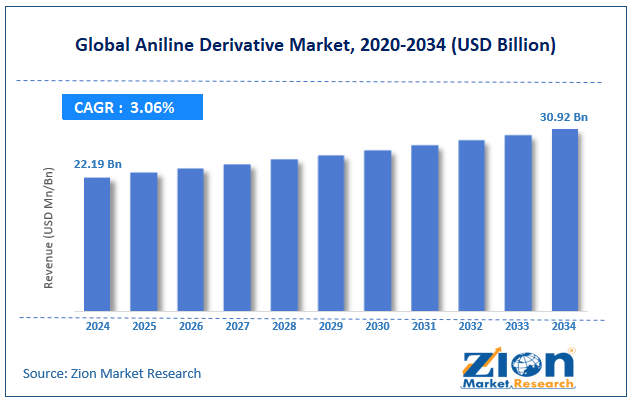
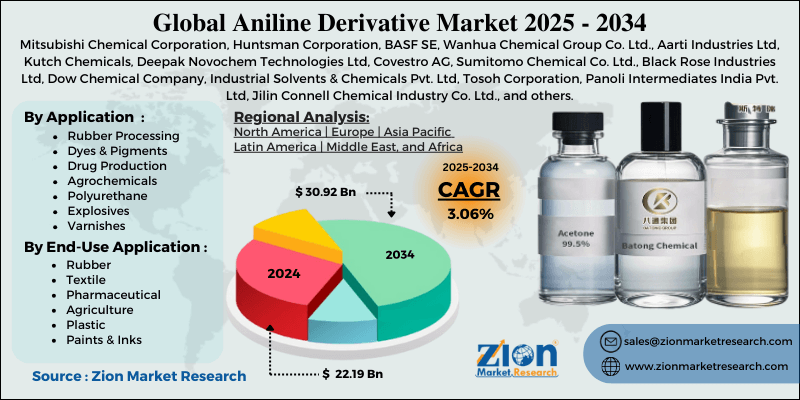
The global aniline derivative market size was worth around USD 22.19 billion in 2024 and is predicted to grow to around USD 30.92 billion by 2034, with a compound annual growth rate (CAGR) of roughly 3.06% between 2025 and 2034.
Key Insights:
- As per the analysis shared by our research analyst, the global aniline derivative market is estimated to grow annually at a CAGR of around 3.06% over the forecast period (2025-2034)
- In terms of revenue, the global aniline derivative market size was valued at around USD 22.19 billion in 2024 and is projected to reach USD 30.92 billion by 2034.
- The aniline derivative market is projected to grow at a significant rate due to the rising demand for the compounds in the textile industry.
- Based on the application, the dyes & pigments segment is growing at a high rate and will continue to dominate the global market, as per industry projections
- Based on the end-use application, the textile applications segment is anticipated to command the largest market share
- Based on region, the Asia-Pacific is projected to dominate the global market during the forecast period
Aniline Derivative Market: Overview
Aniline derivatives are produced by modifying aniline, which is a chemical compound consisting of a benzene ring. According to industry analysis, aniline derivatives have wide applications across multiple industries, including pharmaceuticals, manufacturing dyes, agrochemicals, polymers, and other materials. Aniline derivatives are produced by substituting one or more hydrogen atoms from the amino group present in aniline. The modifications include hydroxyl, halogen, nitro, or methyl groups. Changing the chemical composition of aniline subsequently results in changes in molecular properties such as solubility, reactivity, color, and texture. During the forecast period, demand for aniline derivatives is expected to continue growing, driven by several favorable factors. For instance, growing end-user demand for fertilizers and other agrochemicals will drive industry demand in the coming years.
Additionally, the rising prevalence of medical conditions is expected to encourage greater use of aniline derivatives in drug research & development. The industry growth trends may be affected by regulatory concerns affecting market expansion, in addition to growing concerns over health risks associated with the chemical compounds.
Aniline Derivative Market: Dynamics
Growth Drivers
How will growing applications in the textile sector fuel growth in the aniline derivative market?
The global aniline derivative market is expected to grow due to the rising demand for the compounds in the textile industry. Aniline derivatives are extensively used in producing dyes and pigments. According to industry research, popular artificial or synthetic dyes such as aniline blue, indigo, and azo dyes are produced using aniline derivatives. They are further applied in the thriving textile sector. The rising global population, along with changing consumer lifestyles and evolving fashion trends worldwide, has significantly influenced demand in the textile industry.
In addition, the rapid expansion of fast and ultra-fast fashion, along with the proliferation of the e-commerce industry, is expected to work in favor of aniline derivatives in the coming years. Dyes made using aniline are preferred among fashion brands because they are highly durable and versatile. In addition, aniline dyes bond to a wide range of fabrics such as cotton and polyester. The surging demand for affordable and luxury fashion will emerge as an influential factor for aniline derivative manufacturers during the projection period.
Increasing production of agrochemicals to facilitate improved revenue for aniline derivatives
Aniline derivatives are critical ingredients used in the production of agrochemicals such as pesticides, fungicides, and herbicides. Modern farming techniques rely heavily on agrochemicals to enhance crop yield and improve overall produce quality. As per industry research, aniline derivatives, when used as agrochemicals, are highly effective in delivering desired results in low quantities as well.
On the other hand, growing cases of crop damage caused by insects or fungal infestations further amplify the use of critical aniline derivatives, such as phenylamine fungicides. Growing food demand worldwide and the accelerating use of highly effective agrochemicals will work in favor of the global aniline derivative market during the forecast period.
Restraints
Which safety concerns create growth barriers in the aniline derivative market?
The global aniline derivative industry is expected to be limited due to the rising safety concerns associated with the compounds. Industry research suggests that exposure to aniline derivatives can be harmful to the ecosystem and living organisms. For instance, certain derivatives are toxic to humans, causing shortness of breath, dizziness, and oxygen deprivation.
Furthermore, they also lead to water pollution and affect marine ecosystems. Regulatory bodies such as the Environmental Protection Agency (EPA) and Occupational Safety and Health Administration (OSHA) have classified aniline derivatives as hazardous, thus limiting market expansion trends.
Opportunities
Accelerating the use of aniline derivatives in the pharmaceutical industry to generate growth opportunities
The global aniline derivative market is expected to generate growth opportunities due to the rising use of the compound in the pharmaceutical sector. Aniline derivatives are used for the production of popular analgesics such as paracetamol and acetanilide. Analgesics are widely used medicinal drugs that help relieve pain by blocking pain signals or making changes to pain perception. The rising prevalence of pain-causing medical conditions has amplified demand for analgesics, subsequently driving revenue for aniline derivatives. Analgesics are used after surgical interventions or an injury.
Furthermore, they are also helpful in managing pain caused by arthritis or cancer. In the last few years, healthcare expenditure worldwide has grown at an unprecedented rate. Factors such as a growing geriatric population, rising cases of cancer, and accidents have worked in tandem to influence demand for aniline derivatives. The global expansion of the healthcare sector will open new avenues for industry growth during the projection period.
Challenges
Why are supply chain disruptions considered major challenges in the aniline derivative market?
The global aniline derivative industry is expected to be challenged by severe supply chain disruptions. Global production and supply of aniline derivatives depend on accessibility to petrochemicals. However, evolving market dynamics and changing geopolitical trade relationships are likely to affect production and prices associated with aniline derivatives.
Aniline Derivative Market: Report Scope
| Report Attributes | Report Details |
|---|---|
| Report Name | Aniline Derivative Market |
| Market Size in 2024 | USD 22.19 Billion |
| Market Forecast in 2034 | USD 30.92 Billion |
| Growth Rate | CAGR of 3.06% |
| Number of Pages | 216 |
| Key Companies Covered | Mitsubishi Chemical Corporation, Huntsman Corporation, BASF SE, Wanhua Chemical Group Co. Ltd., Aarti Industries Ltd, Kutch Chemicals, Deepak Novochem Technologies Ltd, Covestro AG, Sumitomo Chemical Co. Ltd., Black Rose Industries Ltd, Dow Chemical Company, Industrial Solvents & Chemicals Pvt. Ltd, Tosoh Corporation, Panoli Intermediates India Pvt. Ltd, Jilin Connell Chemical Industry Co. Ltd., and others. |
| Segments Covered | By Application, By End-Use Application, and By Region |
| Regions Covered | North America, Europe, Asia Pacific (APAC), Latin America, Middle East, and Africa (MEA) |
| Base Year | 2024 |
| Historical Year | 2019 to 2023 |
| Forecast Year | 2025 - 2034 |
| Customization Scope | Avail customized purchase options to meet your exact research needs. Request For Customization |
Aniline Derivative Market: Segmentation
The global aniline derivative market is segmented based on application, end-user application, and region.
Based on application, the global market is segmented into rubber processing, dyes & pigments, drug production, agrochemicals, polyurethane, explosives, varnishes, and others. In 2024, the highest growth was listed in the dyes & pigments segment. The growing use of textile dyes worldwide has fueled segmental demand. In addition, the rapid global expansion of the textile industry and the explosion of the fashion e-commerce sector will further facilitate segmental growth in the coming years.
Based on end-use application, the global market is segmented into rubber, textile, pharmaceutical, agriculture, plastic, paints & inks, and others. In 2024, the textile applications of aniline derivatives were the most dominant influencers. Rising world population, increasing demand for fast-fashion, affordable clothing items, and growing investments in luxury fashion will promote the segmental growth rate during the projection period.
Aniline Derivative Market: Regional Analysis
Why will Asia-Pacific continue to dominate the aniline derivative market during the forecast period?
The global aniline derivative market is expected to be dominated by Asia-Pacific during the projection period. The region is expected to deliver a CAGR of more than 4.59% during the projection period. In 2024, the Asia-Pacific region accounted for over 53% of the global revenue, with China and India leading the regional market. Growth in the Asia-Pacific is driven by the development of chemical manufacturing infrastructure. China is the world’s largest supplier of essential chemicals serving global clients.
In addition, the Asia-Pacific has a high demand for aniline derivatives with applications across major industries. The regional textile sector is one of the largest consumers of aniline derivatives, as China continues to invest in dominating the global fast-fashion landscape.
North America is projected to emerge as the second-highest revenue generator in the aniline derivative industry. It is expected to grow at a CAGR of more than 3.71% during the forecast period. The North American market will be led by the higher use of aniline derivatives in the regional pharmaceutical industry.
Furthermore, the North American market is also heavily influenced by the presence of standard policies regulating the production and safe use of aniline derivatives. In addition, the compounds have excellent scope for expansion in the region’s agricultural sector, as North America is shifting toward encouraging regional crop production and reducing reliance on other countries for crop imports.
Aniline Derivative Market: Competitive Analysis
The global aniline derivative market is led by players like:
- Mitsubishi Chemical Corporation
- Huntsman Corporation
- BASF SE
- Wanhua Chemical Group Co. Ltd.
- Aarti Industries Ltd
- Kutch Chemicals
- Deepak Novochem Technologies Ltd
- Covestro AG
- Sumitomo Chemical Co. Ltd.
- Black Rose Industries Ltd
- Dow Chemical Company
- Industrial Solvents & Chemicals Pvt. Ltd
- Tosoh Corporation
- Panoli Intermediates India Pvt. Ltd
- Jilin Connell Chemical Industry Co. Ltd.
What are the key trends in the global Aniline Derivative Market?
Rising production of polyurethane
A major trend observed in the aniline derivative industry is the growing production of polyurethane. Aniline derivatives are used as essential feed for producing polyurethane, which has applications in the construction and automotive sectors. These applications may offer new growth prospects to the industry players.
Sustainable production practices
As the world moves toward sustainability, aniline derivative producers are actively seeking technologies that encourage green manufacturing of the compounds. These solutions include ensuring catalyst optimization and improvement of the atom economy, among other methods.
The global aniline derivative market is segmented as follows:
By Application
- Rubber Processing
- Dyes & Pigments
- Drug Production
- Agrochemicals
- Polyurethane
- Explosives
- Varnishes
- Others
By End-Use Application
- Rubber
- Textile
- Pharmaceutical
- Agriculture
- Plastic
- Paints & Inks
- Others
By Region
- North America
- The U.S.
- Canada
- Europe
- France
- The UK
- Spain
- Germany
- Italy
- Rest of Europe
- Asia Pacific
- China
- Japan
- India
- South Korea
- Southeast Asia
- Rest of Asia Pacific
- Latin America
- Brazil
- Mexico
- Rest of Latin America
- Middle East & Africa
- GCC
- South Africa
- Rest of Middle East & Africa
Table Of Content
Methodology
FrequentlyAsked Questions

HappyClients