Electronic Dance Music Market Size, Share, Trends, Growth 2034
Electronic Dance Music Market By Type (Live Performances and Festivals, Recorded Music and Streaming, Disc Jockey Software and Equipment, Merchandise and Licensing), By Application (Nightclubs and Bars, Music Festivals and Concerts, Online Streaming Platforms, Private Events and Parties), By Distribution Channel (Streaming and Digital Platforms, Live Event Ticketing Platforms, Retail and E-Commerce Stores, Direct Artist and Label Sales), By End User (Individual Listeners, Commercial Venues, Event Organizers, Record Labels and Producers), and By Region - Global and Regional Industry Overview, Market Intelligence, Comprehensive Analysis, Historical Data, and Forecasts 2026 - 2034
| Market Size in 2025 | Market Forecast in 2034 | CAGR (in %) | Base Year |
|---|---|---|---|
| USD 13.82 Billion | USD 22.09 Billion | 5.35% | 2025 |
Electronic Dance Music Industry Perspective:
What will be the size of the electronic dance music market during the forecast period?
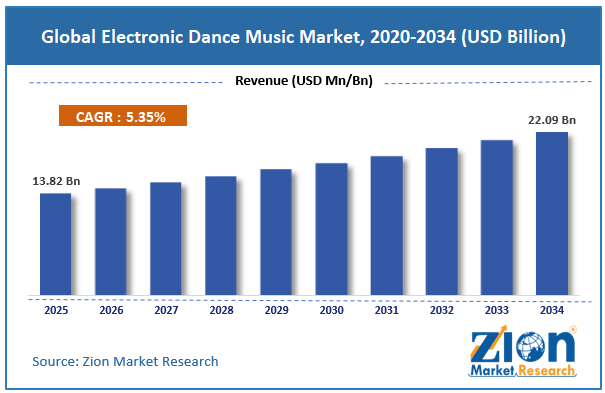
The global electronic dance music market size was valued at approximately USD 13.82 billion in 2025 and is projected to reach around USD 22.09 billion by 2034, growing at a compound annual growth rate of approximately 5.35% between 2026 and 2034.
Key Insights
- As per the analysis shared by our research team, the global electronic dance music market is estimated to grow at a compound annual growth rate of approximately 5.35% during the forecast period from 2026 to 2034.
- In terms of revenue, the global electronic dance music market was valued at approximately USD 13.82 billion in 2025 and is projected to reach USD 22.09 billion by 2034.
- The electronic dance music market is expected to grow steadily, driven by rising festival attendance, growing streaming subscriptions, increasing sponsorship spending, and expanding social media promotion of new artists.
- Based on type, live performances and festivals lead the market because fans are willing to pay for in-person experiences, while recorded music and streaming are gaining momentum as more listeners shift to on-demand digital platforms.
- Based on application, music festivals and concerts lead the market due to their large-scale draw and premium ticket pricing. At the same time, online streaming platforms are the fastest-growing segment as more fans discover new artists through personalized playlists.
- Based on distribution channel, streaming and digital platforms lead the market because of their convenience and global reach, while live event ticketing platforms are steadily growing as more fans book festival passes and club tickets directly through mobile apps.
- Based on end user, individual listeners lead the market because dance music is widely enjoyed across age groups, while event organizers are growing rapidly as more cities host dedicated electronic music festivals and touring club nights.
- Based on region, Europe leads the global electronic dance music market. At the same time, Asia Pacific is the fastest-growing region due to rising festival culture and expanding streaming access among younger audiences.
Electronic Dance Music Market: Overview
Electronic dance music (EDM) is a type of music created mainly with electronic instruments, computer software, and strong rhythmic beats designed for dancing. The electronic dance music market includes music festivals, nightclub events, streaming platforms, live performances, DJ equipment, licensing, and merchandise. Unlike traditional music, EDM generates revenue through several channels, including digital streaming, concerts, festivals, sponsorships, and branded products. Growing smartphone use and affordable music production software are helping independent artists create, release, and promote tracks without relying heavily on major record labels. Large EDM festivals attract international audiences and have become major entertainment events, creating opportunities for artists, event organizers, sponsors, and tourism businesses. Streaming services also let producers reach listeners worldwide and build fan bases faster. Event organizers are improving audience experiences through large stages, advanced lighting, visual effects, and interactive performances. Nightclubs remain important spaces for emerging DJs and producers to develop their skills and connect with audiences. Rising interest in live entertainment, digital music, and global festivals is helping EDM expand beyond its traditional audience. As technology and online platforms continue improving, the genre is reaching more listeners and creating new commercial opportunities worldwide.
The electronic dance music industry continues to expand as record labels, streaming platforms, and festival organizers work together to deliver more immersive, accessible, and shareable music experiences to fans worldwide.
Electronic Dance Music Market: Strategic Perspective
What trends will shape the future of the electronic dance music market?
The electronic dance music market is moving toward more immersive, interactive fan experiences as listeners increasingly want more than a song playing through their headphones. Virtual concert streams, augmented reality stage visuals, and artist-fan interaction through social media are becoming key parts of how people enjoy dance music. At the same time, shorter, remix-style tracks spread faster across short-video platforms than older, longer-format releases.
Where are the investment opportunities in the electronic dance music market?
Businesses can find growth opportunities in the electronic dance music market by investing in festival production technology, artist management platforms, streaming royalty systems, and partnerships with social media and short video applications. Improving ticketing systems, supporting independent producers with distribution tools, and forming sponsorship deals with beverage and technology brands can also help companies strengthen their position as dance music continues to gain fans worldwide.
What factors will influence the future of the electronic dance music market?
Live event production quality, artist discovery tools, streaming royalty fairness, and ticket pricing will influence the electronic dance music market. Providers can strengthen their position by offering well-produced festivals, reliable streaming platforms, strong artist partnerships, competitive pricing, and dependable customer service that keeps fans coming back for both live shows and everyday listening.
Electronic Dance Music Market: Technology Roadmap 2026–2034
What is the projected development roadmap of the electronic dance music market over the forecast period?
The electronic dance music market is advancing through improved live streaming technology, smarter music discovery algorithms, expanded festival production capabilities, and growing use of artist support tools, making dance music more accessible and engaging for fans and creators alike. The market is expected to grow at a compound annual growth rate of approximately 5.35% over the forecast period, driven by rising festival demand, evolving streaming technology, and ongoing refinement of digital distribution platforms.
The following roadmap outlines key development phases expected through 2034.
2026–2028: Access and Discovery Building Phase
- Streaming quality focus: Platforms are expected to improve audio quality and reduce buffering delays while strengthening royalty tracking for independent producers.
- Fan engagement design: Companies are likely to focus more on personalized playlists, artist recommendation tools, and direct messaging features to strengthen the bond between fans and performers.
- Festival positioning: Event organizers are expected to create themed festival experiences targeting specific dance music subgenres, including house, techno, trance, and bass music.
2029–2031: Immersion and Distribution Expansion Phase
- Live experience growth: Products offering virtual reality concert access, multi-camera livestreams, and hybrid in-person plus online festival passes are expected to gain greater popularity among fans.
- New format experimentation: Companies are likely to introduce combinations using collaborative remix contests, fan-voted setlists, and cross-genre festival lineups to differentiate events and attract repeat attendees.
- Digital reach expansion: Short video platform integrations, direct-to-fan merchandise sales, and brand sponsorship programs are expected to give artists and labels additional ways to reach listeners.
2032–2034: Smart and Connected Music Phase
- Next-generation ticketing integration: Providers are expected to move toward blockchain-based ticket verification, dynamic pricing tools, and lower-friction festival entry experiences as fan expectations continue evolving.
- Personalization-driven technology: Smart recommendation systems may increasingly suggest artists, tracks, and live events based on listening habits, past festival attendance, or favorite subgenres.
- Customized fan products: Streaming platforms and merchandise stores could increasingly be developed around individual listening habits, with products tailored to specific artist preferences, festival history, and personal music taste.
Electronic Dance Music Market: Dynamics
Growth Drivers
What is driving changing listener preferences in the electronic dance music market?
Digital platforms and evolving entertainment habits are changing the electronic dance music industry, as listeners increasingly seek new artists, social connections, and memorable live experiences. Streaming platforms make it easy to discover fresh tracks, remixes, DJs, and playlists, helping listeners explore different styles without buying full albums. Festivals and nightclub events are also attracting audiences who enjoy sharing music experiences with friends and meeting other fans. Younger listeners are expanding the audience as short-video platforms turn songs and remixes into viral trends. Artists are responding by creating collaborations, exclusive content, livestreams, and short videos that encourage audience interaction. Social media also helps performers build loyal fan communities and promote upcoming releases or events. Fans can now compare artists, playlists, festival lineups, ticket prices, and venue information online before deciding where to spend their money. Event organizers are improving stage shows, sound systems, lighting, and interactive experiences to make live performances more appealing. Better mobile access is also helping fans discover events, follow favorite artists, and purchase tickets faster.
Festival culture and brand sponsorships are creating opportunities in the electronic dance music market.
The electronic dance music market is creating new opportunities through festival partnerships, artist promotions, sponsorships, and digital services targeting younger audiences. Companies are developing event management tools, artist booking platforms, mobile ticketing systems, and sponsorship solutions that help organizers run large events more efficiently. Digital tickets reduce printing costs, speed entry, and help limit fraud. Multi-genre festivals also attract audiences by combining different dance styles under one event, giving fans more entertainment for a single ticket. Beverage brands, technology companies, and fashion labels increasingly partner with festivals to reach large youth audiences. Streaming platforms and social media also help emerging artists gain attention from promoters and booking agencies. Organizers can create customized events around local music preferences, new subgenres, cultural themes, or charitable causes to attract specific audiences. Flexible ticket packages, loyalty rewards, exclusive merchandise, and artist meet-and-greet experiences can further improve fan engagement.
Restraints
Ticket fraud and rising event costs are key challenges limiting growth in the electronic dance music market.
The electronic dance music market faces challenges from fake tickets, resale scams, rising event costs, and growing security requirements. Stronger ticket verification, identity checks, and fraud monitoring can protect fans but also increase technology and operating expenses. Reports of ticket scams may make audiences cautious about buying passes from smaller or newer festivals. Organizers must also balance affordable ticket prices with high-quality stages, sound systems, lighting, and safety measures. Smaller festivals and independent artists often face greater financial pressure because they have fewer resources than large events. Venue permits, insurance, security staff, and safety regulations can further increase operating costs. To manage these challenges, organizers can use trusted ticketing platforms, strengthen digital verification, simplify entry procedures, and clearly communicate official ticket sources. Better communication can also help fans identify fraudulent sellers and avoid scams. Careful budgeting, reliable security systems, and transparent ticketing practices can strengthen audience confidence, reduce financial losses, and support sustainable growth across the industry while improving the overall festival experience for attendees and performers.
Opportunities
Will streaming expansion open new opportunities in the electronic dance music market?
The electronic dance music market is expanding beyond traditional clubs and festivals as streaming services grow and music production tools become more accessible to independent artists. Platforms offering direct fan support, transparent royalty payments, and simple distribution options are helping producers build audiences without depending entirely on major record labels. Livestreamed performances, virtual concerts, and interactive online events are also giving fans new ways to enjoy music from home. Cross-genre collaborations are creating fresh sounds and helping artists reach listeners outside their usual audiences. Short-form video platforms are especially useful for promoting tracks to younger, socially active listeners, while large festivals continue to attract dedicated fans. Corporate events, tourism programs, and university concerts are creating additional performance opportunities through branded parties and live bookings. Online fan communities are also helping smaller labels and artists build stronger relationships with listeners. Personalized recommendations, easier licensing, clear royalty systems, and seasonal event calendars can further improve music discovery and audience engagement. Better digital access also lets emerging artists promote releases, connect with international fans, and earn income through multiple channels. These developments are making dance music more accessible while creating new opportunities across streaming, live entertainment, social media, and digital communities worldwide.
Challenges
How is licensing complexity affecting the electronic dance music market?
The electronic dance music industry faces regulatory challenges because music licensing, noise limits, venue permits, and festival safety rules differ across countries and cities. These differences can complicate event planning, artist bookings, royalty agreements, and international ticket sales. Touring artists may also face visa requirements and currency issues. Smaller organizers can struggle to understand changing legal requirements, increasing the risk of delays or disputes. Companies can manage these challenges by working with legal and licensing specialists, using clear royalty agreements, and adapting event systems to local regulations. Transparent information about licensing costs, noise restrictions, performance rights, and safety rules can also improve cooperation between organizers and artists. Standardized digital systems for licensing, payments, and ticketing could simplify international operations. Strong compliance procedures can reduce legal risks while helping businesses maintain reliable relationships with venues, performers, and audiences. As festivals and digital music platforms expand across borders, flexible operations and clear communication will remain important for supporting smooth growth and building trust among industry participants worldwide.
Electronic Dance Music Market: Report Scope
| Report Attributes | Report Details |
|---|---|
| Report Name | Electronic Dance Music Market |
| Market Size in 2025 | USD 13.82 Billion |
| Market Forecast in 2034 | USD 22.09 Billion |
| Growth Rate | CAGR of 5.35% |
| Number of Pages | 228 |
| Key Companies Covered | Live Nation Entertainment, Insomniac Events, Tomorrowland, Ultra Music Festival, Beatport, Spinnin' Records, Armada Music, Anjunabeats, Ministry of Sound, Defected Records, and others. |
| Segments Covered | By Type, By Application, By Distribution Channel, By End User, and By Region |
| Regions Covered | North America, Europe, Asia Pacific (APAC), Latin America, Middle East, and Africa (MEA) |
| Base Year | 2025 |
| Historical Year | 2020 - 2024 |
| Forecast Year | 2026 - 2034 |
| Customization Scope | Avail customized purchase options to meet your exact research needs. Request For Customization |
Electronic Dance Music Market: Segmentation
The global electronic dance music market is segmented by type, application, distribution channel, end user, and region.
Why do live performances and festivals lead the electronic dance music market?
Based on type, the global electronic dance music industry is classified into live performances and festivals, recorded music and streaming, disc jockey software and equipment, and merchandise and licensing. Live performances and festivals hold about 45% of the market share, leading because fans are willing to spend on unforgettable in-person experiences, and large-scale events can command premium pricing. Recorded music and streaming hold around 29% market share. It is the fastest-growing segment because more listeners are turning to on-demand platforms to discover and replay their favorite tracks.
How are music festivals and concerts maintaining their lead in the electronic dance music market?
By application, the electronic dance music market is divided into nightclubs and bars, music festivals and concerts, online streaming platforms, and private events and parties. Music festivals and concerts account for about 37% of the global market share, driven by large-scale attendance and strong ticket-revenue potential. Online streaming platforms hold around 26% market share. This segment is the fastest-growing, driven by personalized recommendation algorithms helping fans discover new artists and subgenres.
Where do streaming and digital platforms stand in the electronic dance music market?
Based on distribution channel, the market is divided into streaming and digital platforms, live event ticketing platforms, retail and e-commerce stores, and direct artist and label sales. Streaming and digital platforms lead with about 43% share because of their global reach and ease of access for everyday listeners. Live event ticketing platforms hold around 25% market share. They are growing steadily as more fans book festival passes and club tickets directly through mobile applications.
Who accounts for the largest end-user share in the electronic dance music market?
By end user, the market is categorized into individual listeners, commercial venues, event organizers, and record labels and producers. Individual listeners account for about 48% of the market, leading because dance music remains a popular personal listening choice across many age groups and lifestyles. Event organizers hold around 23% market share. This segment is expanding quickly as more cities and regions host dedicated electronic music festivals and touring club events.
Electronic Dance Music Market: Regional Analysis
What factors are strengthening Europe's position in the electronic dance music market?
Europe leads the global electronic dance music market, accounting for around 39% of the global market share during the forecast period, supported by a strong dance music culture, major festivals, and a large network of nightclubs. Countries such as Germany, the Netherlands, Belgium, and the United Kingdom have well-established electronic music scenes that attract local audiences and international visitors. Major cities continue to host regular club events, artist performances, and large-scale festivals year-round. Growing sponsorship from beverage, fashion, technology, and lifestyle brands is providing additional funding for festival production and artist promotions. Streaming platforms are also helping regional artists reach wider audiences through curated playlists, recommendations, and digital music discovery. Rising demand for live entertainment is supporting ticket sales for touring artists, club residencies, and music festivals. Organizers are also creating events focused on specific electronic music styles, helping attract different listener groups. Easy cross-border travel allows fans to attend festivals across neighboring European countries. Strong internet access, active nightlife scenes, established event networks, and growing international tourism continue to support regional demand. These factors are helping Europe maintain its leading position while creating new opportunities for artists, promoters, streaming platforms, venues, and sponsors across the region.
How is rising festival culture driving growth in the Asia Pacific electronic dance music market?
Asia Pacific accounts for around 24% of the global electronic dance music market share and is expected to remain the fastest-growing regional market during the forecast period. China, India, Japan, and South Korea have large young populations that are increasingly interested in electronic music festivals, live performances, and streaming services. Social media and short-video platforms are helping new tracks, artists, and remixes reach younger listeners quickly, making music discovery easier than ever. International festival organizers are also entering the region to benefit from rising disposable incomes and growing interest in live entertainment. At the same time, local DJs and producers are gaining international audiences through streaming platforms and social media promotion. Higher middle-class spending is encouraging fans to purchase festival tickets, merchandise, and premium music subscriptions. E-commerce platforms are further simplifying access to event tickets, artist merchandise, and music-related products. Growing smartphone adoption and improving internet connectivity are supporting digital music consumption across urban and emerging markets. Expanding nightlife scenes, local festivals, and collaborations between regional and international artists are also strengthening audience interest. Together, these trends are creating strong opportunities for promoters, artists, streaming platforms, venues, sponsors, and merchandise businesses across Asia Pacific, especially as electronic music culture continues to expand into smaller cities and developing economies.
Recent Market Developments
- In February 2026, Amaze Holdings announced a partnership with Winter Music Conference 2026 to provide official merchandise services and digital engagement opportunities for the electronic music event.
- In May 2026, Anker Innovations announced a multi-year partnership with Tomorrowland, becoming its global official portable power bank and power station partner, while soundcore became its official headphones partner.
Electronic Dance Music Market: Competitive Analysis
The leading players in the global electronic dance music market are:
- Live Nation Entertainment
- Insomniac Events
- Tomorrowland
- Ultra Music Festival
- Beatport
- Spinnin' Records
- Armada Music
- Anjunabeats
- Ministry of Sound
- Defected Records
The global electronic dance music market is segmented as follows:
By Type
- Live Performances and Festivals
- Recorded Music and Streaming
- Disc Jockey Software and Equipment
- Merchandise and Licensing
By Application
- Nightclubs and Bars
- Music Festivals and Concerts
- Online Streaming Platforms
- Private Events and Parties
By Distribution Channel
- Streaming and Digital Platforms
- Live Event Ticketing Platforms
- Retail and E-Commerce Stores
- Direct Artist and Label Sales
By End User
- Individual Listeners
- Commercial Venues
- Event Organizers
- Record Labels and Producers
By Region
- North America
- The U.S.
- Canada
- Mexico
- Europe
- France
- The UK
- Spain
- Germany
- Italy
- Rest of Europe
- Asia Pacific
- China
- Japan
- India
- Australia
- South Korea
- Rest of Asia Pacific
- The Middle East & Africa
- Saudi Arabia
- UAE
- Egypt
- Kuwait
- South Africa
- Rest of the Middle East & Africa
- Latin America
- Brazil
- Argentina
- Rest of Latin America
Table Of Content
Methodology
FrequentlyAsked Questions
Electronic dance music (EDM) is a type of music created mainly with electronic instruments, computer software, and strong rhythmic beats designed for dancing. The electronic dance music market includes music festivals, nightclub events, streaming platforms, live performances, DJ equipment, licensing, and merchandise.
The global electronic dance music market is expected to grow due to rising festival attendance, growing streaming subscriptions, increasing sponsorship spending, and expanding social media promotion of new artists worldwide.
According to research, the global electronic dance music market was valued at approximately USD 13.82 billion in 2025 and is projected to reach approximately USD 22.09 billion by 2034.
What will be the compound annual growth rate of the electronic dance music market from 2026 to 2034?
The compound annual growth rate of the electronic dance music market is expected to be approximately 5.35% from 2026 to 2034.
Europe is expected to lead the global electronic dance music market throughout the forecast period, driven by a long-standing dance music culture, a dense festival calendar, and a strong nightclub scene.
The major players in the global electronic dance music market include Live Nation Entertainment, Insomniac Events, Tomorrowland, Ultra Music Festival, Beatport, Spinnin' Records, Armada Music, Anjunabeats, Ministry of Sound, and Defected Records.
The report examines key aspects of the electronic dance music market, including growth drivers, adoption barriers, application opportunities, competitive landscape dynamics, detailed regional market performance analysis, and a comprehensive forward-looking outlook across all major types, applications, distribution channels, end-user segments, and geographic regions through 2034.
The electronic dance music market faces challenges from ticket fraud, rising production costs, complex licensing rules, and inconsistent regional festival regulations. Differences in noise restrictions, venue permits, and royalty agreements can also create confusion and increase operating costs for organizers.
The electronic dance music market includes festival organizers, streaming platforms, record labels, and equipment manufacturers. Providers compete through artist partnerships, production quality, pricing, streaming reach, and sponsorship deals that help them connect with individual fans and large-scale event audiences.
Listener preferences in the electronic dance music market are shifting toward personalized playlists, immersive live experiences, short-form music sharing, and flexible ticketing options. Streaming platforms, social media promotion, festival culture, and brand sponsorships are also driving demand for convenient, engaging dance music experiences.

HappyClients