
Cardiac Ablation Market Size, Share, Trends, Growth & Forecast 2034

Cardiac Ablation Market By Type (Radiofrequency Ablation, Cryoablation, Microwave Ablation, Laser Ablation, Ultrasound Ablation), By Application (Atrial Fibrillation, Atrial Flutter, Ventricular Tachycardia, Supraventricular Tachycardia, Wolff-Parkinson-White Syndrome), By End User (Hospitals, Cardiac Centers, Ambulatory Surgical Centers, Specialty Clinics), By Technology (3D Mapping Systems, Contact Force Sensing, Robotic Navigation, Electrophysiology Recording), and By Region - Global and Regional Industry Overview, Market Intelligence, Comprehensive Analysis, Historical Data, and Forecasts 2025 - 2034
| Market Size in 2024 | Market Forecast in 2034 | CAGR (in %) | Base Year |
|---|---|---|---|
| USD 5.11 Billion | USD 19.09 Billion | 14.27% | 2024 |
Cardiac Ablation Industry Perspective:
What will be the size of the global cardiac ablation market during the forecast period?
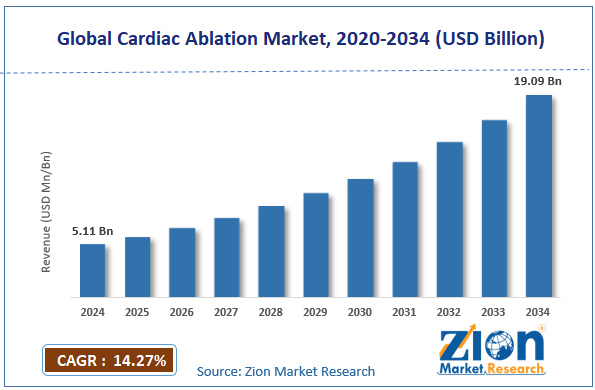
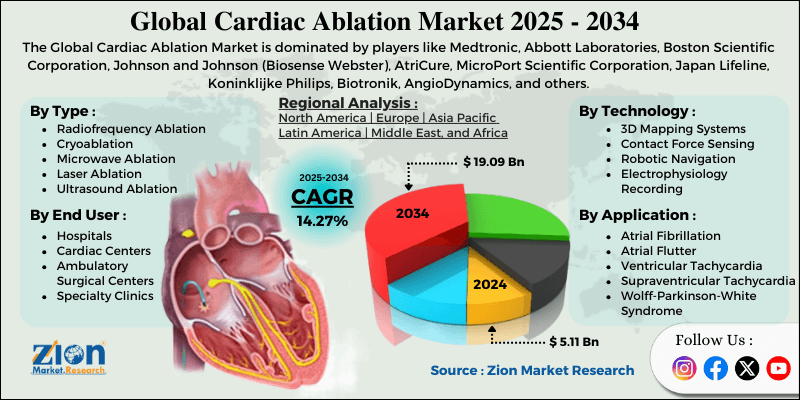
The global cardiac ablation market size was worth approximately USD 5.11 billion in 2024 and is projected to grow to around USD 19.09 billion by 2034, with a compound annual growth rate (CAGR) of roughly 14.27% between 2025 and 2034.
Key Insights
- As per the analysis shared by our research analyst, the global cardiac ablation market is estimated to grow annually at a CAGR of around 14.27% over the forecast period (2025-2034).
- In terms of revenue, the global cardiac ablation market size was valued at approximately USD 5.11 billion in 2024 and is projected to reach USD 19.09 billion by 2034.
- The cardiac ablation market is projected to grow significantly due to the rising prevalence of atrial fibrillation, the increasing aging population, growing awareness about minimally invasive treatments, and technological advancements in electrophysiology equipment.
- Based on type, the radiofrequency ablation segment is expected to lead the cardiac ablation market, while the cryoablation segment is anticipated to grow rapidly.
- Based on application, the atrial fibrillation segment is expected to lead the cardiac ablation market, while the ventricular tachycardia segment is anticipated to grow rapidly.
- Based on end-user, the hospitals segment is the dominating segment, while the cardiac centers segment is projected to witness sizeable revenue over the forecast period.
- Based on technology, the 3D mapping systems segment is expected to lead the market, followed by the conventional electrophysiology recording segment.
- Based on region, North America is projected to dominate the global cardiac ablation market during the estimated period, followed by Europe.
Cardiac Ablation Market: Overview
Cardiac ablation is a minimally invasive medical procedure that treats abnormal heart rhythms by creating controlled scar tissue in specific areas of the heart to block faulty electrical signals that cause irregular heartbeats. This therapeutic intervention uses specialized catheters inserted through blood vessels and guided to the heart chambers where rhythm problems originate. Electrophysiologists map the heart's electrical pathways using advanced imaging technology to identify the precise locations generating irregular signals. Energy sources such as radiofrequency heat, extreme cold from cryotherapy, microwave energy, laser beams, or focused ultrasound destroy small areas of heart tissue responsible for rhythm disturbances. The scarred tissue cannot conduct electrical impulses, effectively interrupting abnormal pathways and restoring normal heart rhythm patterns.
Modern ablation systems integrate three-dimensional mapping platforms that generate detailed heart-chamber models, improving procedural accuracy and reducing treatment time. Contact force sensing technologies help physicians apply optimal pressure during catheter placement, thereby enhancing safety and effectiveness. Robotic navigation systems provide precise catheter control, reducing radiation exposure for both patients and medical teams. The procedure treats various arrhythmias, including atrial fibrillation, atrial flutter, ventricular tachycardia, and other supraventricular rhythm disorders.
Recovery typically requires shorter hospital stays compared to open-heart surgery, with most patients resuming normal activities within days. Cardiac ablation offers long-term rhythm control, reduces stroke risk associated with atrial fibrillation, decreases medication dependence, and improves overall quality of life for patients suffering from debilitating heart rhythm problems.
The increasing prevalence of cardiac arrhythmias and growing preference for minimally invasive procedures are expected to drive growth in the cardiac ablation market throughout the forecast period.
Cardiac Ablation Market: Technology Roadmap 2025 – 2034
The cardiac ablation market is entering a dynamic phase of growth, driven by aging populations, rising prevalence of arrhythmias, technological advances in catheter design, and the integration of artificial intelligence. The following roadmap outlines key development phases expected through 2034.
2025–2027: Enhanced Precision and Safety Phase
- Improved contact-force sensing technologies provide real-time feedback during catheter placement, reducing complications and improving lesion quality, thereby improving treatment outcomes.
- Advanced three-dimensional mapping systems generate more detailed cardiac chamber models, enabling physicians to visualize complex anatomical structures and electrical pathways with greater accuracy.
2028–2031: Intelligence and Automation Phase
- Artificial intelligence algorithms analyze electrophysiology signals in real time, automatically identifying optimal ablation targets and predicting procedural success rates based on patient characteristics.
- Robotic catheter navigation systems offer enhanced precision and stability during complex procedures, reducing operator fatigue and improving consistency across different skill levels.
2032–2034: Comprehensive Treatment Ecosystem Phase
- Fully autonomous ablation systems perform standard procedures with minimal physician intervention, expanding access to treatment in underserved regions lacking specialized electrophysiology expertise.
- Real-time outcome prediction tools assess immediate procedural success and long-term probability of rhythm control, guiding decisions about additional ablation or adjunctive therapies.
Cardiac Ablation Market: Dynamics
Growth Drivers
The rising prevalence of atrial fibrillation is driving market expansion.
The cardiac ablation market is experiencing robust growth as atrial fibrillation rates increase globally due to aging populations and rising cardiovascular risk factors affecting millions of people. Atrial fibrillation is the most common sustained cardiac arrhythmia, causing irregular and often rapid heartbeats that significantly impair quality of life and increase stroke risk. The condition becomes more prevalent with advancing age, and global demographic shifts toward older populations directly increase the number of individuals requiring rhythm management interventions. Obesity, hypertension, diabetes, sleep apnea, and sedentary lifestyles contribute to atrial fibrillation development, and these risk factors are becoming more common worldwide. Untreated atrial fibrillation increases stroke risk by five times compared to individuals with a normal heart rhythm, creating serious public health concerns.
Symptoms, including palpitations, shortness of breath, fatigue, dizziness, and reduced exercise tolerance, significantly impair daily activities and overall well-being. Traditional management approaches rely heavily on medications that often cause side effects and require ongoing monitoring and dose adjustments. Growing awareness among both physicians and patients of ablation benefits, combined with expanding clinical indications and an aging population, collectively drive strong market growth for cardiac ablation technologies and services.
How are technological advancements in ablation systems driving the growth of the cardiac ablation market?
The global cardiac ablation industry is expanding rapidly as continuous technological innovations improve procedural safety, effectiveness, efficiency, and accessibility for patients and healthcare providers worldwide. Modern ablation catheters feature advanced tip designs that improve tissue contact, deliver energy uniformly, and integrate sensors that monitor temperature, impedance, and contact force during procedures. Three-dimensional electro-anatomic mapping systems create detailed color-coded maps that depict electrical activity patterns, anatomical structures, and previously ablated regions in real time. These mapping platforms significantly reduce fluoroscopy time, lowering radiation exposure for patients and medical staff while improving procedural precision. Contact force-sensing technology provides immediate feedback on catheter-tissue contact pressure, ensuring optimal lesion formation while preventing complications from excessive force.
Robotic navigation systems enable precise catheter manipulation through complex cardiac anatomy, reducing procedure time and improving outcomes in challenging cases. Newer energy modalities, including pulsed-field ablation, offer tissue-selective ablation that targets cardiac muscle while sparing nearby structures, such as the esophagus and the phrenic nerve. Integration with artificial intelligence algorithms helps identify optimal ablation targets, predict procedural success, and reduce learning curves for less experienced operators.
Restraints
High procedural costs limit the widespread adoption of cardiac ablation.
A significant challenge for the cardiac ablation market is the substantial cost of procedures, equipment, and specialized facilities required for safe and effective treatment delivery. Ablation procedures require advanced electrophysiology laboratories equipped with sophisticated mapping systems, imaging equipment, radiation protection, and emergency resuscitation capabilities. Capital investments required to establish fully equipped electrophysiology laboratories range from hundreds of thousands to several million dollars, creating barriers for smaller hospitals and facilities. Disposable catheters, mapping equipment, and other single-use supplies increase the direct costs of each procedure by several thousand dollars. Highly specialized electrophysiologists require extensive training beyond general cardiology, commanding premium compensation, and limiting the available workforce.
Lengthy procedure times, ranging from 2 to 6 hours, occupy expensive laboratory space and staff resources that could otherwise serve multiple patients. Insurance coverage varies significantly across regions and healthcare systems, with some insurers requiring failed medication trials before approving ablation. Rural and underserved areas often lack the specialized facilities and trained personnel needed to perform ablation safely.
Opportunities
How is the expansion of healthcare infrastructure creating new opportunities for the cardiac ablation market?
The cardiac ablation industry is experiencing strong growth as healthcare infrastructure improves in emerging economies, providing access to advanced cardiac rhythm management for previously underserved populations worldwide. Rising incomes in developing countries enable more individuals to afford private healthcare and specialized cardiac services previously unavailable in their regions. Government investments in healthcare infrastructure include the construction of new cardiac centers equipped with modern electrophysiology laboratories and the training of local specialists.
Growing medical tourism attracts international patients seeking high-quality ablation procedures at lower costs than available in their home countries. International manufacturers establish local partnerships and distribution networks to penetrate emerging markets more effectively. Training programs supported by professional societies and device manufacturers increase the number of qualified electrophysiologists in developing regions. Telemedicine and remote proctoring enable experienced physicians in developed countries to guide procedures performed by local teams in underserved areas.
Improved awareness about cardiac arrhythmias and available treatments reaches populations through public health campaigns and expanded media access. The growing prevalence of risk factors, including obesity, diabetes, and hypertension, in developing countries increases the patient population requiring rhythm management. International clinical trials in emerging markets generate local expertise and demonstrate safety and effectiveness to regulatory authorities and medical communities. Technology transfer agreements help local manufacturers produce affordable ablation equipment tailored to resource-limited settings.
Challenges
How are complications and recurrence rates creating challenges for the cardiac ablation industry?
The cardiac ablation industry faces significant challenges, as procedural complications, arrhythmia recurrence, and variability in long-term outcomes raise concerns among patients, physicians, and healthcare payers evaluating treatment value. Ablation procedures carry inherent risks, including vascular complications at catheter insertion sites, cardiac perforation causing pericardial effusion or tamponade requiring emergency intervention, and thromboembolic events potentially causing stroke. Damage to structures near ablation sites can occur, including esophageal injury leading to atrioesophageal fistula, phrenic nerve injury causing diaphragmatic paralysis, and pulmonary vein stenosis restricting blood flow from the lungs.
Ablation may inadvertently damage the atrioventricular node, requiring permanent pacemaker implantation in a small percentage of patients. Radiation exposure during fluoroscopy-guided procedures poses risks to patients and medical staff, particularly during lengthy or complex cases. Recurrence of arrhythmia after an initially successful ablation occurs in a significant proportion of patients, ranging from 20 to 40%, depending on arrhythmia type and patient characteristics. Repeat procedures increase cumulative costs, patient burden, and complication risks while reducing confidence in ablation as definitive therapy.
Cardiac Ablation Market: Report Scope
| Report Attributes | Report Details |
|---|---|
| Report Name | Cardiac Ablation Market |
| Market Size in 2024 | USD 5.11 Billion |
| Market Forecast in 2034 | USD 19.09 Billion |
| Growth Rate | CAGR of 14.27% |
| Number of Pages | 214 |
| Key Companies Covered | Medtronic, Abbott Laboratories, Boston Scientific Corporation, Johnson and Johnson (Biosense Webster), AtriCure, MicroPort Scientific Corporation, Japan Lifeline, Koninklijke Philips, Biotronik, AngioDynamics, and others. |
| Segments Covered | By Type, By Application, By End User, By Technology, and By Region |
| Regions Covered | North America, Europe, Asia Pacific (APAC), Latin America, Middle East, and Africa (MEA) |
| Base Year | 2024 |
| Historical Year | 2019 to 2023 |
| Forecast Year | 2025 - 2034 |
| Customization Scope | Avail customized purchase options to meet your exact research needs. Request For Customization |
Cardiac Ablation Market: Segmentation
The global cardiac ablation market is segmented based on type, application, end-user, technology, and region.
Based on type, the global cardiac ablation industry is segregated into radiofrequency ablation, cryoablation, microwave ablation, laser ablation, and ultrasound ablation. Radiofrequency ablation leads the market due to extensive clinical experience, proven safety and effectiveness, widespread availability, and strong supporting clinical evidence across multiple arrhythmia types.
Based on application, the industry is segmented into atrial fibrillation, atrial flutter, ventricular tachycardia, supraventricular tachycardia, and Wolff-Parkinson-White syndrome. Atrial fibrillation is expected to lead the market during the forecast period, driven by high and increasing prevalence, significant stroke risk requiring intervention, and expanding clinical indications supporting first-line ablation therapy.
Based on end user, the global cardiac ablation market is classified into hospitals, cardiac centers, ambulatory surgical centers, and specialty clinics. Hospitals hold the largest market share due to established electrophysiology infrastructure, the availability of specialized staff and emergency support services, and the ability to handle complex cases and potential complications.
Based on technology, the global market is divided into 3D mapping systems, contact force sensing, robotic navigation, and electrophysiology recording. 3D mapping systems hold the largest market share due to superior procedural guidance, reduced radiation exposure, improved ablation precision, and growing adoption as standard-of-care technology in modern electrophysiology.
Cardiac Ablation Market: Regional Analysis
North America leads the global market.
North America is expected to account for 42.8% of the global cardiac ablation market, retaining its lead. North America leads the cardiac ablation market due to the high prevalence of cardiac arrhythmias and widespread adoption of innovative medical technologies. The United States has a well-established network of electrophysiology laboratories equipped with state-of-the-art mapping systems, imaging equipment, and experienced specialists. High rates of obesity, diabetes, hypertension, and other cardiovascular risk factors contribute to elevated atrial fibrillation prevalence across North American populations.
Aging baby boomer demographics increase the absolute number of individuals developing cardiac arrhythmias requiring rhythm management interventions. Comprehensive insurance coverage through Medicare, Medicaid, and private insurers provides broad access to ablation procedures for eligible patients. Clinical practice guidelines from major cardiology societies increasingly recommend ablation as first-line therapy for selected patient populations. Robust research infrastructure supports ongoing clinical trials evaluating new ablation technologies, techniques, and patient selection strategies. Major medical device manufacturers maintain headquarters and significant operations in North America, ensuring rapid access to the latest innovations.
High physician awareness and training levels mean cardiologists readily refer appropriate patients for electrophysiology evaluation and consideration of ablation. Patient education through media coverage, advocacy groups, and direct-to-consumer advertising increases awareness about ablation as a treatment option. Strong emphasis on quality metrics and outcomes reporting drives continuous improvement in procedural techniques and patient selection. Regulatory pathways through the Food and Drug Administration, though rigorous, provide clear frameworks for bringing new ablation technologies to market. Academic medical centers and teaching hospitals train the next generation of electrophysiologists and pioneer advanced techniques.
What factors are contributing to Europe's significant growth in the cardiac ablation market?
Europe is projected to account for 28.4% of the global cardiac ablation market, remaining the second-largest region. Europe is witnessing considerable expansion in the cardiac ablation market as healthcare systems increasingly recognize ablation's clinical and economic value compared to long-term medication management for cardiac arrhythmias. Universal healthcare coverage in most European countries ensures broad patient access to cardiac rhythm management services regardless of socioeconomic status. Strong clinical research traditions across European academic centers contribute significantly to global evidence supporting ablation safety and effectiveness.
Multicenter registries and clinical trials coordinated across European countries provide robust data about long-term outcomes and optimal patient selection criteria. Aging populations throughout Europe drive increasing arrhythmia prevalence, particularly atrial fibrillation in individuals over sixty-five years of age. National and regional cardiology societies actively promote evidence-based guidelines recommending ablation for appropriate patient populations. Efficient healthcare systems emphasize cost-effectiveness, and growing economic analyses demonstrate ablation's value compared to the lifetime costs of medication and complications. Medical device regulations through the European Union frameworks ensure high safety and quality standards while allowing relatively efficient market access for innovations.
Established networks of cardiac centers and electrophysiology laboratories provide geographic coverage for patient access across both urban and rural areas. Strong emphasis on minimally invasive approaches aligns with ablation's advantages over traditional surgical rhythm management options. Cross-border healthcare agreements enable patients to seek specialized ablation services in neighboring countries with particular expertise or shorter waiting times. Government initiatives addressing cardiovascular disease as a major public health priority support investment in cardiac arrhythmia management infrastructure. Growing awareness about stroke prevention through rhythm control motivates both physicians and patients to pursue definitive ablation therapy. Physician training programs across Europe produce qualified electrophysiologists to meet the growing demand for ablation services.
Recent Market Developments
- In April 2025, Medtronic reported positive clinical outcomes from its next-generation Affera™ pulsed field ablation (PFA) technologies, including the investigational Sphere-360™ single-shot PFA catheter, which showed promising safety and performance results in atrial fibrillation patients.
Cardiac Ablation Market: Competitive Analysis
The leading players in the global cardiac ablation market are:
- Medtronic
- Abbott Laboratories
- Boston Scientific Corporation
- Johnson and Johnson (Biosense Webster)
- AtriCure
- MicroPort Scientific Corporation
- Japan Lifeline
- Koninklijke Philips
- Biotronik
- AngioDynamics
The global cardiac ablation market is segmented as follows:
By Type
- Radiofrequency Ablation
- Cryoablation
- Microwave Ablation
- Laser Ablation
- Ultrasound Ablation
By Application
- Atrial Fibrillation
- Atrial Flutter
- Ventricular Tachycardia
- Supraventricular Tachycardia
- Wolff-Parkinson-White Syndrome
By End User
- Hospitals
- Cardiac Centers
- Ambulatory Surgical Centers
- Specialty Clinics
By Technology
- 3D Mapping Systems
- Contact Force Sensing
- Robotic Navigation
- Electrophysiology Recording
By Region
- North America
- The U.S.
- Canada
- Europe
- France
- The UK
- Spain
- Germany
- Italy
- Rest of Europe
- Asia Pacific
- China
- Japan
- India
- South Korea
- Southeast Asia
- Rest of Asia Pacific
- Latin America
- Brazil
- Mexico
- Rest of Latin America
- Middle East & Africa
- GCC
- South Africa
- Rest of Middle East & Africa
Table Of Content
Methodology
FrequentlyAsked Questions

HappyClients