
Cactus Plants Market Size, Growth, Global Trends, Forecast 2034

Cactus Plants Market By Type (Desert Cacti, Forest Cacti, Grafted Cacti, Miniature Cacti, Flowering Cacti, and Others), By Application (Ornamental Plants, Landscaping, Indoor Decoration, Commercial Spaces, Botanical Gardens, Gift Items), By Distribution Channel (Online Retail, Offline Retail, Specialty Plant Stores, Garden Centers, Direct Sales, Wholesale Distribution), By End-User (Residential, Commercial, Institutional, Hospitality, Office Spaces), and By Region - Global and Regional Industry Overview, Market Intelligence, Comprehensive Analysis, Historical Data, and Forecasts 2025 - 2034
| Market Size in 2024 | Market Forecast in 2034 | CAGR (in %) | Base Year |
|---|---|---|---|
| USD 6.85 Billion | USD 23.84 Billion | 16.24% | 2024 |
Cactus Plants Industry Perspective:
What will be the size of the global cactus plants market between 2025 to 2034?
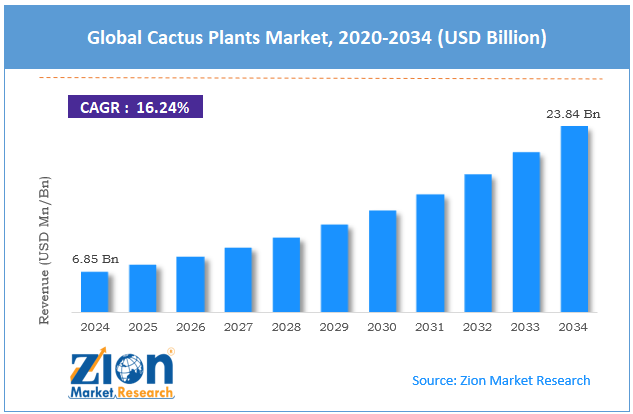
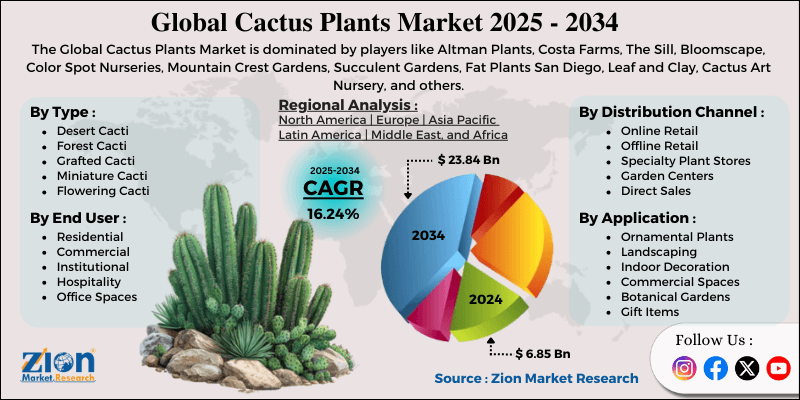
The global cactus plants market size was worth approximately USD 6.85 billion in 2024 and is projected to grow to around USD 23.84 billion by 2034, with a compound annual growth rate (CAGR) of roughly 16.24% between 2025 and 2034.
Key Insights
- As per the analysis shared by our research analyst, the global cactus plants market is estimated to grow annually at a CAGR of around 16.24% over the forecast period (2025-2034).
- In terms of revenue, the global cactus plants market size was valued at approximately USD 6.85 billion in 2024 and is projected to reach USD 23.84 billion by 2034.
- The cactus plants market is projected to grow significantly due to the rising demand for low-maintenance plants, increasing urbanization, growing interest in indoor gardening, and expanding awareness of water-efficient landscaping solutions.
- Based on type, the desert cacti segment is expected to lead the cactus plants market, while the flowering cacti segment is anticipated to experience significant growth.
- Based on application, the ornamental plants segment is expected to lead the cactus plants market, while the indoor decoration segment is anticipated to witness notable growth.
- Based on the distribution channel, the offline retail segment is the dominating segment, while the online retail segment is projected to witness sizeable revenue over the forecast period.
- Based on the end-user, the residential segment is expected to lead the market compared to the commercial segment.
- Based on region, North America is projected to dominate the global cactus plants market during the estimated period, followed by Europe.
Cactus Plants Market: Overview
Cacti are a diverse group of succulents in the family Cactaceae that have adapted to survive in arid and semi-arid environments through specialized water-storage mechanisms and unique structural features. These remarkable plants store water in their thick stems and have evolved spines instead of traditional leaves to minimize water loss through transpiration. The market encompasses a range of species, from small indoor specimens suitable for desk decoration to large outdoor varieties used in xeriscaping and landscape design. Desert cacti thrive in dry conditions with minimal water requirements, making them ideal for regions experiencing water scarcity or for individuals seeking low-maintenance plant options. Forest cacti originate in tropical rainforests and require higher humidity and indirect light than their desert counterparts. Flowering cacti produce spectacular blooms in various colors, including red, pink, yellow, orange, and white, attracting enthusiasts who appreciate both the plant structure and seasonal flowering displays. The market serves multiple purposes, including interior decoration, outdoor landscaping, botanical collections, educational displays, and gift-giving occasions.
Commercial growers cultivate millions of cacti annually through propagation methods, including seed germination, offset division, and cuttings. The plants appeal to consumers seeking sustainable, drought-tolerant, and aesthetically interesting additions to their homes, offices, and gardens. Growing environmental awareness and the global shift toward water-conserving landscaping practices continue to drive interest in cactus cultivation. As urbanization increases and living spaces become smaller, compact and resilient plant varieties like cacti offer practical solutions for bringing nature into modern environments.
The increasing popularity of indoor gardening and sustainable landscaping is expected to drive growth in the cactus plants market throughout the forecast period.
Cactus Plants Market: Development Roadmap 2025–2034
The cactus market is entering a gradual growth phase, supported by changing lifestyles, greater awareness of plant care, and improved cultivation practices. This roadmap highlights how cultivation quality, design use, sustainability, and consumer awareness will shape the cactus plants market through 2034.
2025–2027: Cultivation Improvement and Consumer Education Phase
- Growers improve nursery practices to produce healthier cactus plants with stronger roots and better survival rates.
- Brands invest more in simple care guides, labels, and online content to help buyers understand watering, sunlight, and soil needs correctly.
- Improved packaging and transport methods reduce damage during shipping and improve customer satisfaction for online cactus purchases.
2028–2031: Variety Expansion and Design Integration Phase
- Nurseries introduce more cactus varieties with unique shapes, colors, and flowering features to attract home décor-focused buyers.
- Designers and landscapers increasingly use cactus plants in offices, hotels, cafés, and shared spaces to create low-maintenance green interiors.
- Urban housing projects adopt cactus landscaping for balconies, rooftops, and common areas due to water-saving and easy upkeep benefits.
2032–2034: Sustainability and Smart Growing Phase
- Sustainable growing practices use recycled pots, organic soil mixes, and water-efficient systems to meet eco-conscious consumer expectations.
- Digital tools help growers monitor plant health, control pests early, reduce losses, and improve consistent cactus plant quality.
- Wider use of cactus plants in public spaces, schools, and commercial projects strengthens long-term demand through education and visibility.
Cactus Plants Market: Dynamics
Growth Drivers
How are environmental concerns and water conservation driving the growth of the cactus plants market?
The cactus plants market is experiencing robust expansion as environmental awareness intensifies and communities worldwide face increasing pressure to conserve water resources. Climate change has led to droughts and water restrictions in many regions, prompting homeowners and municipalities to reconsider traditional landscaping practices that rely heavily on irrigation. Cacti require minimal watering compared to conventional garden plants, making them attractive alternatives for sustainable landscaping projects. Government initiatives in water-scarce regions actively encourage or mandate xeriscaping practices that prioritize drought-resistant plants, such as cacti. Property owners face financial incentives to reduce water consumption through rebate programs that offset the cost of replacing water-intensive lawns with succulent gardens. Urban areas experiencing population growth struggle to maintain adequate water supplies for both residential and agricultural needs. The environmental movement has raised consumer awareness of resource conservation, leading individuals to make purchasing decisions that align with ecological values.
Educational campaigns highlighting the environmental impact of traditional gardening have shifted public perception, leading many to view cacti and other succulents as responsible choices rather than merely aesthetic preferences. Desert regions and areas prone to water scarcity have naturally embraced cactus landscaping as both practical and regionally appropriate.
Urbanization and changing lifestyles increase demand for decorative cactus plants.
The global cactus plant market is growing as urban living and modern lifestyles increase demand for small, easy-care indoor plants. Cities grow vertically, creating smaller homes where people still want greenery and natural décor indoors. Apartment residents have limited outdoor space, which has increased interest in indoor cactus plants that thrive under artificial lighting. Young professionals and millennials prefer cacti as affordable decorative plants to express personal style. Remote work growth increases time at home, encouraging people to improve indoor spaces with living plants. Social media trends promote cactus collections through modern minimalist interior design content and home décor inspiration. Small cactus plants fit desks, shelves, and windowsills, making them ideal for compact apartments and offices.
Low-maintenance cactus care appeals to busy urban consumers with limited time for watering routines. Cactus plants tolerate neglect, making them a good choice for frequent travelers and people with irregular schedules. Interior design trends that highlight natural elements are boosting the popularity of cacti as decorative home accents. Affordable cactus plants support global market growth.
Restraints
Limited awareness and misconceptions about care requirements are limiting the market growth.
A major challenge for the cactus market is a poor understanding of proper cactus care among new and casual plant buyers. Many people believe cactus plants survive without care, leading to mistakes that cause plant damage or death. New owners often assume that cactus plants require no water, resulting in severe dehydration and stunted growth over time. Others water cactus plants like regular houseplants, which leads to root rot and fungal problems. Confusion increases because different cactus types require different care, yet many buyers treat all cactus plants similarly. Forest cactus varieties need more water and shade compared to desert cactus plants, but this difference remains unclear to many consumers.
Limited knowledge of seasonal growth and dormancy leads to incorrect care during critical growth periods. Many cactus plants are placed indoors in low-light conditions, even though most varieties need bright light daily. Slow cactus growth discourages buyers expecting fast visual changes and quick results. Temperature needs, including cooler winter conditions for flowering, remain poorly understood. These care challenges reduce customer satisfaction and limit repeat purchases in the cactus plants market.
Opportunities
How is the growing trend of biophilic design creating new opportunities for the cactus plants market?
The cactus plant market is seeing strong growth as nature-inspired interior design becomes popular across homes, offices, and public buildings worldwide. Biophilic design focuses on adding natural elements indoors to improve comfort, well-being, and everyday living experiences. Companies increasingly understand that plants in workplaces help employees feel relaxed, focused, and more productive. Office designers choose cactus plants for desks, lobbies, and shared areas because they require little care. Hospitals and clinics use cactus plants in waiting areas and gardens to create calm, stress-reducing spaces. Schools and colleges add plant displays to improve learning environments and teach students basic plant knowledge. Hotels and restaurants use eye-catching cactus arrangements to create unique décor and memorable guest experiences.
Housing developers include cactus landscaping in balconies, courtyards, and common spaces to increase property appeal. Interior designers select large cactus plants as decorative features that also improve indoor spaces naturally. Architects view cactus walls and succulent displays as eco-friendly design elements supporting healthier indoor environments. Museums and cultural centers display cactus collections to educate visitors and promote interest in plant diversity and sustainability.
Challenges
How are pest infestations and disease management creating challenges for the cactus plants industry?
The cactus plant industry faces serious challenges from pests and diseases that damage plants and reduce success for both growers and home users. Mealybugs are very common pests that hide between spines and feed on plants, leaving sticky residue that can cause mold growth. Scale insects stick to cactus surfaces, multiply quickly, and weaken plants by continuously sucking vital nutrients. Spider mites grow easily in dry indoor air, creating webbing and causing spotted damage, reducing plant appearance. Root rot spreads fast when soil drains poorly or when cactus plants receive too much water.
Bacterial soft rot quickly destroys cactus plants, especially in warm, humid conditions common in greenhouses. Fungal diseases appear as spots, scars, or discoloration, reducing plant health and visual appeal. Virus infections, though rare, permanently damage the cactus's shape and lower the plant's market value. Pest problems grow faster in commercial greenhouses where plants remain close together for long periods. Chemical pest sprays may harm sensitive cactus types or create safety concerns for indoor use. Natural pest control needs skill, regular checks, and careful handling to remain effective.
Cactus Plants Market: Report Scope
| Report Attributes | Report Details |
|---|---|
| Report Name | Cactus Plants Market |
| Market Size in 2024 | USD 6.85 Billion |
| Market Forecast in 2034 | USD 23.84 Billion |
| Growth Rate | CAGR of 16.24% |
| Number of Pages | 216 |
| Key Companies Covered | Altman Plants, Costa Farms, The Sill, Bloomscape, Color Spot Nurseries, Mountain Crest Gardens, Succulent Gardens, Fat Plants San Diego, Leaf and Clay, Cactus Art Nursery, and others. |
| Segments Covered | By Type, By Application, By Distribution Channel, By End User, and By Region |
| Regions Covered | North America, Europe, Asia Pacific (APAC), Latin America, Middle East, and Africa (MEA) |
| Base Year | 2024 |
| Historical Year | 2019 to 2023 |
| Forecast Year | 2025 - 2034 |
| Customization Scope | Avail customized purchase options to meet your exact research needs. Request For Customization |
Cactus Plants Market: Segmentation
The global cactus plants market is segmented based on type, application, distribution channel, end-user, and region.
Based on type, the global cactus plants market is categorized into desert cacti, forest cacti, grafted cacti, miniature cacti, flowering cacti, and others. Desert cacti lead the market due to their exceptional drought tolerance, minimal maintenance requirements, and strong association with traditional cactus characteristics that appeal to consumers seeking authentic succulent experiences.
Based on application, the cactus plants industry is classified into ornamental plants, landscaping, indoor decoration, commercial spaces, botanical gardens, and gift items. Ornamental plants lead the market due to the widespread desire for decorative elements that enhance living and working environments, require minimal care, and provide long-term aesthetic value.
Based on distribution channel, the global cactus plants market is divided into online retail, offline retail, specialty plant stores, garden centers, direct sales, and wholesale distribution. Offline retail is expected to lead the market during the forecast period due to consumer preference for inspecting plants in person before purchase, immediate product availability, and the established presence of garden centers and nurseries in most communities.
Based on the end-user, the global market is segregated into residential, commercial, institutional, hospitality, and office spaces. Residential holds the largest market share due to the enormous number of households worldwide, the personal nature of home decoration decisions, and the growing trend of individuals cultivating indoor plant collections as hobbies.
Cactus Plants Market: Regional Analysis
What factors are contributing to North America's dominance in the global cactus plants market?
North America leads the cactus plants market due to suitable desert climates, strong gardening culture, and growing interest in water-saving and indoor plant trends. The United States, especially Arizona, California, Texas, and New Mexico, has natural desert landscapes where cactus plants grow naturally and remain culturally familiar. These southwestern regions face regular water shortages, making drought-tolerant cactus landscaping practical and necessary for long-term sustainability. Local governments promote xeriscaping through awareness programs, rebates, and landscaping rules that limit the use of high-water grasses. The region benefits from advanced nursery and greenhouse industries skilled in cactus growing, breeding, and large-scale distribution.
Commercial growers produce large cactus volumes for home décor, landscaping, gifting, and export markets. Strong retail networks, including home improvement stores, garden centers, and online platforms, ensure easy access to cactus plants. Higher disposable incomes allow consumers to spend on landscaping, indoor greenery, and premium cactus varieties. Modern interior design trends favor cactus plants as decorative, sculptural elements in homes and offices. Social media creators and plant influencers in North America drive interest in cactus collecting and home styling.
The region also introduced many popular succulent and cactus styling trends that have been adopted globally. Environmental awareness encourages sustainable planting practices that match cactus benefits. Educational gardening content increases knowledge of cactus care. Continuous housing development supports steady demand for cactus plants. Strong online plant retail platforms make cactus purchases convenient, supporting a wider reach across urban and suburban households. Rising interest in low-maintenance home décor plants continues to strengthen long-term demand for the cactus plants market across the region.
Europe is experiencing significant growth.
Europe is showing strong growth in the cactus plants market as indoor gardening becomes popular and sustainable living gains importance among younger consumers. The Netherlands plays a key role as a global plant trading hub, using advanced greenhouses to supply cactus plants across Europe. German consumers exhibit a strong interest in eco-friendly lifestyles and indoor plants, supporting steady demand for cactus varieties. Scandinavian countries prefer indoor plants because long winters and limited sunlight favor cactus plants, which are low-light tolerant. The United Kingdom sees rising cactus demand driven by social media, home décor trends, and lifestyle magazines. Southern European countries such as Spain and Italy support outdoor cactus cultivation due to their Mediterranean climates. French buyers value cactus plants as stylish design pieces for apartments, offices, and modern commercial interiors. European sustainability goals align well with cactus cultivation, as it requires low water use and is easy to maintain.
Urban residents in cities like London, Paris, Berlin, and Amsterdam choose compact cactus plants for small living spaces. Strong botanical traditions encourage interest in rare and decorative cactus varieties. Trade agreements facilitate the easy movement of plants across borders, supporting efficient distribution networks. Climate awareness increases demand for drought-resistant plants across the region. Rising apartment living boosts indoor cactus popularity. Growing interest in minimalist décor supports market expansion. The growing popularity of compact home living has led to a preference for plants that require minimal space and simple care. Increased availability of cactus varieties through online stores further supports market accessibility and sustained regional growth.
Recent Market Developments
- In February 2025, houseplant retailer The Sill reported rare cactus varieties emerging as the most popular houseplants of 2025, driven by strong consumer interest and increased availability of unique cactus types.
Cactus Plants Market: Competitive Analysis
The leading players in the global cactus plants market are:
- Altman Plants
- Costa Farms
- The Sill
- Bloomscape
- Color Spot Nurseries
- Mountain Crest Gardens
- Succulent Gardens
- Fat Plants San Diego
- Leaf and Clay
- Cactus Art Nursery
The global cactus plants market is segmented as follows:
By Type
- Desert Cacti
- Forest Cacti
- Grafted Cacti
- Miniature Cacti
- Flowering Cacti
- Others
By Application
- Ornamental Plants
- Landscaping
- Indoor Decoration
- Commercial Spaces
- Botanical Gardens
- Gift Items
By Distribution Channel
- Online Retail
- Offline Retail
- Specialty Plant Stores
- Garden Centers
- Direct Sales
- Wholesale Distribution
By End User
- Residential
- Commercial
- Institutional
- Hospitality
- Office Spaces
By Region
- North America
- The U.S.
- Canada
- Mexico
- Europe
- France
- The UK
- Spain
- Germany
- Italy
- Rest of Europe
- Asia Pacific
- China
- Japan
- India
- Australia
- South Korea
- Rest of Asia Pacific
- The Middle East & Africa
- Saudi Arabia
- UAE
- Egypt
- Kuwait
- South Africa
- Rest of the Middle East & Africa
- Latin America
- Brazil
- Argentina
- Rest of Latin America
Table Of Content
Methodology
FrequentlyAsked Questions

HappyClients

