
Global Roof Window Market Size, Share, Growth Analysis Report - Forecast 2034

Roof Window Market By Material (Metal, Wood, Glass, UPVC, Others), By Mechanism (Swinging, Sliding, Folding, Others), By End User (Household, Corporate Complex, Commercial Complex, Others), By Distribution Channel (Specialty Stores, Distributor, Online, Others), and By Region: Global and Regional Industry Overview, Market Intelligence, Comprehensive Analysis, Historical Data, and Forecasts 2025 - 2034
| Market Size in 2024 | Market Forecast in 2034 | CAGR (in %) | Base Year |
|---|---|---|---|
| USD 4.52 Billion | USD 8.02 Billion | 5.9% | 2024 |
Roof Window Market: Industry Perspective
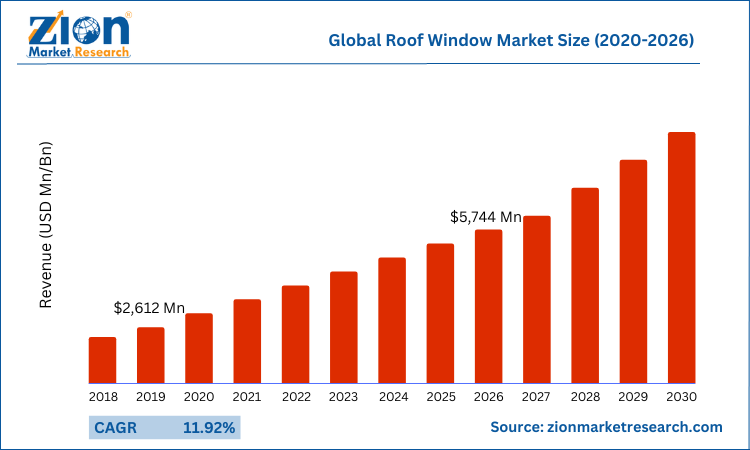
The global roof window market size was worth around USD 4.52 Billion in 2024 and is predicted to grow to around USD 8.02 Billion by 2034 with a compound annual growth rate (CAGR) of roughly 5.9% between 2025 and 2034. The report analyzes the global roof window market's drivers, restraints/challenges, and the effect they have on the demands during the projection period. In addition, the report explores emerging opportunities in the roof window industry.
Roof Window Market: Overview
A roof window is integrated into a building's roof design. It is often confused with skylight but has its structural variations, as well as other similar architectural or lighting elements. A roof may have one or more roof windows of different shapes and sizes. It can be sealed, opened, tinted, double-glazed, or triple-glazed. A roof window is also a good choice if there is a need to allow both light and fresh air into the room. The roof window appears to be bigger than the skylight, making it possible to enjoy a broader view of the sky. In addition, the skylights are typically stationary; specifically, they cannot be opened or closed.
Key Insights
- As per the analysis shared by our research analyst, the global roof window market is estimated to grow annually at a CAGR of around 5.9% over the forecast period (2025-2034).
- Regarding revenue, the global roof window market size was valued at around USD 4.52 Billion in 2024 and is projected to reach USD 8.02 Billion by 2034.
- The roof window market is projected to grow at a significant rate due to rising demand for natural light and ventilation, increased adoption of energy-efficient building solutions, and growing urbanization and construction activities.
- Based on Material, the Metal segment is expected to lead the global market.
- On the basis of Mechanism, the Swinging segment is growing at a high rate and will continue to dominate the global market.
- Based on the End User, the Household segment is projected to swipe the largest market share.
- By Distribution Channel, the Specialty Stores segment is expected to dominate the global market.
- Based on region, Europe is predicted to dominate the global market during the forecast period.
Roof Window Market: Dynamics
Key Growth Drivers:
The roof window market is primarily driven by the increasing demand for enhanced natural lighting and ventilation in residential and commercial buildings. Growing urbanization, rising disposable incomes, and the shift toward sustainable and energy-efficient construction are encouraging the adoption of roof windows. The popularity of green building concepts and eco-friendly materials has further fueled the demand for roof windows that improve indoor air quality and reduce energy consumption. Additionally, advancements in window glazing, insulation, and smart control technologies are enhancing product performance and boosting market growth. The renovation and remodeling of older buildings in developed regions also contribute significantly to the market’s expansion.
Restraints:
The roof window market faces several restraints, including high installation and maintenance costs that may deter cost-sensitive consumers, especially in developing regions. Roof windows also require precise installation to prevent water leakage, which can increase labor expenses and complexity. Harsh weather conditions such as heavy rainfall or snow accumulation can limit the use of roof windows in certain regions. Furthermore, limited awareness about the benefits of roof windows in some markets restricts their adoption. The availability of low-cost substitutes like skylights and traditional windows also poses a challenge to widespread market growth.
Opportunities:
The growing emphasis on smart home technologies presents new opportunities for the roof window market. The integration of sensors, remote controls, and automated systems in roof windows is gaining popularity among modern consumers seeking convenience and energy efficiency. Emerging economies are witnessing rapid infrastructure development and increased investment in housing projects, offering vast potential for market expansion. Moreover, the trend toward sustainable architecture and government incentives promoting energy-efficient buildings are expected to drive future demand. Manufacturers focusing on innovative designs, customizable products, and eco-friendly materials can further capitalize on the growing consumer preference for aesthetic and functional home improvements.
Challenges:
The roof window market faces challenges related to strict building regulations and standards that vary across regions, making it difficult for manufacturers to achieve compliance and streamline production. Fluctuations in raw material prices, particularly for glass and aluminum, can affect overall production costs and profit margins. The risk of damage during extreme weather conditions and the need for regular maintenance can also deter potential buyers. Additionally, the presence of unorganized local players offering low-cost alternatives increases competition and pressures established brands to maintain quality while staying price-competitive.

Roof Window Market: Segmentation
The global roof window is segmented based on material type, application, and region. All the segments have been analyzed based on present and future trends and the market is estimated from 2025 to 2034.
Based on material type, the market is segmented into Wood, Polyurethane (PU), Polyvinyl Chloride (PVC), Aluminum, and others. The PVC segment is predicted to grow at a remarkable CAGR during the forecast period. The PVC segment of the roof window market has been experiencing steady growth in recent years due to several factors. One of the key drivers of this growth is the increasing demand for energy-efficient and eco-friendly building solutions.
PVC roof windows offer excellent thermal insulation, which can help reduce energy consumption and lower heating and cooling costs. Additionally, PVC is a cost-effective material compared to wood and metal, making it an attractive option for budget-conscious customers. The growing popularity of modern and contemporary building designs that favor clean and sleek lines also works in favor of the PVC segment. Moreover, the durability and low maintenance requirements of PVC roof windows make them a practical choice for customers who value convenience and longevity. The continued growth of the construction and renovation industries in emerging markets also presents new growth opportunities for the PVC segment of the roof window market.
Based on application, the market is segmented into residential and commercial. The residential segment of the roof window industry has been experiencing steady growth in recent years due to several factors. One of the key drivers of this growth is the increasing trend of home renovation and remodeling, as homeowners seek to improve the value and functionality of their homes. Roof windows are popular additions to residential properties, as they provide natural light & ventilation, and enhance the aesthetics of the building.
Additionally, the growing trend of eco-friendly and energy-efficient building solutions has increased the demand for roof windows in residential properties, as they provide a source of natural light that can help reduce energy consumption and lower heating and cooling costs. The increasing focus on health and well-being in modern-day living has also contributed to the growth of the residential segment of the roof window market, as homeowners seek to create a more comfortable and healthy living environment for themselves and their families. With the continued growth of the residential construction and renovation industries, the residential segment of the roof window market is poised for further growth in the coming years.
The Regional, this segment includes the current and forecast demand for North America, Europe, Asia Pacific, Latin America,and the Middle East and Africa.
Roof Window Market: Report Scope
| Report Attributes | Report Details |
|---|---|
| Report Name | Roof Window Market |
| Market Size in 2024 | USD 4.52 Billion |
| Market Forecast in 2034 | USD 8.02 Billion |
| Growth Rate | CAGR of 5.9% |
| Number of Pages | 234 |
| Key Companies Covered | VELUX, Glazing Vision, Fakro Group, Dakea, FAKRO, Renson, Roto, Roto Frank AG, RoofLITE, Velux UK, and others. |
| Segments Covered | By Material, By Mechanism, By End User, By Distribution Channel, and By Region |
| Regions Covered | North America, Europe, Asia Pacific (APAC), Latin America, The Middle East and Africa (MEA) |
| Base Year | 2024 |
| Historical Year | 2020 to 2023 |
| Forecast Year | 2025 - 2034 |
| Customization Scope | Avail customized purchase options to meet your exact research needs. Request For Customization |
Roof Window Market: Regional Analysis
Asia-Pacific region to dominate the global market during the forecast period
Based on region, the Asia-Pacific region held the largest roof window market share in 2024 and is further predicted to grow exponentially during the forecast period. The Asia Pacific region has been experiencing significant growth in the roof window market in recent years. The growing urbanization and industrialization in the region have led to a rise in construction activities, resulting in an increasing demand for roofing solutions. The growing trend of eco-friendly and energy-efficient building solutions has also contributed to the growth of the roof window market in the region, as consumers seek to reduce their energy consumption and lower their carbon footprint.
The region's large population and rising disposable income have also increased demand for high-quality roofing solutions that enhance the aesthetics and functionality of their buildings. Additionally, the increasing adoption of modern building designs that favor clean and sleek lines works in favor of the roof window market. With continued investments in infrastructure development and the growth of the construction industry in the region, the Asia Pacific roof window market is poised for further growth in the coming years.
Roof Window Market: Competitive Analysis
The report provides a company market share analysis to give a broader overview of the key market players. In addition, the report also covers key strategic developments of the market, including acquisitions & mergers, new product launches, agreements, partnerships, collaborations & joint ventures, research & development, and regional expansion of major participants involved in the roof window market on a global and regional basis.
The key players operating in the Global Roof Window Market include:
- Velux Group
- Fakro
- Roto Frank AG
- Sunlux Roof Windows
- Keylite Roof Windows
- Faelux
- Skylights Plus
- VELFAC
- ECOtherm
- Optilight Roof Windows
- Dakea
- LAMILUX Heinrich Strunz Group
- RoofLITE
- Alwitra
- AHRD
- AHRD Korea
- Natural Light Co. Ltd.
- Solstro
- VivaTerra
- Bilka Steel.
This report segments the global Roof Window Market into:
By Material Type
- Wood
- Polyurethane (PU)
- Polyvinyl Chloride (PVC)
- Aluminum
- Others [Composite, Fiberglass Etc.]
By Application
- Residential
- Commercial
By Region
- North America
- The U.S.
- Canada
- Mexico
- Europe
- France
- The UK
- Spain
- Germany
- Italy
- Rest of Europe
- Asia Pacific
- China
- Japan
- India
- Australia
- South Korea
- Rest of Asia Pacific
- The Middle East & Africa
- Saudi Arabia
- UAE
- Egypt
- Kuwait
- South Africa
- Rest of the Middle East & Africa
- Latin America
- Brazil
- Argentina
- Rest of Latin America
Table Of Content
Methodology
FrequentlyAsked Questions
A roof window is integrated into a building's roof design. It is often confused with skylight but has its structural variations, as well as other similar architectural or lighting elements. A roof may have one or more roof windows of different shapes and sizes. It can be sealed, opened, tinted, double-glazed, or triple-glazed.
The global roof window market is expected to grow due to increasing demand for natural light and ventilation, the growing trend of energy-efficient and sustainable building solutions, rising disposable incomes leading to more home renovations, and the desire for aesthetic and functional improvements in building.
According to a study, the global roof window market size was worth around USD 4.52 Billion in 2024 and is expected to reach USD 8.02 Billion by 2034.
The global roof window market is expected to grow at a CAGR of 5.9% during the forecast period.
Europe is expected to dominate the roof window market over the forecast period.
Leading players in the global roof window market include VELUX, Glazing Vision, Fakro Group, Dakea, FAKRO, Renson, Roto, Roto Frank AG, RoofLITE, Velux UK, among others.
The report explores crucial aspects of the roof window market, including a detailed discussion of existing growth factors and restraints, while also examining future growth opportunities and challenges that impact the market.

HappyClients

