
Digital Games Market Trend, Share, Growth, Size, Analysis and Forecast 2032

Digital Games Market - by Devices (Personal Computer, Tablet, Laptop, Smartphones, Notepad, And Others): Global Industry Perspective, Comprehensive Analysis and Forecast, 2024 - 2032
| Market Size in 2023 | Market Forecast in 2032 | CAGR (in %) | Base Year |
|---|---|---|---|
| USD 219.18 Billion | USD 793.06 Billion | 15.36% | 2023 |
What is the projected value for the Digital Games Market during 2024 to 2032?
According to Zion Market Research, the global Digital Games Market was worth USD 219.18 Billion in 2023. The market is forecast to reach USD 793.06 Billion by 2032, growing at a compound annual growth rate (CAGR) of 15.36% during the forecast period 2024-2032. The report offers a comprehensive analysis of the market, highlighting the factors that will determine growth, potential challenges, and opportunities that could emerge in the Digital Games industry over the next decade.
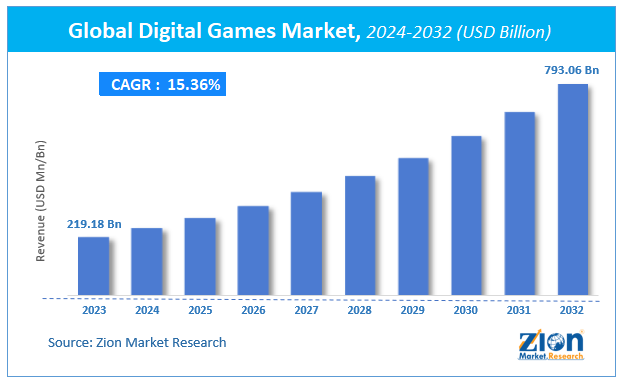
Global Digital Games Market: Overview
An electronic game played with the help of human interaction on user-interface electronic devices is known as a digital game. The digital devices such as TV, consoles, mobile displays, and PC monitors used to play games are known as platforms. On the basis of various different platforms, a wide range of games can be designed. Digital games can be played once the required file is downloaded.
The digital games market refers to the industry that involves the creation, distribution, and monetization of video games played on digital platforms such as PCs, consoles, mobile devices, and cloud-based services. This market includes various genres like action, adventure, sports, simulation, and more, catering to a broad audience globally. Digital games are distributed through online platforms, such as Steam, Xbox Live, PlayStation Network, and mobile app stores, enabling users to download or stream games without needing physical copies. The market's growth is driven by factors such as increasing smartphone penetration, the rise of online multiplayer gaming, advancements in graphics and game design, and the popularity of esports and in-game purchases. The shift towards digital downloads and cloud gaming services has further expanded the reach of the market, making it a multi-billion-dollar industry.
Global Digital Games Market: Growth Factors
Factors including increasing use of devices such as smartphones, laptops, and tablets for gaming purpose are expected to boost the global digital games market growth in the near future. In addition, growing interest and attraction towards games among young generation are also impact the growth of the market in a positive way. Other factors such as paymium and freemium subscription models are further anticipated to boost the global market growth in future. Digital games witness high demand as compared with core games, social games, and casual games.
Moreover, support of virtual technologies in the digital gaming field will also increase the demand in the coming future. Additionally, adults playing digital games as a source of entertainment also contribute to the growth of the market. Technological advancements such as touch screen technology and easy availability of the games over the Internet positively impact the market growth.
Other factors such as social media including Facebook, rising disposal income, and standard of living, increasing awareness of digital games for the educative purpose are increasing the demand of digital games in the market globally. On the other hand, factors such as piracy, excess memory utilization, and old version of OS are hampering the global digital games market.
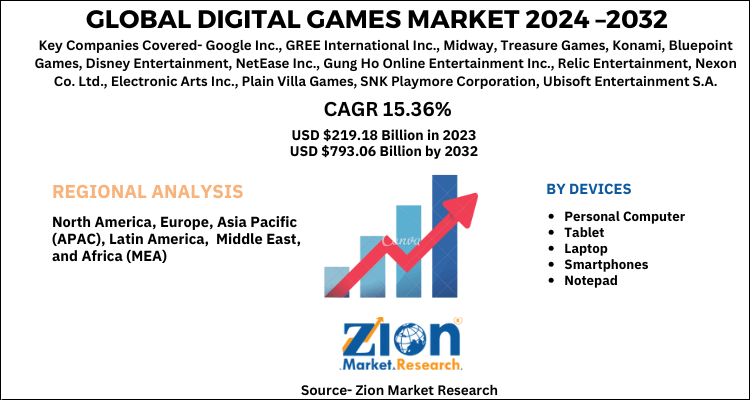
Global Digital Games Market: Segmentation
On the basis of devices, the global digital games market is segmented as the personal computer, tablet, laptop, smartphones, notepad, and others.
Smartphone segment is dominating the market due to its largest market share. These games include console games, social gaming, online games, and play station.
Region-wise, the global market is segregated into North America, Europe, Asia Pacific, Latin America, and Middle East & Africa.
Digital Games Market: Report Scope
| Report Attributes | Report Details |
|---|---|
| Report Name | Digital Games Market |
| Market Size in 2023 | USD 219.18 Billion |
| Market Forecast in 2032 | USD 793.06 Billion |
| Growth Rate | CAGR of 15.36% |
| Number of Pages | 110 |
| Key Companies Covered | Google Inc., GREE International Inc., Midway, Treasure Games, Konami, Bluepoint Games, Disney Entertainment, NetEase Inc., Gung Ho Online Entertainment Inc., Relic Entertainment, Nexon Co. Ltd., Electronic Arts Inc., Plain Villa Games, SNK Playmore Corporation, Ubisoft Entertainment S.A., and Activation Blizzard Inc. Other key players influencing the global market include Westwood Studios, Supercell Oy, Apple Inc., King Digital Entertainment, Black Isle Studios, Origin Systems, SCE Japan Studio, Square Unix, Facebook Inc., Telltale Games Inc., Popcap GamesTakeTwo Interactive, Capybara Games, DeNa Co. Ltd., Zynga Inc., Namco Bandai, Shanda Games Ltd., Sega, Tencent, NCSoft, Sony Corporation, Nintendo Co. Ltd., Failbetter Games, and Microsoft Corporation |
| Segments Covered | By Product Type, By Application And By Region |
| Regions Covered | North America, Europe, Asia Pacific (APAC), Latin America, Middle East, and Africa (MEA) |
| Base Year | 2023 |
| Historical Year | 2018 - 2022 |
| Forecast Year | 2024 - 2032 |
| Customization Scope | Avail customized purchase options to meet your exact research needs. Request For Customization |
Global Digital Games Market: Regional Analysis
Based on the region, the global Digital Games market can be divided into five main regions: Latin America, North America, Europe, Asia Pacific, and the Middle East and Africa. Asia Pacific is witnessing the highest growth in the global digital games market. China is the leading market player in the region. In addition, developing countries such as India and Japan are anticipated to witness considerable market growth in the global digital games market.
Global Digital Games Market: Competitive Players
Some main participants of the Digital Games market are
- Google Inc.
- GREE International Inc.
- Midway
- Treasure Games
- Konami
- Bluepoint Games
- Disney Entertainment
- NetEase Inc.
- Gung Ho Online Entertainment Inc.
- Relic Entertainment
- Nexon Co. Ltd.
- Electronic Arts Inc.
- Plain Villa Games
- SNK Playmore Corporation
- Ubisoft Entertainment S.A.
- Activation Blizzard Inc.
Other key players influencing the global market include
- Westwood Studios
- Supercell Oy
- Apple Inc.
- King Digital Entertainment
- Black Isle Studios
- Origin Systems
- SCE Japan Studio
- Square Unix
- Facebook Inc.
- Telltale Games Inc.
- Popcap GamesTakeTwo Interactive
- Capybara Games
- DeNa Co. Ltd.
- Zynga Inc.
- Namco Bandai
- Shanda Games Ltd.
- Sega
- Tencent
- NCSoft
- Sony Corporation
- Nintendo Co. Ltd.
- Failbetter Games
- Microsoft Corporation.
The digital gaming market is segmented as follows:
By Devices
- Personal Computer
- Tablet
- Laptop
- Smartphones
- Notepad
- And Others
By Region
- North America
- The U.S.
- Canada
- Mexico
- Europe
- France
- The UK
- Spain
- Germany
- Italy
- Rest of Europe
- Asia Pacific
- China
- Japan
- India
- Australia
- South Korea
- Rest of Asia Pacific
- The Middle East & Africa
- Saudi Arabia
- UAE
- Egypt
- Kuwait
- South Africa
- Rest of the Middle East & Africa
- Latin America
- Brazil
- Argentina
- Rest of Latin America
Table Of Content
Methodology
FrequentlyAsked Questions
Digital games are electronic games played on computers, consoles, or mobile devices. They provide interactive entertainment and engagement.
The global Digital Games market is expected to be driven by the rising smartphone and console adoption, growing internet penetration, and increasing demand for immersive gaming experiences. Expansion of online multiplayer, cloud gaming, and in-app purchases supports market growth.
According to study, the global Digital Games market size was worth around USD 219.18 Billion in 2023 and is predicted to grow to around USD 793.06 Billion By 2032.
The global Digital Games market is expected to grow at a Compound Annual Growth Rate (CAGR) of around CAGR 15.36% during the forecast period from 2024-2032.
The global Digital Games industry is projected to be challenged by Challenges include intense competition, rising user acquisition costs, platform dependency, and regulatory scrutiny on monetization and content.
The Opportunities include growth in mobile and cloud gaming, e-sports expansion, in-game purchases, and adoption of AR/VR and AI-driven experiences will offer significant growth opportunities in the Digital Games market.
Cloud gaming and subscription-based access models; AI-driven personalization and in-game analytics; growth of AR/VR and immersive multiplayer experiences are the emerging trends and innovations impacting the Digital Games market.
The global Digital Games market is expected to be led by APAC during the forecast period.
Some of the prominent players operating in the global Digital Games market are; Google Inc., GREE International Inc., Midway, Treasure Games, Konami, Bluepoint Games, Disney Entertainment, NetEase Inc., Gung Ho Online Entertainment Inc., Relic Entertainment, Nexon Co. Ltd., Electronic Arts Inc., Plain Villa Games, SNK Playmore Corporation, Ubisoft Entertainment S.A., and Activation Blizzard Inc. Other key players influencing the global market include Westwood Studios, Supercell Oy, Apple Inc., King Digital Entertainment, Black Isle Studios, Origin Systems, SCE Japan Studio, Square Unix, Facebook Inc., Telltale Games Inc., Popcap GamesTakeTwo Interactive, Capybara Games, DeNa Co. Ltd., Zynga Inc., Namco Bandai, Shanda Games Ltd., Sega, Tencent, NCSoft, Sony Corporation, Nintendo Co. Ltd., Failbetter Games, and Microsoft Corporation and others.
The report explores crucial aspects of the Digital Games market, including a detailed discussion of existing growth factors and restraints, while also browsing future growth opportunities and challenges that impact the market.

HappyClients