
Global Yoga Tourism Market Size, Share Analysis, Growth Trends, and Forecast 2034

Yoga Tourism Market By Type (Yoga Retreats, Wellness Programs, Yoga Teacher Training Programs, and Adventure Yoga Trips), By Application (Short-Term and Long-Term), By Gender (Men and Women), and Region - Global and Regional Industry Overview, Market Intelligence, Comprehensive Analysis, Historical Data, and Forecasts 2026 - 2034
| Market Size in 2025 | Market Forecast in 2034 | CAGR (in %) | Base Year |
|---|---|---|---|
| USD 177 Billion | USD 296 Billion | 5.9% | 2025 |
Yoga Tourism Market: Industry Perspective
What will be the size of the global yoga tourism market during the forecast period?
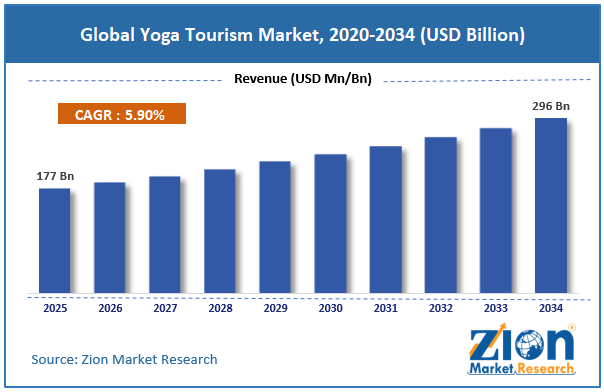
The global yoga tourism market size was worth around USD 177 billion in 2025 and is predicted to grow to around USD 296 billion by 2034, with a compound annual growth rate (CAGR) of roughly 5.9% between 2026 and 2034.
Key Insights
- As per the analysis shared by our research analyst, the global yoga tourism market is estimated to grow annually at a CAGR of around 5.9% over the forecast period (2026-2034).
- In terms of revenue, the global yoga tourism market size was valued at around USD 177 billion in 2025 and is projected to reach USD 296 billion by 2034.
- Increasing government initiatives are expected to propel the yoga tourism market over the projected period.
- Based on the type, the wellness programs segment dominates the market.
- Based on the application, the long-term segment holds a majority of market share in 2025.
- Based on the gender, the male segment holds a majority of market share in 2025.
- Based on region, the Asia Pacific dominates the yoga tourism market.
Yoga Tourism Market: Overview
Yoga tourism involves traveling to practice yoga, learn about it, deepen one’s knowledge, and enjoy the destination's cultural, spiritual, and wellness offerings. Yoga tourism involves integrating yoga practices, which include retreats, meditations, breathing techniques, and yoga workshops, with tourism experiences, which include visiting wellness centers, temples, natural wonders, and other cultural destinations. Yoga tourism is increasingly popular among tourists seeking a stress-free life, physical and mental wellness, mindfulness, and holistic living. The popular yoga tourism destinations include India (Rishikesh and Kerala), Southeast Asia, and Europe.
Impact of the USA-Israel War on Iran on the Yoga Tourism Market
The U.S.-Israel conflict with Iran is having a negative impact on the yoga tourism market by causing uncertainties and disruptions in flights and safety in the Middle East. The rise in travel costs and disruptions to tourist movement stem from airspace restrictions and longer routes, while further tensions in the Strait of Hormuz have increased fuel price volatility. Consequently, some tourists may defer or even cancel their trips to such destinations.
Yoga Tourism Market: Dynamics
Growth Drivers
Why does the growing focus on health and wellness drive the yoga tourism market?
Growing attention to health and well-being plays an important role in driving growth in the Yoga Tourism Market. The rise in lifestyle diseases and other health issues affecting people worldwide is another key driver of the market. Growing awareness of problems like obesity, heart disease, diabetes, stress, and more has helped consumers recognize the need to adopt preventive, wellness-focused lifestyles, making yoga a complementary activity for better physical fitness, flexibility, and relaxation.
Restraints
High travel and accommodation costs act as a major restraint on the growth of the yoga tourism industry
The high cost of travel and accommodation is one of the biggest constraints on the growth of the yoga tourism market, as international airfares, travel costs, yoga retreats, hotels, wellness resorts, and other travel-related expenses can significantly raise the total cost of the trip. Premium yoga retreats include accommodation, special classes, nutritious food, meditation sessions, wellness treatments, and more, so they are usually costly for price-sensitive customers. Inflation and rising fuel and accommodation prices may also increase travel costs.
Opportunities
How does the growth of spiritual and experiential travel offer a lucrative opportunity for the yoga tourism market?
Growth in spiritual and experiential tourism offers a major opportunity for the yoga tourism market, as tourists increasingly seek experiences that help them grow personally, meditate, relax, and feel spiritually fulfilled rather than engage in ordinary tourism. Yoga tourism can include yoga classes, meditation, Ayurvedic practices, cultural activities, time in nature, and visits to spiritually significant places. This trend allows the development of special yoga tours for both local and international tourists.
Challenges
Why does the lack of standardized industry regulations pose a significant challenge to the growth of the yoga tourism industry?
The lack of industry-wide regulations is a serious barrier to growth for the yoga tourism market, as the absence of standardization in teacher qualifications, safety, certification, venues, and even services means traveling yogis' experiences will likely differ from place to place. The lack of regulations might also fuel fears about unqualified teachers, false health claims, and safety issues, which in turn might reduce consumer trust.

Yoga Tourism Market: Report Scope
| Report Attributes | Report Details |
|---|---|
| Report Name | Yoga Tourism Market |
| Market Size in 2025 | USD 177 Billion |
| Market Forecast in 2034 | USD 296 Billion |
| Growth Rate | CAGR of 5.9% |
| Number of Pages | 227 |
| Key Companies Covered | Yoga International, Ananda in the Himalayas, Yoga Alliance, Yoga Journal, Iyengar Yoga Institute of San Francisco, Gaia Inc., BookYogaRetreats, Pure Yoga, CorePower Yoga, Manduka, Liforme, YogaWorks, Yoga Download, Yoga retreats Spain, YogaGlo, Yogaworks, Wanderlust, Sivananda Ashram Yoga Retreat, Tripaneer, Yogaville, and others. |
| Segments Covered | By Type, By Application, By Gender, and By Region |
| Regions Covered | North America, Europe, Asia Pacific (APAC), Latin America, Middle East, and Africa (MEA) |
| Base Year | 2025 |
| Historical Year | 2020 - 2024 |
| Forecast Year | 2026 - 2034 |
| Customization Scope | Avail customized purchase options to meet your exact research needs. Request For Customization |
Yoga Tourism Market: Segmentation
Type Insights
Why does the wellness programs segment hold a prominent position in the yoga tourism market?
The wellness programs segment dominates the yoga tourism market. Wellness programs now support revenue generation in the yoga tourism market, as tourists want an integrated experience that combines yoga with meditation, Ayurveda, nutrition, spa treatments, mindfulness, and stress management. This is leading hotels, resorts, and retreats to offer customized wellness programs, resulting in higher visitor spending and longer stays.
Application Insights
How does the long-term segment capture the largest share in the yoga tourism market?
The long-term segment holds the largest share of the yoga tourism industry in 2025 because most travelers are choosing longer periods of relaxation and rejuvenation rather than brief ones. Longer stays mean higher spending on hotels, yoga classes, meditation, treatments, food, and culture-related activities. Moreover, longer courses like yoga instructor training, spiritual retreats, and wellness programs are likely to bring travelers back for more visits.
Gender Insights
Why does the male segment capture the largest share in the yoga tourism market?
The male segment holds the largest share of the yoga tourism market in 2025. Growing health awareness and the increasing prevalence of lifestyle disorders are driving market growth.
Regional Insights
What factors drive the Asia Pacific region in the yoga tourism market?
The Asia Pacific Yoga Tourism Market is expected to grow steadily, driven by the region's cultural heritage, including yoga, an expanding wellness tourism market, and more government programs promoting yoga and holistic wellness. One major contributor to these trends is India, which actively markets yoga as part of its wellness and tourism offerings through the Ministry of Tourism and the Ministry of AYUSH. For instance, in 2025, the Ministry of Tourism held International Day of Yoga activities at 40 cultural and nature landmarks in India.
Government programs like the International Day of Yoga, the Common Yoga Protocol, and the construction of 1,000 Yoga Parks make yoga better known and more popular. Furthermore, India has established a strategy to develop its medical and wellness tourism industry and introduced the Ayush Visa for foreigners who want to use traditional Indian wellness services. These government initiatives improve the region's attractiveness as a wellness destination, increase international and local tourism, and create opportunities to organize yoga retreats, wellness resorts and centers, and spiritual tourism experiences.
Yoga Tourism Market: Competitive Analysis
The global yoga tourism market is dominated by players like:
- Yoga International
- Ananda in the Himalayas
- Yoga Alliance
- Yoga Journal
- Iyengar Yoga Institute of San Francisco
- Gaia Inc.
- BookYogaRetreats
- Pure Yoga
- CorePower Yoga
- Manduka
- Liforme
- YogaWorks
- Yoga Download
- Yoga retreats Spain
- YogaGlo
- Yogaworks
- Wanderlust
- Sivananda Ashram Yoga Retreat
- Tripaneer
- Yogaville
The global yoga tourism market is segmented as follows:
By Type
- Yoga Retreats
- Wellness Programs
- Yoga Teacher Training Programs
- Adventure Yoga Trips
By Application
- Short-Term
- Long-Term
By Gender
- Men
- Women
By Region
- North America
- The U.S.
- Canada
- Mexico
- Europe
- France
- The UK
- Spain
- Germany
- Italy
- Rest of Europe
- Asia Pacific
- China
- Japan
- India
- Australia
- South Korea
- Rest of Asia Pacific
- The Middle East & Africa
- Saudi Arabia
- UAE
- Egypt
- Kuwait
- South Africa
- Rest of the Middle East & Africa
- Latin America
- Brazil
- Argentina
- Rest of Latin America
Table Of Content
Methodology
FrequentlyAsked Questions
Yoga tourism involves traveling to practice yoga, learn about it, deepen one’s knowledge, and enjoy the destination's cultural, spiritual, and wellness offerings. Yoga tourism involves integrating yoga practices, which include retreats, meditations, breathing techniques, and yoga workshops, with tourism experiences, which include visiting wellness centers, temples, natural wonders, and other cultural destinations.
The key growth drivers for the yoga tourism market include the growing focus on health and wellness, increasing prevalence of lifestyle-related diseases, rising interest in spiritual and experiential travel, and growing awareness of yoga for physical and mental well-being.
The major challenges restraining the yoga tourism market include high travel and accommodation costs, seasonality of tourism, limited accessibility to remote yoga destinations, and concerns regarding the quality and certification of yoga instructors and wellness providers.
Based on gender, the male segment is expected to dominate the yoga tourism market growth during the projected period.
The emerging trends and innovations impacting the yoga tourism market include personalized yoga retreats, digital detox programs, sustainable and eco-friendly wellness resorts, and the integration of yoga with Ayurveda, meditation, nutrition, and mental-health services. Technology is also enabling AI-based personalization, online booking, virtual previews, and hybrid online-offline yoga experiences. In addition, travelers are increasingly seeking nature-based, culturally immersive, small-group, and transformational wellness experiences.
According to the report, the global yoga tourism market size was worth around USD 177 billion in 2025 and is predicted to grow to around USD 296 billion by 2034.
The global yoga tourism market is expected to grow at a CAGR of 5.9% during the forecast period.
The global yoga tourism industry growth is expected to be led by the Asia Pacific over the forecast period.
The global yoga tourism market is dominated by players like Yoga International, Ananda in the Himalayas, Yoga Alliance, Yoga Journal, Iyengar Yoga Institute of San Francisco, Gaia, Inc., BookYogaRetreats, Pure Yoga, CorePower Yoga, Manduka, Liforme, YogaWorks, Yoga Download, Yoga retreats Spain, YogaGlo, Yogaworks, Wanderlust, Sivananda Ashram Yoga Retreat, Tripaneer, and Yogaville, among others.
The yoga tourism market report covers the geographical market along with a comprehensive competitive landscape analysis. It also includes cash flow analysis, profit ratio analysis, market basket analysis, market attractiveness analysis, sentiment analysis, PESTLE analysis, trend analysis, SWOT analysis, trade area analysis, demand & supply analysis, Porter’s five forces analysis, and value chain analysis.

HappyClients

