
Global Upper Respiratory Tract Infection Treatment Market Size, Share, Trends, Growth 2032

Upper Respiratory Tract Infection Treatment Market By Distribution Channel (Retail Pharmacies, Online Sales, and Hospital Pharmacies), By Treatment (Topical Treatment [Cough Suppressant, Nasal Decongestant, and Others], and Drug Treatment [NSAID, Antibiotics, and Others]), and By Region - Global and Regional Industry Overview, Market Intelligence, Comprehensive Analysis, Historical Data, and Forecasts 2024 - 2032
| Market Size in 2023 | Market Forecast in 2032 | CAGR (in %) | Base Year |
|---|---|---|---|
| USD 42.78 Billion | USD 75.74 Billion | 5.9% | 2023 |
Upper Respiratory Tract Infection Treatment Market: Industry Perspective
What will be the global upper respiratory tract infection treatment market size during the forecast period?
The global upper respiratory tract infection treatment market size was worth around USD 42.78 billion in 2023 and is predicted to reach around USD 75.74 billion by 2032, with a compound annual growth rate (CAGR) of roughly 5.9% between 2024 and 2032.
The report examines the primary drivers, challenges, and restraints shaping global demand for the upper respiratory tract infection treatment market throughout the forecast period and identifies high-growth opportunities across the industry.
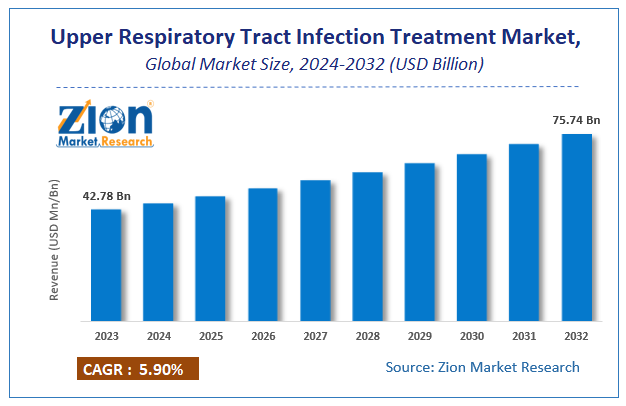
Key Insights
- As per the analysis shared by our research analyst, the upper respiratory tract infection treatment market is estimated to grow annually at a CAGR of roughly 5.10% over the forecast period from 2024 to 2032.
- In terms of revenue, the global upper respiratory tract infection treatment market size was valued at around USD 11.20 billion in 2023 and is projected to reach USD 17.50 billion by 2032.
- The upper respiratory tract infection treatment market is driven by the rising incidence of seasonal viral and bacterial pathogens, worsening air pollution, and growing adoption of over-the-counter symptomatic therapeutics.
- By distribution channel, retail pharmacies accounted for the dominant share of over 48.0% in 2023 because of their extensive local brick-and-mortar presence, patient preference for immediate symptomatic relief, and direct access to pharmacists for OTC counseling.
- By treatment, drug treatment commanded the largest share of roughly 59.0% in 2023 due to heavy clinical reliance on systemic therapies such as non-steroidal anti-inflammatory drugs and targeted oral antibiotics to control severe inflammation, pain, and secondary bacterial complications.
- North America dominated the global upper respiratory tract infection treatment market with a share of over 37.0% in 2023 due to high healthcare expenditure, rapid diagnostic infrastructure, widespread OTC medicine availability, and elevated seasonal infection burdens across age groups.
Upper Respiratory Tract Infection Treatment Market: Overview
Upper respiratory tract infection is an illness that is caused by various viruses & bacteria. Upper respiratory tract infections include acute bronchitis, flu, laryngitis, common cold, pharyngitis, sinusitis, sore throat, nasal obstruction, tonsillitis, otitis media, and respiratory distress syndrome. Symptoms of upper respiratory tract infection also include headache, low-grade fever, malaise, sinus pain, runny nose, myalgia, shortness of breath, nausea, body ache, cough, vomiting, conjunctivitis, sneezing, and diarrhea. Upper respiratory tract infections can be treated with decongestants, ibuprofen, guaifenesin, prednisone, diphenhydramine, and codeine. Moreover, Decongestants and antihistamines are used in combination to reduce cough, nasal congestion, and other symptoms in adults.
Upper Respiratory Tract Infection Treatment Market: Growth Drivers
What factors are primarily accelerating demand in the upper respiratory tract infection treatment market?
The surge in respiratory ailments, technological breakthroughs in medical developments, and easy access to generic medicines will drive expansion in the upper respiratory tract infection treatment industry in the years ahead. In addition to vaccination, antiviral chemoprophylaxis can prevent flu and is also considered an adjunct to vaccination in certain cases. It is also used when vaccines are unavailable or when inoculation cannot be done.
Furthermore, antiviral therapy for flu helps reduce symptom duration, shorten hospital stays, and minimize complication risks. According to evidence-based research by Cochrane, Vitamin C, used as routine prophylaxis at doses of nearly 0.2 grams to treat common cold symptoms, has shown a modest & constant effect on the common cold in adults and children. This will support the expansion of the upper respiratory tract infection treatment industry in the years ahead.
Apparently, the common bacterial agents that cause sinusitis include S. Pneumonia, H. Influenza, S. Aureus, S. Pyogenes, and M. Catarrhalis. Moreover, amoxicillin is an antibacterial drug used to treat sinusitis. Cephalexin is also used to treat sinusitis when the disease is chronic or recurs. These factors will contribute significantly to the upper respiratory tract infection treatment market size in the foreseeable future.
Upper Respiratory Tract Infection Treatment Market: Restraints
What factors are limiting the expansion of the upper respiratory tract infection treatment market?
Many upper respiratory tract infections are viral and self-limiting, which can limit the need for specific antiviral or antibiotic treatment and moderate demand for certain drug classes.
Antimicrobial stewardship efforts and concerns about inappropriate antibiotic use for viral conditions can constrain volume in some treatment segments.
Upper Respiratory Tract Infection Treatment Market: Opportunities
Where do significant growth opportunities lie for the upper respiratory tract infection treatment market?
Seasonal outbreaks of cold and flu, along with factors such as urbanization, pollution, and climate change that can elevate respiratory illness prevalence, create ongoing demand for effective symptom-relief and treatment options.
Evidence supporting adjunct approaches such as Vitamin C for common cold symptoms and established antibacterial options for bacterial sinusitis open additional avenues for product utilization and market expansion.
Upper Respiratory Tract Infection Treatment Market: Challenges
What key challenges confront participants in the upper respiratory tract infection treatment market?
Differentiating viral from bacterial infections and ensuring appropriate antibiotic use remain important clinical and commercial challenges. Maintaining patient access to effective over-the-counter and prescription options while addressing resistance and safety concerns requires ongoing attention.
Competition among symptomatic therapies and the self-limiting course of many infections influence prescribing and purchasing patterns across channels.

Upper Respiratory Tract Infection Treatment Market: Report Scope
| Report Attributes | Report Details |
|---|---|
| Report Name | Upper Respiratory Tract Infection Treatment Market |
| Market Size in 2023 | USD 42.78 Billion |
| Market Forecast in 2032 | USD 75.74 Billion |
| Growth Rate | CAGR of 5.9% |
| Number of Pages | 220 |
| Key Companies Covered | Pfizer Inc, Collegium Pharmaceutical Inc, Merck & Co. Inc, Alcon Inc, Sandoz Inc, GlaxoSmithKline plc, Verona Pharma Plc, Teva Pharmaceuticals, Hospira Inc |
| Segments Covered | By Distribution Channel, By Treatment, and By Region |
| Regions Covered | North America, Europe, Asia Pacific (APAC), Latin America, Middle East, and Africa (MEA) |
| Base Year | 2023 |
| Historical Year | 2018 - 2022 |
| Forecast Year | 2024 - 2032 |
| Customization Scope | Avail customized purchase options to meet your exact research needs. Request For Customization |
Upper Respiratory Tract Infection Treatment Market: Segmentation
The upper respiratory tract infection treatment market is segmented by distribution channel, treatment, and region. All the segments of the upper respiratory tract infection treatment market have been analyzed based on present and future trends, and the market is estimated from 2024 to 2032.
By distribution channel, the upper respiratory tract infection treatment market is divided into retail pharmacies, online sales, and hospital pharmacies. Retail pharmacies are the dominant segment in this category, capturing the largest market share because physical pharmacies serve as the primary first-line healthcare destination for individuals experiencing immediate upper airway discomfort. Patients prioritize rapid, same-day access to topical sprays, lozenges, and oral pain relievers, supported by clinical guidance from licensed community pharmacists who help select suitable over-the-counter interventions without requiring clinical appointments. Hospital pharmacies are the second-largest segment, generating substantial revenue through inpatient dispensing of specialized oral medications, systemic anti-infectives, and prescription interventions needed when upper respiratory conditions occur alongside chronic pulmonary conditions, immunosuppression, or severe secondary complications.
By treatment segment, the upper respiratory tract infection treatment market is divided into topical treatment (cough suppressants, nasal decongestants, others) and drug treatment (NSAIDs, antibiotics, others). Drug treatment is the dominant segment, accounting for the highest revenue contribution due to the extensive use of systemic therapeutics, including non-steroidal anti-inflammatory drugs, antipyretics, and targeted oral antibiotics, to manage systemic fever, severe head and throat pain, and confirmed bacterial infections. Systemic agents provide comprehensive physiological relief across multiple symptom pathways, solidifying their status as central treatment modalities in clinical practice. Topical treatment is the second-largest segment, growing rapidly as consumer preference shifts toward fast-acting, localized solutions such as targeted nasal decongestants and cough-suppressing lozenges that minimize systemic absorption while providing rapid relief at the mucosal surface.
Upper Respiratory Tract Infection Treatment Market: Regional Analysis
Why will North America continue to dominate the global market during the projection period?
North America is expected to contribute significantly to overall market revenue over the forecast period. This expansion is driven by a surge in upper respiratory tract infections across the United States. An increase in physician home visits for these infections and rising demand for over-the-counter medicines further support regional growth. This leadership drives overall market expansion by sustaining high treatment volumes, encouraging product availability across retail and clinical channels, and reinforcing demand patterns that influence global supply and innovation in symptomatic and targeted therapies.
Europe maintains steady demand, supported by established healthcare systems and seasonal illness patterns. Asia Pacific is advancing through population size, urbanization, and rising access to medicines. Latin America and the Middle East and Africa are progressing as healthcare access and awareness of respiratory treatments expand.
Recent Developments
-
In August 2023, GlaxoSmithKline plc secured expanded regulatory clearances across multiple international territories for its next-generation seasonal respiratory formulations, optimizing symptom management for patients with concurrent viral upper airway inflammation.
Upper Respiratory Tract Infection Treatment Market: Competitive Landscape
The key players profiled in the study of the upper respiratory tract infection treatment industry are
- Pfizer Inc
- Collegium Pharmaceutical, Inc
- Merck & Co., Inc
- Alcon, Inc
- Sandoz, Inc
- GlaxoSmithKline plc
- Verona Pharma Plc
- Teva Pharmaceuticals
- Hospira, Inc.
Upper Respiratory Tract Infection Treatment Market: Key Trends
What are the key trends in the upper respiratory tract infection treatment market?
Strong demand for symptomatic and over-the-counter relief
High prevalence of common cold, flu, and related upper respiratory conditions sustains consistent demand for decongestants, cough suppressants, analgesics, and combination products available through retail and other channels.
Targeted use of antivirals and antibacterials
Antiviral chemoprophylaxis and therapy for influenza, together with antibacterial agents for bacterial sinusitis, support focused treatment approaches in appropriate clinical settings and contribute to market value.
Segments Covered
The global upper respiratory tract infection treatment market is segmented as follows:
By Distribution Channel
- Retail Pharmacies
- Online Sales
- Hospital Pharmacies
By Treatment
- Topical treatment
- Cough Suppressant
- Nasal Decongestant
- Others
- Drug treatment
- NSAID
- Antibiotics
- Others
By Region
- North America
- The U.S.
- Canada
- Mexico
- Europe
- France
- The UK
- Spain
- Germany
- Italy
- Rest of Europe
- Asia Pacific
- China
- Japan
- India
- Australia
- South Korea
- Rest of Asia Pacific
- The Middle East & Africa
- Saudi Arabia
- UAE
- Egypt
- Kuwait
- South Africa
- Rest of the Middle East & Africa
- Latin America
- Brazil
- Argentina
- Rest of Latin America
Table Of Content
Methodology
FrequentlyAsked Questions
Often affecting the nose, throat, and sinuses, upper respiratory tract infections (URIs) are frequent illnesses. Viruses, bacteria, or allergies can all cause them; viral infections are more common (e.g., the common cold, flu). Since most infections are self-limiting and go away without particular antiviral or antibiotic treatment, treatment for URIs mostly aims in symptom relief.
URIs, particularly in seasonal outbreaks (such as cold and flu season), are rather common, which fuels demand for over-the-counter drugs and efficient therapies. Higher prevalence of respiratory illnesses can be caused in part by elements including urbanization, pollution, and climate change.
According to a report from Zion Market Research, the global Upper Respiratory Tract Infection Treatment Market was valued at USD 42.78 Billion in 2023 and is projected to hit USD 75.74 Billion by 2032.
According to a report from Zion Market Research, the global Upper Respiratory Tract Infection Treatment Market a compound annual growth rate (CAGR) of 5.9% during the forecast period 2024-2032.
North America is expected to make lucrative contributions, supported by high infection incidences in the United States, physician home visits, and strong demand for over-the-counter medicines.
The key players profiled in the study and influencing the growth of upper respiratory tract infection treatment industry are Pfizer Inc., Collegium Pharmaceutical, Inc., Merck & Co., Inc., Alcon, Inc., Sandoz, Inc., GlaxoSmithKline plc, Verona Pharma Plc, Teva Pharmaceuticals, and Hospira, Inc.

HappyClients

