
Global Hot Sauce Market Size, Trend, Growth, Industry Analysis 2034

Hot Sauce Market By Type (Table Hot Sauces, Cooking Sauces, and Specialty Sauces), By Ingredients (Chili-Based, Vinegar-Based, Tomato-Based, Fruit-Based, and Others), By Distribution Channel (Retail Stores, Online Retail, and Food Service), and By Region - Global and Regional Industry Overview, Market Intelligence, Comprehensive Analysis, Historical Data, and Forecasts 2025 - 2034
| Market Size in 2024 | Market Forecast in 2034 | CAGR (in %) | Base Year |
|---|---|---|---|
| USD 3.49 Billion | USD 6.72 Billion | 8.55% | 2024 |
Hot Sauce Industry Perspective
What will be the size of the global hot sauce market during the forecast period?
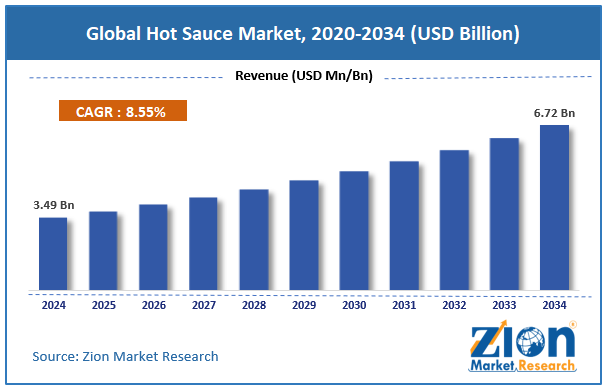
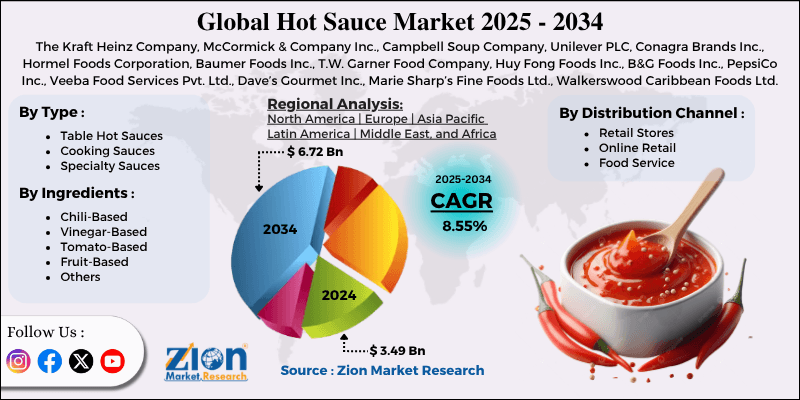
The global hot sauce market size was around USD 3.49 billion in 2024 and is projected to reach USD 6.72 billion by 2034, with a compound annual growth rate (CAGR) of roughly 8.55% between 2025 and 2034.
This report provides a comprehensive analysis of the growth drivers, restraints, and challenges shaping demand across the global hot sauce market throughout the forecast period, while highlighting high-potential emerging opportunities within the industry.
Key Insights:
- As per the analysis shared by our research analyst, the global hot sauce market is estimated to grow annually at a CAGR of around 8.55% over the forecast period (2025-2034)
- In terms of revenue, the global hot sauce market size was valued at around USD 3.49 billion in 2024 and is projected to reach USD 6.72 billion by 2034.
- The hot sauce market is projected to grow significantly owing to increasing demand for ethnic cuisines, changing lifestyles, growing urbanization, and strong marketing and branding strategies.
- Based on type, the table hot sauces segment is expected to lead the market, while the cooking sauces segment is expected to grow considerably.
- Based on ingredients, the chili-based segment is the largest, while the vinegar-based segment is projected to record sizeable revenue over the forecast period.
- Based on the distribution channel, the retail stores segment is expected to lead the market, followed by the food service segment.
- By region, North America is projected to dominate the global market during the forecast period, followed by Asia Pacific.
Hot Sauce Market: Overview
Hot sauce is a spicy condiment made from vinegar, chili peppers, and seasonings, used to add flavor and heat to most dishes. Its intensity ranges from mild tangy warmth to extreme heat, depending on peppers like habanero, ghost pepper, and jalapeño, and is broadly enjoyed in global cuisines to enhance foods like eggs, tacos, and grilled meats. The global hot sauce market is poised to expand rapidly, driven by the growing demand for spicy flavors, globalization of cuisines, and health and clean-label trends. Consumers worldwide are increasingly drawn to spicy, bold flavors, particularly among younger demographics seeking adventurous dining experiences. This move in preferences is driving hot sauce competition in cuisines and meals.
Hence, demand continues to grow steadily in both foodservice and retail sectors. The spread of international cuisines, such as Asian and Mexican, has made hot sauces more mainstream worldwide. Consumers are incorporating these flavors into everyday cooking. This cultural integration expands the industry's reach. Furthermore, growing health awareness is fueling demand for organic, natural, and preservative-free hot sauces. Several consumers see chili-based sauces as healthier alternatives to heavy condiments. This perception backs premium product growth.
Despite growth, the global market is constrained by factors such as raw material price volatility and climate impact on crops. Fluctuations in the prices of chili peppers and other ingredients affect production costs. Supply chain and weather disturbances make pricing unpredictable. This affects profit margins for manufacturers. Similarly, extreme weather conditions can reduce chili yields and impact quality. Floods and droughts create supply instability, thus challenging consistent production.
Nonetheless, the global hot sauce industry stands to benefit from several key opportunities, such as health-based and functional products and the growth of plant-based diets. There is a surging demand for hot sauces with added health benefits, such as probiotics and low sodium. Consumers are seeking functional foods, thus creating a strong niche segment. Hot sauces enhance flavor in vegan and vegetarian meals. As plant-based diets grow in popularity, demand for flavorful condiments rises. This supports consistent growth. Additionally, consumers are showing interest in premium, unique, and small-batch hot sauces. Craft brands can differentiate through storytelling and quality. This allows higher margins.
Hot Sauce Market: Dynamics
Growth Drivers
How is the hot sauce market driven by the expansion of foodservice & quick‑service channels?
Hot sauces are increasingly used in QSRs, cloud kitchens, restaurants, and food trucks, becoming a major flavor and experience driver, with spicy menu items growing by nearly 31%, making the food service segment a major revenue contributor; casual eateries and fast-food chains use spicy dishes to differentiate offerings, fueling repeat and bulk orders, while food delivery and meal-kit platforms expand home use, together supporting steady commercial volume growth alongside retail demand.
How are product innovation and premiumization significantly fueling the hot sauce market?
Artisanal and premium hot sauces featuring exotic ingredients, like fruit-infused blends and fermented chilies, are experiencing rapid growth, with new products increasing by nearly 31% worldwide. Clean-label offerings, comprising low-sodium, non-GMO, and organic options, cater to health-conscious consumers seeking wellness and flavors, and craft brands differentiate through sustainable packaging, such as eco-friendly materials and reusable glass, enhancing appeal. Limited-edition releases and culinary creativity generate excitement and consumer engagement. These trends largely support high price points, broader category growth, and brand loyalty, fueling the global hot sauce market.
Restraints
Consumer health concerns over ingredients negatively impact the market progress
Growing public focus on health has highlighted issues like sugar, sodium, and capsaicin levels in spicy condiments. A growing share of consumers now seeks clean-label, low-sodium alternatives, potentially reducing consumption of traditional sauces. Health initiatives and nutritional guidelines in major markets are encouraging reformulation and clear labeling, which adds costs. Some consumers with digestive sensitivities avoid spicy condiments altogether. These concerns hamper widespread mainstream adoption beyond core spicy-food lovers.
Opportunities
How are ethical sourcing initiatives and sustainability presenting favorable prospects for the expansion of the hot sauce market?
Brands that invest in eco-friendly packaging, transparent supply chains, and fair trade sourcing can differentiate themselves and build loyalty. Sustainability is an increasingly important purchasing criterion among younger consumers worldwide. The use of recyclable materials and ethical farming practices improves brand reputation. This long-term opportunity also aligns with regulatory moves towards environmental responsibility. Companies leading in this segment can appeal to ethically conscious buyers, thus impacting the hot sauce industry.
Challenges
Maintaining consistent quality across batches limits market growth
Natural ingredient variability, often due to crop differences, makes it challenging to guarantee consistent heat levels and identical taste from one batch to the next. Consumers expect consistent flavor profiles, mainly from established brands. Achieving this quality benchmark needs advanced blending, inventory strategies, and testing. New or smaller producers may lack capital or capacity, which can affect brand trust. Persistent quality challenges may hamper growth.
Hot Sauce Market: Report Scope
| Report Attributes | Report Details |
|---|---|
| Report Name | Hot Sauce Market |
| Market Size in 2024 | USD 3.49 Billion |
| Market Forecast in 2034 | USD 6.72 Billion |
| Growth Rate | CAGR of 8.55% |
| Number of Pages | 226 |
| Key Companies Covered | The Kraft Heinz Company, McCormick & Company Inc., Campbell Soup Company, Unilever PLC, Conagra Brands Inc., Hormel Foods Corporation, Baumer Foods Inc., T.W. Garner Food Company, Huy Fong Foods Inc., B&G Foods Inc., PepsiCo Inc., Veeba Food Services Pvt. Ltd., Dave’s Gourmet Inc., Marie Sharp’s Fine Foods Ltd., Walkerswood Caribbean Foods Ltd., and others. |
| Segments Covered | By Type, By Ingredients, By Distribution Channel, and By Region |
| Regions Covered | North America, Europe, Asia Pacific (APAC), Latin America, Middle East, and Africa (MEA) |
| Base Year | 2024 |
| Historical Year | 2019 to 2023 |
| Forecast Year | 2025 - 2034 |
| Customization Scope | Avail customized purchase options to meet your exact research needs. Request For Customization |
Hot Sauce Market: Segmentation
The global hot sauce market is segmented based on type, ingredients, distribution channel, and region.
Why is the Table Hot Sauces segment projected to dominate the hot sauce market?
Based on type, the global hot sauce industry is divided into table hot sauces, cooking sauces, and specialty sauces. The table hot sauces segment captures a dominant 56% share. They are widely used in foodservice outlets, households, and quick-service restaurants because of their versatility and ease of use in most dishes. Their broad appeal, from mild to bold flavors, and strong retail placement support their leading share.
Conversely, the cooking sauces segment registers a leading 35% market share, fueled by the growing inclusion of hot sauces as essential ingredients in culinary preparations and recipes. These sauces are mainly valued for improving flavor during cooking, whether in marinades, stews, or stir-fries, making them popular in both everyday home cooking and professional kitchens.
What factors help the Chili-Based segment lead the hot sauce market?
Based on ingredients, the global hot sauce market is segmented into chili-based, vinegar-based, tomato-based, fruit-based, and others. The chili-based segment holds leadership with 57.9% market share. It is primarily made from chili peppers and is known for delivering natural heat and bold flavor, making it widely popular in both modern and traditional cuisines. Their strong alignment with both health-conscious trends and classic recipes sustains steady demand.
However, the vinegar-based sauces segment ranks second, accounting for 30% of the total market, due to their widespread use in classic formulations such as Louisiana-style hot sauces. The tangy acidity enhances shelf stability and flavor, increasing their versatility for cooking and table use. Their compatibility with different cuisines and longstanding prominence support consistent adoption.
What are the key reasons for the leadership of the Retail Stores segment in the hot sauce market?
Based on distribution channel, the global market is segmented into retail stores, online retail, and food service. The retail stores segment holds a dominant 62% market share. These outlets offer easy access to a broader range of brands and heat levels, making them popular among household customers. The convenience of one-stop shopping, extensive product assortments, and competitive pricing strengthen their market dominance.
Nonetheless, the foodservice industry, comprising cafes, restaurants, and fast-food chains, holds the second rank among others. Hot sauces are usually purchased in bulk and integrated into dishes to improve flavor and maintain consistency. The growth of dining-out trends and global cuisine diversity fuels demand through high-volume use in this channel.
Hot Sauce Market: Regional Analysis
Why is North America outperforming other regions in the global Hot Sauce market?
North America is anticipated to retain its leading role in the global hot sauce market, with a 7.7% CAGR, driven by high consumer preference for spicy foods, strong foodservice and quick-service industry, and wide product availability and brand presence. North American consumers, especially in Canada and the U.S., have developed a growing taste for spicy and bold flavors. This trend is driven by adventurous eating habits and growing acceptance of international cuisines, which in turn drive hot sauce consumption in foodservice and household channels.
Moreover, the region has a well-developed network of fast-food chains, restaurants, and cafes that include hot sauces on their menus. High dining-out frequency and chain expansions create large-volume demand for cooking and table sauces, strengthening industry dominance. North America has a wide e-commerce and retail infrastructure, offering a wide variety of imported and domestic hot sauce brands. Strong brand marketing, digital accessibility, and in-store visibility make it easy for users to adopt new products, backing sustained growth.
Why does Asia Pacific rank second in the global Hot Sauce Market?
Asia Pacific ranks as the second-largest region in the global hot sauce industry, with an 8.2% CAGR, driven by the rising prominence of regional and spicy cuisines, growing urbanization and disposable income, and expansion of quick-service and foodservice chains. Furthermore, in APAC, traditional diets already emphasize spicy, bold flavors, making hot sauces a natural complement. The popularity of street food and regional dishes fuels consistent demand for flavor-enhancing, chili-based condiments.
Rapid urbanization and rising disposable incomes in countries like India and China are driving the consumption of convenience foods. As households adopt more ready-to-eat and packaged meals, hot sauces are increasingly used to improve everyday cooking. Additionally, the growth of cafes, restaurants, and fast-food chains in urban areas supports large-scale demand for hot sauces. Chains include sauces in menu offerings, creating high-volume demand and broad market penetration.
Hot Sauce Market: Competitive Analysis
The leading players in the global hot sauce market are:
- The Kraft Heinz Company
- McCormick & Company Inc.
- Campbell Soup Company
- Unilever PLC
- Conagra Brands Inc.
- Hormel Foods Corporation
- Baumer Foods Inc.
- T.W. Garner Food Company
- Huy Fong Foods Inc.
- B&G Foods Inc.
- PepsiCo Inc.
- Veeba Food Services Pvt. Ltd.
- Dave’s Gourmet Inc.
- Marie Sharp’s Fine Foods Ltd.
- Walkerswood Caribbean Foods Ltd.
Industry Key Trends
What are the key trends in the global Hot Sauce Market?
Flavor innovation and exotic varieties
Brands are actively introducing bold, unique flavors to appeal to adventurous palates. Examples include smoky chipotle blends, fruit-infused sauces, extreme-heat variants, and fermented sauces made with exotic peppers. These innovations not only cater to niche consumer preferences but also help brands stand out in a competitive market.
Rising demand for organic and health-oriented sauces
Consumers are increasingly seeking organic, natural, and low-sodium hot sauces, perceiving them as healthy alternatives. This trend is fueling manufacturers to develop clean-label, preservative-free, and functional products that cater to health-conscious buyers.
Segments Covered
By Type
- Table Hot Sauces
- Cooking Sauces
- Specialty Sauces
By Ingredients
- Chili-Based
- Vinegar-Based
- Tomato-Based
- Fruit-Based
- Others
By Distribution Channel
- Retail Stores
- Online Retail
- Food Service
By Region
- North America
- The U.S.
- Canada
- Mexico
- Europe
- France
- The UK
- Spain
- Germany
- Italy
- Rest of Europe
- Asia Pacific
- China
- Japan
- India
- Australia
- South Korea
- Rest of Asia Pacific
- The Middle East & Africa
- Saudi Arabia
- UAE
- Egypt
- Kuwait
- South Africa
- Rest of the Middle East & Africa
- Latin America
- Brazil
- Argentina
- Rest of Latin America
Table Of Content
Methodology
FrequentlyAsked Questions
Hot sauce is a spicy condiment made from vinegar, chili peppers, and seasonings used to add flavor and heat to a majority of dishes. Its intensity ranges from mild tangy warmth to extreme heat, depending on peppers like habanero, ghost pepper, and jalapeno, and is widely enjoyed in global cuisines to enhance dishes like eggs, tacos, and grilled meats.
The global hot sauce market is projected to grow due to the rising popularity of spicy foods, the expansion of fast-food and quick-service restaurants, and the growth of e-commerce and online retail.
According to study, the global hot sauce market size was around USD 3.49 billion in 2024 and is projected to reach USD 6.72 billion by 2034.
The CAGR value of the hot sauce market is expected to be around 8.55% during 2025-2034.
Chili peppers, organic vinegars, exotic fruits, natural spices, and fermented ingredients are expected to offer significant growth opportunities in the hot sauce market.
Supply chain disruptions, volatile raw material prices, regulatory compliance, and limited consumer acceptance of extreme heat are major challenges restraining the growth of the hot sauce market.
North America is expected to lead the global hot sauce market during the forecast period.
The key players profiled in the global hot sauce market include The Kraft Heinz Company, McCormick & Company, Inc., Campbell Soup Company, Unilever PLC, Conagra Brands, Inc., Hormel Foods Corporation, Baumer Foods, Inc., T.W. Garner Food Company, Huy Fong Foods, Inc., B&G Foods, Inc., PepsiCo, Inc., Veeba Food Services Pvt. Ltd., Dave’s Gourmet, Inc., Marie Sharp’s Fine Foods Ltd., and Walkerswood Caribbean Foods Ltd.
The hot sauce market is highly competitive, dominated by regional players, global brands, and emerging artisanal producers emphasizing brand differentiation and innovation.
The report examines key aspects of the hot sauce market, including a detailed analysis of current growth drivers and constraints, as well as future growth opportunities and challenges that will affect the market.

HappyClients