
Global Product Analytics Market Size, Share, Growth, Forecast 2032

Product Analytics Market By Vertical (Automotive, Retail & Consumer Goods, F&B Manufacturing, Machinery & Industrial Equipment Manufacturing, Healthcare & Pharmaceuticals, Energy & Utilities, and Others), By Mode (Tracking Data and Analyzing Data), By Deployment (Cloud and On-premises), By End-users (Designers, Manufacturers, Sales & Marketing Professionals, and Consumer Engagement), and By Region - Global and Regional Industry Overview, Market Intelligence, Comprehensive Analysis, Historical Data, and Forecasts 2024 - 2032
| Market Size in 2023 | Market Forecast in 2032 | CAGR (in %) | Base Year |
|---|---|---|---|
| USD 11.31 Billion | USD 38.85 Billion | 14.7% | 2023 |
Product Analytics Industry Perspective
What will be the global product analytics market size during the forecast period?
The global product analytics market size was worth around USD 11.31 billion in 2023 and is predicted to reach around USD 38.85 billion by 2032, with a compound annual growth rate (CAGR) of roughly 14.70% between 2024 and 2032.
This report provides a comprehensive analysis of the growth drivers, restraints, and challenges shaping demand across the global product analytics market throughout the forecast period, while highlighting high-potential emerging opportunities within the industry.

Key Insights
- As per the analysis shared by our research analyst, the global product analytics market is estimated to grow annually at a CAGR of around 14.70% over the forecast period (2024-2032).
- In terms of revenue, the global product analytics market size was valued at around USD 11.31 billion in 2023 and is projected to reach USD 38.85 billion by 2032.
- The product analytics market is projected to grow at a significant rate due to rising demand for expert insights into usage and deployment of advanced analytics solutions, growing need for consultancy, increasing adoption of data-driven decision-making, and expansion of IoT-enabled technologies.
- Based on the vertical segment, retail & consumer goods is expected to hold a substantial share owing to extensive use of product analytics to understand customer choices, buying patterns, and improve services.
- Based on the mode segment, tracking data plays an essential role in capturing user interactions and generating actionable insights for product improvement.
- Based on the deployment segment, cloud options support different organizational preferences for scalability, control, and security in product analytics implementations.
- Based on the end-user segment, the designers held the largest market share in 2023 and is expected to grow at a significant rate over the forecast period
- Based on region, North America is anticipated to hold a substantial share during the forecast period due to the presence of major players such as Oracle, Google, Adobe, and Salesforce, along with strong adoption of artificial intelligence, machine learning, business intelligence, and advanced analytical solutions.
Product Analytics Market: Overview
Product analytics is the use of business intelligence and analytical software to examine product-related data, including service reports, returns, warranties, customer feedback, and information from connected sensors. It enables manufacturers and organizations to evaluate product defects, identify opportunities for upgrades, and better connect product components and features with customer needs. The approach provides a detailed understanding of customer choices, reasons for purchasing or not purchasing specific products, and broader buying patterns and attitudes.
Product Analytics Market: Dynamics
Growth Drivers
What factors are propelling the expansion of the product analytics market?
Rising demand for expert insights and training in the usage and deployment of advanced analytics solutions, together with the need for related consultancy, is supporting market growth. Product analytics delivers detailed information on customer choices and reasons for buying or not buying particular products, enabling organizations to improve offerings and performance.
Increasing adoption of data-driven decision-making and the expansion of Internet of Things-enabled technologies further bolster demand. These tools help companies target the right audiences, extract clearer understanding of customer needs and attitudes, and support faster operational decisions across product development, marketing, and sales functions.
Restraints
What factors are limiting the growth of the product analytics market?
Implementation complexity and the need for specialized skills to effectively deploy and interpret advanced analytics solutions can slow adoption among some organizations. Data quality, integration challenges across multiple systems, and concerns around data privacy and security may also constrain broader uptake.
Variability in analytical maturity across industries and the investment required to build robust internal data and business intelligence systems can limit the pace of market expansion in certain segments and regions.
Opportunities
What opportunities are emerging in the product analytics market?
Growing emphasis on understanding user behavior, optimizing product features, and improving customer experiences creates substantial opportunities for product analytics platforms. Expansion into additional verticals and deeper integration of artificial intelligence and machine learning capabilities further enhance the value proposition.
Challenges
What challenges does the product analytics market face?
Ensuring high-quality, consistent data inputs and translating analytical insights into concrete product and business actions remain ongoing challenges. Organizations must balance the sophistication of analytics tools with usability for non-technical stakeholders across design, manufacturing, sales, and marketing teams.

Product Analytics Market: Report Scope
| Report Attributes | Report Details |
|---|---|
| Report Name | Product Analytics Market |
| Market Size in 2023 | USD 11.31 Billion |
| Market Forecast in 2032 | USD 38.85 Billion |
| Growth Rate | CAGR of 14.70% |
| Number of Pages | 220 |
| Key Companies Covered | IBM, Google, Adobe, Oracle, Salesforce, Piwik PRO, Mixpanel, Amplitude, Plytix, and Heap |
| Segments Covered | By Vertical, By Mode, By Deployment, By End-Users, and By Region |
| Regions Covered | North America, Europe, Asia Pacific (APAC), Latin America, Middle East, and Africa (MEA) |
| Base Year | 2023 |
| Historical Year | 2018 - 2022 |
| Forecast Year | 2024 - 2032 |
| Customization Scope | Avail customized purchase options to meet your exact research needs. Request For Customization |
Product Analytics Market: Segmentation
The product analytics market is segmented by vertical, mode, deployment, end-users, and region. All the segments of the product analytics market have been analyzed based on present and future trends and the market is estimated from 2024 to 2032.
Based on Vertical Segment, the product analytics market is divided into automotive, retail & consumer goods, F&B manufacturing, machinery & industrial equipment manufacturing, healthcare & pharmaceuticals, energy & utilities, and others. Retail & consumer goods is expected to hold a substantial share owing to extensive application of product analytics to understand customer preferences, buying patterns, and service improvement opportunities. Automotive, healthcare & pharmaceuticals, and other manufacturing and industrial verticals also utilize these tools to study user behavior, enhance product quality, and refine offerings. Strong demand across these verticals, particularly where customer experience and product performance are critical, helps drive overall market growth and encourages continued platform development and industry-specific solutions.
Based on Mode Segment, the product analytics market is divided into tracking data and analyzing data. Tracking data enables systematic collection of usage, interaction, and performance metrics from products and connected sources. Analyzing data transforms this information into actionable insights regarding defects, upgrade opportunities, customer attitudes, and feature effectiveness. Both modes are interdependent and essential for comprehensive product analytics. Together, they support faster decision-making, improved product development, and better alignment with customer needs, thereby contributing to sustained market expansion.
Based on Deployment Segment, the product analytics market is divided into cloud and on-premises. Cloud deployment offers scalability, accessibility, and reduced infrastructure burden, making it attractive for organizations seeking flexible analytics capabilities. On-premises deployment provides greater control over data and systems, which remains important for certain enterprises with specific security or regulatory requirements. The availability of both options allows organizations to select the model that best fits their operational and compliance needs, supporting broader market adoption across different industries and company sizes.
Based on End-User Segment, the product analytics market is divided into designers, manufacturers, sales & marketing professionals, and consumer engagement. Designers and manufacturers use product analytics to evaluate performance, identify improvement opportunities, and refine product features. Sales & marketing professionals leverage insights for targeting, campaign effectiveness, and understanding buying behavior. Consumer engagement teams apply analytics to enhance customer experiences and relationships. The broad applicability across these end-user groups expands the addressable market and drives demand for versatile, user-friendly analytics platforms that support multiple functional areas within organizations.
Product Analytics Market: Regional Analysis
Why will North America continue to dominate the global market during the projection period?
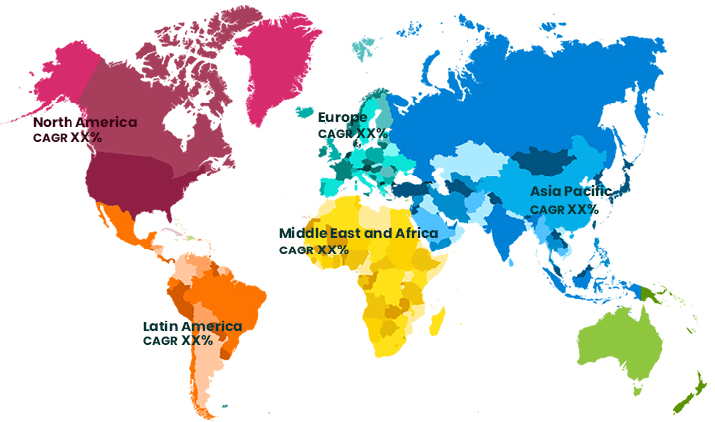
North America is anticipated to hold a substantial share during the forecast period, owing to the presence of major players such as Oracle, Google, Adobe, and Salesforce North America, coupled with the adoption of artificial intelligence, machine learning, business intelligence, and developing analytical solutions. Several industries such as automotive, travel & hospitality, education, and pharmaceuticals use product analytics to study users to enhance their experience by offering improved services.
Europe maintains a significant position through established digital infrastructure and enterprise investment in analytics capabilities. Asia Pacific is expected to register notable growth as organizations increasingly adopt data-driven approaches and digital transformation initiatives expand across manufacturing, retail, and other sectors. Latin America and the Middle East and Africa are likely to see gradual uptake as analytics maturity and digital infrastructure continue to develop.
Product Analytics Market: Competitive Analysis
The global product analytics market is dominated by players:
- IBM
- Adobe
- Oracle
- Salesforce
- Piwik PRO
- Mixpanel
- Amplitude
- Plytix
- Heap
The report segments the product analytics market as follows:
By Vertical
- Automotive
- Retail & Consumer Goods
- F&B Manufacturing
- Machinery & Industrial Equipment Manufacturing
- Healthcare & Pharmaceuticals
- Energy & Utilities
- Others
By Mode
- Tracking Data
- Analyzing Data
By Deployment
- Cloud
- On-premises
By End-Users
- Designers
- Manufacturers
- Sales & Marketing Professionals
- Consumer Engagement
By Region
- North America
- The U.S.
- Canada
- Mexico
- Europe
- France
- The UK
- Spain
- Germany
- Italy
- Rest of Europe
- Asia Pacific
- China
- Japan
- India
- Australia
- South Korea
- Rest of Asia Pacific
- The Middle East & Africa
- Saudi Arabia
- UAE
- Egypt
- Kuwait
- South Africa
- Rest of the Middle East & Africa
- Latin America
- Brazil
- Argentina
- Rest of Latin America
Table Of Content
Methodology
FrequentlyAsked Questions
Product analytics refers to the process of collecting, analyzing, and interpreting data related to product usage, performance, and user behavior using business intelligence and analytical software. It helps organizations evaluate defects, identify upgrade opportunities, understand customer choices, and optimize products to meet user needs and business goals.
Key growth drivers include rising demand for expert insights and training in advanced analytics solutions, the need for consultancy services, increasing adoption of data-driven decision-making, expansion of IoT-enabled technologies, and the ability of product analytics to improve understanding of customer needs and support faster operational decisions.
According to the study, the global product analytics market size was evaluated at USD 11.31 billion in 2023 and is projected to reach USD 38.85 billion by 2032.
The global product analytics market is expected to grow at a compound annual growth rate (CAGR) of around 14.7% during the forecast period from 2024 to 2032.
North America is anticipated to hold a substantial share and contribute notably to the product analytics market during the forecast period.
The major players leveraging the product analytics market include IBM, Google, Adobe, Oracle, Salesforce, Piwik PRO, Mixpanel, Amplitude, Plytix, and Heap, among others.
The report provides a comprehensive analysis of market size, growth drivers, restraints, opportunities, segmentation by vertical, mode, deployment, and end-users, regional insights, competitive landscape, and forecasts through 2032.

HappyClients

