Global Payment as a Service Market Size, Share, Growth, Forecast 2032

Payment as a Service Market By Component (Platform and Service), By Service (Managed Services and Professional Services), By Vertical (Media and Entertainment, Hospitality, Healthcare, Retail, BFSI, and Others), and By Region - Global and Regional Industry Overview, Market Intelligence, Comprehensive Analysis, Historical Data, and Forecasts 2024 - 2032
| Market Size in 2023 | Market Forecast in 2032 | CAGR (in %) | Base Year |
|---|---|---|---|
| USD 16.20 Billion | USD 65.20 Billion | 16.73% | 2023 |
Payment as a Service Industry Perspective
What will be the global payment as a service market size during the forecast period?
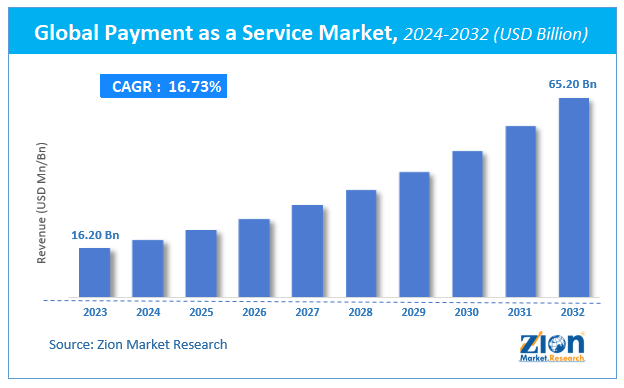
The global payment as a service market size was valued at around USD 16.20 billion in 2023 and is projected to reach about USD 65.20 billion by 2032, with a compound annual growth rate (CAGR) of roughly 16.73% between 2024 and 2032.
This report provides a comprehensive analysis of the growth drivers, restraints, and challenges shaping demand across the global payment as a service market throughout the forecast period, while highlighting high-potential emerging opportunities within the industry.
Key Insights
- As per the analysis shared by our research analyst, the global payment as a service market is estimated to grow at a CAGR of approximately 16.73% during the forecast period from 2024 to 2032.
- In terms of revenue, the global payment as a service market size was valued at around USD 16.20 billion in 2023 and is projected to reach USD 65.20 billion by 2032.
- The market is driven by the need for businesses to outsource payment processing, demand for comprehensive suites that accept multiple electronic payment methods, digital transformation across industries, and the shift toward flexible, cloud-based payment platforms.
- Based on the component, platforms form a core part of offerings as they provide the technology foundation for accepting and processing payments across channels.
- Based on the service, the managed services segment holds strong relevance as organizations seek end-to-end operational support for payment processing, compliance, and ongoing system management.
- Based on the vertical, the retail segment represents major demand areas as merchants and financial institutions require scalable, secure, and multi-channel payment capabilities to serve customers efficiently.
- Regionally, North America is expected to lead the payment as a service market during the forecast period, supported by mature digital infrastructure, high adoption of cashless and electronic payments, and a strong presence of fintech and payment technology providers.
Payment as a Service Market: Overview
Payment as a Service (PaaS) is a financial technology model in which companies outsource their payment processing needs to a third-party provider. The provider offers a comprehensive suite of payment-related services and tools that enable businesses to accept and process various types of payments, including credit cards, debit cards, digital wallets, and other electronic methods. This approach allows organizations to focus on core operations while relying on specialized partners for secure, scalable, and compliant payment infrastructure.
Payment as a Service Market: Dynamics
Growth Drivers
What factors are accelerating the expansion of the payment as a service market?
The shift toward outsourcing payment processing is a primary growth driver. Businesses prefer specialized third-party providers that deliver complete suites of tools for accepting credit cards, debit cards, digital wallets, and other electronic methods without building and maintaining complex internal infrastructure. This model reduces operational burden and accelerates time to market for payment capabilities.
Digital transformation across industries further fuels demand. Retailers, hospitality operators, healthcare providers, media companies, and financial institutions require secure, scalable, and multi-channel payment solutions. Cloud-based platforms, API connectivity, and support for emerging payment methods strengthen the value proposition of payment as a service and encourage broader adoption.
Restraints
What factors are limiting the growth of the payment as a service market?
Data privacy and cybersecurity concerns can restrain adoption. Handling sensitive payment data requires robust security, compliance with evolving regulations, and continuous investment in fraud prevention. Organizations may hesitate to outsource critical payment functions if they perceive elevated risk or limited control.
Integration complexity and dependence on third-party providers also present challenges. Connecting payment platforms with existing enterprise systems, ensuring consistent performance, and managing vendor relationships require careful planning and ongoing oversight, which can slow deployment in some organizations.
Opportunities
What emerging opportunities exist in the payment as a service market?
Expansion of digital and contactless payments, growth of e-commerce and omnichannel retail, and rising interest in embedded finance create significant opportunities. Providers that offer modular, API-driven platforms and strong compliance and fraud capabilities are well positioned to capture demand from businesses seeking flexible payment infrastructure.
Cross-border payment needs, real-time payment initiatives, and industry-specific solutions for hospitality, healthcare, and media further broaden the addressable market. Partnerships and continuous product innovation support geographic and vertical expansion for payment-as-a-service providers.
Challenges
What challenges does the payment as a service market face?
Maintaining security, regulatory compliance, and high availability across diverse geographies and payment methods remains a continuous challenge. Competition among established processors and fintech providers intensifies pressure on pricing, service quality, and innovation. Delivering seamless customer experiences while managing fraud, disputes, and evolving payment preferences requires sustained investment and operational excellence.
Payment as a Service Market: Report Scope
| Report Attributes | Report Details |
|---|---|
| Report Name | Payment as a Service Market |
| Market Size in 2023 | USD 16.20 Billion |
| Market Forecast in 2032 | USD 65.20 Billion |
| Growth Rate | CAGR of 16.73% |
| Number of Pages | 285 |
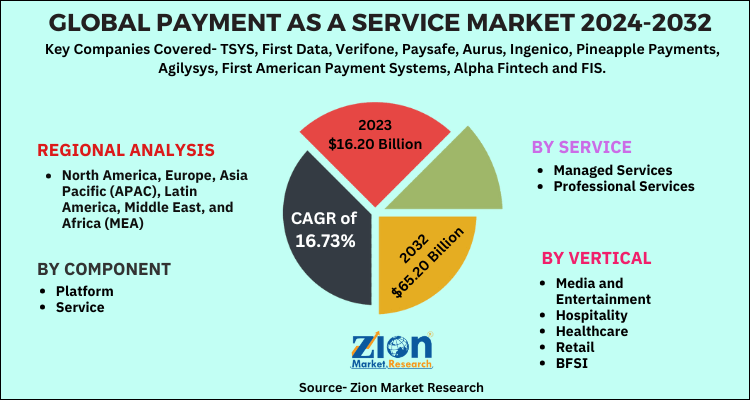
| Key Companies Covered | TSYS, First Data, Verifone, Paysafe, Aurus, Ingenico, Pineapple Payments, Agilysys, First American Payment Systems, Alpha Fintech, and FIS |
| Segments Covered | By Component, By Service, By Vertical, and By Region |
| Regions Covered | North America, Europe, Asia Pacific (APAC), Latin America, Middle East, and Africa (MEA) |
| Base Year | 2023 |
| Historical Year | 2018 - 2022 |
| Forecast Year | 2024 - 2032 |
| Customization Scope | Avail customized purchase options to meet your exact research needs. Request For Customization |
Payment as a Service Market: Segmentation
The payment as a service market is segmented by component, service, vertical, and region. All the segments of the payment as a service market have been analyzed based on present and future trends and the market is estimated from 2024 to 2032.
Based on Component, the payment as a service market is divided into platform and service. Platforms form a foundational part of the offering because they provide the technology layer for accepting, routing, and processing payments across channels and methods. A robust platform enables merchants and enterprises to support cards, wallets, and other electronic instruments with appropriate security and reporting. Service components complement platforms by delivering implementation, customization, managed operations, and professional support that help customers deploy and optimize payment capabilities efficiently.
Based on Service, the market is divided into managed services and professional services. Managed services hold strong relevance as many organizations prefer end-to-end operational support covering payment processing, monitoring, compliance, and ongoing system management. This model reduces internal resource requirements and provides predictable service levels. Professional services support implementation, integration, consulting, and specialized projects that help customers adapt payment platforms to specific business processes and regulatory environments.
Based on Vertical, the payment as a service market is divided into media and entertainment, hospitality, healthcare, retail, BFSI, and others. Retail and BFSI represent major demand areas because merchants and financial institutions process high volumes of payments and require secure, multi-channel, and scalable solutions. Hospitality and healthcare benefit from specialized payment workflows and compliance needs. Media and entertainment and other verticals contribute additional demand as digital content, subscriptions, and diverse commercial models expand the need for flexible payment acceptance and processing.
Payment as a Service Market: Regional Analysis
Why will North America continue to dominate the global market during the projection period?
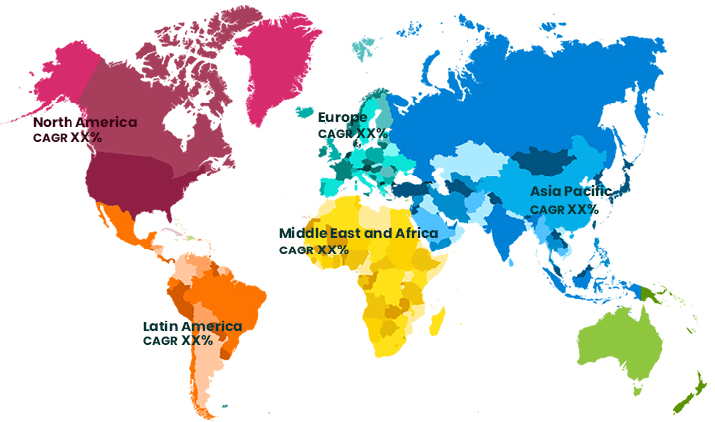
North America is expected to lead the payment as a service market during the forecast period. The region benefits from mature digital infrastructure, high adoption of cashless and electronic payments, and a strong ecosystem of fintech companies and payment technology providers. Enterprises across retail, financial services, hospitality, and other sectors actively seek outsourced, scalable payment platforms that support compliance, security, and omnichannel experiences. These conditions enable North America to drive innovation, set competitive benchmarks, and influence global product development and deployment patterns in the payment as a service market.
Europe maintains significant demand supported by open banking initiatives, regulatory frameworks, and ongoing digital payment adoption. Asia Pacific is expected to grow rapidly as digital payment penetration increases, e-commerce expands, and businesses seek modern payment infrastructure across major economies. Latin America and the Middle East and Africa represent emerging opportunities where rising electronic payment use and digital transformation support gradual expansion of payment as a service offerings.
Payment as a Service Market: Competitive Analysis
Some of the major players in the global payment as a service market include;
- TSYS
- First Data
- Verifone
- Paysafe
- Aurus
- Ingenico
- Pineapple Payments
- Agilysys
- First American Payment Systems
- Alpha Fintech
- FIS
Segments Covered
The global payment as a service market is segmented as follows:
By Component
- Platform
- Service
By Service
- Managed Services
- Professional Services
By Vertical
- Media and Entertainment
- Hospitality
- Healthcare
- Retail
- BFSI
- Others
By Region
- North America
- The U.S.
- Canada
- Mexico
- Europe
- France
- The UK
- Spain
- Germany
- Italy
- Rest of Europe
- Asia Pacific
- China
- Japan
- India
- Australia
- South Korea
- Rest of Asia Pacific
- The Middle East & Africa
- Saudi Arabia
- UAE
- Egypt
- Kuwait
- South Africa
- Rest of the Middle East & Africa
- Latin America
- Brazil
- Argentina
- Rest of Latin America
Table Of Content
Methodology
FrequentlyAsked Questions
Payment as a Service (PaaS) is a financial technology model in which companies outsource payment processing to a third-party provider. The provider delivers a comprehensive suite of tools and services that enable businesses to accept and process credit cards, debit cards, digital wallets, and other electronic payment methods.
The global payment as a service market is driven by the need to outsource payment processing, demand for multi-method electronic payment acceptance, digital transformation across industries, and preference for flexible, cloud-based payment platforms that reduce infrastructure burden.
The global payment as a service market size was valued at approximately USD 16.20 billion in 2023 and is expected to reach around USD 65.20 billion by 2032.
The global payment as a service market is expected to grow at a compound annual growth rate (CAGR) of approximately 16.73% during the forecast period from 2024 to 2032.
North America is expected to lead and contribute notably to the global payment as a service market, supported by mature digital infrastructure, high electronic payment adoption, and a strong fintech and payment technology ecosystem.
Some of the major players leveraging the payment as a service market growth are TSYS, First Data, Verifone, Paysafe, Aurus, Ingenico, Pineapple Payments, Agilysys, First American Payment Systems, Alpha Fintech, and FIS.

HappyClients