
Hammocks Market Size, Growth, Global Trends, Forecast 2034

Hammocks Market By Product Type (Rope Hammocks, Fabric Hammocks, Quilted Hammocks, Brazilian Hammocks, Mayan Hammocks, Camping Hammocks), By Material (Cotton, Polyester, Nylon, Canvas, Rope, Mixed Materials), By Distribution Channel (Online Retail, Supermarkets and Hypermarkets, Specialty Stores, Home Improvement Stores, Department Stores, Direct Sales), By End-User (Residential Users, Commercial Establishments, Camping and Outdoor Enthusiasts, Hotels and Resorts, Healthcare Facilities, Military and Defense), and By Region - Global and Regional Industry Overview, Market Intelligence, Comprehensive Analysis, Historical Data, and Forecasts 2025 - 2034
| Market Size in 2024 | Market Forecast in 2034 | CAGR (in %) | Base Year |
|---|---|---|---|
| USD 4.38 Billion | USD 6.29 Billion | 5.30% | 2024 |
Hammocks Industry Perspective:
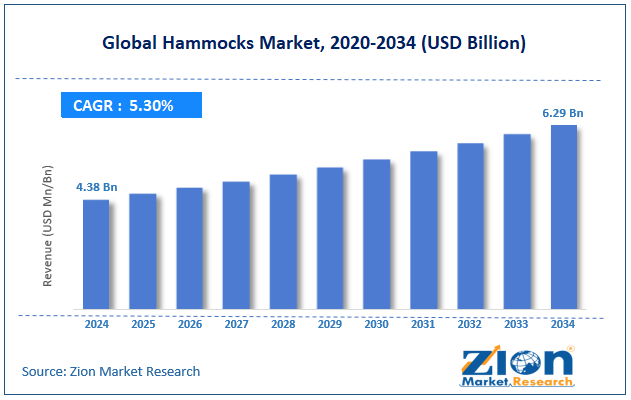
The global hammocks market size was worth approximately USD 4.38 billion in 2024 and is projected to grow to around USD 6.29 billion by 2034, with a compound annual growth rate (CAGR) of roughly 5.30% between 2025 and 2034.
Key Insights:
- As per the analysis shared by our research analyst, the global hammocks market is estimated to grow annually at a CAGR of around 5.30% over the forecast period (2025-2034).
- In terms of revenue, the global hammocks market size was valued at approximately USD 4.38 billion in 2024 and is projected to reach USD 6.29 billion by 2034.
- The hammocks market is projected to grow significantly due to the increasing popularity of outdoor activities and rising consumer preference for portable relaxation solutions worldwide.
- Based on product type, the camping hammocks segment is expected to lead the hammocks market, while the Brazilian hammocks segment is anticipated to experience significant growth.
- Based on material, the nylon segment is expected to lead the hammocks market, while the cotton segment is anticipated to witness notable growth.
- Based on the distribution channel, the online retail segment is the dominating segment, while the specialty stores segment is projected to witness sizeable revenue over the forecast period.
- Based on end-user, the residential users segment is expected to lead the market compared to the commercial establishments segment.
- Based on region, North America is projected to dominate the global hammocks market during the estimated period, followed by Europe.
Hammocks Market: Overview
A hammock is a suspended bed or resting surface made from fabric, rope, or netting and attached between two secure points such as trees, posts, or stands. It was first created by indigenous communities in Central and South America and has since evolved into a simple, versatile product used for relaxation, camping, outdoor leisure, and certain therapeutic purposes. Modern hammocks are available in many designs, including basic rope styles and advanced outdoor models with protection from insects and weather. They are lightweight, easy to carry, and appreciated by people who enjoy spending time outdoors without carrying heavy equipment.
Homes, gardens, and patios often use hammocks to create peaceful spaces for rest, while hotels, resorts, and wellness centers use them to offer a pleasant experience to guests. Healthcare settings sometimes rely on therapeutic hammocks, as their gentle swaying motion can help reduce stress. Growing interest in outdoor activities, mental wellness, and compact furniture continues to increase their popularity.
The increasing consumer interest in outdoor recreation and wellness-focused lifestyles is expected to drive growth in the hammocks market throughout the forecast period.
Hammocks Market Dynamics
Growth Drivers
How are outdoor recreation trends and adventure tourism driving the hammock market growth?
The hammock market is growing quickly as more people enjoy outdoor activities and spend leisure time in natural environments with simple and relaxing setups. Adventure tourism is becoming more popular as travelers look for unique stays in natural spaces instead of traditional hotel rooms during vacations. Camping is becoming a popular choice for families, young adults, and older travelers seeking easy, peaceful outdoor experiences. National parks and recreation areas are seeing more visitors each year, creating steady demand for portable and comfortable sleeping options. Hiking and backpacking groups prefer ultralight camping hammocks because these products reduce weight and offer flexible setups.
Music festivals and outdoor events show many people using hammocks to rest between activities, creating strong visibility for the products. Vanlife and overlanding communities consider hammocks important gear when living or traveling in converted vehicles. Outdoor education programs and therapy groups use hammocks to support learning and connection with nature in simple ways. Social media platforms display scenic hammock setups that encourage people to buy similar products. Environmental awareness motivates campers to use hammocks because these products help reduce impact on natural ground surfaces.
Wellness trends and therapeutic applications
The global hammocks market is expanding as people understand the simple therapeutic and wellness benefits offered by gentle suspended resting positions in many environments. Medical studies show the slow rocking motion in hammocks helps users fall asleep faster and enjoy deeper sleep cycles with ease. Physical therapists often recommend using a hammock for some patients with back pain because the suspended posture reduces pressure on the spine. Mental health professionals include hammock sessions in programs for anxiety, stress, and mood issues because the enclosed space supports calmness. Sensory therapy for children with autism often uses hammock swings that provide soothing movement input during sessions.
Yoga and meditation practitioners use aerial hammocks to combine supported poses with smooth, flowing movement during relaxing routines. Spas and wellness centers install hammocks in quiet rooms where visitors can rest peacefully between treatments. Corporate wellness spaces use hammocks to offer short breaks that support focus and overall productivity. Sleep clinics explore hammock use as a simple method for easing insomnia symptoms without medication. Prenatal care providers sometimes recommend hammocks for pregnant women who want comfortable resting positions during daily routines. Rehabilitation centers use therapeutic hammocks to help patients regain balance and mobility through gentle movements.
Restraints
Weather dependency and seasonal demand fluctuations
The hammocks market faces a major challenge because it depends heavily on good weather conditions, which creates strong seasonal changes in consumer interest and purchasing behavior. Demand rises sharply during spring and summer when people spend more time outdoors, but it decreases during colder months in many regions. Retailers must manage stock carefully to avoid excess inventory in slow seasons and prevent shortages during periods of high sales activity. Weather uncertainty influences buying decisions because consumers often delay outdoor purchases when long stretches of rain or cold temperatures are expected.
Manufacturers struggle to maintain steady production levels across seasons, which sometimes leads to reduced workforces during quieter periods. Marketing efforts focus mainly on warm months, resulting in limited promotional activity during the rest of the year. Indoor hammock usage remains relatively low, making it difficult for the market to generate consistent sales throughout all seasons and regions. Climate change is driving more unpredictable weather patterns, making planning more difficult for businesses that depend on outdoor product demand.
Opportunities
How is the growing trend of outdoor living spaces creating new opportunities for the hammock market?
The hammocks industry is growing steadily as homeowners invest in simple outdoor living spaces that make homes feel larger, more comfortable, and more relaxing. Residential construction and renovation projects often include outdoor rooms, covered patios, and garden areas designed for everyday enjoyment. Designers and landscape planners place hammocks in these spaces because the products offer comfort while adding a pleasing visual element.
Many families choose staycations and improve their backyards to create peaceful environments without traveling far from home. Real estate trends show strong demand for homes with well-designed outdoor areas because these features increase property value and buyer interest. Home improvement shows and online creators share easy hammock ideas that inspire people to try similar projects. Retailers and garden centers expand hammock selections to meet rising customer interest in outdoor comfort products.
Apartment residents look for compact hammock designs that fit small balconies while offering cozy seating. Larger households use hammocks to create simple relaxation spots for family members of different ages. Outdoor kitchens and dining areas often include hammock spaces where people can unwind before or after meals. Fire pits and outdoor heaters extend the time homeowners can enjoy hammocks during cooler seasons. Pergolas and covered structures provide shade and protection, helping people use hammocks more comfortably year-round.
Challenges
How are quality concerns and safety standards creating challenges for the hammock market?
The hammock industry faces steady challenges as companies work to maintain simple product quality and basic user safety across many manufacturing styles and price levels. Weight capacity information often varies between brands, and some products do not support the loads listed on packaging. Hanging hardware and anchor points sometimes fail because the equipment cannot withstand the forces generated during everyday use. Stitching strength and fabric durability differ between high-end and low-cost options, and buyers cannot easily judge these details before purchasing. Counterfeit and low-quality hammocks appear across online marketplaces and copy trusted brands while using weak materials. Missing safety standards allow poorly tested products to reach customers without proper quality checks.
Many hammocks include unclear instructions that lead users to install the equipment incorrectly and create unnecessary safety risks. Trees and posts used for hanging are often chosen without guidance, even though some structures lack sufficient strength for safe use. Weather exposure slowly weakens materials, yet many products do not provide simple information on lifespan or care. Product recalls reduce consumer trust and affect entire categories rather than single brands. Children and older adults face added safety concerns, but most products offer little age-specific advice. Online reviews reveal inconsistent quality within single product lines, showing gaps in basic manufacturing controls.
Hammocks Market: Report Scope
| Report Attributes | Report Details |
|---|---|
| Report Name | Hammocks Market |
| Market Size in 2024 | USD 4.38 Billion |
| Market Forecast in 2034 | USD 6.29 Billion |
| Growth Rate | CAGR of 5.30% |
| Number of Pages | 212 |
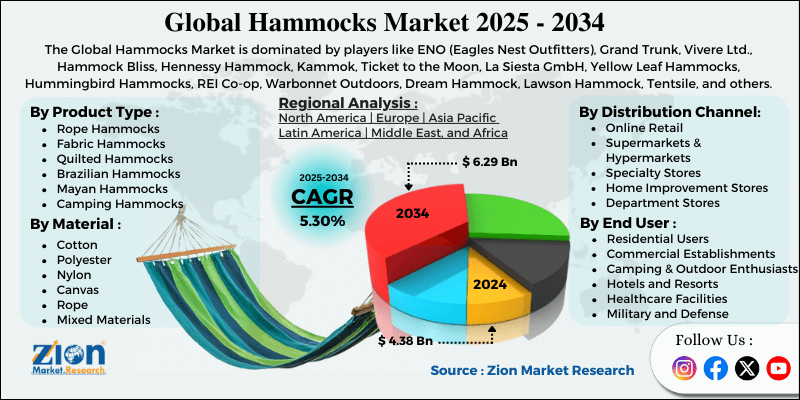
| Key Companies Covered | ENO (Eagles Nest Outfitters), Grand Trunk, Vivere Ltd., Hammock Bliss, Hennessy Hammock, Kammok, Ticket to the Moon, La Siesta GmbH, Yellow Leaf Hammocks, Hummingbird Hammocks, REI Co-op, Warbonnet Outdoors, Dream Hammock, Lawson Hammock, Tentsile, and others. |
| Segments Covered | By Product Type, By Material, By Distribution Channel, By End User, and By Region |
| Regions Covered | North America, Europe, Asia Pacific (APAC), Latin America, Middle East, and Africa (MEA) |
| Base Year | 2024 |
| Historical Year | 2019 to 2023 |
| Forecast Year | 2025 - 2034 |
| Customization Scope | Avail customized purchase options to meet your exact research needs. Request For Customization |
Hammocks Market: Segmentation
The global hammocks market is segmented based on product type, material, distribution channel, end-user, and region.
Based on product type, the global hammocks industry is segregated into rope hammocks, fabric hammocks, quilted hammocks, Brazilian hammocks, Mayan hammocks, and camping hammocks. Camping hammocks lead the market due to their lightweight portability, versatile applications for outdoor activities, and strong appeal to the growing adventure tourism and backpacking communities.
Based on material, the industry is segmented into cotton, polyester, nylon, canvas, rope, and mixed materials. Nylon leads the market due to its excellent strength-to-weight ratio, superior weather resistance, and quick-drying properties, and preferred status among camping and outdoor recreation enthusiasts.
Based on distribution channel, the global hammocks market is classified into online retail, supermarkets and hypermarkets, specialty stores, home improvement stores, department stores, and direct sales. Online retail is expected to lead the market during the forecast period due to extensive product variety and the ability to easily compare features across multiple brands.
Based on end-user, the global market is divided into residential users, commercial establishments, camping and outdoor enthusiasts, hotels and resorts, healthcare facilities, and military and defense. Residential users hold the largest market share due to their substantial numbers, and the increasing adoption of hammocks for backyard relaxation and aesthetic enhancement of gardens and patios.
Hammocks Market: Regional Analysis
What factors are contributing to North America's dominance in the global hammock market?
North America leads the hammocks market because the region has a strong outdoor recreation culture, high consumer spending power, and a reliable distribution system that keeps products available. The United States supports a large camping and hiking community of millions of participants, which naturally creates demand for portable relaxation gear. National parks, state parks, and public lands offer many locations where people enjoy hammocking during outdoor activities. The region also has a long tradition of backyard leisure culture, with homeowners investing in outdoor furniture and simple garden amenities.
Major outdoor retailers operate extensive store networks and advanced online platforms that make it easy for consumers to buy hammocks. American brands have strong reputations for quality and innovation in outdoor equipment, which increases customer trust. High social media use spreads hammock culture through shared photos of scenic setups in natural spaces.
Disposable income levels support steady spending on leisure products even when items are used for short seasons. Climate diversity across the continent allows different regions to enjoy warm, humid weather at different times, extending the overall season. Environmental awareness encourages interest in sustainable outdoor activities, and hammocks fit well with leave-no-trace practices. Outdoor participation increased during the COVID-19 pandemic as people looked for safe activities, and many new users continued these habits. Canada shows similar behavior with a strong camping culture in provinces known for large wilderness areas and recreation infrastructure. The region maintains a strong manufacturing capacity that supports domestic production and varied imports.
Europe is experiencing significant growth.
Europe is seeing rising interest in the hammocks market as outdoor recreation grows and lifestyle trends emphasize relaxation, wellness, and sustainable living. Environmental awareness and climate goals are encouraging consumers to choose simple, low-impact leisure products, while many European outdoor and lifestyle brands are adding hammocks to their collections to support nature-focused habits. Universities studying design, ergonomics, and material science are exploring stronger, safer, and more durable hammock constructions, and traditional craft communities with knowledge of natural fibers are sharing techniques for modern hammock designs. Consumer interest in slow living, mindful rest, and time spent in green spaces is creating steady demand for hammocks across urban and rural areas. Industry groups and outdoor associations are including hammocks in training programs, and some regional manufacturers see them as new products that support local production growth.
Sustainable tourism operators are incorporating hammocks into eco-lodges and coastal retreats, and outdoor wear brands value hammock-friendly gear that supports light travel. Artisan markets are helping raise awareness of handmade hammock accessories, and European rules promoting sustainable consumption are encouraging durable, repairable leisure products. In Europe, cooperation among designers, manufacturers, and wellness brands is strengthening the region’s position as the second-leading market for hammocks.
Recent Market Developments:
- In April 2025, KW Hammocks reported shifting retail trends in the U.S., revealing how niche hammock boutiques are emerging while others decline amid changing consumer behavior.
- In May 2025, Patio Watchman and Sunbrella formed a strategic partnership to develop and market high-end, UV-protective hammocks, combining Patio Watchman’s manufacturing expertise with Sunbrella’s advanced textile technology.
Hammocks Market: Competitive Analysis
The leading players in the global hammocks market are:
- ENO (Eagles Nest Outfitters)
- Grand Trunk
- Vivere Ltd.
- Hammock Bliss
- Hennessy Hammock
- Kammok
- Ticket to the Moon
- La Siesta GmbH
- Yellow Leaf Hammocks
- Hummingbird Hammocks
- REI Co-op
- Warbonnet Outdoors
- Dream Hammock
- Lawson Hammock
- Tentsile
The global hammocks market is segmented as follows:
By Product Type
- Rope Hammocks
- Fabric Hammocks
- Quilted Hammocks
- Brazilian Hammocks
- Mayan Hammocks
- Camping Hammocks
By Material
- Cotton
- Polyester
- Nylon
- Canvas
- Rope
- Mixed Materials
By Distribution Channel
- Online Retail
- Supermarkets and Hypermarkets
- Specialty Stores
- Home Improvement Stores
- Department Stores
- Direct Sales
By End User
- Residential Users
- Commercial Establishments
- Camping and Outdoor Enthusiasts
- Hotels and Resorts
- Healthcare Facilities
- Military and Defense
By Region
- North America
- The U.S.
- Canada
- Europe
- France
- The UK
- Spain
- Germany
- Italy
- Rest of Europe
- Asia Pacific
- China
- Japan
- India
- South Korea
- Southeast Asia
- Rest of Asia Pacific
- Latin America
- Brazil
- Mexico
- Rest of Latin America
- Middle East & Africa
- GCC
- South Africa
- Rest of Middle East & Africa
Table Of Content
Methodology
FrequentlyAsked Questions

HappyClients

