Dry Cleaning And Laundry Services Market Size, Share and Value 2034

Dry Cleaning And Laundry Services Market By Service Type (Dry Cleaning, Wet Cleaning, Laundry Services, Ironing and Pressing, Alterations and Repairs, Specialty Cleaning, and Others), By End-User (Residential Customers, Commercial Establishments, Hospitality Industry, Healthcare Facilities, Corporate Offices, Retail Stores), By Service Mode (Drop-off Services, Pickup and Delivery, Self-Service Laundromats, On-Demand Mobile Services, Subscription Services), By Pricing Model (Pay-Per-Service, Subscription-Based, Bulk Pricing, Premium Services, Membership Plans), and By Region - Global and Regional Industry Overview, Market Intelligence, Comprehensive Analysis, Historical Data, and Forecasts 2025 - 2034
| Market Size in 2024 | Market Forecast in 2034 | CAGR (in %) | Base Year |
|---|---|---|---|
| USD 78.31 Billion | USD 159.95 Billion | 7.43% | 2024 |
Dry Cleaning And Laundry Services Industry Perspective
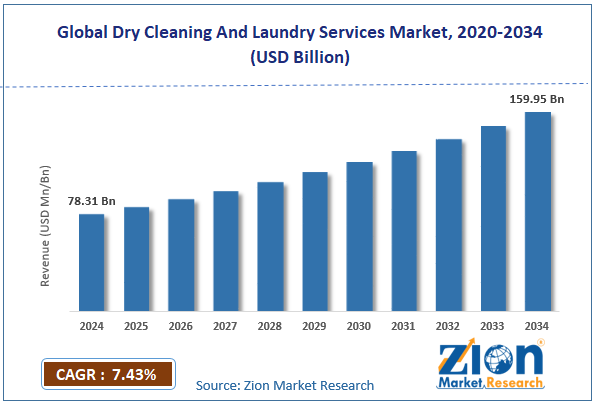
The global dry cleaning and laundry services market size was worth approximately USD 78.31 billion in 2024 and is projected to grow to around USD 159.95 billion by 2034, with a compound annual growth rate (CAGR) of roughly 7.43% between 2025 and 2034.
Key Insights
- As per the analysis shared by our research analyst, the global dry cleaning and laundry services market is estimated to grow annually at a CAGR of around 7.43% over the forecast period (2025-2034).
- In terms of revenue, the global dry cleaning and laundry services market size was valued at approximately USD 78.31 billion in 2024 and is projected to reach USD 159.95 billion by 2034.
- The dry cleaning and laundry services market is projected to grow significantly due to the increasing urbanization, rising working population, growing demand for convenient services, and expanding hospitality and healthcare sectors requiring professional cleaning solutions.
- Based on service type, the laundry services segment is expected to lead the dry cleaning and laundry services market, while the specialty cleaning segment is anticipated to experience significant growth.
- Based on end-user, the residential customers segment is expected to lead the dry cleaning and laundry services market, while the hospitality industry segment is anticipated to witness notable growth.
- Based on service mode, the pickup and delivery segment is the dominating segment, while the on-demand mobile services segment is projected to witness sizeable revenue over the forecast period.
- Based on the pricing model, the pay-per-service segment is expected to lead the market compared to the subscription-based segment.
- Based on region, North America is projected to dominate the global dry cleaning and laundry services market during the estimated period, followed by Europe.
Dry Cleaning And Laundry Services Market: Overview
Dry cleaning and laundry services are professional cleaning solutions that maintain the quality, appearance, and hygiene of garments and household fabrics through specialized methods and equipment. These services include traditional dry cleaning, which uses chemical solvents for delicate materials, and wet washing for everyday clothing. Professional cleaners use industrial machines, safe cleaning agents, and trained staff to handle fabrics such as wool, silk, cotton, synthetics, and specialty materials. Dry cleaning relies on liquid solvents instead of water to clean garments that cannot endure regular washing. Modern facilities also offer stain removal, ironing, alterations, leather care, wedding dress preservation, and cleaning for items such as curtains and bedding. Technology integration includes mobile applications for scheduling pickups, tracking orders, and making digital payments. Eco-friendly methods using biodegradable solvents and energy-efficient systems are becoming widely preferred. Businesses may operate storefronts or offer mobile services, and some specialize in luxury clothing, uniforms, or bulk laundry needs. The growing demand for convenient professional cleaning services and increasing disposable incomes are expected to drive growth in the dry cleaning and laundry services market throughout the forecast period.
Dry Cleaning And Laundry Services Market Dynamics
Growth Drivers
Changing lifestyles and urbanization
The dry cleaning and laundry services market grows quickly as modern urban routines create a rising need for simple, professional garment care services offering convenient support for everyday clothing needs. Many working professionals spend long hours on their careers, leaving limited time for chores, encouraging easy outsourcing of regular washing and garment maintenance. Dual-income households handle full-time jobs, making reliable cleaning services helpful for reducing daily stress while keeping clothing in good condition. Long commute times in crowded cities reduce personal time, increasing interest in quick-service options that offer timely pickup and delivery. Small urban homes offer limited space for machines, leading many individuals to prefer professional cleaning for regular and occasional garments. Young professionals learning independent living often seek expert support for handling delicate fabrics and maintaining expanding wardrobes. Busy parents and senior citizens value dependable services offering practical solutions for clothing care without heavy physical effort or time pressure.
How are technological advancements and service innovation driving the dry cleaning and laundry services market growth?
The global dry cleaning and laundry services market is experiencing strong growth as technology enables convenient, efficient service models that offer a simple, smooth customer experience across many regions. Mobile applications help users schedule pickups, track cleaning progress, make payments, and share instructions without visiting service locations or speaking with staff. Real-time tracking systems give clear updates on garment movement and expected delivery times, helping build trust and reduce unnecessary questions. Automated notifications remind users about pickup schedules, inform customers when orders are ready, and share promotional messages from service providers. Online payment systems support quick transactions for both customers and businesses, improving speed and reducing manual tasks during busy hours. Digital profiles store fabric preferences, garment sizes, and service history, supporting personalized care without repeated explanations from customers. Barcode and RFID systems track each garment during cleaning, reducing losses and improving accurate handling in every step. Eco-friendly methods using biodegradable solvents and energy-efficient equipment appeal to consumers seeking sustainable choices across daily needs. Automated sorting and folding systems increase efficiency, reduce labor hours, and support consistent results across large workloads in commercial spaces.
Restraints
How are high operational costs and environmental regulations affecting the dry cleaning and laundry services market?
A major challenge for the dry cleaning and laundry services industry is the high investment requirements and ongoing expenses needed to maintain efficient, compliant operations in busy service regions. Commercial machines used for washing, drying, pressing, and solvent cleaning require large upfront spending, creating difficulties for new businesses trying to enter competitive areas. Rental costs in urban locations with strong customer activity place heavy pressure on revenue, especially in cities with expensive property rates. Utility costs for water, electricity, and gas add major expenses and change often due to shifting market prices throughout the year. Labor costs for trained staff who handle fabrics, manage machines, and complete quality checks reduce profit margins across many service providers. Environmental rules covering solvent disposal, wastewater treatment, and air emissions require costly systems supporting safe and responsible operations. Chemical expenses for detergents, solvents, and stain removers rise regularly due to unstable raw material prices in different markets. Maintenance needs for heavily used machines create frequent repair expenses, while insurance costs add fixed overhead for daily business activities.
Opportunities
Hospitality and healthcare sector
The dry cleaning and laundry services market sees strong growth as expanding hospitality, healthcare, and institutional sectors create rising demand for large-scale professional cleaning support. Hotels require daily laundering of linens, towels, uniforms, and guest clothing, creating steady business for providers offering reliable high-volume cleaning solutions. Restaurants and food service establishments need frequent washing of table linens, napkins, chef outfits, and staff attire, helping maintain clean environments and professional appearances. Hospitals and healthcare centers generate large laundry loads, including gowns, sheets, towels, surgical linens, and uniforms, which require specialized processes to ensure safe, hygienic results. Nursing homes and senior care facilities need regular cleaning for resident clothing, bedding, and facility linens, creating consistent service needs across many locations. Gyms, spas, and salons require fresh towels, robes, and treatment linens throughout the day, supporting predictable demand for dependable cleaning partners. Corporate offices, schools, airlines, and sports teams also rely on uniform cleaning services, creating broad opportunities for providers serving diverse commercial clients.
Challenges
How is market fragmentation and intense competition creating challenges for the dry cleaning and laundry services industry?
The dry cleaning and laundry services industry faces major challenges as fragmented markets and strong local competition reduce pricing power and weaken long-term customer loyalty across many regions. Low entry barriers allow new businesses to start with modest investment, increasing competition and reducing the ability of existing providers to raise service rates. Price competition intensifies as rising operational expenses force businesses to keep rates low, reducing profit margins and limiting future growth plans. Customer loyalty remains weak as many users treat laundry services as simple commodities, switching providers easily for small discounts or promotional benefits. Economic slowdowns reduce spending as customers delay professional cleaning or manage tasks personally to save money during uncertain times. Home laundry equipment with advanced wash settings and steam functions reduces dependency on external services for regular garments. Self-service laundromats attract budget-focused users who prefer lower-cost options even if tasks require personal effort and additional time. Online reviews spread quickly, affecting business reputation and influencing customer choices in highly competitive service areas. Hiring and retention issues increase pressure as experienced workers leave the industry while younger workers show limited interest in long-term service roles.

Dry Cleaning And Laundry Services Market : Report Scope
| Report Attributes | Report Details |
|---|---|
| Report Name | Dry Cleaning And Laundry Services Market Research Report |
| Market Size in 2024 | USD 78.31 Billion |
| Market Forecast in 2034 | USD 159.95 Billion |
| Growth Rate | CAGR of 7.43% |
| Number of Pages | 220 |
| Key Companies Covered | The Huntington Company, ZIPS Franchising LLC, Tide Cleaners, Rinse Inc., Laundrapp, FlyCleaners, Zipjet Limited, Cleanly, Washio Inc., and Mulberrys Garment Care |
| Segments Covered | By Service Type, By End User, By Service Mode, By Pricing Model And By Region |
| Regions Covered | North America, Europe, Asia Pacific (APAC), Latin America, The Middle East and Africa (MEA) |
| Base Year | 2024 |
| Historical Year | 2019 to 2023 |
| Forecast Year | 2025 - 2034 |
| Customization Scope | Avail customized purchase options to meet your exact research needs. Request For Customization |
Dry Cleaning And Laundry Services Market: Segmentation
The global dry cleaning and laundry services market is segmented based on service type, end-user, service mode, pricing model, and region.
Based on service type, the global dry cleaning and laundry services industry is divided into dry cleaning, wet cleaning, laundry services, ironing and pressing, alterations and repairs, specialty cleaning, and others. Laundry services lead the market due to the high frequency of everyday clothing cleaning needs and a broader customer base requiring regular services.
Based on end-user, the industry is segmented into residential customers, commercial establishments, hospitality industry, healthcare facilities, corporate offices, and retail stores. Residential customers lead the market due to the large demographic base, recurring individual cleaning needs, and widespread adoption of professional services among urban households.
Based on service mode, the global dry cleaning and laundry services market is classified into drop-off services, pickup and delivery, self-service laundromats, on-demand mobile services, and subscription services. Pickup and delivery services are expected to lead the market during the forecast period due to the maximum convenience they provide and strong alignment with modern consumer preferences for doorstep services.
Based on the pricing model, the global market is divided into pay-per-service, subscription-based, bulk pricing, premium services, and membership plans. Pay-per-service holds the largest market share due to its flexibility, which provides customers who use services occasionally.
Dry Cleaning And Laundry Services Market: Regional Analysis
North America leads the global market
North America leads the dry cleaning and laundry services market because high incomes, busy lifestyles, and mature industry infrastructure support growing demand from residential and commercial users across many regions. The United States shows strong use of professional cleaning services as households outsource laundry to save time and maintain clothing quality in fast-paced lifestyles. Large cities, including New York, Los Angeles, Chicago, and San Francisco, create dense populations that support many service providers offering varied cleaning options for different users. Professional work culture encourages consistent demand for dry cleaning and pressing as workers maintain polished appearances for daily office routines. High labor costs make personal time valuable, encouraging many consumers to outsource laundry instead of spending limited hours on domestic tasks after long workdays. Entrepreneurial activity supports diverse businesses ranging from small neighborhood shops to advanced franchise operations offering modern cleaning solutions.
Technology adoption helps providers introduce mobile applications, online booking, and digital payments, improving customer convenience and overall service experience across multiple areas. Environmental awareness increases interest in eco-friendly cleaning methods using biodegradable solvents and energy-efficient machines in many neighborhoods. High-rise housing with limited laundry space increases reliance on professional services among urban residents seeking easy access to clean clothing. Hospitality businesses, including hotels and restaurants, generate large laundry volumes, creating steady demand for specialized commercial service providers. Corporate work cultures encourage employees to choose professional services to maintain a balance between personal life and daily responsibilities in demanding environments. Immigration patterns bring diverse customs related to garment care, supporting ongoing interest in professional services across many communities.
What factors are contributing to Europe’s substantial presence in the dry cleaning and laundry services market?
Europe maintains a strong position in the dry cleaning and laundry services market because long service traditions, quality-focused culture, and dense urban populations support consistent demand for professional garment care across many regions. The United Kingdom operates numerous high-street cleaning shops that serve neighborhood customers, with major cities offering premium services for professionals seeking polished appearances for daily routines. France has strong dry-cleaning traditions among fashion-conscious consumers in Paris and other style-focused cities, where clothing presentation holds deep cultural value. Germany demonstrates efficient service delivery supported by systematic processes, reliable quality, and punctual operations that match consumer expectations for professional standards in everyday garment care. Italy benefits from a strong fashion industry influence, as cities like Milan support advanced cleaning services for designer garments and luxury fabrics handled by experienced specialists.
Urban density across European cities places residential areas close to service providers, making drop-off options convenient for customers walking short distances in busy neighborhoods. Smaller living spaces in many European homes reduce room for laundry equipment, encouraging residents to rely on professional services for efficient garment care across all seasons. Tourism activity in cities including Paris, London, Rome, and Barcelona creates strong commercial laundry demand from hotels and restaurants serving international travelers throughout the year. Aging populations appreciate pickup and delivery services that offer simple solutions for garment care, eliminating physical effort and transportation requirements in daily routines.
Recent Developments
- In July 2025, Laundrywala announced expansion into new markets in India while improving its technology platform and customer service model across franchise outlets.
- In August 2025, Tide Cleaners acquired and rebranded four former Flair Cleaners locations in the Los Angeles area, expanding its physical footprint in Santa Monica, Redondo Beach, Studio City, and Valencia.
- In October 2025, Rinse, Inc. announced the rollout of a new “Next Day Hang Dry Service” offering one-day turnaround for athleisure and delicate garments across its North American markets.
Dry Cleaning And Laundry Services Market: Competitive Analysis
The leading players in the global dry cleaning and laundry services market are
- The Huntington Company
- ZIPS Franchising LLC
- Tide Cleaners
- Rinse Inc
- Laundrapp
- FlyCleaners
- Zipjet Limited
- Cleanly
- Washio Inc
- Mulberrys Garment Care
The global dry cleaning and laundry services market is segmented as follows:
By Service Type
- Dry Cleaning
- Wet Cleaning
- Laundry Services
- Ironing and Pressing
- Alterations and Repairs
- Specialty Cleaning
- Others
By End User
- Residential Customers
- Commercial Establishments
- Hospitality Industry
- Healthcare Facilities
- Corporate Offices
- Retail Stores
By Service Mode
- Drop-off Services
- Pickup and Delivery
- Self-Service Laundromats
- On-Demand Mobile Services
- Subscription Services
By Pricing Model
- Pay-Per-Service
- Subscription-Based
- Bulk Pricing
- Premium Services
- Membership Plans
By Region
- North America
- The U.S.
- Canada
- Europe
- France
- The UK
- Spain
- Germany
- Italy
- Rest of Europe
- Asia Pacific
- China
- Japan
- India
- South Korea
- Southeast Asia
- Rest of Asia Pacific
- Latin America
- Brazil
- Mexico
- Rest of Latin America
- Middle East & Africa
- GCC
- South Africa
- Rest of Middle East & Africa
Table Of Content
Methodology
FrequentlyAsked Questions

HappyClients