
Global Blind Boxes Market Size, Trends Analysis, Report 2034

Blind Boxes Market By Product Type (Toy Figures, Fashion Accessories, Stationery Items, Electronics Accessories, Home Decor, and Others), By Distribution Channel (Online Retail, Offline Retail, Specialty Stores, Convenience Stores, Supermarkets and Hypermarkets), By Price Range (Budget Segment, Mid-Range Segment, Premium Segment, Luxury Segment), By End-User (Children, Teenagers, Adults, Collectors, Gift Buyers), and By Region - Global and Regional Industry Overview, Market Intelligence, Comprehensive Analysis, Historical Data, and Forecasts 2025 - 2034
| Market Size in 2024 | Market Forecast in 2034 | CAGR (in %) | Base Year |
|---|---|---|---|
| USD 13.53 Billion | USD 25.14 Billion | 6.14% | 2024 |
Blind Boxes Industry Prospective:
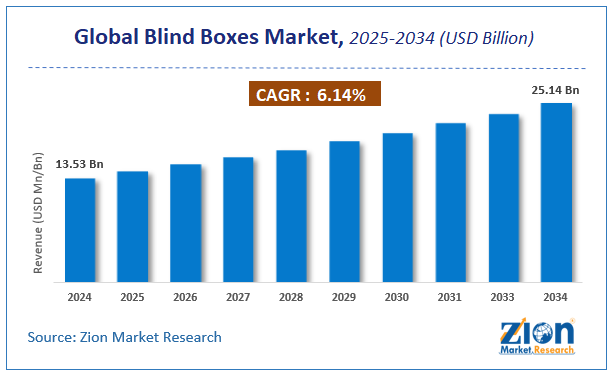
The global blind boxes market size was worth approximately USD 13.53 billion in 2024 and is projected to grow to around USD 25.14 billion by 2034, with a compound annual growth rate (CAGR) of roughly 6.14% between 2025 and 2034.
Key Insights
- As per the analysis shared by our research analyst, the global blind boxes market is estimated to grow annually at a CAGR of around 6.14% over the forecast period (2025-2034).
- In terms of revenue, the global blind boxes market size was valued at approximately USD 13.53 billion in 2024 and is projected to reach USD 25.14 billion by 2034.
- The blind boxes market is projected to grow significantly due to rising disposable incomes among young consumers, growing social media influence on purchasing behavior, expansion of collector culture, and increasing licensing partnerships with entertainment franchises.
- Based on product type, the toy figures segment is expected to lead the blind boxes market, while the fashion accessories segment is anticipated to experience significant growth.
- Based on distribution channel, the online retail segment is expected to lead the blind boxes market, while the specialty stores segment is anticipated to witness notable growth.
- Based on price range, the mid-range segment is the dominating segment, while the premium segment is projected to witness sizeable revenue over the forecast period.
- Based on end-user, the teenagers segment is expected to lead the market compared to the gift buyers segment.
- Based on region, Asia Pacific is projected to dominate the global blind boxes market during the estimated period, followed by North America.
Blind Boxes Market: Overview
The blind boxes market refers to a retail packaging model in which sealed products contain mystery collectibles, and buyers do not know the exact item inside before purchase, creating a surprise-based buying experience. Blind boxes usually include small collectible toys, miniature figures, accessories, or decorative products inspired by popular characters, anime figures, gaming franchises, fashion themes, or original art concepts. Each blind box series includes multiple designs, which encourages repeat purchases as collectors aim to complete full sets or discover rare items. Limited-edition and chase figures increase perceived value and strengthen demand among collectors. Bright packaging and compact sizes support impulse buying across toy stores, malls, and online platforms.
Social media unboxing videos and collector communities increase visibility and consumer engagement. Young consumers see blind boxes as affordable collectibles offering entertainment, emotional excitement, and social sharing value. Licensed merchandise from movies, animation, and video games supports strong brand-driven sales. Artist collaborations introduce creative designs and limited releases. Lifestyle and fashion brands expand blind box use into beauty, accessories, and home décor. Predictable production cycles, lower inventory risk, and repeat customer behavior support steady growth in the global blind boxes market.
The expanding global influence of pop culture and the growth of collector communities are expected to drive growth in the blind boxes market over the forecast period.
Blind Boxes Market Dynamics
Growth Drivers
How is social media influence driving demand for the blind boxes market?
The blind boxes market is growing as social media increases product visibility through unboxing videos, collection posts, and influencer-driven content. Creators on YouTube, TikTok, and Instagram attract large audiences by sharing blind box opening moments, reactions, and rare collectible discoveries. Collectors connect across online communities to share rare items, trade duplicates, discuss releases, and build excitement for upcoming blind box series. Influencer collaborations help blind boxes reach younger buyers who prefer peer opinions, visual content, and interactive shopping experiences.
Livestream shopping combines entertainment and sales as hosts open multiple blind boxes live while viewers purchase products during broadcasts. Hashtags, user-generated content, and a sharing culture enhance brand awareness, strengthen trust, and support repeat purchases in the blind boxes market. Algorithm-based recommendations spread blind box videos widely, exposing new buyers to collectibles culture and supporting long-term market growth.
Pop culture licensing and entertainment tie-ins are creating new opportunities.
The global blind boxes market grows through partnerships with entertainment franchises, creating recognition, demand, and loyal fan-driven collectible purchasing. Movie studios license popular characters to blind box manufacturers, using film releases and franchise popularity to increase licensed blind box merchandise sales. Anime, manga, and video game brands fit blind box collectibles well, since large character casts encourage repeat buying and full collection completion. Musical artists, television series, and streaming platforms launch limited-edition blind boxes, helping fans acquire physical collectibles associated with their favorite entertainment content.
Comic publishers, sports leagues, and teams expand the blind boxes market reach by offering superhero figures, athlete collectibles, mascots, and branded memorabilia. Fashion brands, museums, and cultural institutions collaborate with blind box companies to create premium artistic collectibles at accessible price levels. Seasonal blind box releases tied to festivals, holidays, and special events support predictable sales cycles and sustained global blind box market growth.
Restraints
Environmental concerns and packaging waste are limiting market accessibility.
A major challenge in the blind boxes industry involves rising criticism over excessive packaging waste, plastic use, and environmental impact. Each blind box uses several packaging layers, such as outer boxes, plastic bags, cardboard inserts, and protective wraps per unit. Environmental groups describe blind boxes as symbols of unnecessary consumption because small collectibles generate high packaging waste volumes globally today. Young consumers drive the blind boxes industry demand while expressing growing concern about sustainability, eco-friendly materials, and responsible purchasing.
Government regulations across several countries focus on reducing single-use plastics and limiting excessive retail packaging practices worldwide standards globally. Blind box collection culture encourages repeat purchases, thereby increasing plastic waste, carbon emissions, and the overall environmental footprint globally. Brand reputation risks rise as sustainability concerns grow, causing retailers, consumers, and advocacy groups to question blind box practices.
Opportunities
How is geographic expansion creating growth potential?
The blind boxes industry finds strong growth opportunities as Asian collectibles trends expand across Europe, North America, Latin America, and emerging global markets. European blind boxes market interest rises as retailers introduce Asian style products and local brands create region-specific collectible series. North American consumers adopt blind boxes through bookstores, toy stores, gift shops, and online retail platforms, supporting wider mainstream acceptance. Latin America, the Middle East, and Africa show potential due to young populations, rising incomes, expanding access to e-commerce, and strong interest in popular culture. Australia, New Zealand, and tourist cities grow demand through conventions, airports, hotel shops, and souvenir-focused blind box retail locations.
Online sales remove distance barriers, allowing suburban, rural, and international buyers to access global blind boxes market offerings easily. Pop-up stores, festivals, universities, and malls introduce blind boxes to new customers, creating trial purchases and long-term collector growth. Overall, the blind boxes market continues to expand globally as cultural adoption, retail diversification, and digital commerce together create sustained demand across both mature and emerging consumer regions.
Challenges
How are counterfeit products and quality concerns creating obstacles for the blind boxes market?
The blind boxes industry faces serious challenges from counterfeiting, quality issues, and weak brand protection, reducing consumer trust and undermining long-term global market stability. Counterfeit blind boxes appear widely on online marketplaces, offering low prices, poor materials, misleading packaging, and the illegal use of licensed characters. Customers often receive low-quality or unsafe collectibles, causing disappointment and harming the brand reputation of legitimate blind box manufacturers.
Intellectual property enforcement remains difficult across borders, especially in regions with weak trademark laws and limited regulatory oversight. Online retail platforms struggle to detect counterfeit listings quickly, allowing fake blind box products to reach buyers before removal. Quality control problems also affect genuine blind boxes market players when fast production leads to paint defects, assembly errors, or damaged packaging. Manipulated rarity claims, high resale prices, limited refunds, and poor supply chain transparency further increase frustration among blind box collectors and retailers.
Blind Boxes Market: Report Scope
| Report Attributes | Report Details |
|---|---|
| Report Name | Blind Boxes Market |
| Market Size in 2024 | USD 13.53 Billion |
| Market Forecast in 2034 | USD 25.14 Billion |
| Growth Rate | CAGR of 6.14% |
| Number of Pages | 280 |
| Key Companies Covered | Pop Mart International Group, Bandai Namco Holdings Inc., Funko Inc., Kidrobot, Tokidoki LLC, 52Toys, Medicom Toy Corporation, The Loyal Subjects, Super7 LLC, Mighty Jaxx Pte Ltd., Dreams Inc., Bearbrick, Hidden Fortress Press, Unbox Industries, and Kasing Lung Company Limited. |
| Segments Covered | By Product Type, By Distribution Channel, By Price Range, By End User and By Region |
| Regions Covered | North America, Europe, Asia Pacific (APAC), Latin America,The Middle East and Africa (MEA) |
| Base Year | 2024 |
| Historical Year | 2019 to 2023 |
| Forecast Year | 2025 - 2034 |
| Customization Scope | Avail customized purchase options to meet your exact research needs. Request For Customization |
Blind Boxes Market: Segmentation
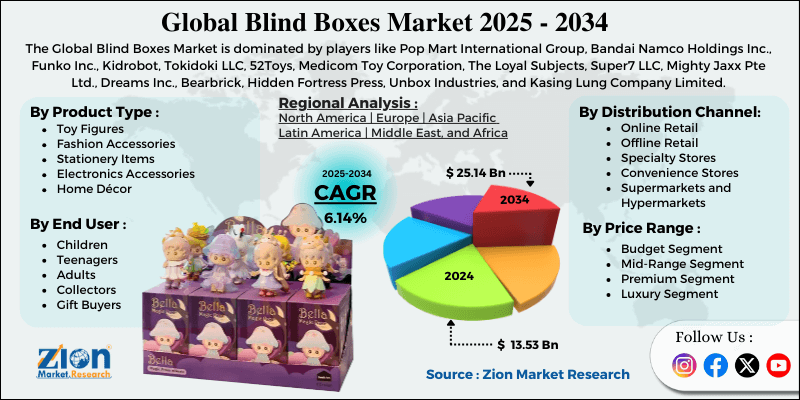
The global blind boxes market is segmented based on product type, distribution channel, price range, end-user, and region.
Based on product type, the global blind boxes industry is categorized into toy figures, fashion accessories, stationery items, electronics accessories, home décor, and others. Toy figures lead the market due to their strong appeal across age groups, diverse character options from licensed properties, established collector culture, and repeat purchase behavior as consumers complete series collections.
Based on distribution channel, the industry is segregated into online retail, offline retail, specialty stores, convenience stores, and supermarkets and hypermarkets. Online retail leads the market due to its wider product selection, a convenient shopping experience, access to international brands, customer reviews that guide purchases, and direct-to-consumer sales models.
Based on price range, the global blind boxes market is classified into the budget, mid-range, premium, and luxury segments. The mid-range segment is expected to lead the market during the forecast period, owing to a balance between affordability and quality, appeal to regular collectors, and the availability of licensed characters at accessible prices.
Based on end user, the global market is classified into children, teenagers, adults, collectors, and gift buyers. Teenagers hold the largest market share due to high disposable income from allowances and part-time work, strong social media engagement, and collection culture participation.
Blind Boxes Market: Regional Analysis
What factors are contributing to the Asia Pacific's dominance in the global blind boxes market?
Asia Pacific is estimated to account for a share of around 45% during the forecast period, maintaining its position as the leading region in the global blind boxes market. The Asia Pacific blind boxes market leads due to cultural origins, large youth populations, strong manufacturing ecosystems, and widespread acceptance of collectible purchasing habits. China represents the largest blind boxes market and production hub, supported by leading brands, extensive retail networks, and continuous artist-driven product innovation. Strong interest in gifting, collecting, and character merchandise sustains high demand across major cities in China, Japan, South Korea, and Taiwan.
Japan supports premium blind boxes through long-standing capsule toy culture, high-quality standards, and deep connections with anime collectibles. South Korea experiences rapid blind boxes market expansion through K-pop merchandise, fashion-focused designs, and digitally active consumers engaging through online platforms. Southeast Asian countries, including Thailand, Vietnam, Indonesia, and the Philippines, show strong growth driven by rising incomes, smartphone usage, and expanding E-commerce access. Shopping malls across Asian cities support blind box sales through specialty stores, pop-up outlets, vending machines, and frequent promotional events. Affordable pricing makes blind boxes attractive lifestyle collectibles for students, young professionals, and first-time collectors across the region.
Popular Asian social media platforms support blind box communities, trading discussions, unboxing content, and organic brand discovery among younger audiences. Licensed entertainment characters gain regional popularity through streaming media, supporting consistent blind boxes across multiple Asia Pacific countries. Large collectible retail chains expand across cities, offering standardized buying experiences and strong brand visibility for blind box products. Tourist destinations generate additional blind box sales as visitors purchase exclusive regional collections as souvenirs and cultural memorabilia.
Advanced manufacturing capabilities and efficient supply chains help maintain competitive pricing while supporting quality consistency across large production volumes. Cultural acceptance of blind boxes as a mainstream hobby supports adoption across age groups beyond niche collector communities. Strong regional integration of entertainment, retail, and digital commerce continues to position the Asia Pacific as the core growth engine for the global blind boxes market.
North America maintains a significant market share.
North America is projected to account for approximately 28% of the global blind boxes market during the forecast period, maintaining its position as the second-largest region. The North America blind boxes market grows through expanding collector communities, wider retail availability, and rising interest in experience-based shopping among younger consumers. The United States supports strong blind boxes through major entertainment franchises across movies, television, comics, gaming, and animation merchandise. Large retail chains such as Target, Hot Topic, and specialty stores provide visible shelf placement, helping blind boxes reach mainstream shoppers beyond hobby audiences.
Pop culture conventions, including Comic Con, anime expos, and fan events, act as key sales points while building loyal blind box collector communities. Stable disposable income levels enable frequent blind-box purchases, as individual prices remain affordable relative to premium collectibles or limited-edition figures. Social media creators increase blind box awareness through unboxing videos, collection displays, and trend-driven short-form content. E-commerce platforms, including Amazon, expand access to international blind box brands while supporting the growth of domestic collectible companies. Major urban centers such as New York, Los Angeles, and San Francisco show high blind boxes adoption among young professionals. College campuses and nearby shopping areas provide dense customer bases for affordable blind box collectibles and gift items.
Gift-giving traditions encourage blind box purchases for birthdays, holidays, celebrations, and casual social exchanges across families and friend groups. Art toy culture continues expanding as contemporary artists release blind box collaborations blending creative design with accessible price points. Nostalgia-driven demand among millennials supports the growth of blind boxes by linking modern collectibles to familiar childhood toy experiences. Growing acceptance of adult toy collecting removes stigma, allowing blind boxes' appeal to expand beyond children into broader age groups. Retail marketing strategies emphasize limited editions, exclusivity, and surprise elements, increasing blind box engagement across physical and online channels. Combined retail strength, cultural influence, and digital promotion position North America as a stable long-term growth region within the global blind boxes market.
Recent Market Developments
- In June 2025, Pop Mart International Group Ltd. experienced a share price decline after Chinese state media called for stricter regulation of blind-box toys and collectible figures, affecting investor confidence in the market.
- In August 2025, a rare giant Labubu figure broke auction records in China, selling for approximately USD 150,000 and highlighting high secondary-market demand for blind box collectibles.
Blind Boxes Market: Competitive Analysis
The leading players in the global blind boxes market are as follows:
- Pop Mart International Group
- Bandai Namco Holdings Inc.
- Funko Inc.
- Kidrobot
- Tokidoki LLC
- 52Toys
- Medicom Toy Corporation
- The Loyal Subjects
- Super7 LLC
- Mighty Jaxx Pte Ltd.
- Dreams Inc.
- Bearbrick
- Hidden Fortress Press
- Unbox Industries
- Kasing Lung Company Limited.
The global blind boxes market is segmented as follows:
By Product Type
- Toy Figures
- Fashion Accessories
- Stationery Items
- Electronics Accessories
- Home Décor
- Others
By Distribution Channel
- Online Retail
- Offline Retail
- Specialty Stores
- Convenience Stores
- Supermarkets and Hypermarkets
By Price Range
- Budget Segment
- Mid-Range Segment
- Premium Segment
- Luxury Segment
By End User
- Children
- Teenagers
- Adults
- Collectors
- Gift Buyers
By Region
- North America
- The U.S.
- Canada
- Mexico
- Europe
- France
- The UK
- Spain
- Germany
- Italy
- Rest of Europe
- Asia Pacific
- China
- Japan
- India
- Australia
- South Korea
- Rest of Asia Pacific
- The Middle East & Africa
- Saudi Arabia
- UAE
- Egypt
- Kuwait
- South Africa
- Rest of the Middle East & Africa
- Latin America
- Brazil
- Argentina
- Rest of Latin America
Table Of Content
Methodology
FrequentlyAsked Questions

HappyClients

