
Aesthetic Threads Market Size, Share, Value, Industry Trends 2034

Aesthetic Threads Market By Thread Type (Polydioxanone Threads, Polylactic Acid Threads, Polycaprolactone Threads, Barbed Threads, Smooth Threads, and Others), By Application (Face Lifting, Neck Lifting, Eyebrow Lifting, Skin Rejuvenation, Wrinkle Reduction, Body Contouring), By End-User (Dermatology Clinics, Cosmetic Surgery Centers, Medical Spas, Hospitals, Beauty Clinics, Aesthetic Practitioners), By Distribution Channel (Direct Sales, Distributors and Wholesalers, Online Platforms, Medical Supply Companies), and By Region - Global and Regional Industry Overview, Market Intelligence, Comprehensive Analysis, Historical Data, and Forecasts 2025 - 2034
| Market Size in 2024 | Market Forecast in 2034 | CAGR (in %) | Base Year |
|---|---|---|---|
| USD 149.26 Million | USD 294.16 Million | 6.42% | 2024 |
Aesthetic Threads Industry Prospective
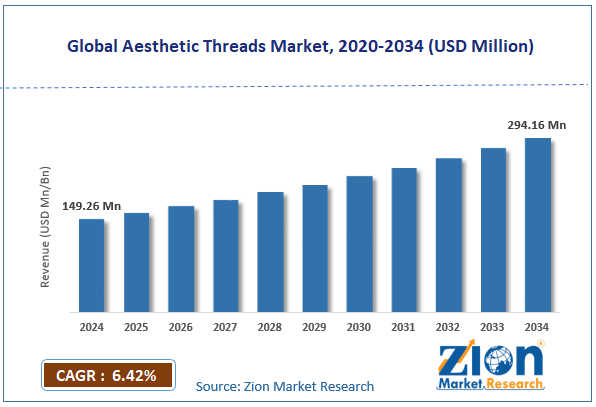
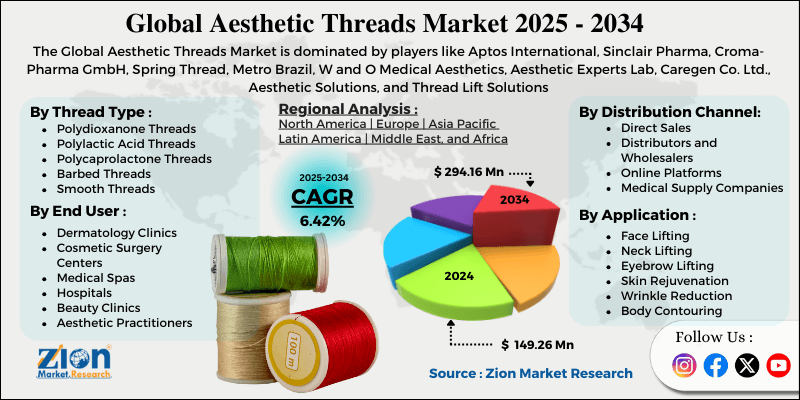
The global aesthetic threads market size was worth approximately USD 149.26 million in 2024 and is projected to grow to around USD 294.16 million by 2034, with a compound annual growth rate (CAGR) of roughly 6.42% between 2025 and 2034.
Key Insights
- As per the analysis shared by our research analyst, the global aesthetic threads market is estimated to grow annually at a CAGR of around 6.42% over the forecast period (2025-2034).
- In terms of revenue, the global aesthetic threads market size was valued at approximately USD 149.26 million in 2024 and is projected to reach USD 294.16 million by 2034.
- The aesthetic threads market is projected to grow significantly due to the rising preference for non-surgical cosmetic treatments, increasing disposable incomes in emerging markets, growing influence of social media on beauty standards, and expanding availability of trained practitioners offering thread lift procedures.
- Based on thread type, the polydioxanone threads segment is expected to lead the aesthetic threads market, while the polylactic acid threads segment is anticipated to experience significant growth.
- Based on application, the face-lifting segment is expected to lead the aesthetic threads market, while the skin rejuvenation segment is anticipated to witness notable growth.
- Based on end-user, the cosmetic surgery centers segment is the dominating segment, while the medical spas segment is projected to witness sizeable revenue over the forecast period.
- Based on the distribution channel, the direct sales segment is expected to lead the market compared to the online platforms segment.
- Based on region, the Asia Pacific is projected to dominate the global aesthetic threads market during the estimated period, followed by North America.
Aesthetic Threads Market: Overview
Aesthetic thread lifting is a simple non-surgical cosmetic procedure used to lift and tighten loose skin on the face, neck, and body using medical-grade dissolvable threads. These threads enter the skin through fine needles and give quick lifting support while also improving natural collagen production over time. Polydioxanone threads give instant support with tiny barbs for lifting, while polylactic acid threads mainly improve skin firmness in a gradual way. The complete procedure usually takes thirty to sixty minutes with only mild swelling or bruising after treatment. Results show quickly and continue to improve for several months as collagen increases. Common treatment areas include cheeks, jawline, neck, eyebrows, arms, and thighs. Local anesthesia keeps discomfort low during treatment. The method suits individuals who seek facial rejuvenation without surgery, prolonged recovery, scars, or significant risk. Demand grows as non-surgical beauty options become more popular.
The effects typically last between 12 and 18 months, depending on skin type and age. Many patients choose repeat treatments to maintain a firm, youthful skin appearance over time.The growing demand for minimally invasive cosmetic procedures and increasing awareness of non-surgical facial rejuvenation options are expected to drive growth in the aesthetic threads market throughout the forecast period.
Aesthetic Threads Market Dynamics
Growth Drivers
Changing beauty standards and social media influence
The aesthetic threads market is growing as social media platforms increase pressure for youthful looks, shape beauty standards, and make cosmetic care feel normal. Platforms like Instagram and TikTok show perfected faces through filters and editing, setting strong beauty goals through constant viewing of attractive and polished images. Video meetings during remote work raise awareness of facial aging, as sagging skin and fine lines stay visible during long daily screen time. Selfie culture encourages frequent face photos, which bring attention to small flaws and increase interest in appearance-improving treatments. Beauty influencers and celebrities speak openly about cosmetic care, making such treatments feel like regular grooming rather than luxury beauty choices. Online before-and-after images show thread lift results clearly and help people understand possible changes and realistic treatment outcomes. Younger adults start preventive treatments earlier in life, which expands the regular customer base for non-surgical aesthetic services. Social comparison with friends online makes people feel more alert toward aging signs and increases interest in cosmetic appearance improvement over time.
How is the shift toward minimally invasive procedures driving the aesthetic threads market growth?
The global aesthetic threads market shows strong growth as more patients choose non-surgical cosmetic treatments with lower risk and faster healing. Thread lift procedures avoid general anesthesia risks and reduce fear linked with major surgery for many individuals seeking simple beauty solutions. Recovery time is only a few days, which helps patients return to work and their daily routine without the long breaks common with surgical facelifts. Lower treatment costs compared with surgery make thread lifts suitable for wider patient groups who prefer affordable facial improvement options. Reversible treatment results provide mental comfort since changes remain flexible, unlike permanent surgical changes, creating long-term stress for some patients. Natural-looking improvement helps patients avoid stiff or artificial facial appearance often linked with traditional facelift procedures. Office-based treatment settings offer convenience and comfort, as hospitalization and extended surgical admission stays are unnecessary for simple suture procedures.
Restraints
How do limited long-term effectiveness and the need for repeat treatments act as restraints on the aesthetic threads market growth?
The main challenge for the aesthetic threads market comes from results lasting only 12 to 24 months, with repeat treatments raising long-term costs. The thread material dissolves within the body over months, thereby reducing the lifting effect, whereas the collagen benefit remains mild and gradual over time. Natural aging and gravity continue affecting facial skin after treatment and slowly reduce the lifting benefit until features return closer to their original, loose appearance. Patient expectations sometimes rise higher than practical outcomes, which creates dissatisfaction when improvement looks subtle or fades sooner than personal hopes. Repeat treatment costs every 12 to 18 months can exceed the single surgery expense over several years for many long-term patients. Threads may shift from their original placement or become visible under thin skin, which leads to uneven appearance or surface dimpling concerns. Results vary by provider skill, and limited long-term studies create uncertainty, while full out-of-pocket payment reduces access for price-sensitive patients.
Opportunities
How is the expansion into emerging markets creating new opportunities for the aesthetic threads industry?
The aesthetic threads industry is experiencing strong growth driven by rising incomes, Western beauty trends, and easier access to basic cosmetic care. Asia Pacific regions like China, India, South Korea, and Southeast Asia see fast growth from large populations and growing wealth. Middle Eastern markets show high interest in thread lifts as non-surgical options suited for communities with conservative beauty choices. Latin American countries, including Brazil, Mexico, and Colombia, display steady demand supported by strong beauty culture and expanding middle-class populations. Eastern European regions are adopting cosmetic care at an increasing rate as income levels rise and Western-style beauty ideals gain popularity. Medical tourism boosts demand as patients travel for safe, low-cost thread lift care in trusted clinics across developing cities. Young urban populations are creating significant future demand for preventive beauty care, supported by social media exposure and changing lifestyle goals. Global brands expand through local partners, training programs, and online platforms, while rising women's income strengthens long-term market potential.
Challenges
Regulatory complexities and safety concerns
The aesthetic threads industry faces numerous obstacles, including inconsistent regulations, safety concerns, and weak quality control, which reduce public trust and slow steady market growth. Rules for thread lifts differ across countries, where some treat products as medical devices with strict approval, while others allow sales with limited oversight. Fake and low-grade threads from illegal makers raise safety risks and harm brand image when poor materials cause infection, swelling, or visible skin damage. Poorly trained providers performing procedures without proper skills lead to complications, which create negative media coverage and attract strong legal attention. Clinics sometimes promise dramatic lifting results through marketing, which builds false hopes and leads to disappointment, complaints, and loss of patient confidence. Online sharing of poor outcomes spreads fear among viewers and reduces interest, even among individuals who might benefit from the treatments. Ongoing recalls investigations and a lack of long-term safety data keep doctors cautious and limit wider adoption across many developing and developed regions.
Aesthetic Threads Market : Report Scope
| Report Attributes | Report Details |
|---|---|
| Report Name | Aesthetic Threads Market Research Report |
| Market Size in 2024 | USD 149.26 Million |
| Market Forecast in 2034 | USD 294.16 Million |
| Growth Rate | CAGR of 6.42% |
| Number of Pages | 220 |
| Key Companies Covered | Aptos International, Sinclair Pharma, Croma-Pharma GmbH, Spring Thread, Metro Brazil, W and O Medical Aesthetics, Aesthetic Experts Lab, Caregen Co. Ltd., Aesthetic Solutions, and Thread Lift Solutions |
| Segments Covered | By Thread Type, By Application, By End User, By Distribution Channel And By Region |
| Regions Covered | North America, Europe, Asia Pacific (APAC), Latin America, The Middle East and Africa (MEA) |
| Base Year | 2024 |
| Historical Year | 2019 to 2023 |
| Forecast Year | 2025 - 2034 |
| Customization Scope | Avail customized purchase options to meet your exact research needs. Request For Customization |
Aesthetic Threads Market: Segmentation
The global aesthetic threads market is segmented based on thread type, application, end-user, distribution channel, patient demographics, and region.
Based on thread type, the global aesthetic threads industry is divided into polydioxanone threads, polylactic acid threads, polycaprolactone threads, barbed threads, smooth threads, and others. Polydioxanone threads lead the market due to their strong lifting capabilities from barbed designs, predictable dissolution timelines, and established safety profiles recognized by practitioners and regulatory authorities.
Based on application, the industry is classified into face lifting, neck lifting, eyebrow lifting, skin rejuvenation, wrinkle reduction, and body contouring. Face-lifting leads the market due to high patient demand for midface and jawline improvements and the visible aesthetic impact of facial enhancement.
Based on end-user, the global aesthetic threads market is categorized into dermatology clinics, cosmetic surgery centers, medical spas, hospitals, beauty clinics, and aesthetic practitioners. Cosmetic surgery centers are expected to lead the market during the forecast period due to their established patient bases seeking aesthetic treatments and trained staff experienced in cosmetic procedures.
Based on distribution channel, the global market is segmented into direct sales, distributors and wholesalers, online platforms, and medical supply companies. Direct sales hold the largest market share because the technical nature of thread products requires education and training, and manufacturers seek to maintain quality control and brand relationships.
Aesthetic Threads Market: Regional Analysis
Rapid industrial growth and manufacturing investment drive Asia-Pacific dominance.
Asia Pacific is expected to record strong growth in 2025 with an estimated CAGR of around 10%, making it the fastest-growing region in the aesthetic threads market. Asia Pacific leads the aesthetic threads market due to a strong cultural focus on youthful looks, a large population base, rising income levels, and wide acceptance of cosmetic procedures. South Korea serves as a global center for aesthetic treatments with very high demand and a highly advanced medical beauty industry. Korean innovation in thread-lift techniques supports global product development and export growth in international markets. Medical tourism attracts international patients to South Korea, Thailand, and other Asian countries for affordable and trusted aesthetic treatments. China shows massive market potential due to its large population and fast-growing middle class with improving spending power. Japan displays steady demand driven by interest in soft beauty enhancement and preventive aging care. Southeast Asian nations such as Thailand, Singapore, and Malaysia continue to build strong medical aesthetics industries for both local and international consumers. Asian beauty standards that favor youthful skin and defined facial shape support steady demand for thread lifts.
Growing aging populations across the region increase the long-term need for facial rejuvenation solutions. Social acceptance of cosmetic treatments remains high in many Asian societies. Entertainment influence spreads beauty awareness across borders. Lower procedural costs improve access for broader income groups. Skilled medical training improves treatment safety and results. Social media and digital platforms expand customer reach across major cities and smaller towns. Rising urban lifestyles and higher spending on personal appearance further boost treatment adoption across both developed and developing Asian markets. Government support for medical tourism and healthcare infrastructure also strengthens regional growth momentum.
What factors are responsible for North America’s steady growth in the aesthetic threads market?
North America is expected to register steady growth in 2025 with an estimated CAGR of around 8%, supported by rising demand for non-surgical facial treatments. North America shows rapid expansion in the aesthetic threads market as awareness improves, practitioner training increases, and acceptance of minimally invasive cosmetic care continues to rise. The United States holds a large base of potential patients who seek safer alternatives to surgical facelifts with shorter recovery times. A fast-growing medical spa industry offers easy access to thread lift procedures beyond traditional hospital and plastic surgery clinic settings. Celebrity promotions and media exposure raise public awareness of thread lifts as a trusted facial rejuvenation option. An aging yet affluent population with steady disposable income supports continuous demand for appearance-enhancing treatments. Workplace pressure to look youthful in competitive job markets pushes working adults toward subtle cosmetic improvement.
Social media influence increases beauty awareness and keeps facial appearance trends highly visible among all age groups. Strong regulatory control by health authorities builds patient trust in approved thread products and safety standards. Well-established dermatology and plastic surgery fields add thread lifts into routine treatment services. Regular training programs create skilled providers and improve safe treatment delivery. Despite limited insurance coverage, patients continue paying out of pocket for personal beauty care. Clinic competition boosts marketing of thread lifts as affordable alternatives to surgery. Combination treatment plans using thread fillers and injectable raise overall treatment demand.
Recent Developments
- In July 2025, the Taiwanese medical-beauty company introduced its new in-house "JOUVENCE" thread-lift product, featuring a revolutionary bionic cross-sectional structure designed to reduce tissue irritation compared to standard barbed threads.
Aesthetic Threads Market: Competitive Analysis
The leading players in the global aesthetic threads market are
- Aptos International
- Sinclair Pharma
- Croma-Pharma GmbH
- Spring Thread
- Metro Brazil
- W and O Medical Aesthetics
- Aesthetic Experts Lab
- Caregen Co Ltd
- Aesthetic Solutions
- Thread Lift Solutions
The global aesthetic threads market is segmented as follows:
By Thread Type
- Polydioxanone Threads
- Polylactic Acid Threads
- Polycaprolactone Threads
- Barbed Threads
- Smooth Threads
- Others
By Application
- Face Lifting
- Neck Lifting
- Eyebrow Lifting
- Skin Rejuvenation
- Wrinkle Reduction
- Body Contouring
By End User
- Dermatology Clinics
- Cosmetic Surgery Centers
- Medical Spas
- Hospitals
- Beauty Clinics
- Aesthetic Practitioners
By Distribution Channel
- Direct Sales
- Distributors and Wholesalers
- Online Platforms
- Medical Supply Companies
By Region
- North America
- The U.S.
- Canada
- Mexico
- Europe
- France
- The UK
- Spain
- Germany
- Italy
- Rest of Europe
- Asia Pacific
- China
- Japan
- India
- Australia
- South Korea
- Rest of Asia Pacific
- The Middle East & Africa
- Saudi Arabia
- UAE
- Egypt
- Kuwait
- South Africa
- Rest of the Middle East & Africa
- Latin America
- Brazil
- Argentina
- Rest of Latin America
Table Of Content
Methodology
FrequentlyAsked Questions

HappyClients

