
Aesthetic Facial Threads Market Size, Share & Growth 2034
Aesthetic Facial Threads Market By Product Type (Polydioxanone Threads, Polylactic Acid Threads, Polycaprolactone Threads, Combination Threads), By Thread Structure (Barbed Threads, Smooth Threads, Cog Threads, Screw Threads, Molding Threads), By Application (Facial Lifting, Wrinkle Reduction, Skin Rejuvenation, Jawline Contouring, Neck Tightening, Eyebrow Lifting), By End User (Dermatology Clinics, Cosmetic Surgery Centers, Medical Spas, Aesthetic Clinics), and By Region - Global and Regional Industry Overview, Market Intelligence, Comprehensive Analysis, Historical Data, and Forecasts 2025 - 2034
| Market Size in 2024 | Market Forecast in 2034 | CAGR (in %) | Base Year |
|---|---|---|---|
| USD 1.81 Billion | USD 4.22 Billion | 6.82% | 2024 |
Aesthetic Facial Threads Industry Prospective
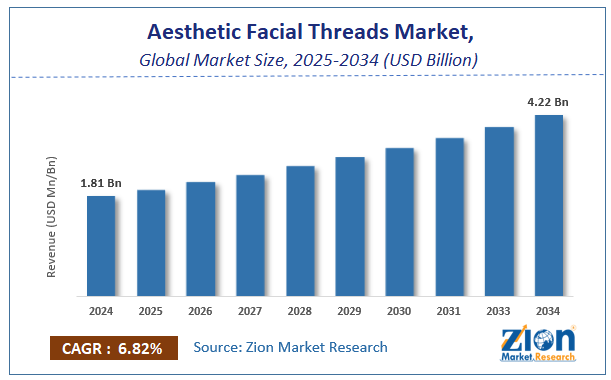
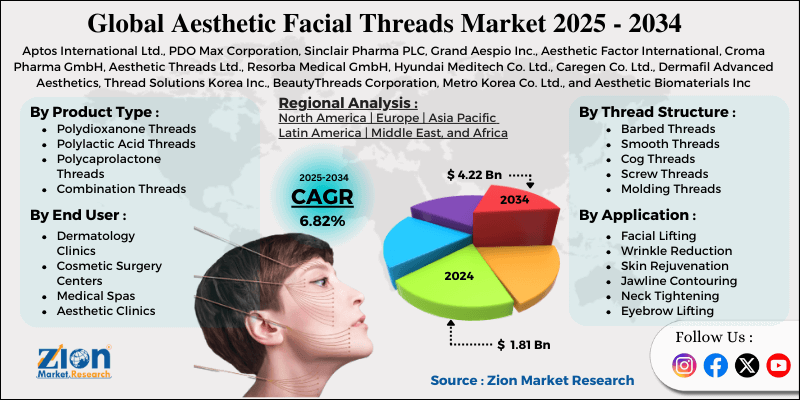
The global aesthetic facial threads market size was worth approximately USD 1.81 billion in 2024 and is projected to grow to around USD 4.22 billion by 2034, with a compound annual growth rate (CAGR) of roughly 6.82% between 2025 and 2034.
Key Insights
- As per the analysis shared by our research analyst, the global aesthetic facial threads market is estimated to grow annually at a CAGR of around 6.82% over the forecast period (2025-2034).
- In terms of revenue, the global aesthetic facial threads market size was valued at approximately USD 1.81 billion in 2024 and is projected to reach USD 4.22 billion by 2034.
- The aesthetic facial threads market is projected to grow significantly due to rising consumer demand for minimally invasive procedures, increasing aging population, growing disposable income in emerging markets, expanding aesthetic clinic networks, and continuous product innovation.
- Based on product type, the polydioxanone threads segment is expected to lead the aesthetic facial threads market, while the polylactic acid threads segment is anticipated to experience significant growth.
- Based on thread structure, the barbed threads segment is expected to lead the aesthetic facial threads market, while the cog threads segment is anticipated to witness notable growth.
- Based on application, the facial lifting segment is the dominating segment, while the wrinkle reduction segment is projected to witness sizeable revenue over the forecast period.
- Based on end-user, the dermatology clinics segment is expected to lead the market compared to the medical spas segment.
- Based on region, Asia Pacific is projected to dominate the global aesthetic facial threads market during the estimated period, followed by North America.
Aesthetic Facial Threads Market: Overview
An aesthetic facial thread is a non-surgical cosmetic device made from biocompatible, absorbable materials that lifts the skin and improves facial shape. Doctors place aesthetic facial threads under the skin to reduce sagging, improve firmness, and support natural collagen growth. This cosmetic treatment helps improve signs of aging, such as loose skin, fine lines, and loss of facial definition. Polydioxanone facial threads are widely used due to safe absorption, skin compatibility, and reliable lifting results. Polylactic acid facial threads provide longer-lasting skin tightening and improve volume through sustained collagen stimulation. Polycaprolactone facial threads offer strong support, longer-lasting lift, and greater strength for advanced facial rejuvenation. Combination facial threads use a mix of materials to deliver instant lift and long-term skin improvement.
Aesthetic facial threads are used for face lifting, wrinkle reduction, skin rejuvenation, jawline shaping, neck tightening, and eyebrow lifting. Dermatology clinics, aesthetic clinics, cosmetic surgery centers, and medical spas offer thread lift treatments for patients seeking safe, minimally invasive facial rejuvenation with natural-looking results. The increasing consumer preference for minimally invasive aesthetic procedures and growing awareness of non-surgical facial rejuvenation options are expected to drive significant expansion in the aesthetic facial threads market throughout the forecast period.
Aesthetic Facial Threads Market Dynamics
Growth Drivers
How is the aging population growth increasing demand for aesthetic facial threads?
The aesthetic facial threads market is growing rapidly as the aging population increases demand for non-surgical facial rejuvenation with visible lifting results. Baby boomer consumers reaching retirement age drive market expansion through high adoption of aesthetic procedures and strong disposable income levels. Natural facial volume loss and soft tissue descent create a demand for lifting solutions that restore youthful contours in aging faces. Skin laxity across the midface and lower facial areas increases interest in minimally invasive tightening alternatives to traditional surgery. Eye-area aging, including fine lines and brow drooping, supports broader use of threads for upper facial rejuvenation treatments.
Signs of neck aging and loss of jawline definition encourage patients to choose targeted thread techniques for lower face contouring. Longer life expectancy and active lifestyles are strengthening demand for aesthetic facial threads, supporting confidence during extended professional and social engagements. Cultural acceptance of cosmetic procedures and early awareness of aging drive sustained growth momentum for the global aesthetic facial threads market. Rising awareness of preventive aesthetics among younger adults further expands the patient base by encouraging early intervention and repeat use of minimally invasive facial thread treatments.
The expansion of social media influence and aesthetic awareness drives market growth.
The global aesthetic facial threads market is growing faster as social media platforms raise cosmetic awareness and normalize aesthetic treatments among wider audiences. Instagram, TikTok, and YouTube creators share thread lift results, explain procedures, and reduce fear around non-surgical facial rejuvenation. Before-and-after visuals demonstrate treatment results, build trust, foster confidence, and drive strong organic promotion for aesthetic thread procedures. Influencer support and celebrity openness increase interest among younger users seeking early prevention options for facial aging concerns. Online education content improves understanding of facial threads, helps set realistic expectations, and supports informed decisions before clinical consultations.
Reviewing platforms' ratings and shared experiences guides clinic selection, improves transparency, and encourages higher service quality standards globally. Live procedure videos and virtual consultations expand access, support follow-up care, and increase comfort with minimally invasive treatments. Together, digital engagement, targeted marketing, and community sharing expand awareness, accelerate adoption, and drive steady growth in the aesthetic facial threads market.
Restraints
How do variable treatment outcomes and complication risks affect market expansion?
A key challenge in the aesthetic facial threads market is the varied treatment outcomes, influenced by practitioner skill, patient anatomy, and individual healing responses. Thread migration or extrusion complications sometimes occur, leading to revision procedures, patient dissatisfaction, and possible damage to the clinic's reputation. Visible irregularities or felt threads under thin skin areas create cosmetic concerns and often require corrective aesthetic treatments. Uneven thread placement or different tissue responses can cause asymmetric lifting results requiring careful assessment and follow-up correction. Infection risk persists despite proper technique, underscoring the importance of strict hygiene practices, patient education, and aftercare guidance. Thread breakage during insertion or healing reduces lifting effectiveness and can increase the need for additional aesthetic procedure sessions. Shorter-lasting results compared with surgical facelift options require repeat sessions, increasing long-term cost and reducing appeal. Limited training among new providers and poor patient selection can affect safety, satisfaction, and trust in aesthetic facial threads.
Opportunities
How is the expansion of emerging markets creating growth potential for the aesthetic facial threads market?
The aesthetic facial threads industry offers strong growth opportunities as developing economies expand middle-class incomes and aesthetic awareness. Asian markets have strong potential driven by a cultural focus on youthful appearance, broad acceptance of cosmetic procedures, and expanding healthcare infrastructure. Latin American countries experience rising demand, driven by a beauty-focused culture, improving economic conditions, and expanding aesthetic medicine training programs. Middle Eastern markets offer opportunities through premium aesthetic services, increasing demand for medical tourism, and high spending on personal appearance. Eastern European regions show emerging potential with better economic stability, Western influence, and expanding networks of modern aesthetic clinics. Southeast Asian nations benefit from medical tourism, competitive pricing, improved regulations, and the concentration of urban demand for services.
Rising immigrant populations and economic growth increase spending power, expand patient access, and support the adoption of advanced therapeutic treatments. Education programs, professional training, and international conferences improve practitioners' skills, reduce barriers, and accelerate global adoption of aesthetic facial threads. Expanding digital marketing, social media influence, and cross-border knowledge sharing further increase awareness, strengthen consumer trust, and support faster adoption of aesthetic facial thread treatments across emerging global markets.
Challenges
How are regulatory complexities and market fragmentation creating obstacles for the aesthetic facial threads industry?
Regulatory differences across countries create major challenges for the aesthetic facial threads industry, increasing compliance effort, costs, and slowing global market entry. Medical device classification varies by region, requiring separate approvals, clinical documents, and timelines before products reach hospitals, clinics, and aesthetic practices. Quality system rules vary worldwide, requiring companies to maintain multiple certifications, audits, and records, thereby increasing administrative work and operating expenses. Safety evidence expectations change across markets, making it harder to present consistent data proving treatment safety, effectiveness, and predictable aesthetic outcomes.
Ongoing monitoring duties require reporting systems, event tracking, and regular reviews, adding long-term responsibility for manufacturers and authorized distributors. Practitioner licensing rules and treatment permissions vary widely, complicating training programs, staffing plans, and expansion strategies for clinics and device suppliers. Advertising restrictions and limited insurance coverage limit promotional options, reduce affordability, and influence patient demand for aesthetic facial thread procedures.
Aesthetic Facial Threads Market : Report Scope
| Report Attributes | Report Details |
|---|---|
| Report Name | Aesthetic Facial Threads Market Research Report |
| Market Size in 2024 | USD 1.81 Billion |
| Market Forecast in 2034 | USD 4.22 Billion |
| Growth Rate | CAGR of 6.82% |
| Number of Pages | 220 |
| Key Companies Covered | Aptos International Ltd., PDO Max Corporation, Sinclair Pharma PLC, Grand Aespio Inc., Aesthetic Factor International, Croma Pharma GmbH, Aesthetic Threads Ltd., Resorba Medical GmbH, Hyundai Meditech Co. Ltd., Caregen Co. Ltd., Dermafil Advanced Aesthetics, Thread Solutions Korea Inc., BeautyThreads Corporation, Metro Korea Co. Ltd., and Aesthetic Biomaterials Inc |
| Segments Covered | By Product Type, By Thread Structure, By Application, By End User, And By Region |
| Regions Covered | North America, Europe, Asia Pacific (APAC), Latin America, The Middle East and Africa (MEA) |
| Base Year | 2024 |
| Historical Year | 2019 to 2023 |
| Forecast Year | 2025 - 2034 |
| Customization Scope | Avail customized purchase options to meet your exact research needs. Request For Customization |
Aesthetic Facial Threads Market: Segmentation
The global aesthetic facial threads market is segmented based on product type, thread structure, application, end-user, and region.
Based on product type, the global aesthetic facial threads industry is classified into polydioxanone, polylactic acid, polycaprolactone, and combination threads. Polydioxanone threads lead the market due to extensive clinical experience supporting their safety profiles, predictable absorption timelines averaging 6 to 12 months, widespread regulatory approvals across major markets, and strong practitioner familiarity, which supports confident utilization.
Based on thread structure, the industry is divided into barbed, smooth, cog, screw, and molding threads. Barbed threads lead the market due to superior mechanical anchoring, immediate lifting effects visible after treatment completion, strong tissue fixation that minimizes migration risk, and versatile applications across diverse facial regions.
Based on application, the global aesthetic facial threads market is segregated into facial lifting, wrinkle reduction, skin rejuvenation, jawline contouring, neck tightening, and eyebrow lifting. Facial lifting is expected to lead the market during the forecast period due to broad patient demand addressing multiple aging concerns simultaneously.
Based on end user, the global market is divided into dermatology clinics, cosmetic surgery centers, medical spas, and aesthetic clinics. Dermatology clinics hold the largest market share due to established patient relationships that support aesthetic service cross-selling, comprehensive skin care integration, optimized treatment outcomes, and strong medical credibility that supports premium pricing structures.
Aesthetic Facial Threads Market: Regional Analysis
What factors are contributing to Asia Pacific's dominance in the global aesthetic facial threads market?
Asia Pacific is projected to grow at a rate of 8.4% CAGR, retaining leadership in the global aesthetic facial threads market during the forecast period. Large populations, strong youth-focused culture, high treatment acceptance, and competitive pricing help the Asia Pacific lead aesthetic facial thread demand. South Korea drives demand through advanced clinics, skilled practitioners, strong beauty awareness, and continuous innovation in facial thread techniques. China is experiencing rapid growth driven by rising middle-class incomes, expanding urban clinics, and greater awareness of non-surgical facial rejuvenation. Japan maintains strength with mature aesthetic services, high-quality training, a preference for natural results, and steady per-capita spending. Thailand supports regional growth using medical tourism appeal, international patients, competitive procedure costs, and improving clinic quality standards nationwide. Taiwan contributes to demand through developed healthcare systems, high aesthetic awareness, and strong adoption of advanced facial thread technologies. Singapore strengthens its markets through premium aesthetic services, strict quality standards, and its role as a regional medical hub.
India presents an opportunity through its large population, an expanding middle class, rising beauty awareness, and growing metro clinic networks. Indonesia, Vietnam, and the Philippines are seeing rising demand, driven by economic growth, urban lifestyles, and exposure to global beauty trends. Cultural factors like social image focus, marriage expectations, and multi-generational households increase interest in aesthetic facial thread treatments. Regional manufacturing improves pricing, strengthens supply chains, speeds distribution, and supports faster adoption of new facial thread technologies. Combined demographic, cultural, and economic strengths position the Asia Pacific as the leading growth region for aesthetic facial threads worldwide.
North America maintains a significant market share.
North America is expected to grow at a 6.1% CAGR, remaining the second-largest region in the global aesthetic facial threads market. The region maintains a strong position due to a mature aesthetic medicine industry, high awareness, strong spending power, and clear safety regulations. The United States drives demand through a large number of cosmetic procedure users, extensive practitioner networks, robust education systems, and cultural acceptance of aesthetic practices. Major cities such as New York, Los Angeles, Miami, and Chicago form dense markets with informed consumers seeking advanced facial thread treatments. An aging baby boomer population supports steady demand for facial rejuvenation solutions addressing wrinkles, skin laxity, and contour changes during adulthood. Preventive aesthetics among younger adults expands market reach beyond older patients and increases early adoption of non-surgical thread lifts.
High-income professionals prefer minimally invasive procedures offering quick recovery, natural results, and compatibility with demanding work schedules across urban centers. Strong social media influence increases awareness, shares outcomes, reduces stigma, and normalizes conversations about aesthetic facial thread procedures across communities nationwide through platform use. Medical spa expansion increases access by offering facial thread services outside hospitals, improving convenience, availability, and patient choice for elective care. Physician training programs and continuing education support consistent skills, safe practices, and reliable outcomes across North American clinics and provider networks. Clear approvals, private pay pricing, intellectual property protection, and broad marketing capabilities sustain confidence and ongoing innovation investment across regional markets.
Recent Developments
- In September 2025, Aptos LLC, a leading aesthetic medical device manufacturer, launched its Namica Nano-Sphere Sustained-Release Barbed Thread, designed for mid-face lifting and formulated with PLLA-PCL combined with hyaluronic acid to deliver mechanical tissue repositioning alongside sustained collagen regeneration benefits.
Aesthetic Facial Threads Market: Competitive Analysis
The leading players in the global aesthetic facial threads market are
- Aptos International Ltd
- PDO Max Corporation
- Sinclair Pharma PLC
- Grand Aespio Inc
- Aesthetic Factor International
- Croma Pharma GmbH
- Aesthetic Threads Ltd
- Resorba Medical GmbH
- Hyundai Meditech Co Ltd
- Caregen Co Ltd
- Dermafil Advanced Aesthetics
- Thread Solutions Korea Inc
- BeautyThreads Corporation
- Metro Korea Co Ltd
- Aesthetic Biomaterials Inc
The global aesthetic facial threads market is segmented as follows:
By Product Type
- Polydioxanone Threads
- Polylactic Acid Threads
- Polycaprolactone Threads
- Combination Threads
By Thread Structure
- Barbed Threads
- Smooth Threads
- Cog Threads
- Screw Threads
- Molding Threads
By Application
- Facial Lifting
- Wrinkle Reduction
- Skin Rejuvenation
- Jawline Contouring
- Neck Tightening
- Eyebrow Lifting
By End User
- Dermatology Clinics
- Cosmetic Surgery Centers
- Medical Spas
- Aesthetic Clinics
By Region
- North America
- The U.S.
- Canada
- Europe
- France
- The UK
- Spain
- Germany
- Italy
- Rest of Europe
- Asia Pacific
- China
- Japan
- India
- South Korea
- Southeast Asia
- Rest of Asia Pacific
- Latin America
- Brazil
- Mexico
- Rest of Latin America
- Middle East & Africa
- GCC
- South Africa
- Rest of Middle East & Africa
Table Of Content
Methodology
FrequentlyAsked Questions

HappyClients