
Silkscreen Glass Market Size, Share, Trends, Growth and Forecast 2034

Silkscreen Glass Market By Type (Energy-Saving, Clear/Tinted, and Others), By Application (Automotive, Architecture & Interior Design, Consumer Electronics, and Others), and By Region - Global and Regional Industry Overview, Market Intelligence, Comprehensive Analysis, Historical Data, and Forecasts 2025 - 2034
| Market Size in 2024 | Market Forecast in 2034 | CAGR (in %) | Base Year |
|---|---|---|---|
| USD 1.70 Billion | USD 2.92 Billion | 6.20% | 2024 |
Silkscreen Glass Industry Perspective:
What will be the anticipated size of the silkscreen glass market during the projection period?
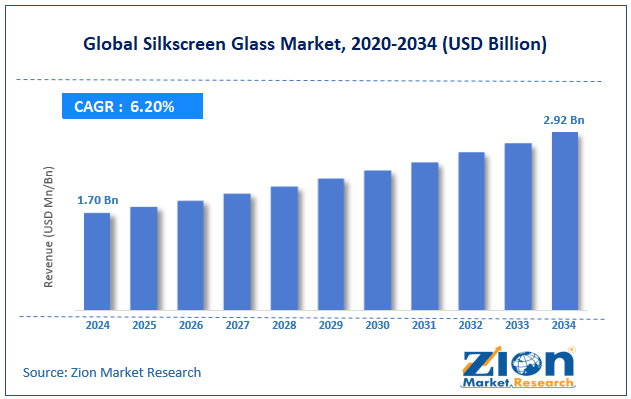
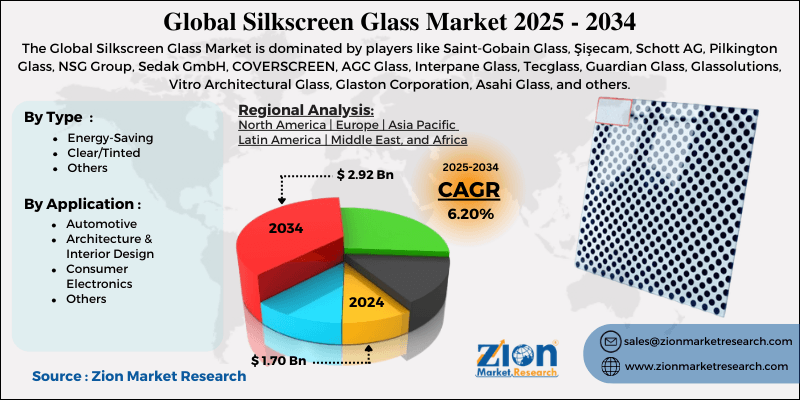
The global silkscreen glass market size was worth around USD 1.70 billion in 2024 and is predicted to grow to around USD 2.92 billion by 2034, with a compound annual growth rate (CAGR) of roughly 6.20% between 2025 and 2034.
Key Insights:
- As per the analysis shared by our research analyst, the global silkscreen glass market is estimated to grow annually at a CAGR of around 6.20% over the forecast period (2025-2034)
- In terms of revenue, the global silkscreen glass market size was valued at around USD 1.70 billion in 2024 and is projected to reach USD 2.92 billion by 2034.
- The silkscreen glass market is projected to grow at a significant rate due to the growing demand for residential buildings worldwide.
- Based on the type, the clear-tinted segment is growing at a high rate and will continue to dominate the global market, as per industry projections
- Based on the application, the architecture & interior segment is anticipated to command the largest market share
- Based on region, the Asia-Pacific is projected to dominate the global market during the forecast period
Silkscreen Glass Market: Overview
Silkscreen glass is a specially designed glass. It features intricate patterns and designs developed using precise printing procedures. The technique involves using a mesh screen and ceramic pigment or ink to develop the design on the glass surface. Silkscreen glass has found widespread applications across interior design projects and architectural applications.
In addition, silkscreen glass is also used on consumer electronics as cover glass for panels and doors. The global demand for silkscreen glass is expected to grow during the forecast period, driven by rising residential and commercial construction projects, increased spending on interior designs, and growing applications in the consumer electronics industry. Technological advancements in silkscreen glass production methods may open new growth avenues for industry players. However, cost and regulatory barriers may impact business growth trends during the projection period.
Silkscreen Glass Market: Dynamics
Growth Drivers
What will be the impact of rising residential projects on the silkscreen glass market?
The global silkscreen glass market is expected to be driven by the growing demand for residential buildings worldwide. Rising population, increased urbanization, and changes in consumer lifestyle are fueling demand for residential projects. The last few years have witnessed increased government undertakings toward smart cities. In February 2025, the Housing Committee of the European Parliament accepted final recommendations on the housing crisis reported across Europe. The new recommendations focus on affordable and sustainable housing solutions for the regional population. South Africa is currently facing a housing shortage of over 2.2 million units, fueling demand for renewed investments in the regional economy. Emerging countries have registered a surge in government and private investments in affordable and luxury homes, creating growth scope for silkscreen glass producers.
Infrastructure development projects are expected to work in favor of the industry players during the projection period
Infrastructure projects such as airports, railway stations, and commercial buildings have been pivotal to increased demand for silkscreen glass over the last few years. Governments are investing heavily in essential infrastructure projects to keep up with global expectations and modernize public spaces. Silkscreen glass is used for creating highly intricate partitions and facades. They are functional and improve the overall appeal of the buildings. For instance, London’s Heathrow Airport Terminal 2 is home to a large number of silk-screened glass panels covering major interior areas of the facility, thereby fueling demand in the global silk-screened glass market.
Restraints
Why will cost limitations affect overall revenue in the silkscreen glass market?
The global silkscreen glass industry is expected to be restricted due to the high cost of production. Silkscreen glass is manufactured using precision production techniques and specialized machinery. Moreover, it uses skilled labor to produce the desired print on silkscreen glass. The average cost of screen-printed glass in the US is between USD 35 and USD 75 per square foot. The cost may increase further depending on the design and overall features of the glass. The presence of cost-effective alternatives may limit industry expansion trends in the future.
Opportunities
Advancements in glass printing technologies may generate growth opportunities for the industry leaders
The global silkscreen glass market is anticipated to experience new growth opportunities due to the rising advancements in glass printing technologies. For instance, the automatic silk screen press has emerged as a cutting-edge solution in the printing industry. Apart from other applications, automatic silk-screen presses are used to print on glass. Key advantages of the press include higher production rate, superior consistency, and reduced material waste. Furthermore, these solutions enhance workplace safety by reducing manual labor.
Why will demand for smart glass create expansion possibilities for the silkscreen glass market?
The ongoing integration of smart technologies such as sensor systems and remote management solutions will prove beneficial for the industry leaders. These glasses are compatible with modern residences that are equipped with smart home appliances. The evolving consumer needs and lifestyle changes offer significant expansion opportunities to the industry players.
Challenges
Environmental concerns over silkscreen glass to challenge market expansion trends
The global silkscreen glass market is expected to be challenged by the rising environmental concerns. Production of silkscreen glass involves heavy metals, volatile organic compounds (VOCs), solvents, and other harmful chemicals. In addition, silkscreen glass production methods that rely on manual labor pose a threat to worker safety and to the environment, thereby challenging industry growth trends.
Silkscreen Glass Market: Report Scope
| Report Attributes | Report Details |
|---|---|
| Report Name | Silkscreen Glass Market |
| Market Size in 2024 | USD 1.70 Billion |
| Market Forecast in 2034 | USD 2.92 Bllion |
| Growth Rate | CAGR of 6.20% |
| Number of Pages | 224 |
| Key Companies Covered | Saint-Gobain Glass, Şişecam, Schott AG, Pilkington Glass, NSG Group, Sedak GmbH, COVERSCREEN, AGC Glass, Interpane Glass, Tecglass, Guardian Glass, Glassolutions, Vitro Architectural Glass, Glaston Corporation, Asahi Glass, and others. |
| Segments Covered | By Type, By Application, and By Region |
| Regions Covered | North America, Europe, Asia Pacific (APAC), Latin America, Middle East, and Africa (MEA) |
| Base Year | 2024 |
| Historical Year | 2019 to 2023 |
| Forecast Year | 2025 - 2034 |
| Customization Scope | Avail customized purchase options to meet your exact research needs. Request For Customization |
Silkscreen Glass Market: Segmentation
The global silkscreen glass market is segmented based on type, application, and region.
Why does the clear-tinted segment lead the silkscreen glass market during the forecast period?
Based on type, the global market segments are energy-saving, clear-tinted, and others. In 2024, the highest revenue was listed in the clear-tinted segment, accounting for 59% of the global revenue. The widespread adoption of clear-tinted glass in architectural settings and interior design projects will drive the segment's CAGR to more than 5.2% over the projection period. Energy-saving silkscreen glass is expected to be led by the growing construction of energy-efficient buildings.
Which application will lead the silkscreen green market in the coming years?
Based on application, the global industry is divided into automotive, architecture & interior design, consumer electronics, and others. Around 46% of global revenue, in 2024, was listed in the architecture & interior design segment. It will grow at a CAGR of 6.5% during the projection period due to the growing construction of residential and commercial buildings. Additionally, infrastructure development projects, along with rising expenditure on interior design, will aid segmental growth in the coming years.
Silkscreen Glass Market: Regional Analysis
Why will Asia-Pacific emerge as the dominant region in the silkscreen glass market?
The global silkscreen glass market is expected to be led by Asia-Pacific during the forecast period. In 2024, the region accounted for 43% of the global revenue, and it is expected to deliver a CAGR of 6.1% in the coming years. Growth in Asia-Pacific is driven by robust glass manufacturing in infrastructure and facilities. Additionally, the dominance of regional players in international markets and rising domestic demand for silkscreen glass may further add to the overall regional revenue.
What is the projected CAGR for North America in the silkscreen glass market during the forecast period?
North America held control over 28% of global revenue in 2024. It will grow at a CAGR of 5.57% during the projection period, with the US leading the regional revenue. Rising construction of modern residential homes and commercial buildings has been a key regional market growth driver.
Moreover, surging silkscreen glass applications in high-end consumer electronics, along with the growing demand for energy-efficient buildings, may aid accelerated regional market growth. Additionally, North America is witnessing greater demand for smart silkscreen glass as a part of the ongoing adoption of intelligent home appliances.
Silkscreen Glass Market: Competitive Analysis
The global silkscreen glass market is led by players like:
- Saint-Gobain Glass
- Şişecam
- Schott AG
- Pilkington Glass
- NSG Group
- Sedak GmbH
- COVERSCREEN
- AGC Glass
- Interpane Glass
- Tecglass
- Guardian Glass
- Glassolutions
- Vitro Architectural Glass
- Glaston Corporation
- Asahi Glass
What are the latest key trends in the silkscreen glass market?
Retrofitting projects
A prominent trend in the silk-screen glass industry is the growing use of the material in retrofit projects, especially in public spaces undergoing renovation. Renovation activities allow greater growth scope for industry players.
Expansion in emerging markets
The ongoing expansion of business leaders in emerging economies such as Africa, Latin America, and the Asia-Pacific has high growth potential for the market. These economies are witnessing cultural and social changes influencing demand for silkscreen glass.
The global silkscreen glass market is segmented as follows:
By Type
- Energy-Saving
- Clear/Tinted
- Others
By Application
- Automotive
- Architecture & Interior Design
- Consumer Electronics
- Others
By Region
- North America
- The U.S.
- Canada
- Mexico
- Europe
- France
- The UK
- Spain
- Germany
- Italy
- Rest of Europe
- Asia Pacific
- China
- Japan
- India
- Australia
- South Korea
- Rest of Asia Pacific
- The Middle East & Africa
- Saudi Arabia
- UAE
- Egypt
- Kuwait
- South Africa
- Rest of the Middle East & Africa
- Latin America
- Brazil
- Argentina
- Rest of Latin America
Table Of Content
Methodology
FrequentlyAsked Questions

HappyClients

