
Global Pachymeter Device Market Size, Share, Growth Report 2034

Pachymeter Device Market By Product Type (Ultrasonic Pachymeter and Optical Pachymeter), By Mobility (Handheld and Desktop), By Application (Glaucoma Diagnosis, Refractive Surgery, Cataract Surgery, and Others), By End-user (Hospitals, Ophthalmic Clinics, and Ambulatory Surgical Centers), and By Region: Global and Regional Industry Overview, Market Intelligence, Comprehensive Analysis, Historical Data, and Forecasts 2025 - 2034
| Market Size in 2024 | Market Forecast in 2034 | CAGR (in %) | Base Year |
|---|---|---|---|
| USD 24.20 Billion | USD 79.00 Billion | 12.56% | 2024 |
What is the pachymeter device market size?
What will be the global pachymeter device market size during the forecast period?
The global pachymeter device market size was worth around USD 24.20 billion in 2024 and is predicted to grow to around USD 79.00 billion by 2034, with a compound annual growth rate (CAGR) of roughly 12.56% between 2025 and 2034.
This report provides a comprehensive analysis of the growth drivers, restraints, and challenges shaping demand across the global pachymeter device market throughout the forecast period, while highlighting high-potential emerging opportunities within the industry.

Key Insights
- As per the analysis shared by our research analyst, the global pachymeter device market is estimated to grow annually at a CAGR of around 12.56% over the forecast period (2025-2034).
- Regarding revenue, the global pachymeter device market size was valued at around USD 24.20 billion in 2024 and is projected to reach USD 79.00 billion by 2034.
- The global pachymeter device market is anticipated to record massive growth over the forecast period owing to a surge in cases of diabetic retinopathy and acceptance of pachymetry systems and easy availability of technologically advanced pachymetry systems at reasonable costs.
- Based on mobility, the handheld type segment is predicted to contribute significantly towards the market growth over the forecast timeline.
- In terms of application, the glaucoma diagnosis segment is projected to record the highest CAGR in the coming eight years.
- Region-wise, North America accounted for 65% of the global pachymeter device market revenue share in 2024 and is anticipated to dominate due to rising demand for pachymeter devices in hospitals and clinics in the U.S. and Canada along with the presence of strong healthcare infrastructure facilities.
Pachymeter Device Market: Overview
A pachymetry is a painless inspection that is used for measuring the cornea thickness. It finds a slew of applications in routine clinical practice, including complementary examination of glaucoma, identification of potential refractive surgery, and diagnosis of particular ailments of the cornea. There are mainly two key types of pachymetry, namely, ultrasound, which makes use of sound waves for creating images, and optical pachymeters, which make use of microscopes. An eye doctor makes use of special hand-held equipment, also referred to as a pachymeter device, for performing pachymetry.
Pachymeter Device Market: Growth Factors
Surge in eye-related disorders to prompt the global market trends
Rise in the occurrence of glaucoma and eye-related ailments is expected to steer the growth of the global pachymeter device market. In addition to this, the surge in incidences of diabetic retinopathy will spur the expansion of the market across the globe. As per the WHO (World Health Organization) in 2019, the number of people having some or other kind of vision impairment amounted to nearly over 2 billion. Reportedly, nearly 1 billion patients across the globe had untreated vision impairments. Furthermore, technological breakthroughs, including the creation of analysis software & image processing, will prop up the expansion of the global market across the globe.
Furthermore, pachymetry systems provide exceptional displays and simplified functions that will embellish the expansion of the pachymetry systems device market globally. A prominent surge in the acceptance of pachymetry systems and easy availability of technologically advanced pachymetry systems at reasonable costs will drive the global market trends.
Pachymeter Device Market: Restraints
Stringent legislation about product use to impede the global industry growth
Strict laws and inadequate compensation offered by public & private insurance firms for pachymeter procedures can inhibit the growth of the pachymeter device industry globally. Lack of availability of strong healthcare infrastructure facilities in emerging economies will put brakes on the expansion of the industry across the globe.
Pachymeter Device Market: Opportunities
Increase in charitable institutes to offer new growth opportunities to the global market
Easy availability of ophthalmic care services even in the emerging economies of Asia and Africa will generate new growth opportunities for the global pachymeter device market. Rise in the number of non-profit & charitable organizations and a surge in ambulatory care facilities will help the market explore new growth dimensions.
Pachymeter Device Market: Challenges
Oscillations in raw component prices can pose a big challenge to the growth of the global industry
Low availability of experts and fluctuating costs of raw materials used in the production of pachymeter devices can pose a big challenge to the expansion of the global pachymeter device industry. Changing government laws regulating the use of pachymeter devices can put brakes on the industry growth globally.

Pachymeter Device Market: Report Scope
| Report Attributes | Report Details |
|---|---|
| Report Name | Pachymeter Device Market |
| Market Size in 2024 | USD 24.20 Billion |
| Market Forecast in 2034 | USD 79.00 Billion |
| Growth Rate | CAGR of 12.56% |
| Number of Pages | 216 |
| Key Companies Covered | Quantel Medical (France), Tomey Corporation (Japan), Reichert Inc. (U.S.), Optovue Incorporated (U.S.), DGH Technology, Inc. (U.S.), Topcon (Japan), Sonomed Escalon (U.S.), MicroMedical Devices (MMD) Inc. (U.S.), Ophtec BV (Netherlands), AMETEK Inc. (U.S.), Zeiss International (Germany), OCULUS (Germany), Bausch & Lomb Incorporated (Canada), CSO (Ireland), NIDEK Co. Ltd. (U.S.), and Essilor (France). |
| Segments Covered | By Product Type, By Mobility, By Application, By End-user, and By Region |
| Regions Covered | North America, Europe, Asia Pacific (APAC), Latin America, Middle East, and Africa (MEA) |
| Base Year | 2024 |
| Historical Year | 2020 - 2023 |
| Forecast Year | 2025 - 2034 |
| Customization Scope | Avail customized purchase options to meet your exact research needs. Request For Customization |
Pachymeter Device Market: Segmentation
The pachymeter device market is segmented by product type, mobility, application, end-user, and region. All the segments of the pachymeter device market have been analyzed based on present and future trends and the market is estimated from 2025 to 2034.
Based on product type, the global pachymeter device market is divided into ultrasonic pachymeter and optical pachymeter. Ultrasonic pachymeters remain widely used for their established reliability in measuring corneal thickness through sound wave technology, supporting routine clinical assessments and surgical planning. Optical pachymeters offer non-contact measurement advantages and continue to gain traction through integration with advanced imaging platforms, driving innovation and expanding options for clinicians seeking precise, patient-friendly diagnostics.
In terms of mobility, the global pachymeter device market is divided into handheld and desktop. The handheld type segment, which accounted for more than half of the global market share in 2024, is predicted to retain its dominant status even during 2025-2034. The segmental surge in the next eight years can be attributed to its 3-micron measuring accuracy, interpretation ease, system compatibility, and ability to take precise measurements from peripheral and central corneal regions. Apart from this, it also helps in creating a map of the cornea from nearly 17 measured points. In addition to this, handheld pachymeters allow physicians in measuring cornea echograms with every measurement. Moreover, the handheld pachymeter is user-friendly and can integrate with tablets and USB.
On the basis of the application, the global pachymeter device industry is segmented into glaucoma diagnosis, refractive surgery, cataract surgery, and other segments. The glaucoma diagnosis segment, which dominated the application landscape in 2024, is predicted to register the fastest CAGR over the forecast timespan. The growth of the segment in the coming years can be due to the growing need for early diagnosis & treatment of glaucoma to help prevent further. Moreover, pachymetry helps in assessing the intraocular pressure with high precision, thereby steering the segmental surge.
In terms of end-users, the global pachymeter device market is categorized into hospitals, ophthalmic clinics, and ambulatory surgical centers. Hospitals lead adoption through comprehensive eye care services and high patient volumes requiring routine corneal thickness evaluation. Ophthalmic clinics form a strong secondary channel focused on specialized diagnosis and treatment, while ambulatory surgical centers contribute growing demand linked to outpatient refractive and cataract procedures that rely on precise preoperative measurements.
Pachymeter Device Market: Regional Analysis
Why will North America continue to dominate the global market during the projection period?
North America, which accounted for 65% of the global pachymeter device market revenue share in 2024, is anticipated to dominate the regional market growth over the forecast timeline. The regional market surge over 2025 - 2034 can be due to a rise in the demand for pachymeter devices in hospitals and clinics in countries such as Canada and the U.S., along with the presence of strong healthcare infrastructure facilities in these countries.
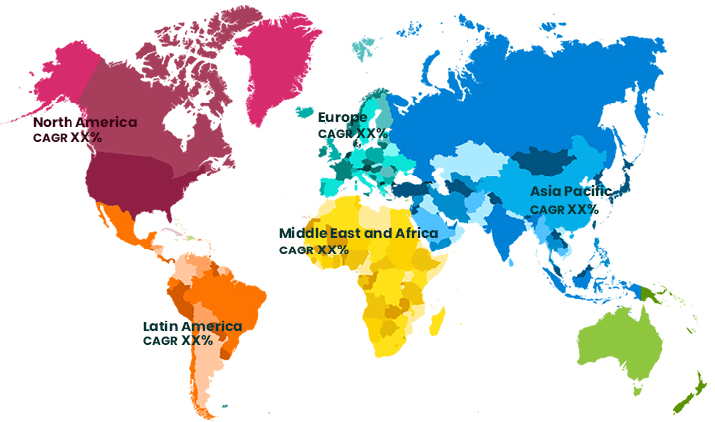
On the other hand, the pachymeter device industry in the Asia-Pacific zone is predicted to record the highest gains of 8.1% in the forthcoming years. The regional market expansion over the forecast time period can be due to a rise in the per capita income of the consumers along with growing awareness among the population about diagnosis of eye disorders in the initial phase.
Asia Pacific is projected to register the highest CAGR during the assessment period. Growth is supported by rising per capita income, increasing awareness among the population about early diagnosis of eye disorders, and expanding access to ophthalmic services. These factors position the region as a key engine of volume growth and future market development.
Recent Breakthroughs
- In November 2022, NIDEK Co., Ltd., a key leader in the design, production, and distribution of ophthalmic, lens, and optometric edging devices, launched the NT-1p non-contact pachymeter. The move will boost the expansion of the pachymeter device market across the globe.
- In the last quarter of 2020, Occuity Ltd., a UK-based firm manufacturing optical healthcare monitoring & screening devices, decided to introduce the world’s first handheld optical non-contact pachymeter in the last quarter of 2021 at MEDICA 2021. The new product referred to as the PM1 pachymeter can be helpful in measuring the thickness of the corneal with the help of a micrometer level of precision. The move is likely to expand the demand for pachymeter in the UK and across the European continent.
Pachymeter Device Market: Competitive Landscape
The global pachymeter device market profiles key players such as:
- Quantel Medical (France)
- Tomey Corporation (Japan)
- Reichert Inc. (U.S.)
- Optovue Incorporated (U.S.)
- DGH Technology
- Topcon (Japan)
- Sonomed Escalon (U.S.)
- MicroMedical Devices (MMD) Inc. (U.S.)
- Ophtec BV (Netherlands)
- AMETEK Inc. (U.S.)
- Zeiss International (Germany)
- OCULUS (Germany)
- Bausch & Lomb Incorporated (Canada)
- CSO (Ireland)
- NIDEK Co. Ltd. (U.S.)
- Essilor (France)
Segments Covered
The global pachymeter device market is segmented as follows:
By Product Type
- Ultrasonic Pachymeter
- Optical Pachymeter
By Mobility
- Handheld
- Desktop
By Application
- Glaucoma Diagnosis
- Refractive Surgery
- Cataract Surgery
- Others
By End-user
- Hospitals
- Ophthalmic Clinics
- Ambulatory Surgical Centers
By Region
- North America
- The U.S.
- Canada
- Mexico
- Europe
- France
- The UK
- Spain
- Germany
- Italy
- Rest of Europe
- Asia Pacific
- China
- Japan
- India
- Australia
- South Korea
- Rest of Asia Pacific
- The Middle East & Africa
- Saudi Arabia
- UAE
- Egypt
- Kuwait
- South Africa
- Rest of the Middle East & Africa
- Latin America
- Brazil
- Argentina
- Rest of Latin America
Table Of Content
Methodology
FrequentlyAsked Questions
A pachymeter device is used to perform pachymetry, a painless examination that measures corneal thickness. It supports glaucoma evaluation, refractive surgery candidate assessment, and diagnosis of specific corneal conditions using ultrasonic or optical technology.
The global pachymeter device market is expected to grow due to growing prevalence of glaucoma and corneal disorders fuels demand. Technological advancements and rising eye care awareness support market expansion.
According to a study, the global pachymeter device market size was worth around USD 24.20 Billion in 2024 and is expected to reach USD 79.00 Billion by 2034.
The global pachymeter device market is expected to grow at a CAGR of 12.56% during the forecast period.
North America is expected to contribute notably and lead the global pachymeter device market during the forecast period, accounting for a substantial share supported by strong healthcare infrastructure and high clinical demand.
The global pachymeter device market is led by industry players such as Quantel Medical (France), Tomey Corporation (Japan), Reichert Inc. (U.S.), Optovue Incorporated (U.S.), DGH Technology, Inc. (U.S.), Topcon (Japan), Sonomed Escalon (U.S.), MicroMedical Devices (MMD) Inc. (U.S.), Ophtec BV (Netherlands), AMETEK Inc. (U.S.), Zeiss International (Germany), OCULUS (Germany), Bausch & Lomb Incorporated (Canada), CSO (Ireland), NIDEK Co. Ltd. (U.S.), and Essilor (France).
The report explores crucial aspects of the pachymeter device market, including a detailed discussion of existing growth factors and restraints, while also examining future growth opportunities and challenges that impact the market.

HappyClients