
Winter Wear Market Size, Share Report, Analysis, Trends, Growth 2032

Winter Wear Market By product (shawls & scarves, sweaters & cardigans, coats & jackets, and others), By price (high, medium, and low. Among these, the low costs price segment holds hegemony over others), By end-users (children, women, and men), By distribution channel (online retailers, independent small retailers, multi-brand stores, specialty stores, supermarkets, and others), By fabric (manmade and natural) And By Region: - Global And Regional Industry Overview, Market Intelligence, Comprehensive Analysis, Historical Data, And Forecasts, 2024-2032
| Market Size in 2023 | Market Forecast in 2032 | CAGR (in %) | Base Year |
|---|---|---|---|
| USD 317.96 Million | USD 528.13 Million | 5.8% | 2023 |
Description
Winter Wear Market Insights
According to the report published by Zion Market Research, the global Winter Wear Market size was valued at USD 317.96 Million in 2023 and is predicted to reach USD 528.13 Million by the end of 2032. The market is expected to grow with a CAGR of 5.8% during the forecast period. The report analyzes the global Winter Wear Market's growth drivers, restraints, and impact on demand during the forecast period. It will also help navigate and explore the arising opportunities in the Winter Wear industry.
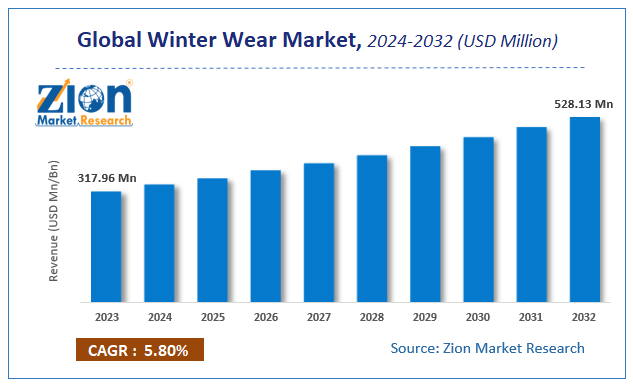
North America Winter Wear Market Sales and Revenue: The North America Winter Wear Market was valued at USD 51,101.08 million in 2023 and is projected to reach USD 83,258.49 million by 2032, growing at a CAGR of 5.62% during 2024–2032.
Europe Winter Wear Market Sales and Revenue: The Europe Winter Wear Market was valued at USD 81,729.56 million in 2023 and is expected to reach USD 127,390.68 million by 2032, registering a CAGR of 5.05% during 2024–2032.
Asia Pacific Winter Wear Market Sales and Revenue: The Asia Pacific Winter Wear Market was valued at USD 148,347.81 million in 2023 and is projected to reach USD 263,327.57 million by 2032, expanding at a CAGR of 6.61% during 2024–2032.
Latin America Winter Wear Market Sales and Revenue: The Latin America Winter Wear Market was valued at USD 16,229.69 million in 2023 and is forecast to reach USD 23,786.38 million by 2032, growing at a CAGR of 4.15% during 2024–2032.
Middle East Winter Wear Market Sales and Revenue: The Middle East Winter Wear Market was valued at USD 11,394.13 million in 2023 and is projected to reach USD 16,493.34 million by 2032, registering a CAGR of 4.29% during 2024–2032.
Africa Winter Wear Market Sales and Revenue: The Africa Winter Wear Market was valued at USD 9,158.57 million in 2023 and is expected to reach USD 13,878.15 million by 2032, growing at a CAGR of 4.17% during 2024–2032.
Global Winter Wear Market: Overview
Winter wear is a special category of clothing that helps the wearer to protect themselves against the cold climate. These clothes are mostly used as outgoing clothes that require enhanced aesthetic appeal along with their high efficiency to provide protection against rough weather.
Key Insights
- As per the analysis shared by our research analyst, the winter wear market is anticipated to grow at a CAGR of 5.8% during the forecast period (2024-2032).
- The global winter wear market was estimated to be worth approximately USD 317.96 million in 2023 and is projected to reach a value of USD 528.13 million by 2032.
- The growth of the winter wear market is being driven by rising disposable incomes, and changing fashion trends.
- Based on the product, the shawls & scarves segment is growing at a high rate and is projected to dominate the market.
- On the basis of price, the high segment is projected to swipe the largest market share.
- In terms of end-users, the children segment is expected to dominate the market.
- Based on the distribution channel, the online retailers segment is expected to dominate the market.
- On the basis of application, the manmade segment is projected to swipe the largest market share.
- By region, North America is expected to dominate the global market during the forecast period.
Winter Wear Market Dynamics
Key Growth Drivers
The winter wear market is driven by several factors, including the increasing impact of climate change leading to more unpredictable and extreme weather patterns. This, in turn, fuels demand for high-performance and durable clothing. A growing fashion consciousness, particularly among urban populations and younger demographics, is another significant driver. Consumers now seek winter wear that combines functionality with style, influenced by social media, fashion influencers, and celebrity endorsements. The rise in disposable income in emerging economies, such as those in the Asia-Pacific region, has also increased consumer purchasing power, allowing them to invest in premium and branded winter apparel. Furthermore, the growing popularity of winter tourism and outdoor activities like skiing, snowboarding, and hiking boosts demand for specialized and technologically advanced winter gear.
Restraints
The winter wear market faces several challenges, with the most prominent being its highly seasonal nature. Demand is concentrated in a few months of the year, leading to challenges in production planning, inventory management, and potential excess stock during off-seasons. This can strain resources and impact profitability. Another major restraint is the high cost of production, which includes labor-intensive craftsmanship, raw material prices that can fluctuate, and the capital-intensive nature of adopting ethical and sustainable manufacturing practices. The market is also highly competitive, particularly in the mass-market segment, where brands must constantly innovate and differentiate their products to stay relevant, which can put downward pressure on prices and profit margins.
Opportunities
The winter wear market is ripe with opportunities for innovation and expansion. A key opportunity lies in the growing demand for sustainable and eco-friendly products. Brands can differentiate themselves by using recycled materials, organic fabrics, and ethical production methods, appealing to environmentally conscious consumers. The integration of technology and smart textiles presents another major opportunity, with the potential for creating garments with features like temperature regulation, moisture-wicking properties, and built-in connectivity. Furthermore, the expansion of e-commerce and direct-to-consumer (D2C) channels allows brands to reach a wider audience globally and bypass traditional retail limitations. The market can also capitalize on the "athleisure" trend, creating versatile and multifunctional winter wear suitable for both athletic activities and everyday urban life.
Challenges
Beyond the seasonal and cost-related restraints, the winter wear market faces significant challenges related to sustainability and ethical practices. The industry is under scrutiny for its environmental impact, particularly the use of synthetic materials like nylon and polyester, which contribute to plastic waste and carbon emissions. Sourcing materials, especially animal-based ones like wool and down, presents ethical challenges and can lead to public backlash if not done responsibly. The industry also grapples with the issue of fast fashion, as a constant drive for new trends encourages a "wear and discard" culture that is unsustainable. Managing a complex global supply chain and ensuring ethical labor practices from raw material sourcing to final production remain a continuous challenge for brands seeking to build a positive and trustworthy brand image.
Global Winter Wear Market: Segmentation
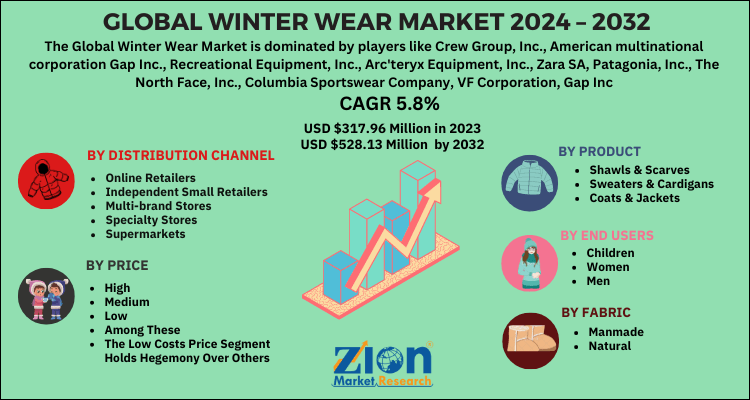
The global winter wear market can be segmented into product, price, end-users, distribution channel, fabric, and region.
By Product, the market can be segmented into shawls & scarves, sweaters & cardigans, coats & jackets, and others. The coats & jackets segment holds the largest share in the global winter wear market as it keeps the body warm and it is water-proof clothing. However, the manufacturers are coming with more fashionable apparels to attract customers. The segment is likely to remain dominant during the forecast period. The shawls & scarves segment is anticipated to witness huge growth due to the on-going fashion trend of stylish scarves and shawls as people are highly influenced by the clothing in entertainment sectors.
By Price, the market can be segmented into high, medium, and low. Among these, the low costs price segment holds hegemony over others. However, there is constant growth in the high price segments due to the increasing purchasing power of the consumers.
By End-Users, the market can be segmented into children, women, and men. The men segment dominates the global winter wear market due to the trendy lifestyle and high penetration of men’s winter clothing.
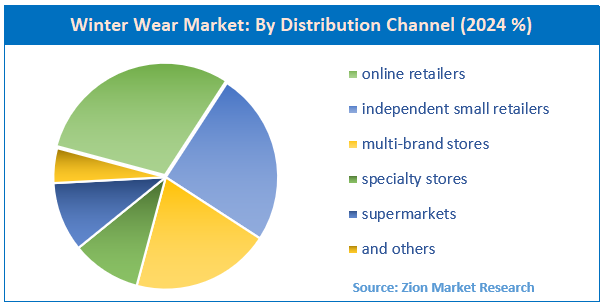
By Distribution Channel, the market can be segmented into online retailers, independent small retailers, multi-brand stores, specialty stores, supermarkets, and others.
By Fabric, the market can be segmented into manmade and natural.
Recent Development
- In 2025, Kontoor Brands acquired Norwegian technical outerwear specialist Helly Hansen from Canadian Tire for approximately CAD 1.28 billion. The acquisition significantly expands Kontoor’s presence in the outdoor, workwear, and winter apparel segments, reinforcing its strategic push into performance-driven categories.
- In 2023, New Wave Group broadened its portfolio of outdoor and technical clothing through the acquisition of Swedish brand Tenson, known for its winter and ski lifestyle wear. The move strengthens New Wave’s positioning in the Nordic and European outdoor apparel markets.
- At the 2025 Asian Winter Games in Harbin, athlete and volunteer uniforms showcased cutting-edge textile innovation. Inner layers incorporated graphene for advanced thermal regulation, while outer layers featured fluorine-free waterproof down — signaling a leap forward in sustainable, high-performance winter sportswear designed for extreme cold conditions (–20 to –40 °C).
- In April 2025, Anta Sports acquired German outdoor brand Jack Wolfskin for €262 million, marking its formal entry into the European market. The deal enhances Anta’s global footprint and accelerates its expansion in the premium outdoor apparel segment.
- In March 2024, Italian fashion house Miroglio acquired heritage brand Trussardi for €35 million. The acquisition enabled Miroglio to enter the premium menswear and leather goods market, diversifying its portfolio and elevating its presence in luxury fashion.
Winter Wear Market: Report Scope
| Report Attributes | Report Details |
|---|---|
| Report Name | Winter Wear Market |
| Market Size in 2023 | USD 317.96 Million |
| Market Forecast in 2032 | USD 528.13 Million |
| Growth Rate | CAGR of 5.8% |
| Number of Pages | 206 |
| Key Companies Covered | Crew Group, Inc., American multinational corporation Gap Inc., Recreational Equipment, Inc., Arc'teryx Equipment, Inc., Zara SA, Patagonia, Inc., The North Face, Inc., Columbia Sportswear Company, VF Corporation, Gap Inc., Wintergreen Northern Wear, Eddie Bauer LLC., Newell Brands Inc., Fenix Outdoor International AG, Amer Sports Corporation, Hennes & Mauritz AB, Canada Goose Inc., Inditex, Marmot Mountain LLC, Forever21 Inc., The TJX Companies Inc., New Balance, Under Armour Inc., PUMA SE, Adidas, Helly Hansen, Canada Goose Inc., Walmart, Macys.com LLC, Patagonia, and Fjällräven |
| Segments Covered | By product, By price, By end-users, By distribution channel, By fabric and By Region |
| Regions Covered | North America, Europe, Asia Pacific (APAC), Latin America, Middle East, and Africa (MEA) |
| Base Year | 2023 |
| Historical Year | 2018 - 2022 |
| Forecast Year | 2024 - 2032 |
| Customization Scope | Avail customized purchase options to meet your exact research needs. Request For Customization |
Global Winter Wear Market: Regional analysis
Asia Pacific accounts for the largest share in the global winter wear market owing to the acceptance of a wide spectrum of categories of winter wear in countries like India and China.
The Middle East and Africa is anticipated to witness huge growth due to the significant rise in the demand for such wear.
Global Winter Wear Market: Competitive Players
The market players are adopting several strategies and effective tactics to launch innovative products in the market to increase the market revenue. Some of the significant players in the global winter wear market are :
- Crew Group, Inc.
- American multinational corporation Gap Inc.
- Recreational Equipment, Inc.
- Arc'teryx Equipment, Inc.
- Zara SA
- Patagonia, Inc.
- The North Face, Inc.
- Columbia Sportswear Company
- VF Corporation
- Gap Inc.
- Wintergreen Northern Wear
- Eddie Bauer LLC.
- Newell Brands Inc.
- Fenix Outdoor International AG
- Amer Sports Corporation
- Hennes & Mauritz AB
- Canada Goose Inc.
- Inditex
- Marmot Mountain LLC
- Forever21 Inc.
- The TJX Companies Inc.
- New Balance
- Under Armour Inc.
- PUMA SE
- Adidas
- Helly Hansen
- Canada Goose Inc.
- Walmart
- Macys.com LLC
- Patagonia
- Fjällräven.
The Global Winter Wear Market is segmented as follows:
By Product
- Shawls & Scarves
- Sweaters & Cardigans
- Coats & Jackets
- Others
By Price
- High
- Medium
- Low
- Among these
- the low costs price segment holds hegemony over others
By End-users
- Children
- Women
- Men
By Distribution channel
- Online Retailers
- Independent Small Retailers
- Multi-Brand Stores
- Specialty Stores
- Supermarkets
- Others
By Fabric
- Manmade
- Natural
By Region
- North America
- The U.S.
- Canada
- Mexico
- Europe
- France
- The UK
- Spain
- Germany
- Italy
- Rest of Europe
- Asia Pacific
- China
- Japan
- India
- Australia
- South Korea
- Rest of Asia Pacific
- The Middle East & Africa
- Saudi Arabia
- UAE
- Egypt
- Kuwait
- South Africa
- Rest of the Middle East & Africa
- Latin America
- Brazil
- Argentina
- Rest of Latin America
What Reports Provides
- Full in-depth analysis of the parent market
- Important changes in market dynamics
- Segmentation details of the market
- Former, on-going, and projected market analysis in terms of volume and value
- Assessment of niche industry developments
- Market share analysis
- Key strategies of major players
- Emerging segments and regional markets
- Testimonials to companies in order to fortify their foothold in the market.
Table Of Content

FrequentlyAsked Questions
Winter wear includes clothing designed to provide warmth and protection in cold weather. Common items include jackets, sweaters, coats, and thermal wear.
The global Winter Wear market is expected to be driven by the Market growth is driven by rising fashion awareness, increasing cold-weather tourism, and demand for functional and stylish apparel. Expansion of e-commerce channels supports sales.
According to study, the global Winter Wear market size was worth around USD 317.96 Million in 2023 and is predicted to grow to around USD 528.13 Million By 2032.
The global Winter Wear market is expected to grow at a Compound Annual Growth Rate (CAGR) of around CAGR 5.8% during the forecast period from 2024-2032.
The global Winter Wear industry is projected to be challenged by Seasonal demand dependency; inventory management challenges; climate variability.
The Rising fashion consciousness; growth of e-commerce apparel sales; expansion into emerging cold-region markets will offer significant growth opportunities in the Winter Wear market.
Sustainable insulation (recycled/down alternatives) and eco fabrics; smart textiles with better breathability/thermal regulation; D2C customization and on-demand production are the emerging trends and innovations impacting the Winter Wear market.
The global Winter Wear market is expected to be led by Europe during the forecast period.
Some of the prominent players operating in the global Winter Wear market are; Crew Group, Inc., American multinational corporation Gap Inc., Recreational Equipment, Inc., Arc'teryx Equipment, Inc., Zara SA, Patagonia, Inc., The North Face, Inc., Columbia Sportswear Company, VF Corporation, Gap Inc., Wintergreen Northern Wear, Eddie Bauer LLC., Newell Brands Inc., Fenix Outdoor International AG, Amer Sports Corporation, Hennes & Mauritz AB, Canada Goose Inc., Inditex, Marmot Mountain LLC, Forever21 Inc., The TJX Companies Inc., New Balance, Under Armour Inc., PUMA SE, Adidas, Helly Hansen, Canada Goose Inc., Walmart, Macys.com LLC, Patagonia, and Fjällräven and others.
The report explores crucial aspects of the Winter Wear market, including a detailed discussion of existing growth factors and restraints, while also browsing future growth opportunities and challenges that impact the market.
HappyClients

