
Pitavastatin Market Size, Share, Growth, Opportunities 2034

Pitavastatin Market By Type (1mg, 2mg, and 5mg), By Product (Capsules, Tablets, and Oral Solutions), By Application (Cardiovascular Disease Prevention and Hyperlipidemia), By Sales Channel (Online Pharmacies, Retail Pharmacies, Clinics, and Hospitals), and By Region - Global and Regional Industry Overview, Market Intelligence, Comprehensive Analysis, Historical Data, and Forecasts 2025 - 2034
| Market Size in 2024 | Market Forecast in 2034 | CAGR (in %) | Base Year |
|---|---|---|---|
| USD 1,240.35 Million | USD 1,852.19 Million | 5.94% | 2024 |
Pitavastatin Industry Perspective:
What will be the size of the global pitavastatin market during the forecast period(2025-2034)?
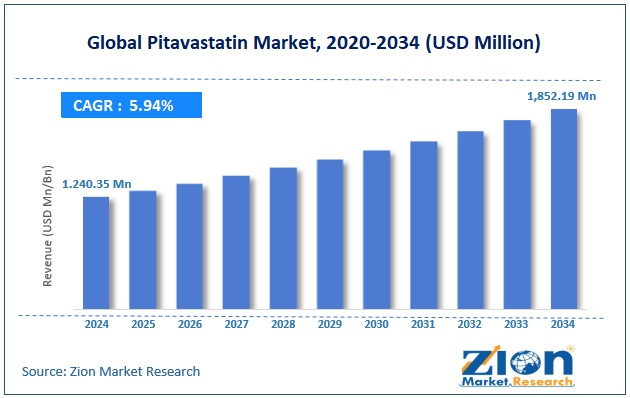
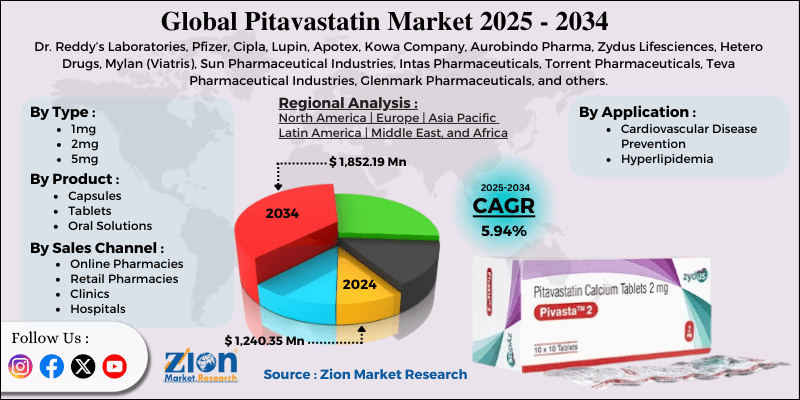
The global pitavastatin market size was worth around USD 1,240.35 million in 2024 and is predicted to grow to around USD 1,852.19 million by 2034 with a compound annual growth rate (CAGR) of roughly 5.94% between 2025 and 2034.
Key Insights:
- As per the analysis shared by our research analyst, the global pitavastatin market is estimated to grow annually at a CAGR of around 5.94% over the forecast period (2025-2034)
- In terms of revenue, the global pitavastatin market size was valued at around USD 1,240.35 million in 2024 and is projected to reach USD 1,852.19 million by 2034.
- The pitavastatin market is projected to grow at a significant rate due to the surge in the number of patients suffering from high cholesterol across the globe.
- Based on the type, the 2mg segment is growing at a high rate and will continue to dominate the global market, as per industry projections
- Based on the application, the hyperlipidemia segment is anticipated to command the largest market share
- Based on region, North America is projected to dominate the global market during the forecast period
Pitavastatin Market: Overview
Pitavastatin is a prescription medicine. It is used for lowering cholesterol levels. Pitavastatin is a type of statin that limits the liver’s ability to make cholesterol. According to the Cleveland Clinic, a healthy cholesterol level is linked to a reduced risk of heart attacks and other cardiovascular conditions. In most cases, pitavastatin is ingested orally with or without food. However, the drug is also associated with several side effects, including allergic reactions and a spiked blood sugar level. Research suggests that the benefits of pitavastatin outweigh its disadvantages, leading to increased demand for the medicine across the globe. During the forecast period, the pitavastatin industry is expected to continue growing, driven by the surge in patients with cardiovascular conditions and elevated cholesterol.
Additionally, expansion of the healthcare infrastructure and a surge in disposable income will further help the industry thrive. A major drawback for the market players may emerge in the form of growing concerns over medicine side effects, as well as rising sales of counterfeit, low-quality drugs, putting the lives of millions at risk.
Pitavastatin Market: Dynamics
Growth Drivers
How will an increase in the number of high-cholesterol patients influence the pitavastatin market growth?
The global pitavastatin market is expected to be driven by the surge in the number of patients suffering from high cholesterol across the globe. According to official research, around 40% of the world population suffers from elevated cholesterol levels due to several genetic, environmental, and lifestyle-related factors. Mayo Clinic confirms that high cholesterol is often symptomless and is generally confirmed by blood tests. Some of the most prominent reasons for high cholesterol include a lack of physical exercise and consuming excessive amounts of saturated and trans-fats-rich food.
Additionally, in some cases, the condition is genetic and passed down from parents through genes. The surge in patients with the condition will influence pitavastatin revenue, as it helps reduce cholesterol levels and improves overall health.
Surging rate of smoking and alcohol consumption is expected to influence improved revenue for the industry players
Frequent smoking and regular consumption of alcohol are some of the leading causes of developing high cholesterol. According to studies published by the National Institutes of Health (NIH), excessive alcohol consumption increases high-density lipoprotein cholesterol (HDL-C) levels. Studies also suggest a sharp increase in the number of people across the globe who are heavy smokers. The World Health Organization (WHO) estimates that more than 1.2 billion people worldwide use tobacco. Such statistics are expected to significantly influence the demand for pitavastatin in the coming years.
Restraints
What will the impact of drug side effects be on the growth trends of the pitavastatin market?
The global pitavastatin market is expected to be restricted due to the rising awareness and concerns over significant side effects associated with the medicine. For instance, allergic reactions to the medicine are reported worldwide. Additionally, pitavastatin is also linked to hyperglycemia, which leads to increased amounts of urine and thirst. Other unwanted effects of pitavastatin ingestion include muscle injury and liver injury. The medicine can also cause some non-serious illnesses such as diarrhea, back pain, and constipation.
Opportunities
Expansion of the global healthcare infrastructure to create growth opportunities for the industry players
The global pitavastatin industry is expected to face growth opportunities due to the rising expansion of the global healthcare infrastructure. The surge in the number of patients suffering from serious illnesses such as cancer, diabetes, and Human immunodeficiency viruses (HIV) has indirectly influenced demand for pitavastatin. These conditions, along with organ transplant-related surgical interventions, can lead to high cholesterol levels, subsequently leading to increased prescription of the cholesterol-controlling drug.
In the last few years, developed and developing economies have witnessed increased government and private investments toward upgrading healthcare infrastructure and providing access to quality medical care to people of all social and economic backgrounds. Such investments create new growth opportunities for the industry players.
How will drug-related innovation offer new growth possibilities to pitavastatin market players?
Over the years, pitavastatin drug developing companies have invested heavily in research & development (R&D). Ongoing innovations to improve the drug's overall efficacy will benefit industry players in the coming years. In January 2026, JW Pharmaceutical, a leading South Korean pharmaceutical company, announced the launch of Livalo Feno Capsule. It is made of fenofibric acid and pitavastatin. The medicine will be a part of dyslipidemia treatment for managing low-density lipoprotein cholesterol (LDL-C) and triglycerides (TG).
Challenges
Concerns over counterfeit drugs to challenge market expansion trends in the future
The global pitavastatin industry is projected to be challenged by the rising concerns over the sale of low-quality or counterfeit drugs. As per official estimates, more than 10.05% of the global medical drug market is represented by counterfeit medicines. The circulation of fake medicine within the global healthcare architecture poses several risks to patient safety and consumer trust. It also has large-scale economic implications, further limiting the expansion of genuine medicinal products, including pitavastatin drugs.
Pitavastatin Market: Report Scope
| Report Attributes | Report Details |
|---|---|
| Report Name | Pitavastatin Market |
| Market Size in 2024 | USD 1,240.35 Million |
| Market Forecast in 2034 | USD 1,852.19 Million |
| Growth Rate | CAGR of 5.94% |
| Number of Pages | 215 |
| Key Companies Covered | Dr. Reddy’s Laboratories, Pfizer, Cipla, Lupin, Apotex, Kowa Company, Aurobindo Pharma, Zydus Lifesciences, Hetero Drugs, Mylan (Viatris), Sun Pharmaceutical Industries, Intas Pharmaceuticals, Torrent Pharmaceuticals, Teva Pharmaceutical Industries, Glenmark Pharmaceuticals, and others. |
| Segments Covered | By Type, By Product, By Application, By Sales Channel, and By Region |
| Regions Covered | North America, Europe, Asia Pacific (APAC), Latin America, Middle East, and Africa (MEA) |
| Base Year | 2024 |
| Historical Year | 2019 to 2023 |
| Forecast Year | 2025 - 2034 |
| Customization Scope | Avail customized purchase options to meet your exact research needs. Request For Customization |
Pitavastatin Market: Segmentation
The global pitavastatin market is segmented based on type, product, application, sales channel, and region.
Based on type, the global market segments are 1mg, 2mg, and 5mg. In 2024, the highest growth was listed in the 2mg segment due to wider prescription of the medicine worldwide. The high segmental demand is a result of the growing number of patients with hypercholesterolemia and the efficacy of 2mg pitavastatin in maintaining the condition. Higher strength drug doses may not be tolerable for a large part of the population.
Based on product, the global pitavastatin industry is segmented into capsules, tablets, and oral solutions.
Based on application, the global market is fragmented into cardiovascular disease prevention and hyperlipidemia. In 2024, the largest share of the market was held by the hyperlipidemia segment. The surge in the prevalence of high cholesterol levels is a primary segmental growth factor. Additionally, an increasing number of patients with cardiovascular diseases may further improve revenue in the region.
Based on sales channel, the global market divisions are online pharmacies, retail pharmacies, clinics, and hospitals.
Pitavastatin Market: Regional Analysis
The global pitavastatin market is expected to be led by North America during the projection period with a CAGR of around 8%. The regional prominence will be led by the presence of a robust and growing healthcare infrastructure across the US and Canada. Additionally, higher patient awareness, increased access to medical care, and extensive R&D undertaken by pharmaceutical companies will influence regional revenue during the projection period. The presence of strict standards governing the region’s healthcare industry will further facilitate improved regional market growth rate.
Why will Asia-Pacific emerge as the fastest-growing region in the pitavastatin market?
Asia-Pacific is set to emerge as the fastest-growing market with a CAGR of 9.15% in the coming years. The growing prevalence of high cholesterol across major economies such as India, China, and Japan will facilitate regional revenue growth driven by factors such as poor lifestyle & eating habits and the growing obesity rate.
Furthermore, the Asia-Pacific region is heavily driven by demand for cost-effective generic medicines, especially in developing nations. The growing government support to encourage higher innovation in drug research and development may work in favor of regional players during the projection period.
Pitavastatin Market: Competitive Analysis
The global pitavastatin market is led by players like:
- Dr. Reddy’s Laboratories
- Pfizer
- Cipla
- Lupin
- Apotex
- Kowa Company
- Aurobindo Pharma
- Zydus Lifesciences
- Hetero Drugs
- Mylan (Viatris)
- Sun Pharmaceutical Industries
- Intas Pharmaceuticals
- Torrent Pharmaceuticals
- Teva Pharmaceutical Industries
- Glenmark Pharmaceuticals
Pitavastatin Market: Key Market Trends
Digital adherence tools
The rise and rapid expansion of digital adherence tools, such as wearables and applications, is a promising trend expected to boost revenue for pitavastatin developers. These digital solutions help patients adhere to their treatment with utmost efficiency, thus helping improve treatment outcomes.
Personalized medicines
The growing shift toward personalized medicines, especially among patients with existing medical conditions, will encourage the development of more effective and safer pitavastatin in the coming years. The cholesterol-lowering drug has a lower drug–drug interaction profile and hence enjoys greater preference among medical professionals when prescribing medicines.
The global pitavastatin market is segmented as follows:
By Type
- 1mg
- 2mg
- 5mg
By Product
- Capsules
- Tablets
- Oral Solutions
By Application
- Cardiovascular Disease Prevention
- Hyperlipidemia
By Sales Channel
- Online Pharmacies
- Retail Pharmacies
- Clinics
- Hospitals
By Region
- North America
- The U.S.
- Canada
- Europe
- France
- The UK
- Spain
- Germany
- Italy
- Rest of Europe
- Asia Pacific
- China
- Japan
- India
- South Korea
- Southeast Asia
- Rest of Asia Pacific
- Latin America
- Brazil
- Mexico
- Rest of Latin America
- Middle East & Africa
- GCC
- South Africa
- Rest of Middle East & Africa
Table Of Content
Methodology
FrequentlyAsked Questions

HappyClients

