
LTE Base Station System Market Trend, Share, Growth, Size and Forecast 2032

LTE Base Station System Market By product type (FDD-LTE, TDD-LTE), By end-user (enterprise, residential & small offices, home offices, rural and urban) And By Region: - Global And Regional Industry Overview, Market Intelligence, Comprehensive Analysis, Historical Data, And Forecasts, 2024-2032
| Market Size in 2023 | Market Forecast in 2032 | CAGR (in %) | Base Year |
|---|---|---|---|
| USD 58.58 Billion | USD 249.19 Billion | 15.6% | 2023 |
Description
How big is the LTE Base Station System Market?
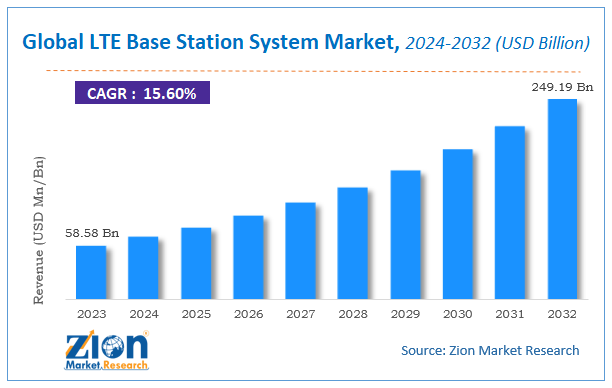
According to the report published by Zion Market Research, the global LTE Base Station System Market size was valued at USD 58.58 Billion in 2023 and is predicted to reach USD 249.19 Billion by the end of 2032. The market is expected to grow with a CAGR of 15.6% during the forecast period. The report analyzes the global LTE Base Station System Market's growth drivers, restraints, and impact on demand during the forecast period. It will also help navigate and explore the arising opportunities in the LTE Base Station System industry.
Global LTE Base Station System Market: Overview
Long-term evolution (LTE) base station system is an equipment system for high-speed network for data terminals and mobile phones to enhance the speed and capacity with the use of a distinct radio interface together with core network improvements. This system is specially designed to reduce cost and save energy by utilizing the latest technology to substantially minimize the consumption of power and enhance the installations. It serves as a hub of the local wireless network and can also be the gateway between the wireless network and a wired network.
Global LTE Base Station System Market: Growth Factors
The global LTE base station system market is growing at a lucrative rate. Factors such as growing demand for high-speed broadband services and growing investments for the development of network infrastructure are propelling the growth of the global market. Further, the deployment of LTE is growing at a rapid pace. This is due to the rise in the number of mobile subscribers that use the up-to-date apps & services and are persistently demanding for better connectivity and are using greater bandwidth. In such cases, LTE-Advanced (LTE-A) and LTE offer reduced latency, greater network capacity, and increased peak bandwidth which is necessary for the advanced video, data, and voice applications rooted in smartphones.
All such factors coupled with the growing use of wireless services in the large IT sector, transportation, and public service sectors are driving the demand for the LTE base station system which in turn is boosting the growth of the global LTE base station system market. In addition to this, the increasing number of smartphone users in developed as well as developing countries, integration of IoT technology, increasing use of digital media, and launch of innovative products by the key players are also some of the factors that are augmenting the growth of the global market.
On the other hand, low penetration of wireless technology in low & middle-income countries and less number of service providers may hamper the growth of the global LTE base station system market. However, the growing focus of major market players to expand their businesses in untapped markets and advancement in the 5G network will provide better opportunities for the growth of the global LTE base station system market during the forecast period.
Current COVID-19 pandemic conditions moderately affected the growth of the global LTE base station system market. The market is primarily affected due to a shortage of raw materials, disruption in the supply chain, and distributor's network. Strict restrictions on the manufacturing process resulted in a shortage of required comments for LTE base stations. However, boosting the demand for wireless high-speed networks is expected to spur the LTE base station system market growth over the forecast period.
Global LTE Base Station System Market: Segmentation
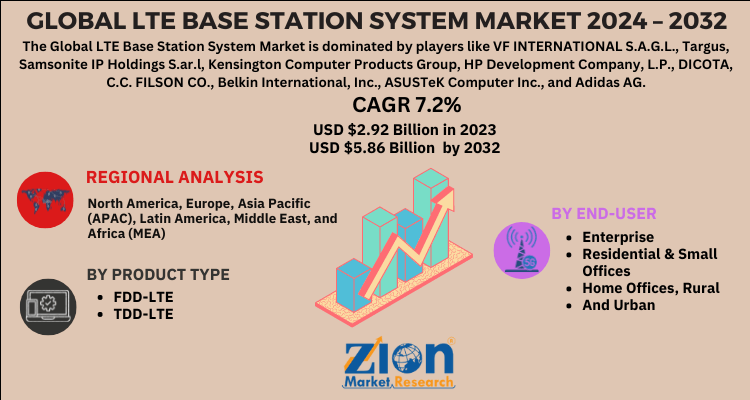
The global LTE base station system market is categorized based on product type, end-user, and region.
By product type, the global market is bifurcated into FDD-LTE and TDD-LTE.
By end-user, the global market is split into the enterprise, residential & small offices or home offices, rural, and urban.
LTE Base Station System Market: Report Scope
| Report Attributes | Report Details |
|---|---|
| Report Name | LTE Base Station System Market |
| Market Size in 2023 | USD 58.58 Billion |
| Market Forecast in 2032 | USD 249.19 Billion |
| Growth Rate | CAGR of 15.6% |
| Number of Pages | 206 |
| Key Companies Covered | Ericsson, Airspan Networks Inc. Huawei technologies, China Mobile, Alpha Wireless Ltd, Airspan, AT&T, Cisco, CommScope, and Juni Global among others |
| Segments Covered | By Product Type, By End-User And By Region |
| Regions Covered | North America, Europe, Asia Pacific (APAC), Latin America, Middle East, and Africa (MEA) |
| Base Year | 2023 |
| Historical Year | 2018 - 2022 |
| Forecast Year | 2024 - 2032 |
| Customization Scope | Avail customized purchase options to meet your exact research needs. Request For Customization |
Global LTE Base Station System Market: Regional Analysis
Asia Pacific is estimated to the largest market by share and revenue contribution in the global LTE base station system market. Some key factors such as large internet users, an increasing number of smartphone users, increasing work from home culture, and affordable internet services are contributing to the high share of the LTE base station system market in this region. India, China, and Japan are the major internet user countries in the Asia Pacific region contributing significant revenue in the overall market. North America is expected to remain in the second position in the global LTE base station system market. Increasing digitalization, remote work culture, and increasing demand for high-speed internet services from large IT sectors are some of the factors supporting the growth of the market in this region.
Global LTE Base Station System Market: Competitive Players
Key players operating in the global LTE base station system market include:
- Ericsson
- Airspan Networks Inc.
- Huawei technologies
- China Mobile
- Alpha Wireless Ltd
- Airspan
- AT&T
- Cisco
- CommScope
- Juni Global among others.
The Global LTE Base Station System Market is segmented as follows:
By product type
- FDD-LTE
- TDD-LTE
By end-user
- enterprise
- residential & small offices
- home offices, rural
- and urban
By Region
- North America
- The U.S.
- Canada
- Mexico
- Europe
- France
- The UK
- Spain
- Germany
- Italy
- Rest of Europe
- Asia Pacific
- China
- Japan
- India
- Australia
- South Korea
- Rest of Asia Pacific
- The Middle East & Africa
- Saudi Arabia
- UAE
- Egypt
- Kuwait
- South Africa
- Rest of the Middle East & Africa
- Latin America
- Brazil
- Argentina
- Rest of Latin America
What Reports Provides
- Full in-depth analysis of the parent market
- Important changes in market dynamics
- Segmentation details of the market
- Former, on-going, and projected market analysis in terms of volume and value
- Assessment of niche industry developments
- Market share analysis
- Key strategies of major players
- Emerging segments and regional markets
- Testimonials to companies in order to fortify their foothold in the market.
Table Of Content

FrequentlyAsked Questions
An LTE base station system is telecom equipment that enables wireless network connectivity. It supports high-speed mobile data transmission.
The global LTE Base Station System market is expected to be driven by the Driven by expanding mobile data traffic, network densification needs, and ongoing 4G coverage upgrades in rural and developing regions. Growth in IoT connectivity and private LTE networks supports continued demand.
According to study, the global LTE Base Station System market size was worth around USD 58.58 Billion in 2023 and is predicted to grow to around USD 249.19 Billion By 2032.
The global LTE Base Station System market is expected to grow at a Compound Annual Growth Rate (CAGR) of around CAGR 15.6% during the forecast period from 2024-2032.
The global LTE Base Station System industry is projected to be challenged by Challenges include spectrum and licensing constraints, high deployment CAPEX, and competition from 5G upgrades reducing LTE investment focus.
The Opportunities arise from rural connectivity programs, private LTE networks for enterprises, and modernization of existing 4G infrastructure to support IoT will offer significant growth opportunities in the LTE Base Station System market.
Software-defined and virtualized RAN upgrades; energy-saving features and advanced MIMO optimization; hybrid LTE/5G coexistence with centralized management are the emerging trends and innovations impacting the LTE Base Station System market.
The global LTE Base Station System market is expected to be led by APAC during the forecast period.
Some of the prominent players operating in the global LTE Base Station System market are; Ericsson, Airspan Networks Inc. Huawei technologies, China Mobile, Alpha Wireless Ltd, Airspan, AT&T, Cisco, CommScope, and Juni Global among others and others.
The report explores crucial aspects of the LTE Base Station System market, including a detailed discussion of existing growth factors and restraints, while also browsing future growth opportunities and challenges that impact the market.
HappyClients