
Global Laser Sensor Market Size, Share, Growth Trends, and Forecast 2032

Laser Sensor Market By Component (Hardware, Software, and Services), By Product (Compact and Ultra-compact), By Vertical (Electronics, Aerospace & Defense, Automotive, and Others), and By Region - Global and Regional Industry Overview, Market Intelligence, Comprehensive Analysis, Historical Data, and Forecasts 2024 - 2032
| Market Size in 2023 | Market Forecast in 2032 | CAGR (in %) | Base Year |
|---|---|---|---|
| USD 1297.85 Million | USD 2927.69 Million | 9.46% | 2023 |
Laser Sensor Industry Perspective
What will be the global laser sensor market size during the forecast period?
The global laser sensor market size was valued at around USD 1297.85 million in 2023 and is projected to reach about USD 2927.69 million by 2032, with a compound annual growth rate (CAGR) of roughly 9.46% between 2024 and 2032.
This report provides a comprehensive analysis of the growth drivers, restraints, and challenges shaping demand across the global laser sensor market throughout the forecast period, while highlighting high-potential emerging opportunities within the industry.

Key Insights
- As per the analysis shared by our research analyst, the global laser sensor market is estimated to grow at a CAGR of approximately 9.46% during the forecast period from 2024 to 2032.
- In terms of revenue, the global laser sensor market size was valued at around USD 1297.85 million in 2023 and is projected to reach USD 2927.69 million by 2032.
- The market is driven by the rise of automation and Industry 4.0, growing demand for advanced safety systems, technological advancements and miniaturization, and expanding applications across diverse industries.
- Based on the component, hardware holds a leading position as physical laser sensing units remain essential for distance, displacement, and presence detection on production lines and in industrial equipment.
- Based on the product, compact laser sensors are widely adopted for their balance of performance and form factor, supporting integration into machinery and automation systems where space and reliability are important.
- Based on the vertical, the electronics segment represents major demand areas as manufacturers rely on high-precision, non-contact measurement for quality control, positioning, and advanced driver-assistance applications.
- Regionally, Asia Pacific is expected to contribute strongly to market growth, supported by extensive manufacturing activity, electronics production, automotive investment, and ongoing adoption of automation and Industry 4.0 practices across key industrial economies.
Laser Sensor Market: Overview
A laser sensor is a device that uses laser technology to detect and measure physical properties of objects, surfaces, or environments. Laser sensors are valued for their precision, accuracy, and ability to perform non-contact measurements. They emit laser light and analyze the reflected or scattered light to provide information about distance, position, presence, profile, or other characteristics of the target. These capabilities make them suitable for industrial automation, quality control, safety systems, and a growing range of specialized applications.
Laser Sensor Market: Dynamics
Growth Drivers
What factors are accelerating the expansion of the laser sensor market?
The rise of automation and Industry 4.0 is a primary growth driver. Manufacturing and industrial processes increasingly depend on accurate, reliable, non-contact sensing for tasks such as precision measurement, quality control, and process optimization. Laser sensors are well suited to these requirements and benefit from continued investment in smart factories and automated production lines.
Growing demand for advanced safety systems further supports market expansion. Stringent regulations and heightened attention to workplace safety drive the use of laser sensors for object detection, hazard monitoring, and collision avoidance. Technological advancements and miniaturization also broaden applicability, while expanding use in healthcare, construction, security, and other sectors increases overall demand.
Restraints
What factors are limiting the growth of the laser sensor market?
The initial cost of laser sensors, especially those with advanced functionalities, can restrict adoption. Sophisticated design and manufacturing raise unit prices, which may make these solutions less accessible for small and medium-scale industries compared with traditional sensor technologies. Cost sensitivity remains a consideration in price-competitive applications.
Environmental sensitivities can affect the performance of certain laser sensors. Factors such as stray light may require additional measures to ensure accurate readings, increasing system complexity and cost. A shortage of personnel with the technical expertise needed for operation, calibration, and maintenance can also slow wider implementation in some regions.
Opportunities
What emerging opportunities exist in the laser sensor market?
Expanding applications beyond traditional industrial automation creates significant opportunities. Sectors such as healthcare, construction, and security are exploring laser sensing for measurement, monitoring, and safety functions. Continued miniaturization and improvements in sensing capabilities open new uses in robotics, consumer electronics, and medical devices.
The rise of 3D sensing technology and growing automotive demand related to advanced driver-assistance systems and autonomous vehicle development further enlarge the addressable market. Vendors that deliver compact, reliable, and application-specific solutions are well positioned to capture these emerging requirements.
Challenges
What challenges does the laser sensor market face?
Balancing performance, cost, and ease of integration remains an ongoing challenge. Ensuring stable operation under varying environmental conditions and supporting users who may lack specialized expertise require continuous product and support improvements. Competition among established sensor suppliers and the need to demonstrate clear value against alternative sensing technologies also influence purchasing decisions and market dynamics.

Laser Sensor Market: Report Scope
| Report Attributes | Report Details |
|---|---|
| Report Name | Laser Sensor Market |
| Market Size in 2023 | USD 1297.85 Million |
| Market Forecast in 2032 | USD 2927.69 Million |
| Growth Rate | CAGR of 9.46% |
| Number of Pages | 285 |
| Key Companies Covered | Rockwell Automation, Inc., Panasonic Corporation, Baumer Electric AG, Keyence Corporation, Laser Technology, Inc., Dimetix AG, Banner Engineering Corp., SmartRay GmbH, MTI Instruments Inc., and OMRON Corporation, among others |
| Segments Covered | By Component, By Product, By Vertical, and By Region |
| Regions Covered | North America, Europe, Asia Pacific (APAC), Latin America, Middle East, and Africa (MEA) |
| Base Year | 2023 |
| Historical Year | 2018 - 2022 |
| Forecast Year | 2024 - 2032 |
| Customization Scope | Avail customized purchase options to meet your exact research needs. Request For Customization |
Laser Sensor Market: Segmentation
The laser sensor market is segmented by component, product, vertical, and region. All the segments of the laser sensor market have been analyzed based on present and future trends and the market is estimated from 2024 to 2032.
Based on Component, the laser sensor market is divided into hardware, software, and services. Hardware holds a leading position because physical laser sensing units are essential for distance, displacement, presence, and profile measurement across industrial and automation applications. Demand for ruggedized and high-precision hardware on production lines sustains this segment. Software supports configuration, data processing, and integration with control systems, while services including calibration, maintenance, and technical support are growing in importance as users seek to maintain accuracy and uptime over the sensor lifecycle.
Based on Product, the market is divided into compact and ultra-compact. Compact laser sensors are widely adopted for their balance of measurement performance, durability, and form factor, making them suitable for integration into machinery, conveyors, and automation cells. Ultra-compact designs address applications where space is highly constrained, such as robotics, consumer electronics, and certain medical or precision assembly environments. Both categories benefit from ongoing miniaturization and improvements in sensing capability that expand design options for equipment manufacturers.
Based on Vertical, the laser sensor market is divided into electronics, aerospace and defense, automotive, and others. Electronics represents a major demand area as manufacturers rely on high-precision, non-contact measurement for quality control, positioning, and inspection of components and assemblies. Automotive is another key vertical, driven by use in production-line measurement and by growing interest in advanced driver-assistance systems and related sensing functions. Aerospace and defense and other industrial sectors contribute additional demand for specialized measurement and safety applications.
Laser Sensor Market: Regional Analysis
Why will Asia Pacific continue to dominate the global market during the projection period?
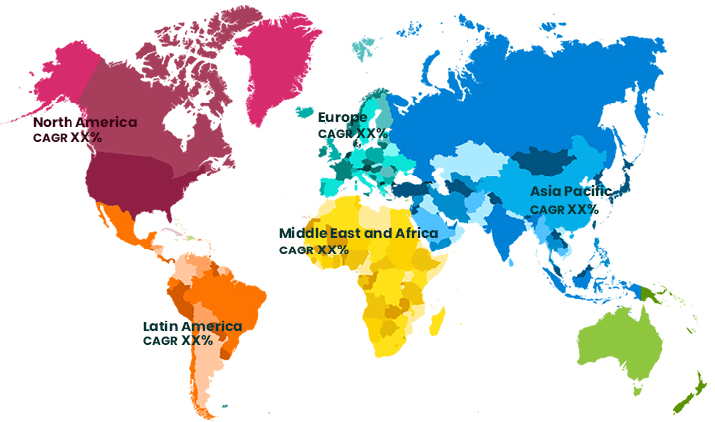
Asia Pacific is expected to contribute strongly to the laser sensor market. The region benefits from extensive manufacturing activity, large electronics production bases, and significant automotive and industrial investment in countries such as China, Japan, South Korea, and India. Adoption of automation and Industry 4.0 practices across factories and supply chains increases demand for precise, non-contact sensing. These factors enable Asia Pacific to drive volume growth, influence product requirements, and support continued innovation and deployment of laser sensors in industrial and emerging applications.
North America maintains substantial demand supported by advanced manufacturing, aerospace and defense activity, and investment in automation and safety systems. Europe continues to adopt laser sensing in industrial automation, quality control, and automotive applications under strong regulatory and efficiency drivers. Latin America and the Middle East and Africa represent emerging opportunities where industrial development and gradual automation uptake are expected to support incremental growth over the forecast period.
Laser Sensor Market: Competitive Analysis
Some of the major players in the global laser sensor market include;
- Rockwell Automation, Inc.
- Panasonic Corporation
- Baumer Electric AG
- Keyence Corporation
- Laser Technology, Inc.
- Dimetix AG
- Banner Engineering Corp.
- SmartRay GmbH
- MTI Instruments Inc.
- OMRON Corporation
Segments Covered
The global laser sensor market is segmented as follows:
By Component
- Hardware
- Software
- Services
By Product
- Compact
- Ultra-compact
By Vertical
By Region
- North America
- The U.S.
- Canada
- Mexico
- Europe
- France
- The UK
- Spain
- Germany
- Italy
- Rest of Europe
- Asia Pacific
- China
- Japan
- India
- Australia
- South Korea
- Rest of Asia Pacific
- The Middle East & Africa
- Saudi Arabia
- UAE
- Egypt
- Kuwait
- South Africa
- Rest of the Middle East & Africa
- Latin America
- Brazil
- Argentina
- Rest of Latin America
Table Of Content
Methodology
FrequentlyAsked Questions
A laser sensor is a device that uses laser technology to detect and measure physical properties of objects, surfaces, or environments. It emits laser light and analyzes the reflected or scattered return to provide precise, non-contact information about distance, position, presence, or other characteristics of the target.
The global laser sensor market is driven by the rise of automation and Industry 4.0, growing demand for advanced safety systems, technological advancements and miniaturization, and expanding applications across industrial and non-traditional sectors.
The global laser sensor market size was valued at approximately USD 1297.85 million in 2023 and is expected to reach around USD 2927.69 million by 2032.
The global laser sensor market is expected to grow at a compound annual growth rate (CAGR) of approximately 9.46% during the forecast period from 2024 to 2032.
Asia Pacific is expected to contribute notably, supported by strong manufacturing activity, electronics and automotive production, and widespread adoption of automation and precision sensing technologies.
Some of the major players leveraging the laser sensor market growth are Rockwell Automation, Inc., Panasonic Corporation, Baumer Electric AG, Keyence Corporation, Laser Technology, Inc., Dimetix AG, Banner Engineering Corp., SmartRay GmbH, MTI Instruments Inc., and OMRON Corporation.

HappyClients

