
Fleet Management Systems Market Size, Share, Trends, Growth and Forecast 2032

Fleet Management Systems Market By Vehicle (Commercial Vehicle, Aircrafts, Railways, And Watercrafts), By Component (Solution And Service), By Technology (GNSS And Cellular Systems), By End-Use Industry (Automotive, Energy & Utilities, Manufacturing, Retail, Government Sector, and Construction), and By Region: Global Industry Perspective, Comprehensive Analysis, And Forecast, 2024-2032
| Market Size in 2023 | Market Forecast in 2032 | CAGR (in %) | Base Year |
|---|---|---|---|
| USD 32.59 Billion | USD 106.82 Billion | 14.1% | 2023 |
What is the Market size of the Fleet Management Systems Market Industry?
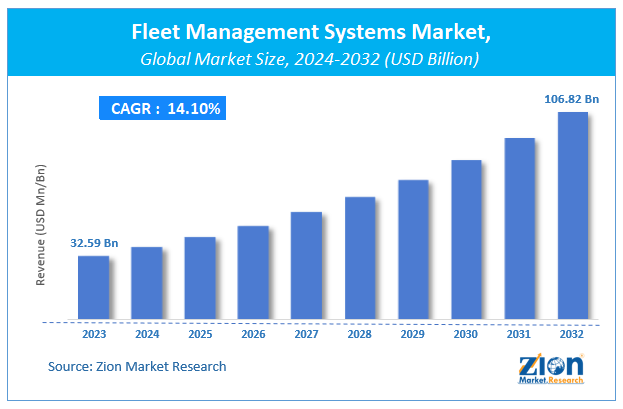
The global Fleet Management Systems market size was worth around USD 32.59 billion in 2023 and is predicted to reach around USD 106.82 billion by 2032, with a compound annual growth rate (CAGR) of roughly 14.10% between 2024 and 2032. The Fleet Management Systems Market is driven by rising adoption of wireless technology, vehicle telematics, cloud computing, and the need for operational efficiency across commercial fleets.
The report offers assessment and analysis of the Fleet Management Systems Market on a global and regional level. The study offers a comprehensive assessment of the market competition, constraints, revenue estimates, opportunities, evolving trends, and industry-validated data.
Fleet Management Systems Market: Overview
Fleet management systems include managing ships, aviation equipment, commercial motor vehicles, rail cars, private vehicles, and non-powered vehicle systems. In addition to this, fleet management comprises an array of functionalities including vehicle maintenance, supply chain management, financing, licensing & compliance, vehicle leasing, accident management & vehicle telematics, speed management, fuel management, driver management, and health & safety management. Moreover, fleet management systems help firms in the transportation industry to minimize risks related to vehicle investment, enhance productivity, reduce transport & staff expenses, and improve efficiency.
Fleet management is a managerial approach that benefits various companies by coordinating and organizing vehicle transit to improve their efficiency, curtail transport costs, and comply with government norms and regulations. Fleet management systems are widely used for vehicle tracking and mechanical operations. Various vendors of fleet management systems offer telematics, such as GLONASS, GPS, and GALILEO. These system providers are focusing on integrating with artificial intelligence (AI) to curtail autonomous vehicle accidents.
Fleet management systems help construction organizations to track the location of heavy machines during transit. Thus, it is expected that the construction industry’s growth will fuel the fleet management systems market during the estimated timeframe. A growing number of cyber-attacks might limit the fleet management systems market in the future. However, increasing use of artificial intelligence (AI) in various sectors might open new avenues for the fleet management systems market in the upcoming years.
Key Insights
- As per the analysis shared by our research analyst, the global Fleet Management Systems market is estimated to grow annually at a CAGR of around 14.10% over the forecast period (2024-2032).
- In terms of revenue, the global Fleet Management Systems market size was valued at around USD 32.59 billion in 2023 and is projected to reach USD 106.82 billion by 2032.
- The market is driven by the surge in acceptance of wireless technology, rise in global trade, necessity of improving operational efficiency, escalating use of vehicle telematics, adoption of cloud computing and analytics, reduction in hardware and IoT connectivity costs, and favorable government mandates.
- Based on the Vehicle, the Commercial Vehicle segment dominated the market due to massive demand for improving driving practices and rising acceptance of IoT by fleet operators.
- Based on the Component, the Solution segment held a leading position as organizations prioritize comprehensive software platforms for tracking, analytics, and optimization over pure service offerings in the early stages of digital transformation.
- Based on the Technology, the GNSS segment dominated owing to its critical role in precise global positioning, vehicle tracking, and navigation across commercial fleets, supported by systems such as GPS, GLONASS, and Galileo.
- Based on the End-Use Industry, the Government segment dominated because of enhanced supply chain proficiency.
- Based on region, Asia Pacific dominated the global Fleet Management Systems market with a substantial share.
Fleet Management Systems Market: Growth Drivers
What factors are accelerating the expansion of the Fleet Management Systems market?
Surge in acceptance of wireless technology, rise in global trade, and necessity of improving operational efficiency in fleet management activities will steer growth of fleet management systems market. Escalating need to enhance fleet efficacy and massive use of vehicle telematics by fleet operators will increase the size of the fleet management systems industry. In addition to this, an increase in acceptance of cloud computing & analytics, reduction in costs of hardware & IoT connectivity, necessity of improving operational proficiency, and favorable government mandates will spur fleet management systems industry growth. Many fleet firms are adopting green initiatives to reduce ecological impact and improve fleet efficiency, thereby driving market trends.
Furthermore, the introduction of new technology and entry of new firms in the industry are projected to magnify the expansion of fleet management systems market size. Growing requirement of fleet management systems in passenger & commercial vehicles is likely to produce new growth avenues for the fleet management systems market.
Restraints
What factors are limiting the growth of the Fleet Management Systems market?
Cybersecurity risks represent a significant restraint. As fleets become increasingly connected, the potential for cyber-attacks, data breaches, and unauthorized access to vehicle systems and sensitive operational data grows, raising concerns among operators about system integrity and regulatory liability. High upfront costs associated with hardware installation, system integration, and staff training can deter smaller fleet operators and organizations in cost-sensitive markets.
Resistance to change among traditional fleet managers, combined with challenges in integrating disparate legacy systems and achieving data interoperability across multi-vendor environments, further slows adoption. Complexity in managing mixed fleets that include road vehicles, aircraft, railways, and watercraft adds layers of technical and operational difficulty, limiting the speed of full-scale deployment in certain industries.
Fleet Management Systems Market: Segmentation
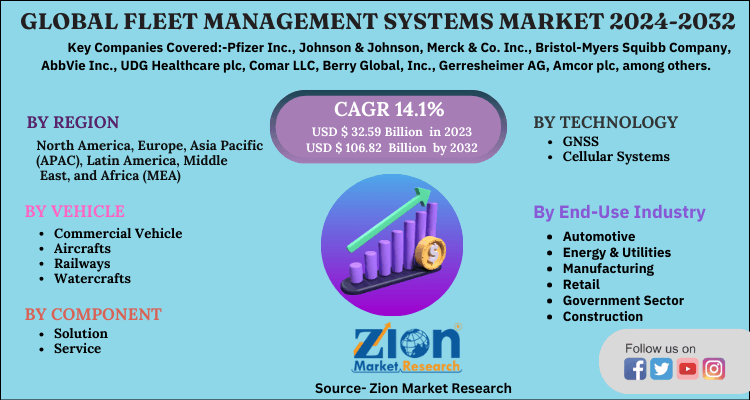
The fleet management systems market is segmented by vehicle, component, technology, end-use industry, and region.
Based on the vehicle, the global fleet management systems market is segmented into commercial vehicles, aircrafts, railways, and watercraft. Commercial vehicles are projected to hold a significant market share during the forecast timeframe, due to the increasing demand for online car rental services. Moreover, increasing investments made by car rental service providers, such as Ola and Uber, in autonomous vehicles are likely to drive this market segment.
Based on Component Segment, the fleet management systems market is divided into solution and service. The solution segment holds the leading position because organizations prioritize comprehensive software platforms that deliver real-time tracking, analytics, route optimization, and predictive insights as the core value proposition. These solutions enable measurable reductions in fuel costs, downtime, and compliance risks, justifying investment and driving broader market expansion. The service segment ranks second and is growing rapidly as operators seek implementation, integration, consulting, and managed services to maximize the value of deployed solutions and ensure continuous system performance.
By end-use industry, this market includes automotive, energy and utilities, manufacturing, retail, government sector, construction, and others. The government sector is anticipated to grow substantially in the estimated time period, due to growing investments in technology for defense applications.
Fleet Management Systems Market: Report Scope
| Report Attributes | Report Details |
|---|---|
| Report Name | Fleet Management Systems Market |
| Market Size in 2023 | USD 32.59 Billion |
| Market Forecast in 2032 | USD 106.82 Billion |
| Growth Rate | CAGR of 14.1% |
| Number of Pages | 210 |
| Key Companies Covered | Cisco Systems, ABB Ltd., TomTom N.V., Telogis, Navico, MiTAC International Corporation, AT&T Inc., Fleetmatics Group PLC, IBM Corporation, Freeway Fleet Systems, I.D. Systems, Honeywell International Inc., and Others |
| Segments Covered | By Vehicle, By Component, By Technology, By End-Use Industry, and By Region |
| Regions Covered | North America, Europe, Asia Pacific (APAC), Latin America, Middle East, and Africa (MEA) |
| Base Year | 2023 |
| Historical Year | 2018 - 2022 |
| Forecast Year | 2024 - 2032 |
| Customization Scope | Avail customized purchase options to meet your exact research needs. Request For Customization |
Fleet Management Systems Market: Regional Analysis
Why will North America continue to dominate the global market during the projection period?
The Asia Pacific is likely to hold a considerable share of the global fleet management systems market in the upcoming years, due to technological advancements made in developing countries, such as China and India. Furthermore, giant automotive manufacturers, such as Volkswagen, Ford, etc., are planning to set up their manufacturing plants in China, India, and Taiwan. This, in turn, is anticipated to further fuel this regional market’s expansion.
Fleet Management Systems Market: Competitive Landscape
Key players profiled in the report and influencing the growth of the fleet management systems industry are -
- Cisco Systems
- ABB Ltd.
- TomTom N.V.
- Telogis
- Navico
- MiTAC International Corporation
- AT&T Inc.
- Fleetmatics Group PLC
- IBM Corporation
- Freeway Fleet Systems
- I.D. Systems
- Honeywell International Inc.
The global Fleet Management Systems Market is segmented as follows:
By Vehicle
- Commercial Vehicle
- Aircrafts
- Railways
- Watercrafts
By Component
- Solution
- Service
By Technology
- GNSS
- Cellular Systems
By End-Use Industry
- Automotive
- Energy & Utilities
- Manufacturing
- Retail
- Government Sector
- Construction
By Region
- North America
- The U.S.
- Canada
- Mexico
- Europe
- France
- The UK
- Spain
- Germany
- Italy
- Rest of Europe
- Asia Pacific
- China
- Japan
- India
- Australia
- South Korea
- Rest of Asia Pacific
- The Middle East & Africa
- Saudi Arabia
- UAE
- Egypt
- Kuwait
- South Africa
- Rest of the Middle East & Africa
- Latin America
- Brazil
- Argentina
- Rest of Latin America
Table Of Content
Methodology
FrequentlyAsked Questions
Fleet management systems track and manage vehicles digitally. They improve efficiency, safety, and cost control
The global Fleet Management Systems market is expected to be driven by the demand for vehicle tracking, fuel efficiency, and logistics optimization. Adoption of GPS and telematics supports market growth.
According to study, the global Fleet Management Systems market size was worth around USD 32.59 Billion in 2023 and is predicted to grow to around USD 106.82 Billion By 2032.
The global Fleet Management Systems market is expected to grow at a Compound Annual Growth Rate (CAGR) of around CAGR 14.1% during the forecast period from 2024-2032.
The global Fleet Management Systems industry is projected to be challenged by Challenges include data integration issues, hardware costs, and resistance to adoption.
The Opportunities include logistics optimization, fuel efficiency tracking, EV fleet management, and telematics-driven analytics will offer significant growth opportunities in the Fleet Management Systems market.
AI-driven route optimization and telematics; EV fleet integration; real-time analytics for fuel, safety, and compliance are the emerging trends and innovations impacting the Fleet Management Systems market.
The global Fleet Management Systems market is expected to be led by Asia Pacific during the forecast period.
Some of the prominent players operating in the global Fleet Management Systems market are: Cisco Systems, ABB Ltd., TomTom N.V., Telogis, Navico, MiTAC International Corporation, AT&T Inc., Fleetmatics Group PLC, IBM Corporation, Freeway Fleet Systems, I.D. Systems, Honeywell International Inc., and others.
The report explores crucial aspects of the Fleet Management Systems market, including a detailed discussion of existing growth factors and restraints, while also browsing future growth opportunities and challenges that impact the market.

HappyClients

