
Global Cosmetovigilance Market Size, Share & Growth Report 2032

Cosmetovigilance Market By Service Type (Pre-Marketing Services [Clinical Safety Testing, Document Writing, Risk Management, and Others], and Post-Marketing Services [Case Intake, Case Triage, Data Entry & Acquisition, Tracking & Reporting, and Others]), By Reported Categories (Skincare, Makeup, Haircare, Perfumes & Deodorants, Hair Colorants, and Others), By Service Provider (Clinical Research Organizations, and Business Process Outsourcing), and By Region: Global and Regional Industry Overview, Market Intelligence, Comprehensive Analysis, Historical Data, and Forecasts 2024 - 2032
| Market Size in 2023 | Market Forecast in 2032 | CAGR (in %) | Base Year |
|---|---|---|---|
| USD 11.24 Billion | USD 16.80 Billion | 4.56% | 2023 |
Cosmetovigilance Industry Perspective
What will be the global cosmetovigilance market size during the forecast period?
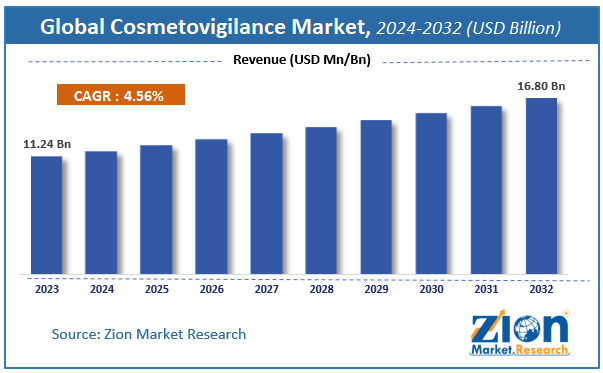
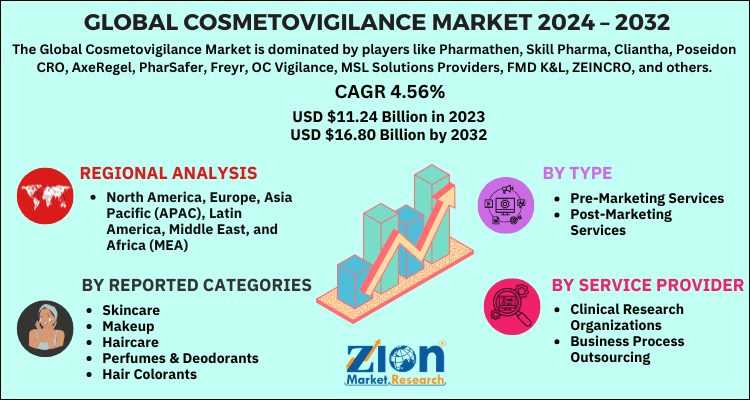
The global cosmetovigilance market size was worth around USD 11.24 billion in 2023 and is predicted to grow to around USD 16.80 billion by 2032 with a compound annual growth rate (CAGR) of roughly 4.56% between 2024 and 2032.
This report provides a comprehensive analysis of the growth drivers, restraints, and challenges shaping demand across the global cosmetovigilance market throughout the forecast period, while highlighting high-potential emerging opportunities within the industry.
Key Insights
- As per the analysis shared by our research analyst, the global cosmetovigilance market is estimated to grow annually at a CAGR of around 4.56% over the forecast period (2024-2032).
- In terms of revenue, the global cosmetovigilance market size was valued at around USD 11.24 billion in 2023 and is projected to reach USD 16.80 billion by 2032.
- The cosmetovigilance market is projected to grow at a significant rate due to rising popularity of cosmetics for aesthetic enhancement, increasing consumer awareness of product safety, and technological advances in monitoring software.
- Based on the service type, the post-marketing services segment is expected to lead the global market owing to the continuous need for case intake, triage, data management, tracking, and regulatory reporting after products reach consumers.
- Based on the reported categories, the skincare segment is expected to dominate the global market because of the high volume of daily-use products and elevated incidence of reported skin reactions that require systematic safety monitoring.
- Based on the service provider, the clinical research organizations segment is expected to hold a leading position due to specialized expertise in clinical safety testing, risk assessment, and comprehensive vigilance programs required by manufacturers.
- Based on region, Europe is predicted to dominate the global market during the forecast period with a share of over one-third, driven by strict EU legislation on cosmetic safety, centralized notification systems, and strong regulatory enforcement that benefits both local and international companies.
Cosmetovigilance Market: Overview
Cosmetovigilance is the systematic collection, evaluation, and monitoring of adverse effects of cosmetic products to ensure that human health is not impacted. The objective behind this is to prevent the side effects of cosmetics on human skin by enforcing the required measures. The practice covers the full product lifecycle and supports manufacturers, regulators, and consumers in maintaining safe cosmetic offerings across skincare, makeup, haircare, fragrances, and related categories.
Cosmetovigilance Market: Dynamics
Growth Drivers
How is the rising popularity of cosmetics and safety awareness driving the cosmetovigilance market?
Escalating consumer interest in products that improve aesthetic appeal continues to expand the overall cosmetics industry, thereby increasing the volume of products that require systematic safety monitoring. Growing consciousness regarding potential side effects on skin and overall health encourages both users and regulators to demand reliable vigilance systems.
Technological progress in dedicated cosmetovigilance software further supports market expansion by enabling more efficient data collection, analysis, and reporting. Together these factors create sustained demand for pre- and post-marketing safety services across developed and emerging economies.
Restraints
What factors related to awareness levels are expected to restrain market growth?
A relatively lower level of consciousness regarding cosmetovigilance practices in many emerging and less-developed economies limits the adoption of formal monitoring systems. Manufacturers and consumers in these regions may not fully recognize the value of structured adverse-event reporting or the regulatory obligations that accompany it.
This awareness gap slows the penetration of specialized service providers and can delay the implementation of comprehensive safety frameworks, thereby constraining overall market expansion in those geographies during the forecast period.
Opportunities
How do improved vigilance systems create growth opportunities?
The introduction of well-designed vigilance frameworks that address consumer health concerns and streamline reporting processes opens attractive opportunities for market participants. Centralized notification platforms and clearer regulatory guidelines reduce complexity for manufacturers and facilitate compliance.
Service providers that offer integrated pre-marketing testing, risk management, and post-marketing surveillance stand to benefit as more companies seek professional support to meet evolving safety expectations and protect brand reputation.
Challenges
What operational and regulatory challenges does the cosmetovigilance market face?
Maintaining consistent data quality across diverse reporting sources and jurisdictions remains a practical challenge. Differences in national requirements can complicate global compliance programs and increase the administrative burden on manufacturers and service providers.
In addition, the need to continuously update systems in response to new product categories and emerging safety signals requires ongoing investment in expertise and technology, which can be demanding for smaller organizations.
Cosmetovigilance Market: Report Scope
| Report Attributes | Report Details |
|---|---|
| Report Name | Cosmetovigilance Market |
| Market Size in 2023 | USD 11.24 Billion |
| Market Forecast in 2032 | USD 16.80 Billion |
| Growth Rate | CAGR of 4.56% |
| Number of Pages | 220 |
| Key Companies Covered | Pharmathen, Skill Pharma, Cliantha, Poseidon CRO, AxeRegel, PharSafer, Freyr, OC Vigilance, MSL Solutions Providers, FMD K&L, ZEINCRO, and others. |
| Segments Covered | By Service Type, By Reported Categories, By Service Provider, and By Region |
| Regions Covered | North America, Europe, Asia Pacific (APAC), Latin America, The Middle East and Africa (MEA) |
| Base Year | 2023 |
| Historical Year | 2018 - 2022 |
| Forecast Year | 2024 - 2032 |
| Customization Scope | Avail customized purchase options to meet your exact research needs. Request For Customization |
Cosmetovigilance Market: Segmentation Analysis
The cosmetovigilance market is segmented by service type, reported categories, service provider, and region. All the segments of the cosmetovigilance market have been analyzed based on present and future trends and the market is estimated from 2024 to 2032.
Based on the service type, the market is segmented into pre-marketing services and post-marketing services. The pre-marketing services are further segmented into clinical safety testing, document writing, risk management, and others. The post-marketing services are further segmented into case intake, case triage, data entry & acquisition, tracking & reporting, and others. Post-marketing services hold the leading position because continuous surveillance after product launch generates ongoing requirements for adverse-event handling and regulatory submissions. Pre-marketing services remain essential for initial safety evaluation and documentation, supporting product approval and market entry. The combined demand for both stages drives sustained growth as manufacturers seek comprehensive lifecycle safety support.
In terms of reported categories, the cosmetovigilance market can be segmented into skincare, makeup, haircare, perfumes & deodorants, hair colorants, and others. Skincare represents the most prominent segment due to the high frequency of daily application and the relatively elevated rate of reported skin reactions that necessitate systematic monitoring. Makeup and haircare follow closely, reflecting strong consumer volumes and the need for vigilance around ingredient interactions and potential sensitivities. These leading categories underpin the majority of reported cases and therefore anchor overall market demand for specialized safety services.
On the basis of service providers, the cosmetovigilance industry can be divided into clinical research organizations and business process outsourcing. Clinical research organizations occupy a strong position because of their specialized capabilities in clinical safety testing, risk assessment, and regulatory-compliant documentation. Business process outsourcing providers complement this offering by delivering scalable operational support for case management and data handling. The expertise of clinical research organizations in complex safety evaluations helps manufacturers meet stringent requirements and contributes significantly to market expansion.
Cosmetovigilance Market: Regional Analysis
Why will Europe continue to dominate the global market during the projection period?
Regionally, the cosmetovigilance market is divided into Europe, Latin America, Asia Pacific, North America, and the Middle East and Africa. The European region is estimated to make substantial contributions towards the global Cosmetovigilance market revenue during the projected timeframe, subject to strict legislation on the use of cosmetic items in the EU. However, the launch of a centralized notification system has resulted in a massive enhancement in the present regulatory scenario, thereby benefiting multinationals as well as firms not based in EU countries. This, in turn, is predicted to drive the market trends in Europe. The North American Cosmetovigilance market is slated to witness incessant growth over the next decade, subject to massive consumer expenditure on cosmetics as well as awareness among consumers about appearance, beauty, and appeal.
In addition, growing consciousness among both the government and consumers regarding the use of ingredients in cosmetic items will proliferate the regional market growth. Asia Pacific, Latin America, and the Middle East and Africa are projected to be the major market growth drivers in the coming decade.
Cosmetovigilance Market: Competitive Analysis
The global cosmetovigilance market is dominated by players like:
- Pharmathen
- Skill Pharma
- Cliantha
- Poseidon CRO
- AxeRegel
- PharSafer
- Freyr
- OC Vigilance
- MSL Solutions Providers
- FMD K&L
- ZEINCRO
Segments Covered
By Service Type
- Pre-Marketing Services
- Clinical Safety Testing
- Document Writing
- Risk Management
- Others
- Post-Marketing Services
- Case Intake
- Case Triage
- Data Entry & Acquisition
- Tracking & Reporting
- Others
By Reported Categories
- Skincare
- Makeup
- Haircare
- Perfumes & Deodorants
- Hair Colorants
- Others
By Service Provider
- Clinical Research Organizations
- Business Process Outsourcing
By Region
- North America
- The U.S.
- Canada
- Mexico
- Europe
- France
- The UK
- Spain
- Germany
- Italy
- Rest of Europe
- Asia Pacific
- China
- Japan
- India
- Australia
- South Korea
- Rest of Asia Pacific
- The Middle East & Africa
- Saudi Arabia
- UAE
- Egypt
- Kuwait
- South Africa
- Rest of the Middle East & Africa
- Latin America
- Brazil
- Argentina
- Rest of Latin America
Table Of Content
Methodology
FrequentlyAsked Questions
The cosmetovigilance market encompasses the global provision of services for the systematic monitoring, collection, evaluation, and prevention of adverse effects associated with cosmetic products, covering both pre-marketing safety assessments and post-marketing surveillance activities.
According to a study, the global cosmetovigilance market size was worth around USD 11.24 billion in 2023 and is expected to reach USD 16.80 billion by 2032.
The global cosmetovigilance market is expected to grow at a CAGR of 4.56% during the forecast period.
The European region is expected to dominate the cosmetovigilance market over the forecast period.
Leading players in the global cosmetovigilance market include Pharmathen, Skill Pharma, Cliantha, Poseidon CRO, AxeRegel, PharSafer, Freyr, OC Vigilance, MSL Solutions Providers, FMD K&L, and ZEINCRO, among others.
Emerging trends include the wider adoption of digital platforms for automated adverse-event management and the growing preference for integrated pre- and post-marketing safety programs that provide comprehensive lifecycle support.
The report delivers a comprehensive analysis of market size, growth rates, segmentation by service type, reported categories, service providers, and region, together with competitive landscape assessment, regional insights, growth drivers, restraints, opportunities, and challenges for the period 2024-2032.

HappyClients

