
Behavioral Rehabilitation Market Size, Share, Growth Report, Trends, Forecast 2032

Behavioral Rehabilitation Market By healthcare setting (residential, inpatient, and outpatient settings), application (attention deficit disorder, anxiety disorder, personality disorder, substance abuse disorder, mood disorder, and several disorders) And By Region: - Global And Regional Industry Overview, Market Intelligence, Comprehensive Analysis, Historical Data, And Forecasts, 2024-2032
|
Market Size in 2023 |
Market Forecast in 2032 | CAGR (in %) | Base Year |
|---|---|---|---|
| USD 601.38 Billion | USD 1091.96 Billion | 6.1% | 2023 |
Description
What is the Behavioral Rehabilitation Market Size?
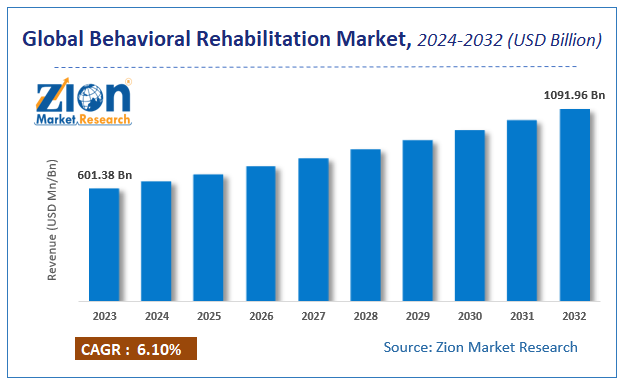
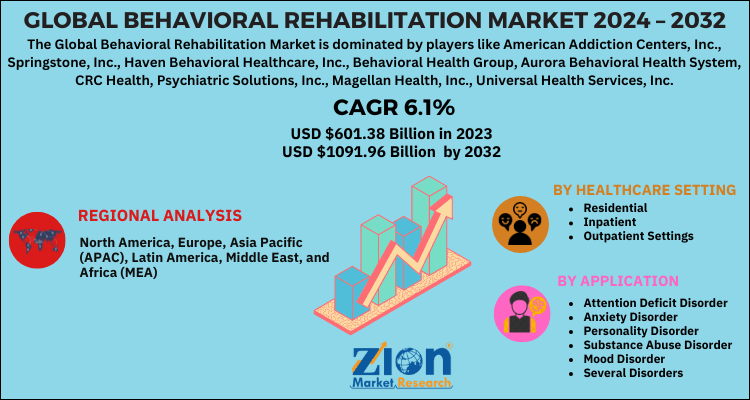
According to the report published by Zion Market Research, the global Behavioral Rehabilitation Market size was valued at USD 601.38 Billion in 2023 and is predicted to reach USD 1091.96 Billion by the end of 2032. The market is expected to grow with a CAGR of 6.1% during the forecast period. The report analyzes the global Behavioral Rehabilitation Market's growth drivers, restraints, and impact on demand during the forecast period. It will also help navigate and explore the arising opportunities in the Behavioral Rehabilitation industry.
Global Behavioral Rehabilitation Market: Overview
People get behavioral addiction due to several reasons and such addictions can harm their health. There are several addictions that do not go away by themselves but need high and reliable methodologies along with a set of behavioral rehabilitation for treating them. Behavioral rehabilitation activities are offered by professional individuals who understand the root cause of addiction and know several tools to overcome them. The behavioral rehabilitation process includes a multi-state affair. It is an inpatient program created by analyzing the behavioral addiction revealed by the patients, their symptoms, and their severity. The program starts with keeping the patient under close watch and far away from the elements that can trigger their addictive behavior.
Key Insights
- As per the analysis shared by our research analyst, the global Behavioral Rehabilitation Market is estimated to grow annually at a CAGR of around 6.1% over the forecast period (2024-2032).
- In terms of revenue, the global Behavioral Rehabilitation Market size was valued at around USD 601.38 Billion in 2023 and is projected to reach USD 1091.96 Billion by 2032.
- Based on the Healthcare Setting, Outpatient services hold the largest market share, accounting for approximately 74.07% of the revenue in 2023. This dominance is attributed to factors such as lower costs, increased availability of services, and enhanced patient convenience.
- Based on the Application, Anxiety disorders represent the largest segment, with a share of around 32.18% in 2023. The high prevalence of conditions like social anxiety, phobias, and other panic disorders, coupled with a wide range of treatment options, drives this dominance.
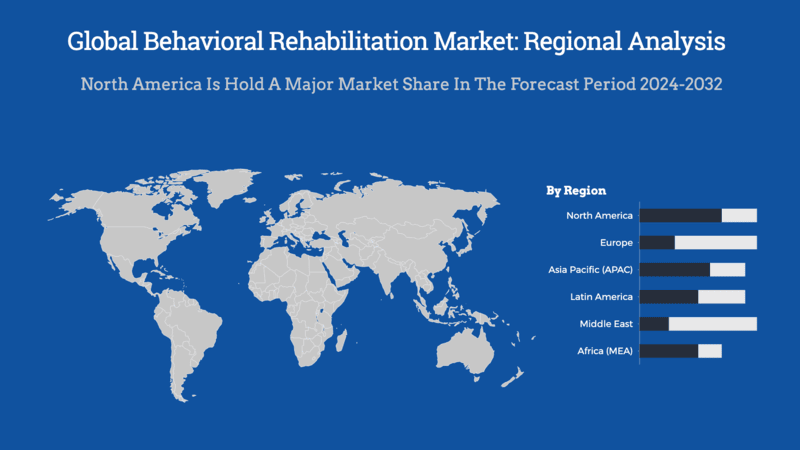
- Based on the Region, North America leads the market, holding a revenue share of 41.92% in 2023. This leadership is due to rising awareness about mental disorders, availability of advanced treatments, favorable government initiatives, and comprehensive insurance coverage for behavioral healthcare services.
Behavioral Rehabilitation Market: Dynamics
Key Growth Drivers
The behavioral rehabilitation market is primarily driven by the rising prevalence of mental health disorders, including anxiety, depression, substance abuse, and behavioral addictions. Increased awareness about mental health issues, supported by government initiatives and non-profit organizations, has led to greater demand for rehabilitation services. Additionally, advancements in therapeutic approaches, including cognitive-behavioral therapy (CBT) and personalized treatment plans, enhance the effectiveness of rehabilitation programs. The integration of telehealth and virtual counseling platforms has further expanded access to behavioral rehabilitation, particularly in underserved and remote areas. Increasing investments in mental health infrastructure and the expansion of behavioral health facilities also contribute to market growth.
Restraints
Despite significant progress, the behavioral rehabilitation market faces several challenges, including the high cost of rehabilitation services. Many individuals, especially in low- and middle-income countries, struggle to afford long-term treatment. Limited insurance coverage for behavioral health services further restricts access to care. Additionally, the persistent stigma associated with mental health conditions discourages people from seeking help, negatively impacting market growth. The shortage of qualified mental health professionals and inadequate infrastructure in certain regions also act as barriers to the expansion of behavioral rehabilitation services.
Opportunities
Growing recognition of mental health as a critical component of overall well-being presents substantial opportunities for the behavioral rehabilitation market. Governments and private organizations are increasing investments in mental health facilities and community-based programs to meet the rising demand for care. The adoption of digital health solutions, including mobile apps and telepsychiatry, provides accessible and cost-effective rehabilitation options. Furthermore, the increasing prevalence of co-occurring disorders, where individuals experience both mental health and substance use disorders, creates a need for integrated treatment programs. Partnerships between healthcare providers, insurance companies, and technology firms can also drive innovation and expand service availability.
Challenges
One of the major challenges in the behavioral rehabilitation market is the fragmented nature of mental health care systems, which often lack coordination between different service providers. This can lead to gaps in treatment continuity and reduced patient outcomes. Regulatory and reimbursement complexities further hinder the growth of the market, as policies regarding mental health coverage vary across regions. Additionally, resistance to adopting new technologies and treatment methodologies within traditional healthcare settings can slow market advancement. Ensuring the quality and standardization of care, particularly in emerging digital platforms, remains a significant challenge for the industry.
Recent Development
- In June 2025, Valera Health, a leading virtual mental health platform, acquired Vita Health, a pioneer in virtual suicide risk reduction services. The move expands Valera’s ability to deliver inclusive, high-quality mental health care, with a strong focus on severe mental illness and suicide prevention.
- In April 2025, Teladoc Health acquired UpLift for $30 million, strengthening its virtual mental healthcare offerings. UpLift’s therapy, psychiatry, and medication management services will enhance Teladoc’s BetterHelp platform, expanding mental health access through existing health plans.
- In March 2025, Wysa, an AI-powered mental health chatbot provider, acquired April Health to integrate digital tools with care coordination, aiming to enhance early intervention in mental health support.
Behavioral Rehabilitation Market: Report Scope
| Report Attributes | Report Details |
|---|---|
| Report Name | Behavioral Rehabilitation Market |
| Market Size in 2023 | USD 601.38 Billion |
| Market Forecast in 2032 | USD 1091.96 Billion |
| Growth Rate | CAGR of 6.1% |
| Number of Pages | 192 |
| Key Companies Covered | American Addiction Centers, Inc., Springstone, Inc., Haven Behavioral Healthcare, Inc., Behavioral Health Group, Aurora Behavioral Health System, CRC Health, Psychiatric Solutions, Inc., Magellan Health, Inc., Universal Health Services, Inc., and Acadia Healthcare |
| Segments Covered | By Healthcare Setting, By Application And By Region |
| Regions Covered | North America, Europe, Asia Pacific (APAC), Latin America, Middle East, and Africa (MEA) |
| Base Year | 2023 |
| Historical Year | 2018 - 2022 |
| Forecast Year | 2024 - 2032 |
| Customization Scope | Avail customized purchase options to meet your exact research needs. Request For Customization |
Global Behavioral Rehabilitation Market: Segmentation
The global behavioral rehabilitation market can be segmented into the healthcare setting, application, and region. All the segments have been analyzed based on present and future trends and the market is estimated from 2024 to 2032.
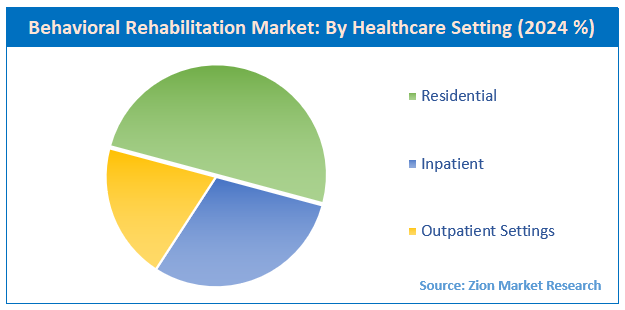
By Healthcare setting, the market can be segmented into residential, inpatient, and outpatient settings. The outpatient segment accounts for the largest share in the global behavioral rehabilitation market due to the growing availability of such services at affordable prices. Moreover, the convenience offered by outpatient settings is further attributing to the growth of the segment. The outpatient treatment assists patients to stay connected with different communities and maintain healthy social interaction for faster recovery. However, the residential segment is expected to witness a significant growth rate in forthcoming years due to the growing shift in preferences of patients from inpatient to a residential setting.
By Application, the market can be segmented into attention deficit disorder, anxiety disorder, personality disorder, substance abuse disorder, mood disorder, and several disorders. The anxiety disorder segment holds the largest share in the global behavioral rehabilitation market. The major anxiety disorders include phobia, social anxiety, and other panic disorders. The growing prevalence of mental disorders along with the availability of effective treatment is further fuelling the demand for anxiety disorder. Moreover, the growing awareness regarding anxiety treatment is likely to escalate the growth of the segment in the forthcoming years.
The Regional segment includes the current and forecast demand for North America, Europe, Asia Pacific, Latin America, and the Middle East and Africa.
Global Behavioral Rehabilitation Market: Regional analysis
The behavioral rehabilitation market demonstrates significant regional variations, influenced by factors such as healthcare infrastructure, prevalence of behavioral disorders, government initiatives, and societal awareness.
North America
North America holds a substantial portion of the global behavioral rehabilitation market, with the U.S. playing a pivotal role. The region's advanced healthcare infrastructure, coupled with a high prevalence of mental health disorders, drives market growth. Government initiatives, such as the Affordable Care Act (ACA), mandate insurance coverage for mental health services, enhancing accessibility to rehabilitation programs. Canada's universal healthcare system also contributes to the availability of behavioral rehabilitation services.
Europe
Europe represents a significant share of the market, with countries like the United Kingdom, Germany, and France leading in behavioral rehabilitation services. Robust government support and public health initiatives have increased awareness and accessibility to mental health services. The National Health Service (NHS) in the UK, for instance, has implemented extensive mental health programs focusing on early intervention and prevention.
Asia-Pacific
The Asia-Pacific region is experiencing rapid growth in the behavioral rehabilitation market. In 2023, the market generated revenue of USD 103.4 billion and is projected to grow at a compound annual growth rate (CAGR) of 6.8% from 2024 to 2030. This growth is driven by increasing mental health awareness, rising healthcare expenditures, and government initiatives in countries such as China, Japan, and India. Notably, Thailand is expected to register the highest CAGR in the region during this period.
Latin America and Middle East & Africa
These regions are emerging markets for behavioral rehabilitation, with countries like Brazil, Mexico, the United Arab Emirates, and South Africa making strides in mental health awareness and services. Despite challenges such as limited resources and societal stigma, government efforts to improve healthcare infrastructure and public awareness are fostering market growth. For example, the UAE government has implemented policies to promote mental wellness and support behavioral rehabilitation.
Global Behavioral Rehabilitation Market: Competitive Players
Some of the significant players in the global behavioral rehabilitation market are
- American Addiction Centers Inc.
- Springstone, Inc.
- Haven Behavioral Healthcare Inc.
- Behavioral Health Group
- Aurora Behavioral Health System
- CRC Health
- Psychiatric Solutions Inc.
- Magellan Health Inc.
- Universal Health Services Inc.
- Acadia Healthcare.
The Global Behavioral Rehabilitation Market is segmented as follows:
By Healthcare Setting
- Residential
- Inpatient
- Outpatient Settings
By Application
- Attention Deficit Disorder
- Anxiety Disorder
- Personality Disorder
- Substance Abuse Disorder
- Mood Disorder
- Several Disorders
By Region
- North America
- The U.S.
- Canada
- Mexico
- Europe
- France
- The UK
- Spain
- Germany
- Italy
- Rest of Europe
- Asia Pacific
- China
- Japan
- India
- Australia
- South Korea
- Rest of Asia Pacific
- The Middle East & Africa
- Saudi Arabia
- UAE
- Egypt
- Kuwait
- South Africa
- Rest of the Middle East & Africa
- Latin America
- Brazil
- Argentina
- Rest of Latin America
What Reports Provides
- Full in-depth analysis of the parent market
- Important changes in market dynamics
- Segmentation details of the market
- Former, on-going, and projected market analysis in terms of volume and value
- Assessment of niche industry developments
- Market share analysis
- Key strategies of major players
- Emerging segments and regional markets
- Testimonials to companies in order to fortify their foothold in the market.
Table Of Content

FrequentlyAsked Questions
Behavioral rehabilitation focuses on changing harmful behaviors. It supports recovery from addiction or mental health conditions.
The global Behavioral Rehabilitation market is expected to be driven by the Growth is fueled by increasing prevalence of substance abuse and mental health disorders, rising awareness of rehabilitation programs, and expanding access through insurance coverage and telehealth. Government initiatives and employer wellness programs also support demand.
According to study, the global Behavioral Rehabilitation market size was worth around USD 601.38 Billion in 2023 and is predicted to grow to around USD 1091.96 Billion By 2032.
The global Behavioral Rehabilitation market is expected to grow at a Compound Annual Growth Rate (CAGR) of around CAGR 6.1% during the forecast period from 2024-2032.
The global Behavioral Rehabilitation industry is projected to be challenged by Challenges include shortages of skilled therapists, reimbursement constraints, and inconsistent treatment outcomes across patient groups.
The Opportunities include rising mental health awareness, growth in digital therapeutics, expanding insurance coverage, and increased demand from aging and post-acute care populations will offer significant growth opportunities in the Behavioral Rehabilitation market.
Digital therapeutics and remote coaching programs; personalized care pathways using analytics; integrated care models combining therapy, medication support, and follow-up monitoring are the emerging trends and innovations impacting the Behavioral Rehabilitation market.
The global Behavioral Rehabilitation market is expected to be led by North America during the forecast period.
Some of the prominent players operating in the global Behavioral Rehabilitation market are; American Addiction Centers, Inc., Springstone, Inc., Haven Behavioral Healthcare, Inc., Behavioral Health Group, Aurora Behavioral Health System, CRC Health, Psychiatric Solutions, Inc., Magellan Health, Inc., Universal Health Services, Inc., and Acadia Healthcare and others.
The report explores crucial aspects of the Behavioral Rehabilitation market, including a detailed discussion of existing growth factors and restraints, while also browsing future growth opportunities and challenges that impact the market.
HappyClients

