
Global Oral Cancer Treatment Market Size, Share, Value and Forecast 2034

Oral Cancer Treatment Market By Treatment Type (Surgery, Radiation Therapy, Chemotherapy, Targeted Therapy, Immunotherapy), By Cancer Stage (Early Stage, Locally Advanced Stage, Metastatic Stage), By Diagnosis Method (Biopsy, Imaging Techniques, Endoscopy, Molecular Testing), By End-User (Hospitals, Cancer Treatment Centers, Ambulatory Surgical Centers, Research Institutes), and By Region - Global and Regional Industry Overview, Market Intelligence, Comprehensive Analysis, Historical Data, and Forecasts 2026 - 2034
| Market Size in 2025 | Market Forecast in 2034 | CAGR (in %) | Base Year |
|---|---|---|---|
| USD 2.17 Billion | USD 3.83 Billion | 6.50% | 2025 |
Oral Cancer Treatment Industry Perspective:
What will be the size of the oral cancer treatment market during the forecast period?
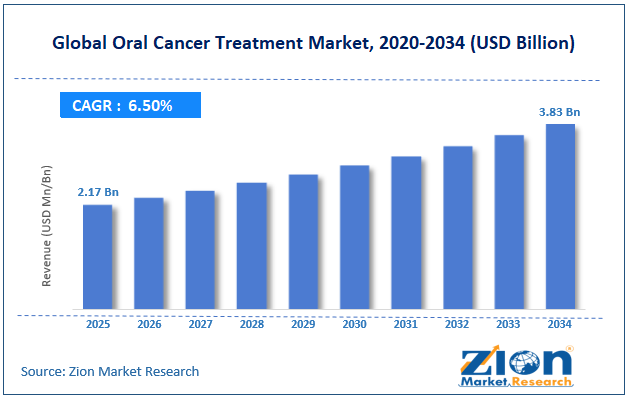
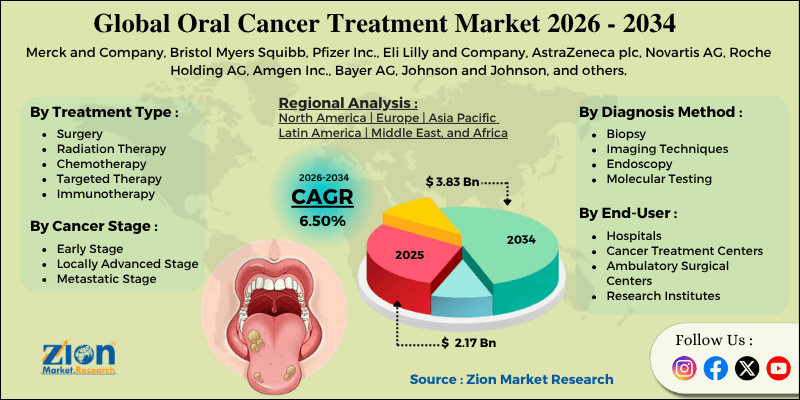
The global oral cancer treatment market size was approximately USD 2.17 billion in 2025 and is projected to reach around USD 3.83 billion by 2034, with a compound annual growth rate of roughly 6.50% between 2026 and 2034.
Key Insights
- As per the analysis shared by our research analyst, the global oral cancer treatment market is estimated to grow annually at a compound annual growth rate of around 6.50% over the forecast period from 2026 to 2034.
- In terms of revenue, the global oral cancer treatment market size was valued at approximately USD 2.17 billion in 2025 and is projected to reach USD 3.83 billion by 2034.
- The oral cancer treatment market is expected to grow steadily, driven by rising cancer incidence rates, growing preference for targeted drug therapies, expanding awareness of early screening, and continuous improvements in surgical reconstruction techniques.
- Based on treatment type, surgery is expected to lead the market, while targeted therapy is anticipated to grow rapidly as more precision medicines become available for specific genetic mutations.
- Based on cancer stage, locally advanced stage cases are expected to lead the oral cancer treatment market. In contrast, early-stage detection and treatment is anticipated to grow quickly, supported by expanding screening programs.
- Based on diagnosis method, biopsy is the largest current segment, while molecular testing is expected to grow rapidly during the forecast period as personalized medicine becomes more widely accepted.
- Based on end-user, hospitals are expected to lead the market, while cancer treatment centers are anticipated to grow steadily as more specialized facilities open worldwide.
- Based on region, North America is projected to dominate the global oral cancer treatment market during the estimated period, followed by Europe.
Oral Cancer Treatment Market: Overview
Oral cancer treatment refers to medical treatments for cancer that develops in the mouth, including the lips, tongue, gums, inner cheeks, and the roof and floor of the mouth. The goal of oral cancer treatment is to remove or destroy cancer cells, stop the disease from spreading, and help patients recover with the best possible quality of life. Treatment depends on the stage, size, and location of the cancer, as well as the patient's overall health. The main treatment options include surgery, radiation therapy, chemotherapy, targeted therapy, and immunotherapy. Doctors may use one treatment or a combination of treatments to achieve the best results. Early diagnosis through dental checkups, biopsy tests, and imaging scans greatly improves the chances of successful treatment. Oral cancer treatment is provided by oncologists, surgeons, dentists, hospitals, and specialized cancer centers around the world. Modern treatment approaches also focus on preserving speech, chewing, and appearance while reducing treatment side effects. Advances in medical technology and multidisciplinary care are helping doctors provide more effective and personalized treatment for patients with oral cancer.
The oral cancer treatment industry is growing due to rising tobacco- and alcohol related cancer cases, expanding use of targeted therapy and immunotherapy drugs, and increasing government focus on early screening programs.
Impact of the USA-Israel War on Iran on the Oral Cancer Treatment Market
Ongoing tensions among the United States, Israel, and Iran may cause short-term disruptions in the global supply chain for certain pharmaceutical raw materials and medical device components used in radiation therapy machines and surgical equipment, since some manufacturing and shipping routes pass through affected regions. Hospitals and treatment centers relying on imported oncology equipment could face temporary delays and higher costs. However, steady patient demand and ongoing government funding for cancer care programs are expected to keep the oral cancer treatment market on a stable growth trajectory despite short-term regional disruptions.
Oral Cancer Treatment Market: Technology Roadmap 2026–2034
What is the projected development roadmap for the oral cancer treatment market over the forecast period?
The oral cancer treatment market is progressing through improved diagnostic accuracy, smarter treatment personalization, and fully integrated cancer care ecosystems. The market is expected to grow at a compound annual growth rate of around 6.50% over the forecast period, supported by rising global demand for effective, less invasive cancer care and ongoing advancements in medical technology.
The following roadmap outlines key development phases expected through 2034.
2026-2028: Early Detection and Diagnostic Improvement Phase
- Hospitals and dental clinics are expected to expand screening programs, helping identify oral cancer cases at much earlier and more treatable stages.
- Imaging technology adoption is expected to grow, allowing doctors to detect tumors with greater accuracy and plan more precise surgical approaches.
- Improved biopsy and molecular testing methods are expected to simplify diagnosis, making it easier for doctors to confirm cancer type and stage quickly.
2029-2031: Personalized Treatment and Precision Medicine Phase
- Companies are expected to combine genetic testing with targeted drug development to create treatments suited to each patient's specific tumor profile.
- Integration between diagnostic imaging and treatment planning software is expected to grow, helping surgeons and oncologists design more accurate procedures.
- Immunotherapy drugs are expected to gain wider acceptance, helping the body's own immune system fight cancer cells more effectively with fewer side effects.
2032-2034: Fully Integrated and Patient-Centered Care Phase
- Cancer treatment centers are expected to become part of larger connected healthcare networks that combine diagnosis, treatment, and recovery support into a single coordinated system.
- Advanced reconstructive surgery techniques are expected to reduce recovery time, helping patients regain normal speech and eating function faster after treatment.
- Fully coordinated care systems are expected to enable seamless collaboration between oncologists, surgeons, and rehabilitation specialists, supporting better long-term survival outcomes.
Oral Cancer Treatment Market: Dynamics
Growth Drivers
How is rising awareness about early detection driving the oral cancer treatment market?
The oral cancer treatment market is growing as more people become aware of the importance of early diagnosis and timely treatment. Oral cancer often shows few symptoms in its early stages, causing many patients to seek medical care only after the disease has progressed. Regular dental checkups, public awareness campaigns, and improved screening programs are helping doctors detect oral cancer earlier, leading to better treatment outcomes. The increasing number of oral cancer cases caused by tobacco use, alcohol consumption, and human papillomavirus (HPV) infection is also driving demand for effective treatment options. Hospitals, research organizations, and pharmaceutical companies are investing in advanced therapies, including targeted drugs and immunotherapy, to improve patient outcomes.
At the same time, advances in surgery, radiation therapy, and reconstructive procedures are making treatment safer and helping patients recover faster. These developments are improving the quality of care and supporting the steady growth of the market worldwide.
Growing investment in targeted therapy and immunotherapy research is accelerating the oral cancer treatment market.
The oral cancer treatment industry is expanding as pharmaceutical companies, hospitals, and research organizations develop safer and more effective treatments for the disease. Traditional treatments such as surgery, radiation therapy, and chemotherapy can successfully remove or destroy cancer cells. Still, they may also cause side effects that affect speaking, eating, swallowing, and overall quality of life. To overcome these challenges, healthcare providers are increasingly using targeted therapies and immunotherapy, which attack cancer cells more precisely while reducing damage to healthy tissues. These advanced treatments can improve recovery, lower the risk of cancer returning, and help patients achieve better long-term outcomes. The growing use of personalized medicine is also increasing demand for genetic and molecular testing, allowing doctors to select treatments based on a patient's specific cancer type.
At the same time, new imaging technologies, digital pathology, and advanced biopsy techniques are improving the speed and accuracy of diagnosis. Hospitals and cancer centers are also combining multiple treatment modalities to provide more effective care, improve survival rates, reduce treatment-related complications, and enhance the overall quality of life for patients with oral cancer.
Restraints
High treatment costs and limited access to advanced care are key challenges in the oral cancer treatment market.
The oral cancer treatment industry faces several challenges that may limit its growth. One of the biggest challenges is the high cost of advanced treatments such as targeted therapy, immunotherapy, and reconstructive surgery, which makes them difficult for many patients to afford, especially in low- and middle-income countries. Another major issue is the lack of awareness about the early signs of oral cancer, which often leads to late diagnosis when treatment becomes more difficult and less effective. Many rural hospitals and smaller healthcare centers also lack advanced diagnostic equipment and experienced cancer specialists. Patients living in remote areas may struggle to travel for regular treatment sessions and follow-up visits. Limited insurance coverage in many countries further increases the financial burden on patients and their families. In addition, developing new cancer drugs requires costly research and lengthy clinical trials. These challenges continue to affect access to quality care, even as demand for better, more affordable oral cancer treatment grows worldwide.
Opportunities
How are precision medicine and expanding screening programs driving the oral cancer treatment market?
The oral cancer treatment market offers strong growth opportunities as healthcare providers focus more on early diagnosis and personalized treatment. The rising number of oral cancer cases across North America, Europe, and Asia-Pacific is increasing the demand for advanced diagnostic tools and more effective treatment options. Patients are looking for treatments that reduce side effects, preserve speech and appearance, and support faster recovery. Pharmaceutical companies, biotechnology firms, and hospitals are investing in targeted therapies, immunotherapy, and other innovative treatments to improve patient outcomes. The growing use of genetic testing and molecular diagnostics is helping doctors choose the most suitable treatment for each patient.
At the same time, artificial intelligence is improving the accuracy of oral cancer detection, while robotic surgery and advanced radiation therapy are making treatment more precise and less invasive. Government screening programs and public awareness campaigns are encouraging more people to undergo regular oral health checkups, leading to earlier diagnosis. Continued advances in medical technology, research, and patient-centered care are creating new opportunities for healthcare providers and supporting the long-term growth of the market worldwide.
Challenges
What challenges does the oral cancer treatment market face in accessibility and patient compliance amid rising competition?
The oral cancer treatment market faces several challenges that may slow its growth. One of the biggest challenges is ensuring that patients complete their full treatment, as long courses of radiation therapy or chemotherapy can be physically and emotionally demanding. Many patients may miss treatment sessions or follow-up visits because of side effects, fatigue, or travel difficulties. Another challenge is providing the right treatment for patients with different ages, health conditions, and stages of cancer. Hospitals also need experienced oncologists, surgeons, nurses, and other healthcare professionals to deliver high-quality care throughout treatment and recovery.
In addition, pharmaceutical companies face intense competition as they develop similar targeted therapies and immunotherapies, making continuous innovation essential. Strict regulatory requirements and lengthy approval processes for new cancer treatments can also delay product launches in different countries. Overcoming these challenges is important for improving patient outcomes, expanding access to advanced therapies, and supporting the continued growth of the market worldwide.
Oral Cancer Treatment Market: Report Scope
| Report Attributes | Report Details |
|---|---|
| Report Name | Oral Cancer Treatment Market |
| Market Size in 2025 | USD 2.17 Billion |
| Market Forecast in 2034 | USD 3.83 Billion |
| Growth Rate | CAGR of 6.50% |
| Number of Pages | 229 |
| Key Companies Covered | Merck and Company, Bristol Myers Squibb, Pfizer Inc., Eli Lilly and Company, AstraZeneca plc, Novartis AG, Roche Holding AG, Amgen Inc., Bayer AG, Johnson and Johnson, and others. |
| Segments Covered | By Treatment Type, By Cancer Stage, By Diagnosis Method, By End-User, and By Region |
| Regions Covered | North America, Europe, Asia Pacific (APAC), Latin America, Middle East, and Africa (MEA) |
| Base Year | 2025 |
| Historical Year | 2020 - 2024 |
| Forecast Year | 2026 - 2034 |
| Customization Scope | Avail customized purchase options to meet your exact research needs. Request For Customization |
Oral Cancer Treatment Market: Segmentation
The global oral cancer treatment market is segmented by treatment type, cancer stage, diagnosis method, end-user, and region.
Why is surgery the preferred treatment type in the oral cancer treatment market?
Based on treatment type, the global oral cancer treatment market is divided into surgery, radiation therapy, chemotherapy, targeted therapy, and immunotherapy. Surgery holds about 40% of the market share, leading due to its widespread use as the primary method for removing tumors and affected tissue in most oral cancer cases. Targeted therapy holds around 20% of the market share. It is one of the fastest-growing segments, driven by increasing demand for treatments that focus precisely on specific cancer cell mutations while sparing healthy tissue.
How does the locally advanced stage segment maintain its leading position in the oral cancer treatment market?
Based on cancer stage, the oral cancer treatment industry is classified into early stage, locally advanced stage, and metastatic stage. The locally advanced stage segment accounts for about 45% of the global oral cancer treatment market, driven by the fact that many patients are diagnosed only after the cancer has spread to nearby tissues or lymph nodes. The early stage segment holds around 33% of the market share. It is one of the fastest-growing segments, driven by rising awareness and expanding screening programs that catch cancer sooner.
Which diagnosis method segment dominates the oral cancer treatment market?
Based on diagnosis method, the market is segregated into biopsy, imaging techniques, endoscopy, and molecular testing. Biopsy leads with about a 38% share, driven by continuous reliance on tissue sampling as the most definitive way to confirm cancer diagnosis. Molecular testing holds around 21% of the market share. It is growing rapidly as more doctors seek genetic information to guide personalized treatment decisions.
How do hospitals dominate the end-user landscape in the oral cancer treatment market?
Based on end-user, the oral cancer treatment market is categorized into hospitals, cancer treatment centers, ambulatory surgical centers, and research institutes. Hospitals account for about 42% of the market due to their comprehensive facilities and ability to handle complex surgical and follow-up care. Cancer treatment centers hold around a 26% share. They are growing steadily as more patients seek specialized, focused care from dedicated oncology facilities.
Oral Cancer Treatment Market: Regional Analysis
What is driving North America's leadership in the oral cancer treatment market?
The North America oral cancer treatment market accounts for around 37% of the global market, making it the largest regional market. A strong healthcare system, high awareness of oral cancer, and easy access to advanced diagnostic and treatment technologies drive growth. The United States holds the largest market share because of its large number of cancer hospitals, leading research institutes, and well-established pharmaceutical industry. Continuous investment in targeted therapy, immunotherapy, and precision medicine is improving treatment outcomes across the country. Hospitals and cancer centers are using advanced imaging, biopsy techniques, and genetic testing to detect oral cancer earlier and provide more personalized treatment.
Public health campaigns promoting regular dental checkups, tobacco cessation, and human papillomavirus (HPV) vaccination are also helping reduce the risk of oral cancer. Canada is supporting market growth through government-funded cancer research, expanding screening programs, and increasing use of precision medicine. Strong partnerships between hospitals, research organizations, pharmaceutical companies, and government agencies continue to improve access to innovative treatments. Ongoing investments in robotic surgery, advanced radiation therapy, and new drug development are expected to strengthen the long-term growth of the North America oral cancer treatment market.
What factors are supporting the expansion of the oral cancer treatment market across Europe?
The Europe oral cancer treatment market accounts for around 27% of the global market, making it the second-largest regional market. Growth is supported by advanced healthcare systems, strong cancer research, and government programs that promote early diagnosis and better access to treatment. Germany holds the largest market share due to its well-developed healthcare infrastructure, leading pharmaceutical companies, and sustained investment in oncology research. Hospitals and cancer centers across the country are adopting advanced surgical techniques, targeted therapies, and precision medicine to improve patient outcomes. The United Kingdom is another major market, supported by national screening programs, modern imaging technologies, and public awareness campaigns about the risks of tobacco and alcohol use and human papillomavirus (HPV) infection. France is also contributing to market growth through increased funding for cancer research, healthcare innovation, and broader access to advanced treatment options.
Across Europe, governments, hospitals, pharmaceutical companies, and research organizations are working together to improve early detection, expand access to modern therapies, and enhance the quality of cancer care. Ongoing investments in clinical research, advanced diagnostics, and innovative treatment methods are expected to support the long-term growth of the European oral cancer treatment market during the forecast period.
Recent Market Developments
- In February 2026, Merck & Co., Inc. announced positive Phase 3 KEYNOTE-689 results showing that KEYTRUDA® (pembrolizumab), used before and after surgery with standard care, significantly improved event-free survival in patients with resectable locally advanced head and neck squamous cell carcinoma, including cancers of the oral cavity.
- In May 2026, Bristol Myers Squibb Company presented new oncology data at the ASCO 2026 Annual Meeting, highlighting progress across its immuno-oncology portfolio and next-generation pipeline for solid tumors, including head and neck cancers, supporting the development of more effective treatment strategies.
Oral Cancer Treatment Market: Competitive Analysis
The leading players in the global oral cancer treatment market are:
- Merck and Company
- Bristol Myers Squibb
- Pfizer Inc.
- Eli Lilly and Company
- AstraZeneca plc
- Novartis AG
- Roche Holding AG
- Amgen Inc.
- Bayer AG
- Johnson and Johnson
The global oral cancer treatment market is segmented as follows:
By Treatment Type
- Surgery
- Radiation Therapy
- Chemotherapy
- Targeted Therapy
- Immunotherapy
By Cancer Stage
- Early Stage
- Locally Advanced Stage
- Metastatic Stage
By Diagnosis Method
- Biopsy
- Imaging Techniques
- Endoscopy
- Molecular Testing
By End-User
- Hospitals
- Cancer Treatment Centers
- Ambulatory Surgical Centers
- Research Institutes
By Region
- North America
- The U.S.
- Canada
- Mexico
- Europe
- France
- The UK
- Spain
- Germany
- Italy
- Rest of Europe
- Asia Pacific
- China
- Japan
- India
- Australia
- South Korea
- Rest of Asia Pacific
- The Middle East & Africa
- Saudi Arabia
- UAE
- Egypt
- Kuwait
- South Africa
- Rest of the Middle East & Africa
- Latin America
- Brazil
- Argentina
- Rest of Latin America
Table Of Content
Methodology
FrequentlyAsked Questions
Oral cancer treatment refers to the medical treatments used to treat cancer that develops in the mouth, including the lips, tongue, gums, inner cheeks, roof of the mouth, and floor of the mouth.
The global oral cancer treatment market is expected to grow, driven by rising awareness about early detection, expanding use of targeted and immunotherapy drugs, growing screening program adoption, and continuous improvements in surgical and reconstructive techniques.
According to research, the global oral cancer treatment market size was approximately USD 2.17 billion in 2025 and is projected to reach approximately USD 3.83 billion by 2034.
The compound annual growth rate value of the oral cancer treatment market is expected to be around 6.50% from 2026 to 2034.
North America is expected to lead the global oral cancer treatment market during the forecast period, driven by strong healthcare infrastructure, high screening awareness, and advanced treatment technology adoption.
The major players in the global oral cancer treatment market include Merck and Company, Bristol Myers Squibb, Pfizer Inc., Eli Lilly and Company, AstraZeneca plc, Novartis AG, Roche Holding AG, Amgen Inc., Bayer AG, and Johnson and Johnson.
The report examines key aspects of the oral cancer treatment market, including growth drivers, restraints, emerging opportunities, challenges, a competitive landscape analysis, regional breakdowns, and a detailed future outlook across all major treatment types, cancer stages, diagnosis methods, end users, and geographies.
Technological advancements are accelerating the oral cancer treatment market by enabling more accurate early detection, precise surgical planning, and personalized treatment approaches. Artificial intelligence, genetic testing, robotic surgery, and advanced radiation delivery systems are making cancer treatment more effective, less invasive, and more comfortable for patients.
The oral cancer treatment market faces challenges such as the high cost of advanced therapies, limited access to specialist care in developing regions, delayed diagnosis due to low awareness, and lengthy regulatory approval processes that can slow the availability of new treatments.
The oral cancer treatment market is highly competitive, with global pharmaceutical companies, biotechnology firms, hospitals, and research organizations focusing on targeted therapies, immunotherapy, clinical trials, strategic partnerships, and new product development to strengthen their market position.

HappyClients

