
Global Cardiac Resynchronization Therapy Market Trend, Share, Growth, Size Analysis, Forecast 2032

Cardiac Resynchronization Therapy Market By Product Type (Cardiac Resynchronization Therapy Defibrillators, Cardiac Resynchronization Therapy Pacemakers), By End User (Hospitals & Cardiac Centers, Ambulatory Surgery Centers), and By Region - Global and Regional Industry Overview, Market Intelligence, Comprehensive Analysis, Historical Data, and Forecasts 2024 - 2032
| Market Size in 2023 | Market Forecast in 2032 | CAGR (in %) | Base Year |
|---|---|---|---|
| USD 4.26 Billion | USD 6.56 Billion | 4.9% | 2023 |
Cardiac Resynchronization Therapy Industry Perspective
What will be the global cardiac resynchronization therapy market size during the forecast period?
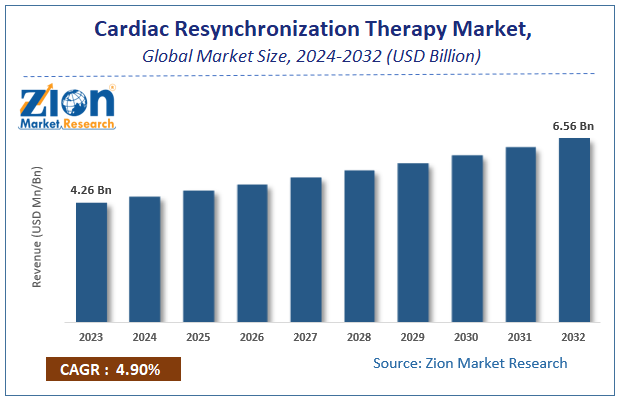
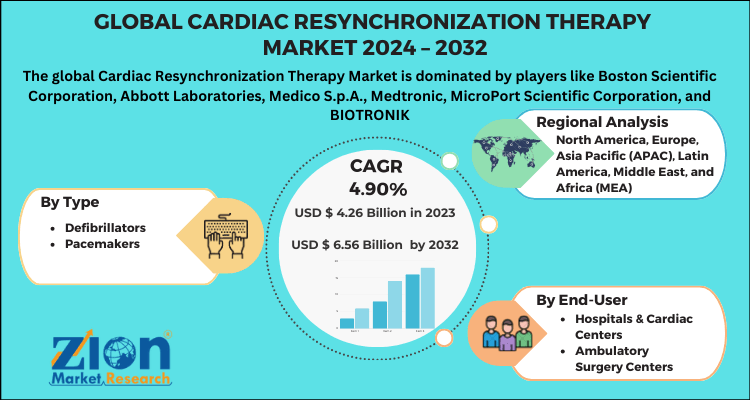
The global cardiac resynchronization therapy market size accrued earnings worth approximately USD 4.26 billion in 2023 and is predicted to gain revenue of about USD 6.56 billion by 2032, and is set to record a CAGR of nearly 4.9% over the period from 2024 to 2032.
This report provides a comprehensive analysis of the growth drivers, restraints, and challenges shaping demand across the global cardiac resynchronization therapy market throughout the forecast period, while highlighting high-potential emerging opportunities within the industry.
Key Insights
- As per the analysis shared by our research analyst, the global cardiac resynchronization therapy market is estimated to grow at a CAGR of approximately 4.9% during the forecast period from 2024 to 2032.
- In terms of revenue, the global cardiac resynchronization therapy market size was valued at around USD 4.26 billion in 2023 and is projected to reach USD 6.56 billion by 2032.
- The market is driven by the increasing prevalence of heart failure and cardiovascular diseases, particularly among the aging population, rising awareness of CRT benefits, technological advancements including wireless devices and remote monitoring, favorable reimbursement policies, and growing preference for minimally invasive procedures.
- Based on the product type, cardiac resynchronization therapy defibrillators (CRT-D) accounted for more than 74.71% of the market share, as these devices combine pacemaker and defibrillator functions and are critical for patients with severe heart failure at high risk of sudden cardiac arrest.
- Based on the end user, hospitals and cardiac centers held the largest share of about 52.08%, as these facilities are equipped with advanced technologies and specialized medical staff and serve as the primary settings for CRT procedures.
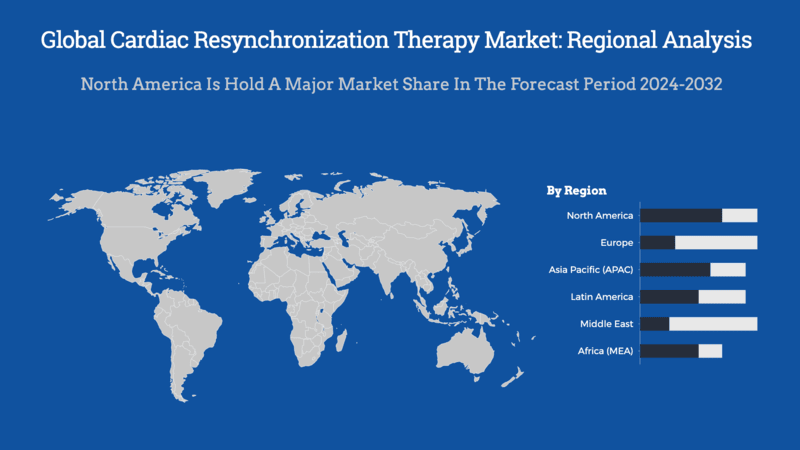
- North America held more than 49.9% share of the market, driven by advanced healthcare infrastructure, a high prevalence of heart disease, and significant research and development investments in medical technologies.
Cardiac Resynchronization Therapy Market: Overview
Cardiac resynchronization therapy was launched at the end of the twentieth century. It has brought a paradigm shift in medical treatment and has proved a boon for patients with systolic heart failure symptoms. The key objective of cardiac resynchronization therapy is restoring mechanical synchrony through electrical activation of the heart in a synchronized way. Clinical trials have demonstrated favorable outcomes when patients exhibiting heart failure symptoms are given combined cardiac resynchronization & medical treatment. Moreover, these combined treatments not only diminish heart failure hospitalizations but also minimize the rate of mortality along with enhancing the quality of life of patients.
Cardiac Resynchronization Therapy Market: Dynamics
Growth Drivers
What factors are accelerating the expansion of the cardiac resynchronization therapy market?
The cardiac resynchronization therapy market is primarily driven by the increasing prevalence of heart failure and cardiovascular diseases, particularly among the aging population. Rising awareness about the benefits of CRT devices in improving heart function and quality of life further fuels market growth.
Technological advancements, including the development of wireless CRT devices and remote monitoring capabilities, enhance patient management and drive adoption. Favorable reimbursement policies and increased healthcare spending in developed countries support market expansion. The growing preference for minimally invasive procedures also contributes to rising demand for CRT devices.
Restraints
What factors are limiting the growth of the cardiac resynchronization therapy market?
The high cost of CRT devices and implantation procedures can limit access in low- and middle-income countries. The complexity of the procedure requires specialized medical professionals, leading to limited availability in regions with inadequate healthcare infrastructure.
Risk of complications associated with CRT implantation, including device malfunctions and infections, can deter some patients and healthcare providers. Regulatory challenges and stringent approval processes for new CRT devices also pose barriers to market growth.
Opportunities
What emerging opportunities exist in the cardiac resynchronization therapy market?
Emerging markets, particularly in Asia-Pacific and Latin America, offer significant growth opportunities due to increasing healthcare investments and improving access to advanced cardiac care. Ongoing research and development, including innovations in leadless and battery-free CRT devices, provide avenues for market expansion.
Integration of artificial intelligence and machine learning in CRT devices for real-time data analysis and predictive diagnostics can enhance treatment outcomes. Expanding telehealth and remote patient monitoring solutions further creates new opportunities for market growth.
Challenges
What challenges does the cardiac resynchronization therapy market face?
Limited awareness and underdiagnosis of heart failure in developing regions lead to lower adoption rates of CRT devices. Patient reluctance to undergo invasive procedures and concerns regarding long-term safety and efficacy also present challenges.
High competition among key market players and the presence of alternative cardiac therapies, such as implantable cardioverter defibrillators and left ventricular assist devices, may impact growth. Addressing disparities in access to advanced cardiac care remains a crucial challenge for the global market.
Cardiac Resynchronization Therapy Market: Report Scope
| Report Attributes | Report Details |
|---|---|
| Report Name | Cardiac Resynchronization Therapy Market |
| Market Size in 2023 | USD 4.26 Billion |
| Market Forecast in 2032 | USD 6.56 Billion |
| Growth Rate | CAGR of 4.9% |
| Number of Pages | 265 |
| Key Companies Covered | Boston Scientific Corporation, Abbott Laboratories, Medico S.p.A., Medtronic, MicroPort Scientific Corporation, and BIOTRONIK |
| Segments Covered | By Product Type, By End-User, and By Region |
| Regions Covered | North America, Europe, Asia Pacific (APAC), Latin America, Middle East, and Africa (MEA) |
| Base Year | 2023 |
| Historical Year | 2018 - 2022 |
| Forecast Year | 2024 - 2032 |
| Customization Scope | Avail customized purchase options to meet your exact research needs. Request For Customization |
Cardiac Resynchronization Therapy Market: Segmentation Analysis
The cardiac resynchronization therapy market is segmented by product type, end user, and region. All the segments of the cardiac resynchronization therapy market have been analyzed based on present and future trends and the market is estimated from 2024 to 2032.
Based on Product Type, the cardiac resynchronization therapy market is divided into cardiac resynchronization therapy defibrillators and cardiac resynchronization therapy pacemakers. Cardiac resynchronization therapy defibrillators (CRT-D) accounted for more than 74.71% of the market share. These devices combine the functions of a pacemaker and a defibrillator, making them critical for patients with severe heart failure at high risk of sudden cardiac arrest. CRT-D systems employ three leads connected to the right atrium and both ventricles to enhance synchronization of the heart’s rhythm while providing defibrillation capability. Cardiac resynchronization therapy pacemakers serve patients who benefit from ventricular resynchronization without the defibrillator component, supporting broader clinical application of the therapy.
Based on End User, the cardiac resynchronization therapy market is divided into hospitals and cardiac centers and ambulatory surgery centers. Hospitals and cardiac centers held the largest share of about 52.08%. These facilities are equipped with advanced technologies and specialized medical staff, making them the primary settings for CRT procedures. Their infrastructure supports complex implantation, post-procedure care, and management of higher-risk patients. Ambulatory surgery centers contribute additional capacity for selected procedures and support broader access as clinical protocols and device technologies evolve.
Cardiac Resynchronization Therapy Market: Regional Analysis
Why will North America continue to dominate the global market during the projection period?
North America holds a dominant position in the cardiac resynchronization therapy market, driven by advanced healthcare infrastructure, extensive research and development activities, and a high prevalence of cardiovascular diseases that necessitate advanced treatments such as CRT. The presence of major market players and favorable reimbursement policies further bolster the market in this region. The United States continues to lead, supported by a large patient base and ongoing technological innovations. These factors enable North America to set clinical standards, drive device innovation, and influence global adoption patterns for cardiac resynchronization therapy.
Europe represents a significant segment of the market, with countries such as Germany, France, the United Kingdom, Spain, and Italy contributing substantially. The region benefits from a strong emphasis on healthcare quality and accessibility, along with proactive strategies by leading companies. Asia-Pacific is emerging as the fastest-growing market, attributed to rapid urbanization, increasing healthcare infrastructure investments, and a rising prevalence of cardiovascular diseases in countries such as China, India, and Japan. Latin America is experiencing steady growth fueled by rising income levels and continued urbanization, while the Middle East and Africa region is witnessing an upward trend supported by increasing healthcare expenditure and a high prevalence of cardiovascular conditions in key countries.
Cardiac Resynchronization Therapy Market: Competitive Players
Some of the major players in the global cardiac resynchronization therapy market include;
- Boston Scientific Corporation
- Abbott Laboratories
- Medico S.p.A.
- Medtronic
- MicroPort Scientific Corporation
- BIOTRONIK
Cardiac Resynchronization Therapy Market: Key Trends
Continued leadership of CRT-D devices for high-risk heart failure patients
Cardiac resynchronization therapy defibrillators remain the dominant product type because they combine pacing and defibrillation functions for patients with severe heart failure at elevated risk of sudden cardiac arrest. This dual capability sustains strong clinical preference and market share.
Hospitals and cardiac centers as primary implantation settings
Hospitals and cardiac centers continue to account for the largest share of procedures due to their advanced infrastructure and specialized staff. Expansion of remote monitoring and technology improvements supports broader care pathways while these facilities remain central to complex CRT delivery.
Segments Covered
The global cardiac resynchronization therapy market is segmented as follows:
By Product Type
- Cardiac Resynchronization Therapy Defibrillators
- Cardiac Resynchronization Therapy Pacemakers
By End User
- Hospitals & Cardiac Centers
- Ambulatory Surgery Centers
By Region
- North America
- The U.S.
- Canada
- Mexico
- Europe
- France
- The UK
- Spain
- Germany
- Italy
- Rest of Europe
- Asia Pacific
- China
- Japan
- India
- Australia
- South Korea
- Rest of Asia Pacific
- The Middle East & Africa
- Saudi Arabia
- UAE
- Egypt
- Kuwait
- South Africa
- Rest of the Middle East & Africa
- Latin America
- Brazil
- Argentina
- Rest of Latin America
Table Of Content
Methodology
FrequentlyAsked Questions
Cardiac resynchronization therapy is a device-based treatment that restores mechanical synchrony of the heart through synchronized electric activation. It is used for patients with systolic heart failure symptoms and has been shown to reduce hospitalizations, lower mortality, and improve quality of life when combined with medical treatment.
The global cardiac resynchronization therapy market is driven by the increasing prevalence of heart failure and cardiovascular diseases, rising awareness of CRT benefits, technological advancements including wireless devices and remote monitoring, favorable reimbursement policies, and growing preference for minimally invasive procedures.
The global cardiac resynchronization therapy market size was valued at approximately USD 4.26 billion in 2023 and is expected to reach around USD 6.56 billion by 2032.
The global cardiac resynchronization therapy market is expected to grow at a compound annual growth rate (CAGR) of approximately 4.9% during the forecast period from 2024 to 2032.
North America held more than 49.9% share and is expected to contribute notably, supported by advanced healthcare infrastructure, high prevalence of heart disease, significant R&D investment, and favorable reimbursement policies.
Some of the major players leveraging the cardiac resynchronization therapy market growth are Boston Scientific Corporation, Abbott Laboratories, Medico S.p.A., Medtronic, MicroPort Scientific Corporation, and BIOTRONIK.
The report provides a detailed examination of growth drivers, restraints, opportunities, and challenges, along with comprehensive segmentation analysis, regional insights, competitive landscape, and forward-looking forecasts that enable stakeholders to make informed strategic decisions.

HappyClients

