
Capsule Wardrobe App Market Size, Share, Trends, Growth & Forecast 2034

Capsule Wardrobe App Market By Type (Free Apps, Subscription-Based Apps, Freemium Apps, One-Time Purchase Apps), By Platform (iOS, Android, Web-Based, Cross-Platform), By Features (Virtual Wardrobe, Outfit Planning, Style Recommendations, Shopping Integration, Weather Integration, Calendar Sync), By End-User (Women, Men, Teenagers, Fashion Enthusiasts, Minimalists), and By Region - Global and Regional Industry Overview, Market Intelligence, Comprehensive Analysis, Historical Data, and Forecasts 2025 - 2034
| Market Size in 2024 | Market Forecast in 2034 | CAGR (in %) | Base Year |
|---|---|---|---|
| USD 631.42 Million | USD 8,247.16 Million | 32.84% | 2024 |
Capsule Wardrobe App Industry Perspective:
What will be the size of the capsule wardrobe app market during the projected period (2025-2034)?
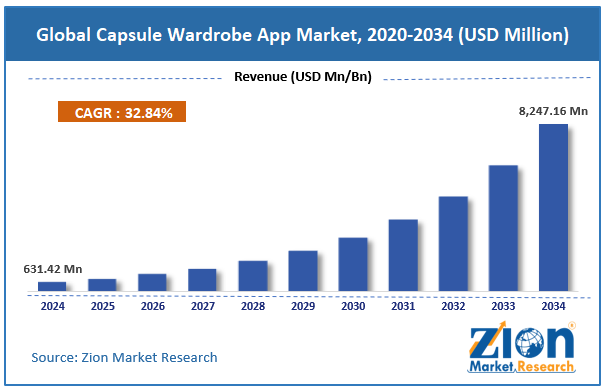
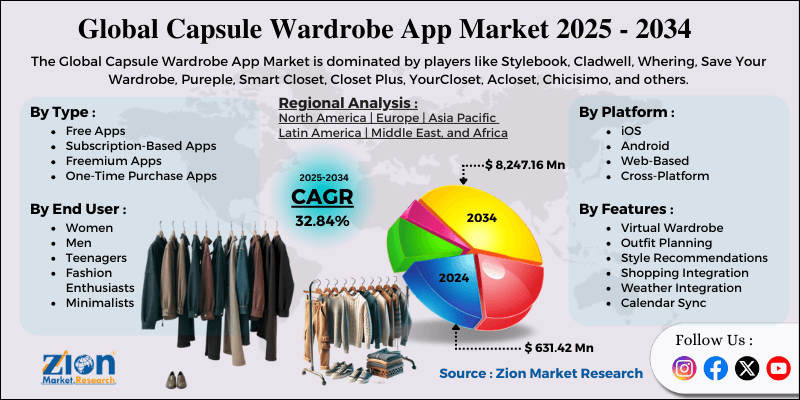
The global capsule wardrobe app market size was worth approximately USD 631.42 million in 2024 and is projected to grow to around USD 8,247.16 million by 2034, with a compound annual growth rate (CAGR) of roughly 32.84% between 2025 and 2034.
Key Insights
- As per the analysis shared by our research analyst, the global capsule wardrobe app market is estimated to grow annually at a CAGR of around 32.84% over the forecast period (2025-2034).
- In terms of revenue, the global capsule wardrobe app market size was valued at approximately USD 631.42 million in 2024 and is projected to reach USD 8,247.16 million by 2034.
- The capsule wardrobe app market is projected to grow significantly due to rising smartphone adoption, increasing environmental consciousness, growing minimalism trends, and expanding adoption of digital fashion technologies.
- Based on type, the freemium apps segment is expected to lead the capsule wardrobe app market, while the subscription-based apps segment is anticipated to experience significant growth.
- Based on platform, the iOS segment is expected to lead the capsule wardrobe app market, while the cross-platform segment is anticipated to grow rapidly.
- Based on features, the virtual wardrobe segment is the dominating segment, while the style recommendations segment is projected to witness sizeable revenue over the forecast period.
- Based on end-user, the women segment is expected to lead the market compared to the men segment.
- Based on region, North America is projected to dominate the global capsule wardrobe app market during the estimated period, followed by Europe.
Capsule Wardrobe App Market: Overview
Capsule wardrobe apps are digital fashion management platforms that help users organize clothing collections, plan outfits efficiently, and adopt simplified wardrobe habits via mobile or web apps. These apps allow users to photograph clothing items and store them in a digital closet, organized by type, color, season, and purpose of use. Built-in outfit planners suggest daily combinations from existing clothes, helping reduce time spent deciding what to wear each morning. Virtual styling tools let users preview outfit pairings without physically trying on clothes, thereby improving convenience and confidence. Smart shopping features highlight missing essentials and recommend versatile items that match current wardrobes. Advanced technology studies personal style preferences, lifestyle patterns, and body needs to provide personalized fashion guidance. Weather integration recommends suitable outfits based on daily forecasts, improving comfort and practicality. Calendar tools help plan outfits for meetings, events, travel, and special occasions in advance. Social sharing options let users seek feedback and discover new styling ideas while building personal fashion confidence. Capsule wardrobe apps promote sustainable fashion by reducing impulse buying, supporting better budget control, encouraging repeated use of clothing, and driving global adoption through growing smartphone use and environmental awareness.
The increasing focus on sustainable fashion and minimalist lifestyles is expected to drive growth in the capsule wardrobe app market throughout the forecast period.
Capsule Wardrobe App Market: Technology Roadmap 2025–2034
The capsule wardrobe app market is entering a steady phase of growth, driven by smartphone innovation, advances in artificial intelligence, deeper e-commerce integration, and rising consumer focus on sustainability and digital lifestyle management. The following roadmap outlines key development phases expected through 2034.
2025–2027: Core Feature Enhancement and User Adoption Phase
- Improved virtual wardrobe tools make it easier for users to upload clothes, organize items, and maintain accurate digital closets with less manual effort.
- Smarter outfit planning features suggest daily looks based on weather, activities, and existing clothing, reducing decision fatigue for users.
- Simplified app interfaces improve onboarding experiences, helping new users adopt capsule wardrobe habits quickly and consistently.
2028–2031: Intelligence and Shopping Integration Phase
- Artificial intelligence styling engines deliver more personalized outfit suggestions based on user behavior, preferences, and lifestyle changes.
- Deeper e-commerce integration enables direct shopping from outfit recommendations, linking users to brands offering compatible clothing items.
- Virtual try-on and size guidance features reduce wrong purchases, improve confidence, and lower product return rates.
2032–2034: Ecosystem Expansion and Sustainability Optimization Phase
- Full wardrobe ecosystems integrate resale, rental, and donation options, supporting circular fashion and sustainable consumption habits.
- Advanced data analytics help users track clothing usage, cost per wear, and environmental impact more accurately.
- Cross-platform synchronization and global partnerships enable seamless wardrobe management across devices, regions, and fashion platforms worldwide.
Capsule Wardrobe App Market: Dynamics
Growth Drivers
Environmental awareness boosts demand for capsule wardrobe apps.
The capsule wardrobe app market is growing rapidly as people become more aware of the environmental damage caused by the fashion industry and seek sustainable clothing solutions. Clothing production generates high carbon emissions, water pollution, and substantial waste, harming ecosystems worldwide. Fast fashion encourages frequent buying of low-quality clothes that are worn briefly and discarded, thereby rapidly filling landfills. Media reports, documentaries, and digital content educate consumers about pollution, waste, and poor labor conditions linked to garment manufacturing. Younger consumers prefer eco-friendly lifestyles and make fashion choices supporting environmental responsibility.
Capsule wardrobe apps encourage mindful shopping by helping users buy fewer items and focus on versatile, long-lasting clothing. These apps organize wardrobes digitally, helping users rediscover unused clothes and reduce unnecessary purchases. By showing what users already own, the apps prevent duplicate buying and lower long-term clothing waste. Environmental concerns, social media promotion of minimalist fashion, government sustainability efforts, and the growth of secondhand markets together strengthen interest in capsule wardrobe apps as practical tools for sustainable fashion adoption.
How are the increasing penetration of smartphones and the adoption of digital lifestyles driving growth in the capsule wardrobe app market?
The global capsule wardrobe app industry is growing steadily as smartphone ownership worldwide rises and people increasingly rely on mobile apps to manage everyday activities. Smartphones have become essential tools for communication, shopping, entertainment, health tracking, and personal organization in daily life. App stores provide access to millions of applications, making app-based solutions familiar and widely accepted across age groups. Younger generations who grow up using smartphones naturally choose digital tools for tasks such as outfit planning and wardrobe management. Improved smartphone cameras help users take clear photos of clothing for digital closets and easy organization.
Larger screens and better displays make visual wardrobe apps more comfortable and engaging to use regularly. Cloud systems enable wardrobe access across devices, while affordable smartphones, mobile payments, smart notifications, and pandemic-driven digital habits together strengthen global adoption of capsule wardrobe apps.
Restraints
User engagement challenges limit long-term use of the capsule wardrobe app.
A significant challenge for the capsule wardrobe app market is difficulty maintaining long-term user engagement after initial enthusiasm fades. Many users download apps with good intentions, but abandon them after initial setup proves time-consuming. Photographing entire wardrobes requires hours of dedicated effort, which busy users often struggle to complete. Categorizing and tagging clothing items demands attention to detail that frustrates less organized individuals. Apps lose value when wardrobes remain incomplete or outdated, leading to negative user experiences. Users often fail to update their digital closets when acquiring new items or discarding old ones.
The manual effort required to maintain accurate wardrobe databases discourages consistent app usage over time. Initial excitement about the organization fades as daily routines override planning intentions. Users revert to familiar habits of grabbing whatever clothes seem appropriate without consulting apps. Complex interfaces with too many features overwhelm casual users seeking simple organizational tools. Frequent app updates that require relearning interfaces annoy users who have mastered previous versions.
Opportunities
How is integration with e-commerce and virtual try-on creating new opportunities for the capsule wardrobe app market?
The capsule wardrobe app industry is experiencing strong growth as new technologies and online shopping partnerships make clothing buying easier, smarter, and more enjoyable for everyday users. Augmented reality features allow users to see how clothes may look on their own bodies before making purchase decisions. Virtual try-on tools place clothing images onto user photos, helping users understand fit, color matching, and overall style suitability. These apps identify missing wardrobe items and suggest versatile pieces that work well with clothes users already own. Built-in shopping links connect users directly to trusted online stores selling recommended items, saving time and simplifying the buying process.
Partnerships with fashion brands provide special discounts and exclusive offers, increasing user value beyond basic wardrobe organization. Smart algorithms gradually learn personal style preferences, budget constraints, and lifestyle needs to provide better recommendations. Size guidance tools reduce wrong purchases and returns. Virtual styling, seasonal planning, social shopping, and resale features together help users plan outfits, shop smarter, save money, and support sustainable fashion habits within a single app ecosystem.
Challenges
How are data privacy concerns and competition creating challenges for the capsule wardrobe app industry?
The capsule wardrobe app industry faces significant challenges, as users worry about personal privacy and face heavy competition from numerous similar applications. Many users feel uncomfortable uploading personal photos of their clothing to online servers due to concerns about data misuse and security breaches. Fashion choices can reveal personal habits and lifestyle details, prompting users to be cautious about sharing wardrobe information online. Apps that request access to cameras, storage, and location often raise concerns about safety and trust. Reports of past data breaches across industries increase hesitation toward new fashion apps.
Privacy policies written in complex legal language make it difficult for users to understand how their data is used. Advertising based on wardrobe data may be perceived as intrusive by privacy-focused consumers. Social sharing features discourage users who prefer to keep their clothing choices private. At the same time, app stores are crowded with similar wardrobe apps, while large fashion brands and technology companies launch their own platforms, making it difficult for smaller developers to stand out, attract users, justify paid features, and compete without large marketing budgets.
Capsule Wardrobe App Market: Report Scope
| Report Attributes | Report Details |
|---|---|
| Report Name | Capsule Wardrobe App Market |
| Market Size in 2024 | USD 631.42 Million |
| Market Forecast in 2034 | USD 8,247.16 Million |
| Growth Rate | CAGR of 32.84% |
| Number of Pages | 214 |
| Key Companies Covered | Stylebook, Cladwell, Whering, Save Your Wardrobe, Pureple, Smart Closet, Closet Plus, YourCloset, Acloset, Chicisimo, and others. |
| Segments Covered | By Type, By Platform, By Features, By End User, and By Region |
| Regions Covered | North America, Europe, Asia Pacific (APAC), Latin America, Middle East, and Africa (MEA) |
| Base Year | 2024 |
| Historical Year | 2019 to 2023 |
| Forecast Year | 2025 - 2034 |
| Customization Scope | Avail customized purchase options to meet your exact research needs. Request For Customization |
Capsule Wardrobe App Market: Segmentation
The global capsule wardrobe app market is segmented based on type, platform, features, end-user, and region.
Based on type, the global capsule wardrobe app industry is segregated into free, subscription-based, freemium, and one-time purchase apps. Freemium apps lead the market due to low barriers to entry, the ability to experience core features before committing financially, and revenue from premium-feature conversions.
Based on platform, the industry is segmented into iOS, Android, web-based, and cross-platform. iOS is expected to lead the market during the forecast period, driven by higher app user spending and strong engagement with lifestyle apps.
Based on features, the global capsule wardrobe app market is classified into virtual wardrobe, outfit planning, style recommendations, shopping integration, weather integration, and calendar sync. Virtual wardrobe holds the largest market share due to fundamental organizational value, universal appeal across user types, and an essential foundation for all other app features.
Based on end-user, the global market is divided into women, men, teenagers, fashion enthusiasts, and minimalists. Women hold the largest market share due to larger average wardrobes, higher fashion engagement, greater willingness to adopt organizational tools, and stronger social sharing behaviors.
Capsule Wardrobe App Market: Regional Analysis
North America leads the global market.
North America is expected to account for 38.5% of the global capsule wardrobe app market, retaining its lead. North America leads the capsule wardrobe app market due to very high smartphone usage, strong fashion awareness, rising environmental concern, and widespread acceptance of digital lifestyle tools. The United States has a highly developed mobile app ecosystem in which consumers are comfortable downloading apps and regularly paying for digital subscriptions and premium features. Higher disposable incomes allow people to spend on clothing while also investing in apps that help organize wardrobes, plan outfits, and reduce daily decision stress.
Minimalism and decluttering trends have become popular through bestselling books, streaming shows, and lifestyle influencers promoting simplified living and mindful consumption. Environmental awareness is especially strong among younger consumers who actively seek sustainable fashion practices and digital tools to reduce waste and overconsumption. Large urban populations often live in smaller homes, making smart wardrobe planning and efficient clothing storage necessary for daily comfort. Public criticism of fast fashion encourages shoppers to buy fewer, higher-quality items.
A technology-driven culture, influenced by Silicon Valley innovation, supports the widespread adoption of productivity and personal management apps. Remote and hybrid work models increase demand for flexible wardrobes, making outfit planning apps useful for balancing casual and professional looks. Seasonal climate variation across North America requires regular wardrobe rotation, increasing reliance on digital planning tools. Strong online shopping habits integrate easily with wardrobe apps, supporting outfit recommendations and smart purchasing decisions. Familiarity with trusted digital payments and subscriptions increases users' willingness to adopt paid wardrobe management features. Busy lifestyles across cities increase demand for tools that save time and mental effort during daily dressing routines.
What factors are contributing to Europe’s significant growth I the capsule wardrobe app market?
Europe is projected to account for a 29.7% share, remaining the second-leading region in the global capsule wardrobe app market. Europe is witnessing considerable expansion in the capsule wardrobe app market as sustainability values increasingly align with minimalist fashion choices and steady digital adoption continues across diverse consumer groups. Scandinavian countries strongly lead the minimalism trend by emphasizing quality, simplicity, durability, and environmental responsibility, shaping lifestyle habits that naturally support the use of capsule wardrobe apps.
Strict environmental regulations and high public awareness across Europe create supportive cultural conditions that encourage sustainable fashion consumption and reduced reliance on fast-fashion practices. Major fashion capitals such as Paris, Milan, and London strongly influence style awareness, inspiring wider populations to engage with fashion planning and wardrobe organization tools. Smaller average living spaces in many European cities increase the practical need for efficient wardrobe management and thoughtful clothing selection, supported by digital apps.
Economic diversity across European countries creates balanced demand for both premium subscription-based apps and affordable wardrobe planning solutions. Multilingual app capabilities significantly expand addressable markets by supporting users across linguistically diverse regions with localized experiences. A strong secondhand fashion culture in countries like Germany and the United Kingdom aligns naturally with capsule wardrobe principles focused on reuse and longevity. Youth-led climate movements across Europe actively influence consumption behavior, encouraging sustainable lifestyle choices and digital tools supporting mindful fashion habits. Fashion weeks, design exhibitions, and industry events generate continuous media coverage that keeps fashion organization and styling topics visible. A strong emphasis on work-life balance encourages individuals to invest time in personal planning tools, such as wardrobe apps. High reliance on public transportation makes practical outfit planning essential for changing weather and daily activities.
Recent Market Developments
- In October 2025, fashion platform Acloset gained attention as one of the best digital wardrobe and outfit-planning apps, blending wardrobe digitization with AI-driven outfit planning based on weather, events, and personal preferences.
Capsule Wardrobe App Market: Competitive Analysis
The leading players in the global capsule wardrobe app market are:
- Stylebook
- Cladwell
- Whering
- Save Your Wardrobe
- Pureple
- Smart Closet
- Closet Plus
- YourCloset
- Acloset
- Chicisimo
The global capsule wardrobe app market is segmented as follows:
By Type
- Free Apps
- Subscription-Based Apps
- Freemium Apps
- One-Time Purchase Apps
By Platform
- iOS
- Android
- Web-Based
- Cross-Platform
By Features
- Virtual Wardrobe
- Outfit Planning
- Style Recommendations
- Shopping Integration
- Weather Integration
- Calendar Sync
By End User
- Women
- Men
- Teenagers
- Fashion Enthusiasts
- Minimalists
By Region
- North America
- The U.S.
- Canada
- Europe
- France
- The UK
- Spain
- Germany
- Italy
- Rest of Europe
- Asia Pacific
- China
- Japan
- India
- South Korea
- Southeast Asia
- Rest of Asia Pacific
- Latin America
- Brazil
- Mexico
- Rest of Latin America
- Middle East & Africa
- GCC
- South Africa
- Rest of Middle East & Africa
Table Of Content
Methodology
FrequentlyAsked Questions

HappyClients

