

Milk Chocolates Market is expected to grow with a CAGR of 3.2% between 2024 and 2032
06-Mar-2026 | Zion Market Research
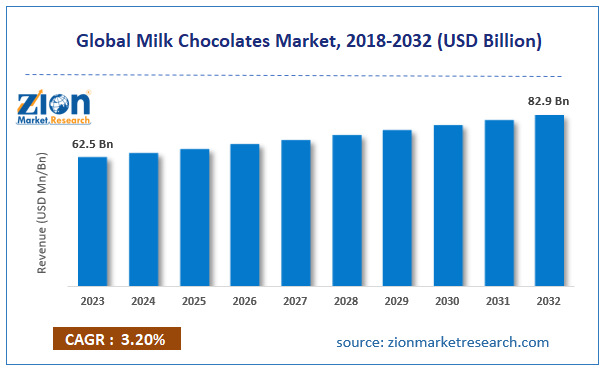
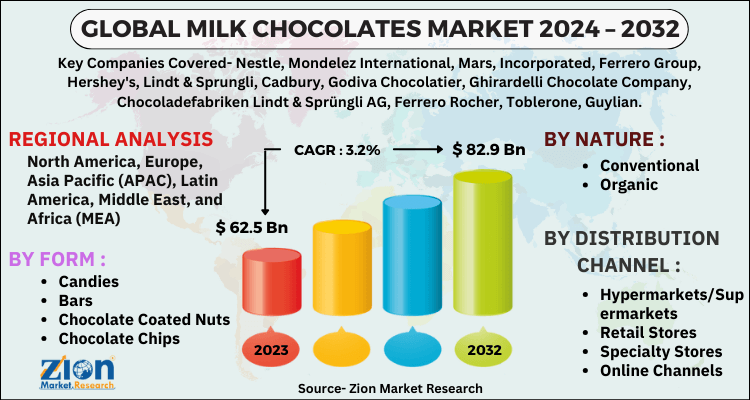
The global milk chocolate market size was worth around USD 62.5 billion in 2023 and is predicted to grow to around USD 82.9 billion by 2032, with a compound annual growth rate (CAGR) of roughly 3.2% between 2024 and 2032.
Milk chocolates are confectionery items made by blending cocoa solids, cocoa butter, milk solids, and sugar in controlled proportions to produce a smooth, sweet chocolate. The addition of milk solids reduces bitterness and yields a softer texture than dark chocolate. Production involves controlled mixing and refining to reduce particle size and improve mouthfeel. Conching develops flavor and removes unwanted moisture from the chocolate mass. Tempering is carried out to create a stable crystal structure, which ensures shine and firmness. Proper cooling prevents fat bloom and maintains product quality during storage. Milk chocolate is used in bars, molded shapes, filled products, and coated snacks. Industry regulations clearly define minimum cocoa content, labeling requirements, allergen declarations, and standards for nutritional information.
The growth of the global milk chocolate industry is primarily driven by rising disposable incomes, increasing urbanization, growing gifting occasions, and expanding retail distribution networks.
Browse the full “Milk Chocolates Market By Form (Candies, Bars, Chocolate Coated Nuts, Chocolate Chips and Others), By Nature (Conventional and Organic), By Distribution Channel (Hypermarkets/Supermarkets, Retail Stores, Specialty Stores, Online Channels and Others) and By Region - Global and Regional Industry Overview, Market Intelligence, Comprehensive Analysis, Historical Data, and Forecasts 2024 - 2032” Report at https://www.zionmarketresearch.com/report/milk-chocolates-market
Market Growth Factors
Several factors are propelling the expansion of the milk chocolates market.
- Premium product demand: An increasing number of consumers are choosing artisan and specialty milk chocolates for richer taste, better ingredients, and unique flavor combinations for gifting and personal enjoyment.
- Emerging-market growth: Rising incomes and expanding middle-class populations in Asia and Latin America are driving chocolate consumption as modern retail stores and international brands become more widely available.
- Seasonal and gifting traditions: Holidays and festivals create strong sales peaks, as shoppers purchase themed milk chocolate products and decorative gift boxes.
Restraints
- Health consciousness rising: Growing concern about sugar levels and calorie intake encourages some consumers to reduce chocolate consumption or switch to perceived healthier alternatives.
- Raw material volatility: Changes in cocoa and dairy prices increase production costs and create pricing challenges for chocolate manufacturers.
Milk Chocolates Market: Report Scope
| Report Attributes | Report Details |
|---|---|
| Report Name | Milk Chocolates Market |
| Market Size in 2023 | USD 62.5 Billion |
| Market Forecast in 2032 | USD 82.9 Billion |
| Growth Rate | CAGR of 3.2% |
| Number of Pages | 218 |
| Key Companies Covered | Nestle, Mondelez International, Mars, Incorporated, Ferrero Group, Hershey's, Lindt & Sprungli, Cadbury, Godiva Chocolatier, Ghirardelli Chocolate Company, Chocoladefabriken Lindt & Sprüngli AG, Ferrero Rocher, Toblerone, Guylian, Kinder Chocolate, Milka, Ritter Sport, Galaxy Chocolate, Kit Kat, Snickers, Twix, and others. |
| Segments Covered | By Form, By Nature, By Distribution Channel, and By Region |
| Regions Covered | North America, Europe, Asia Pacific (APAC), Latin America, Middle East, and Africa (MEA) |
| Base Year | 2023 |
| Historical Year | 2018 to 2022 |
| Forecast Year | 2024 - 2032 |
| Customization Scope | Avail customized purchase options to meet your exact research needs. Request For Customization |
Market Segmentation
The milk chocolate market can be segmented by product type, distribution channel, packaging format, price segment, and region.
Based on product type, the market is segmented into molded bars, boxed chocolates, seasonal items, filled chocolates, and chocolate-coated products. Molded bars are expected to maintain a significant market share during the forecast period due to their convenience, portability, and strong appeal to impulse buyers.
Based on distribution channel, the milk chocolates market is divided into supermarkets and hypermarkets, convenience stores, specialty chocolate shops, online retail platforms, and vending machines. Supermarkets and hypermarkets are expected to lead the market during the forecast period due to their wide product selections, competitive pricing, and high customer foot traffic.
Based on packaging format, the milk chocolates industry is classified into single-serve wraps, sharing bags, premium boxes, seasonal packaging, and bulk formats. Single-serve wraps lead the market due to consumer preference for portion control and on-the-go consumption convenience.
Based on price segment, the market is categorized into economy products, mid-range offerings, premium chocolates, and luxury artisan brands. Mid-range offerings lead the market due to their balance between quality and affordability, appealing to mainstream consumers.
Europe leads the global milk chocolate market because people in the region have a long tradition of eating and enjoying chocolate. Countries such as Switzerland, Belgium, Germany, and the United Kingdom are well known for their strong chocolate culture and high consumption levels. Many premium chocolate brands operate large production units and innovation centers across Europe. Consumers are willing to pay more for high-quality ingredients and carefully made chocolate products. Strict food safety and quality standards help maintain product reliability and build customer trust. High brand loyalty and appreciation for fine chocolate support continuous product development. Growing tourism and export demand also strengthen Europe’s position as a global hub for premium milk chocolate production.
Key Market Players
Leading companies operating in the global milk chocolates market include:
- Nestle
- Mondelez International
- Mars
- Incorporated
- Ferrero Group
- Hershey's
- Lindt & Sprungli
- Cadbury
- Godiva Chocolatier
- Ghirardelli Chocolate Company
- Chocoladefabriken Lindt & Sprüngli AG
- Ferrero Rocher
- Toblerone
- Guylian
- Kinder Chocolate
- Milka
- Ritter Sport
- Galaxy Chocolate
- Kit Kat
- Snickers
- Twix
Recent Developments
- In April 2025, Mondelez International announced a CHF 65 million investment in its Toblerone manufacturing facility in Bern, Switzerland, to enhance production capacity and reinforce global milk chocolate supply while highlighting the brand’s Swiss heritage and quality focus.
The global milk chocolates market is segmented as follows:
By Form
- Candies
- Bars
- Chocolate Coated Nuts
- Chocolate Chips
- Others
By Nature
- Conventional
- Organic
By Distribution Channel
- Hypermarkets/Supermarkets
- Retail Stores
- Specialty Stores
- Online Channels
- Others
[Global]
[AboutUs]
[ContactUs]