

Industrial Protective Clothing Market is projected to grow steadily due to rising safety regulations and industrial expansion
25-Mar-2026 | Zion Market Research
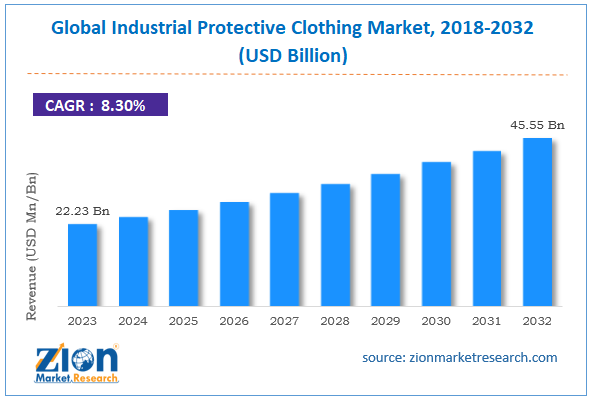
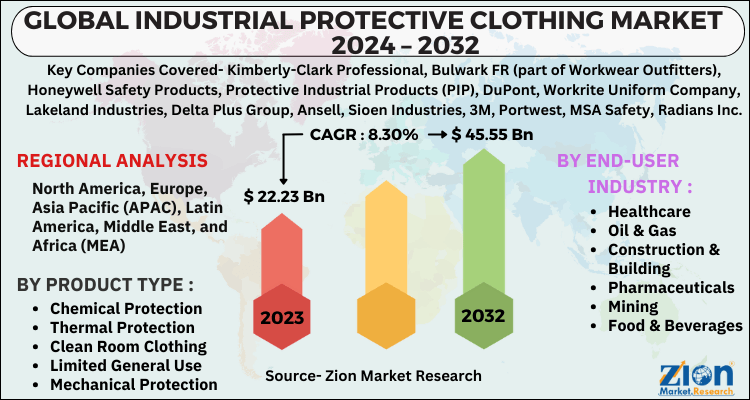
The global industrial protective clothing market size was worth approximately USD 22.23 billion in 2023 and is projected to reach approximately USD 45.55 billion by 2032, with a compound annual growth rate (CAGR) of approximately 8.30% from 2024 to 2032.
Industrial protective clothing is specialized workwear designed to protect workers from hazards such as heat, chemicals, electricity, and physical injuries in industrial environments. These garments are made using advanced fabrics that provide safety while still allowing comfort and easy movement during work. Different types of protective clothing are used for different risks, such as flame-resistant suits for oil and gas workers, high-visibility jackets for construction workers, chemical-resistant coveralls for handling hazardous materials, and arc-flash suits for electrical workers. The materials used in these garments include strong fibers such as aramid and flame-resistant cotton, as well as layered fabrics that combine protection with comfort. The way these clothes are stitched, sealed, and closed is carefully designed to prevent harmful substances or energy from reaching the skin. Industrial protective clothing must meet strict safety standards set by national and international organizations, and each product is tested before use. Choosing the right protective clothing depends on the type of hazard, the duration of exposure, and the nature of the job. Proper selection helps improve worker safety, reduce accidents, and ensure better performance in demanding industrial conditions.
The growth of the global industrial protective clothing industry is primarily driven by tightening occupational safety regulations, expanding industrial workforce, rising incidence of workplace injuries, and increasing corporate investment in worker health and safety programs.
Browse the full “Industrial Protective Clothing Market By Product Type (Chemical Protection, Thermal Protection, Clean Room Clothing, Limited General Use, Mechanical Protection, and Others), By End-User Industry (Healthcare, Oil & Gas, Construction & Building, Pharmaceuticals, Mining, Food & Beverages, Manufacturing, and Others), and By Region - Global and Regional Industry Overview, Market Intelligence, Comprehensive Analysis, Historical Data, and Forecasts 2024 - 2032” Report at https://www.zionmarketresearch.com/report/industrial-protective-clothing-market
Market Growth Factors
Several important factors are accelerating development and investment in the industrial protective clothing market.
- Regulatory enforcement: Governments are setting stricter workplace safety rules, requiring companies to provide certified protective clothing for workers facing industrial risks.
- Industrial sector growth: Growth in oil and gas, construction, mining, and chemical industries is increasing demand for protective clothing.
- Awareness and liability: Rising awareness of worker health and legal risks is pushing companies to invest in better safety gear.
Restraints
- Heat stress and discomfort: Protective clothing can feel hot and uncomfortable, especially in tough working conditions, leading some workers to avoid wearing it properly.
- Counterfeit products: Low-quality, fake protective clothing in some markets undermines safety and erodes trust.
Industrial Protective Clothing Market: Report Scope
| Report Attributes | Report Details |
|---|---|
| Report Name | Industrial Protective Clothing Market |
| Market Size in 2023 | USD 22.23 Billion |
| Market Forecast in 2032 | USD 45.55 Billion |
| Growth Rate | CAGR of 8.30% |
| Number of Pages | 223 |
| Key Companies Covered | Kimberly-Clark Professional, Bulwark FR (part of Workwear Outfitters), Honeywell Safety Products, Protective Industrial Products (PIP), DuPont, Workrite Uniform Company, Lakeland Industries, Delta Plus Group, Ansell, Sioen Industries, 3M, Portwest, MSA Safety, Radians Inc., Uvex Group, and others. |
| Segments Covered | By Product Type,By End-User Industry, and By Region |
| Regions Covered | North America, Europe, Asia Pacific (APAC), Latin America, Middle East, and Africa (MEA) |
| Base Year | 2023 |
| Historical Year | 2018 to 2022 |
| Forecast Year | 2024 - 2032 |
| Customization Scope | Avail customized purchase options to meet your exact research needs. Request For Customization |
Market Segmentation
The industrial protective clothing market can be segmented by protection type, material, end-use industry, distribution channel, and region.
Based on protection type, the industrial protective clothing industry is classified into flame-resistant, chemical-resistant, high-visibility, and arc-flash protection clothing. Flame-resistant clothing is expected to dominate the market as it represents the most widely required category of industrial protective clothing across the oil and gas, petrochemical, and utilities industries, where fire and explosion hazards are prevalent.
Based on material, the industrial protective clothing market is segregated into aramid fiber, polyester and cotton blends, polyethylene, and other technical textile materials. Aramid fiber garments are expected to lead the premium segment due to their excellent flame resistance, thermal protection, and durability, making them the material of choice for high-hazard industrial applications.
Based on end-use industry, the market is divided into oil and gas, chemical processing, construction, mining, utilities, and electrical services. Oil and gas is expected to generate the largest revenue share, as this sector has some of the most demanding protective clothing requirements and maintains large workforces that require comprehensive personal protective equipment programs at onshore and offshore facilities.
Based on distribution channel, the market is segmented into direct sales to industrial companies, sales through safety equipment distributors, and online procurement platforms. Safety equipment distributors are expected to play a critical role in market reach as they serve small and medium-sized industrial businesses that lack the procurement volumes to buy directly from protective clothing manufacturers.
Europe leads the global industrial protective clothing market because it has strong safety rules and strict enforcement across industries. Companies must follow clear guidelines to protect workers who use certified protective clothing in the workplace. Countries like Germany, France, and the United Kingdom are key markets with high demand for safety gear. These nations have well-developed industries and place strong emphasis on worker safety and compliance. Regular inspections and strict laws ensure that protective clothing is used properly in different work environments. At the same time, the Asia Pacific region is growing quickly in this market. Rapid industrial growth in countries such as China, India, and Southeast Asia is increasing demand for safety clothing. Expanding construction, manufacturing, and mining activities are creating more jobs that require protective gear. Governments in these regions are also improving safety standards, which is further increasing demand for industrial protective clothing.
Key Market Players
Leading companies operating in the global industrial protective clothing market include:
- Kimberly-Clark Professional
- Bulwark FR (part of Workwear Outfitters)
- Honeywell Safety Products
- Protective Industrial Products (PIP)
- DuPont
- Workrite Uniform Company
- Lakeland Industries
- Delta Plus Group
- Ansell
- Sioen Industries
- 3M
- Portwest
- MSA Safety
- Radians Inc.
- Uvex Group
Recent Developments
- In March 2026, DuPont launched the Tyvek 500 Xpert BioCircle protective cover, all made from bio-circular materials, reducing environmental impact while maintaining strong chemical and biological protection standards.
The global industrial protective clothing market is segmented as follows:
By Product Type
- Chemical Protection
- Thermal Protection
- Clean Room Clothing
- Limited General Use
- Mechanical Protection
- Others
By End-User Industry
- Healthcare
- Oil & Gas
- Construction & Building
- Pharmaceuticals
- Mining
- Food & Beverages
- Manufacturing
- Others
[Global]
[AboutUs]
[ContactUs]