

Food Truck Market is expected to grow at a CAGR of nearly 6% over the forecast period
06-Mar-2026 | Zion Market Research
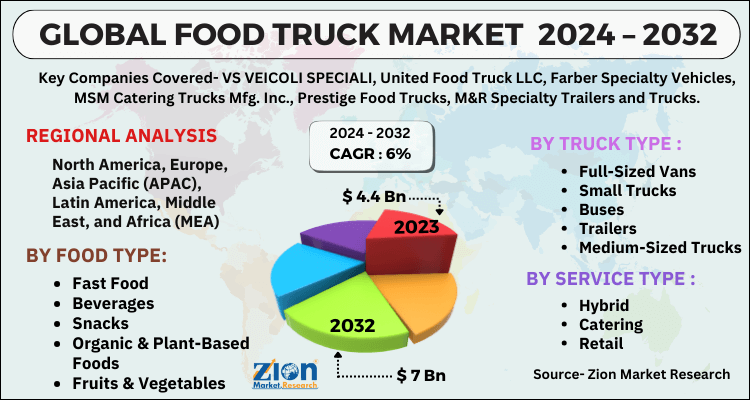
The global food truck market size was evaluated at $4.4 billion in 2023 and is slated to hit $7 billion by the end of 2032, with a CAGR of nearly 6% between 2024 and 2032.
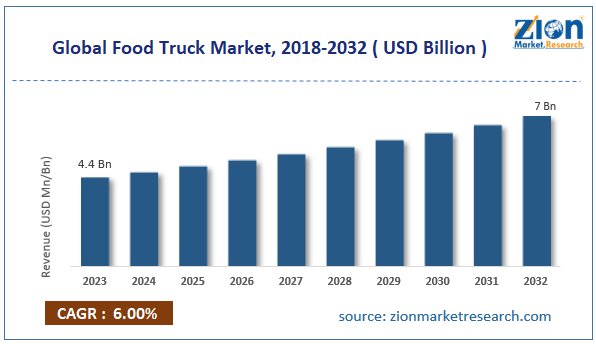
Food trucks are mobile food service businesses that operate from specially equipped vehicles to prepare and sell meals, snacks, and beverages at different public locations. These units serve customers on streets, at festivals, in corporate parks, at markets, and at special events. The industry includes gourmet food trucks, ethnic cuisine vendors, dessert trucks, coffee and beverage vans, breakfast trucks, specialty diet concepts, fusion menus, and mobile catering units. Operators rely on commercial cooking equipment, refrigeration systems, storage units, and digital payment systems to ensure efficient service and consistent food quality. Entrepreneurs prefer food trucks because startup costs are lower than those for traditional restaurants, and they offer flexible location options. Owners can test new menu ideas, reach diverse customer bases, and quickly grow brand awareness. Many food trucks support mobile payments, social media tracking, online ordering, and loyalty programs. Health authorities define strict food safety standards, licensing rules, inspection procedures, and operational compliance requirements.
The growth of the global food truck industry is primarily driven by rising demand for convenient dining options, lower entry barriers than those for traditional restaurants, the growing popularity of food festivals, and increasing consumer interest in diverse culinary experiences.
Browse the full “Food Truck Market By Food Type (Fast Food, Beverages, Snacks, Organic & Plant-Based Foods, and Fruits & Vegetables), By Truck Type (Full-Sized Vans, Small Trucks, Buses, Trailers, and Medium-Sized Trucks), By Service Type (Hybrid, Catering, and Retail), and By Region - Global and Regional Industry Overview, Market Intelligence, Comprehensive Analysis, Historical Data, and Forecasts 2024 - 2032” Report at https://www.zionmarketresearch.com/report/food-truck-market
Market Growth Factors
Several factors are propelling the expansion of the food truck market.
- Millennials and Generation Z preferences: Younger consumers enjoy trying unique street food concepts, discovering new vendors on social media, and supporting small, independent food businesses rather than large restaurant chains.
- Lower operational investment: Launching a food truck requires far less capital compared to opening a traditional restaurant, allowing new chefs to start businesses with lower financial risk and flexible growth options.
- Corporate catering demand: Companies often hire food trucks for office lunches, employee appreciation events, and corporate gatherings since they offer menu variety and convenient on-site service.
Restraints
- Weather dependency challenges: Food truck sales depend heavily on outdoor conditions; rain, extreme heat, or cold can significantly reduce daily customer traffic and overall revenue.
- Regulatory complexity navigation: Operators must secure permits, comply with parking rules, pass health inspections, and navigate local zoning laws, which increases administrative work and limits operating locations.
Food Truck Market: Report Scope
| Report Attributes | Report Details |
|---|---|
| Report Name | Food Truck Market |
| Market Size in 2023 | USD 4.4 Billion |
| Market Forecast in 2032 | USD 7 Billion |
| Growth Rate | CAGR of 6% |
| Number of Pages | 214 |
| Key Companies Covered | VS VEICOLI SPECIALI, United Food Truck LLC, Farber Specialty Vehicles, MSM Catering Trucks Mfg. Inc., Prestige Food Trucks, M&R Specialty Trailers and Trucks, All American Food Trucks, Titan Trucks Manufacturing, United Food Trucks United LLC, Futuristo Trailers, and others. |
| Segments Covered | By Food Type, By Truck Type, By Service Type, and By Region |
| Regions Covered | North America, Europe, Asia Pacific (APAC), Latin America, Middle East, and Africa (MEA) |
| Base Year | 2023 |
| Historical Year | 2018 to 2022 |
| Forecast Year | 2024 - 2032 |
| Customization Scope | Avail customized purchase options to meet your exact research needs. Request For Customization |
Market Segmentation
The food truck market can be segmented by cuisine type, service model, location type, truck size, and region.
Based on cuisine type, the market is divided into ethnic and international cuisine, American comfort food, gourmet and specialty dishes, desserts and sweet treats, and healthy and organic options. Ethnic and international cuisines are expected to maintain a significant market share during the forecast period due to consumers' desire for authentic global flavors and unique culinary experiences.
Based on the service model, the food truck market is categorized into independent single-truck operations, franchise food trucks, fleet operations, and event-focused catering trucks. Independent single-truck operations are expected to lead the market during the forecast period, driven by entrepreneurial ownership and personalized customer service.
Based on location type, the food truck industry is segregated into urban street vending, business district service, event and festival participation, college campus presence, and private event catering. Business district service leads the market due to consistent weekday lunch demand from office workers seeking convenient meal options.
Based on truck size, the market is classified into compact carts and trailers, mid-size trucks, full-size kitchen trucks, and bus conversion units. Mid-size trucks lead the market due to balanced mobility, adequate kitchen space, and reasonable operational costs.
North America leads the global food truck market because major cities support street food culture and local governments provide structured regulations for mobile vendors. The United States and Canada show strong consumer demand for food truck meals during lunch hours, evening outings, and special community events. Large food festivals and public gatherings offer regular business opportunities and steady income for operators. The use of technology, such as mobile ordering and digital payments, improves service speed and customer convenience. Diverse immigrant populations introduce a wide range of authentic international cuisines through mobile food concepts. Social media promotion and organized food truck networks help vendors attract customers and grow brand awareness. High urban population density ensures consistent daily foot traffic in city centers. Strong corporate catering demand and increasing participation in private events further expand revenue streams and strengthen long term market growth across North America.
Key Market Players
Leading companies operating in the global food truck market include:
- VS VEICOLI SPECIALI
- United Food Truck LLC
- Farber Specialty Vehicles
- MSM Catering Trucks Mfg. Inc.
- Prestige Food Trucks
- M&R Specialty Trailers and Trucks
- All American Food Trucks
- Titan Trucks Manufacturing
- United Food Trucks United LLC
- Futuristo Trailers
Recent Developments
- In May 2025, Oklahoma Governor Kevin Stitt signed the Food Truck Freedom Act into law, streamlining permits, reducing red tape for mobile food vendors, and supporting the growth of food truck businesses across the state.
The global food truck market is segmented as follows:
By Food Type
- Fast Food
- Beverages
- Snacks
- Organic & Plant-Based Foods
- Fruits & Vegetables
By Truck Type
- Full-Sized Vans
- Small Trucks
- Buses
- Trailers
- Medium-Sized Trucks
By Service Type
- Hybrid
- Catering
- Retail
[Global]
[AboutUs]
[ContactUs]