

Bispecific Antibodies Market is growing rapidly as demand for targeted cancer therapies and advanced immune system treatments rises
12-Mar-2026 | Zion Market Research
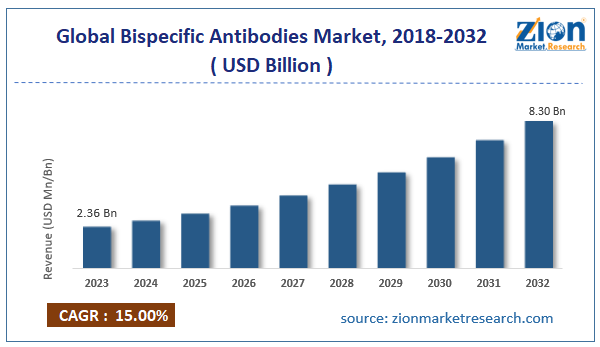
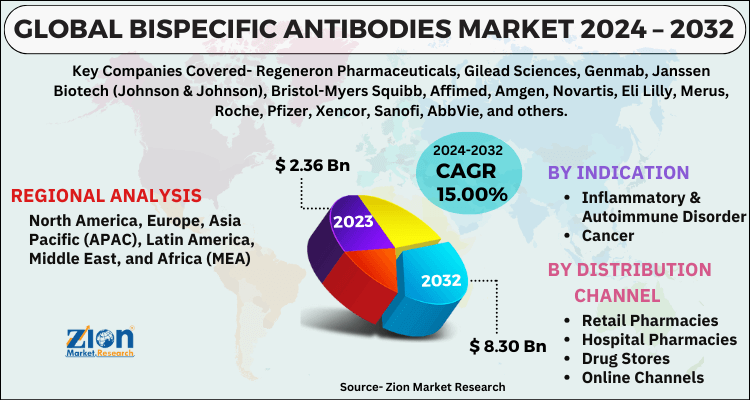
The global bispecific antibodies market size was worth around USD 2.36 billion in 2023 and is predicted to grow to around USD 8.30 billion by 2032, with a compound annual growth rate (CAGR) of roughly 15.00% between 2024 and 2032.
Bispecific antibodies are specially designed medical proteins that can bind to two different biological targets simultaneously. This unique ability allows them to perform two actions simultaneously, which traditional antibodies that bind to only one target cannot. Scientists create these antibodies by combining parts of two different antibodies into a single engineered molecule using advanced biotechnology methods. Some bispecific antibodies guide immune cells directly toward cancer cells, helping the body’s immune system find and destroy harmful cells more effectively. Others block disease signals or help medicines reach specific targets inside the body. These therapies are mainly used to treat cancers, immune system diseases, and certain blood disorders. Manufacturing bispecific antibodies requires advanced laboratory processes and strict purification steps to ensure the molecules are stable, safe, and consistent. Due to their targeted action, these therapies are becoming an important part of modern precision medicine and advanced biological treatments.
The growth of the global bispecific antibodies industry is primarily driven by the strong clinical performance of approved cancer immunotherapies, expanding late-stage pipelines, rising global cancer incidence, and increased investment by large pharmaceutical companies and biotech firms in next-generation antibody engineering.
Browse the full “Bispecific Antibodies Market By Indication (Inflammatory & Autoimmune Disorder, Cancer, and Others), By Distribution Channel (Retail Pharmacies, Hospital Pharmacies, Drug Stores, and Online Channels), and By Region - Global and Regional Industry Overview, Market Intelligence, Comprehensive Analysis, Historical Data, and Forecasts 2024-2032” Report at https://www.zionmarketresearch.com/report/bispecific-antibodies-market
Market Growth Factors
Several key factors are driving the expansion of the bispecific antibodies market.
- Strong oncology clinical outcomes: Approved bispecific antibodies for blood cancers such as multiple myeloma and non-Hodgkin lymphoma have shown strong treatment responses in patients whose disease returned after other therapies.
- Expanding pipeline of candidates: Many new bispecific antibody drugs are currently being tested in clinical trials for solid tumors, autoimmune diseases, and rare conditions, creating a strong pipeline of future treatments expected to enter the market in the coming years.
- Platform technology investments: Biotechnology companies are developing specialized engineering platforms that help scientists design bispecific antibodies faster, improve manufacturing efficiency, and support quicker movement from research discovery to clinical development.
Restraints
- Manufacturing complexity and cost: Producing bispecific antibodies is more complicated and expensive than making traditional antibodies because it requires advanced manufacturing processes, specialized equipment, and strict quality control during production.
- Cytokine release syndrome and safety management: Some bispecific antibody therapies can strongly activate the immune system and cause side effects such as cytokine release syndrome, requiring careful dosing, patient monitoring, and controlled treatment protocols.
Bispecific Antibodies Market: Report Scope
| Report Attributes | Report Details |
|---|---|
| Report Name | Bispecific Antibodies Market |
| Market Size in 2023 | USD 2.36 Billion |
| Market Forecast in 2032 | USD 8.30 Billion |
| Growth Rate | CAGR of 15.00% |
| Number of Pages | 220 |
| Key Companies Covered | Regeneron Pharmaceuticals, Gilead Sciences, Genmab, Janssen Biotech (Johnson & Johnson), Bristol-Myers Squibb, Affimed, Amgen, Novartis, Eli Lilly, Merus, Roche, Pfizer, Xencor, Sanofi, AbbVie, and others. |
| Segments Covered | By Indication, By Distribution Channel, and By Region |
| Regions Covered | North America, Europe, Asia Pacific (APAC), Latin America, Middle East, and Africa (MEA) |
| Base Year | 2023 |
| Historical Year | 2018 to 2022 |
| Forecast Year | 2024 - 2032 |
| Customization Scope | Avail customized purchase options to meet your exact research needs. Request For Customization |
Market Segmentation
The bispecific antibodies market can be segmented by molecule type, technology platform, therapeutic application, end-user, and region.
Based on molecule type, the market is segregated into immunoglobulin G-like bispecific antibodies, fragment-based bispecific constructs, and fusion protein formats. Immunoglobulin G-like bispecific antibodies lead the market because they retain the stability, longer circulation time, and proven manufacturing advantages of traditional antibody drugs while enabling dual-target binding.
Based on the technology platform, the market is segmented into bispecific T-cell engager technology, CrossMAb technology, dual-affinity re-targeting constructs, knob-into-hole engineering, and other proprietary platforms. Bispecific T-cell engager technology holds the leading share due to the strong clinical success of therapies that activate T cells to attack cancer cells directly.
Based on therapeutic application, the bispecific antibodies market is divided into oncology, hematology, inflammatory diseases, and ophthalmology. Oncology represents the leading application because bispecific antibodies are widely used to guide immune cells toward cancer cells and block key tumor growth pathways.
Based on end-user, the bispecific antibodies industry is classified into hospital oncology departments, specialty cancer centers, ambulatory infusion clinics, and research institutions. Hospital oncology departments and specialty cancer centers lead the market since bispecific antibody therapies require controlled administration and close medical supervision.
North America leads the global bispecific antibodies market due to the region's large number of biotechnology companies, pharmaceutical firms, and advanced cancer research centers. The United States plays the biggest role, as many major drug developers and medical research institutions are based there. These organizations are actively developing new antibody therapies and running clinical trials to test innovative cancer treatments. The U.S. Food and Drug Administration has approved several bispecific antibody drugs in recent years, helping these therapies reach patients faster. The region also has a strong healthcare system that supports the launch of new cancer medicines and provides access to advanced treatments. High healthcare spending, strong investment in biotechnology, and active venture capital funding further support research and drug development. Because of these factors, North America remains a major center for innovation, clinical research, and commercialization of next-generation antibody therapies.
Key Market Players
Leading companies operating in the global bispecific antibodies market include:
- Regeneron Pharmaceuticals
- Gilead Sciences
- Genmab
- Janssen Biotech (Johnson & Johnson)
- Bristol-Myers Squibb
- Affimed
- Amgen
- Novartis
- Eli Lilly
- Merus
- Roche
- Pfizer
- Xencor
- Sanofi
- AbbVie
Recent Developments
- In April 2025, Innovent Biologics presented preclinical data on several novel bispecific and trispecific antibody candidates at the American Association for Cancer Research (AACR) Annual Meeting 2025, highlighting new molecules designed to target multiple cancer pathways simultaneously.
The global bispecific antibodies market is segmented as follows:
By Indication
- Inflammatory & Autoimmune Disorder
- Cancer
- Others
By Distribution Channel
- Retail Pharmacies
- Hospital Pharmacies
- Drug Stores
- Online Channels
[Global]
[AboutUs]
[ContactUs]